
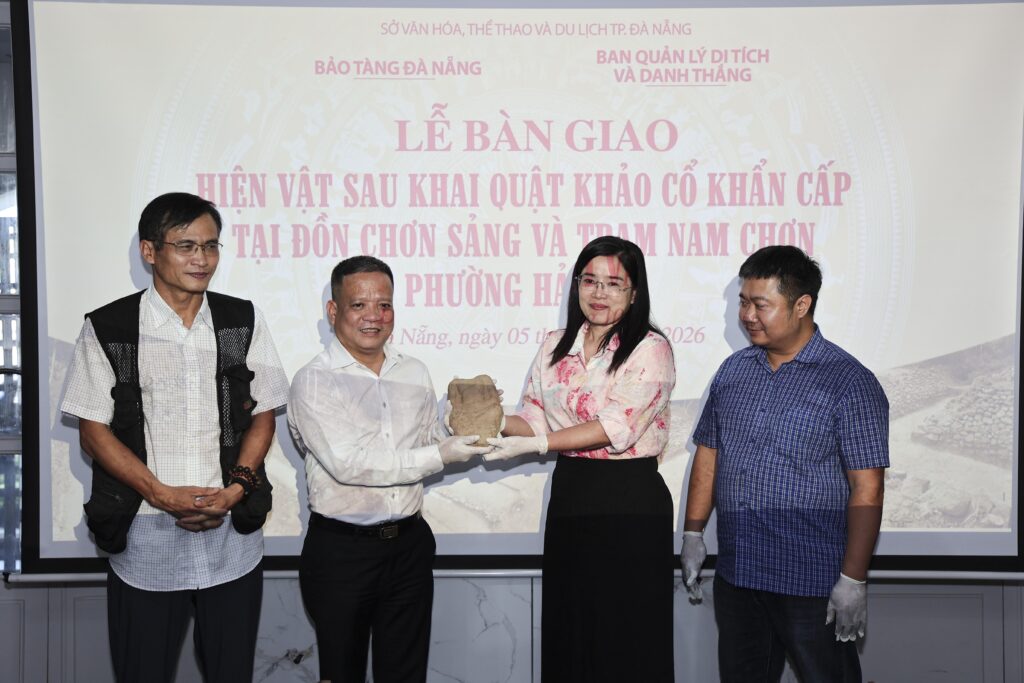
Archaeologists working at the foot of Vietnam’s Hai Van Pass may have uncovered the earliest known Champa relief yet found in the former Da Nang administrative area. The sandstone sculpture came from Chon Sang Fort, a much later military site associated with the Nguyen Dynasty, while preliminary analysis places the artifact around the 8th–9th centuries, roughly a thousand years before the fortifications that archaeologists were investigating.
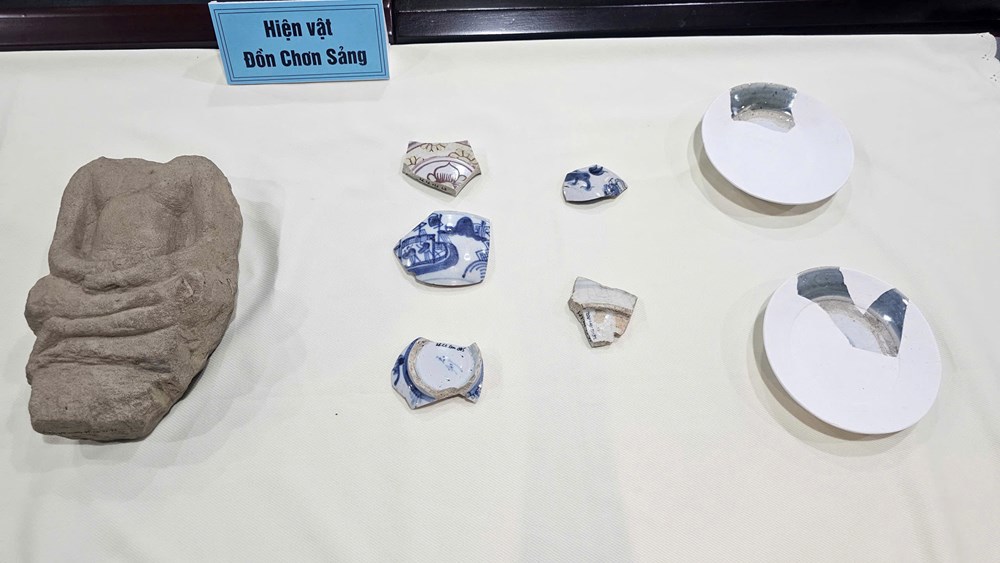
The find stands out because the front of the sandstone piece shows a seated figure in a meditative pose, while markings on the back may represent Cham script. Researchers have not yet deciphered the possible inscription, and they still need to determine the artifact’s original context.
An unexpected discovery at a later military site
The Champa were a Hindu- and later Buddhist-influenced civilization that flourished across parts of central and southern Vietnam for more than a millennium. Their kingdoms developed strong maritime trade networks and left behind distinctive brick temples, sandstone sculptures and inscriptions, many of them associated with religious centers such as Mỹ Sơn.
The relief emerged from excavation pit H2 at Chon Sang Fort, one of two sites recently investigated near Hai Van Pass. The second, Nam Chon Station, also formed part of the defensive and communications network that protected the northern approach to Da Nang during the Nguyen Dynasty.
The excavation lasted 45 days and covered about 600 square meters across the two sites. Archaeologists focused mainly on the architecture, chronology, and military function of the fort and station when the much earlier sandstone object appeared.
Earlier reports from the excavation described the object as a sandstone relief fragment depicting a deity in a meditative posture. Researchers immediately noted that it differed sharply in both date and character from the surrounding Nguyen-period remains.
Possible Cham writing on the back
The sculpture has attracted greater attention because of markings preserved on its reverse. Dr. Phạm Văn Triệu of Vietnam’s Institute of Archaeology, who led the excavation, said specialists provisionally date the piece to the 8th–9th centuries based on its sculptural style and the characteristics of the possible inscription.
Triệu described it as the earliest Champa relief so far discovered in the former Da Nang area, but he stressed that the artifact’s origin still requires further investigation. Archaeologists therefore cannot yet say whether it originally belonged to a Champa religious structure at the site or reached the location at a later date.
A much older layer of Da Nang’s history
The find nevertheless adds evidence for an earlier Champa presence in an area better known for its later defensive landscape. Hai Van Pass formed a strategic corridor between central Vietnam’s northern and southern regions, while Chon Sang Fort and Nam Chon Station later became part of a system that monitored the north–south route and helped protect the northern entrance to Da Nang Bay.
The excavations also produced material from several different periods, suggesting that people used the area repeatedly over many centuries rather than during a single historical phase. Researchers identified later ceramics and artifacts associated with the military occupation of the pass, while the Champa relief stands out as the earliest object recovered from the excavation.
88 artifacts transferred for further study
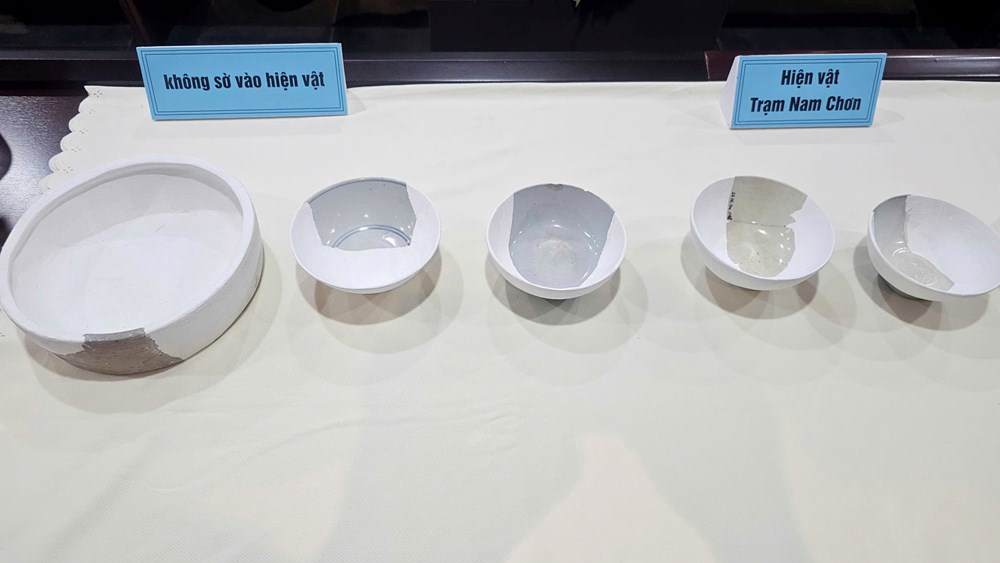
Archaeologists recovered a total of 88 artifacts from Chon Sang Fort and Nam Chon Station, and the collection has now been transferred to the Da Nang Museum for conservation, cataloguing and further research. Museum officials plan to classify and digitally document the objects, while selected finds may eventually go on public display.
Further study of the sandstone relief, particularly the possible Cham writing on its reverse, could help clarify where the sculpture originally came from and what it reveals about Champa activity in the Da Nang region.
