

Archaeologists working in the prehistoric salt mine of Hallstatt in Austria have identified a vast complex of Iron Age mining chambers stretching for about 300 meters through the mountain. The underground system consists of several large chambers arranged beside, above and below one another, revealing a scale and organization of prehistoric salt mining not previously documented at the site.
The discovery is also remarkable for what survives inside these spaces. Layers of mining debris reaching up to nine meters thick have preserved textiles, tools, wooden bowls, food remains and human excrement for around 2,500 years, giving researchers an unusually detailed picture of life and work beneath the mountain.
A 300-Meter Underground Mining System
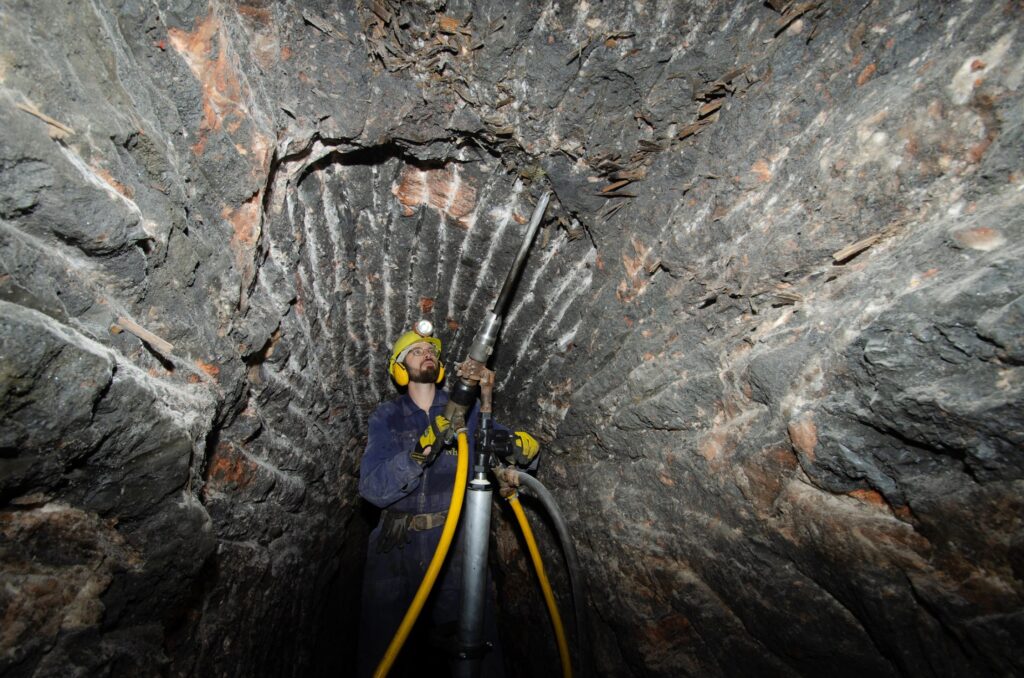
Researchers from the Natural History Museum Vienna, or NHM Wien, began exploratory drilling in previously unexamined parts of the Hallstatt salt mine in 2022 together with Salinen Austria AG. The equipment allowed them to investigate areas that had remained beyond the reach of earlier archaeological work.
The team initially suspected that the drilling might reveal one enormous prehistoric cavity. Instead, it exposed a much more complex underground landscape, with several mining chambers running parallel to one another and others positioned above or below neighboring workings.
Excavation director Daniel Brandner of NHM Wien’s Department of Prehistory said archaeologists had never encountered such an arrangement at Hallstatt before. Researchers have so far traced the system for around 300 meters, while individual chambers reach approximately 25 meters in width and around 20 meters in height.
The layout suggests that Iron Age miners adapted their excavation strategy closely to the geology of the mountain. Rather than creating one continuous underground space, they appear to have followed the richest salt-bearing zones through the rock.
Nine Meters of Ancient Debris Cover the Floors
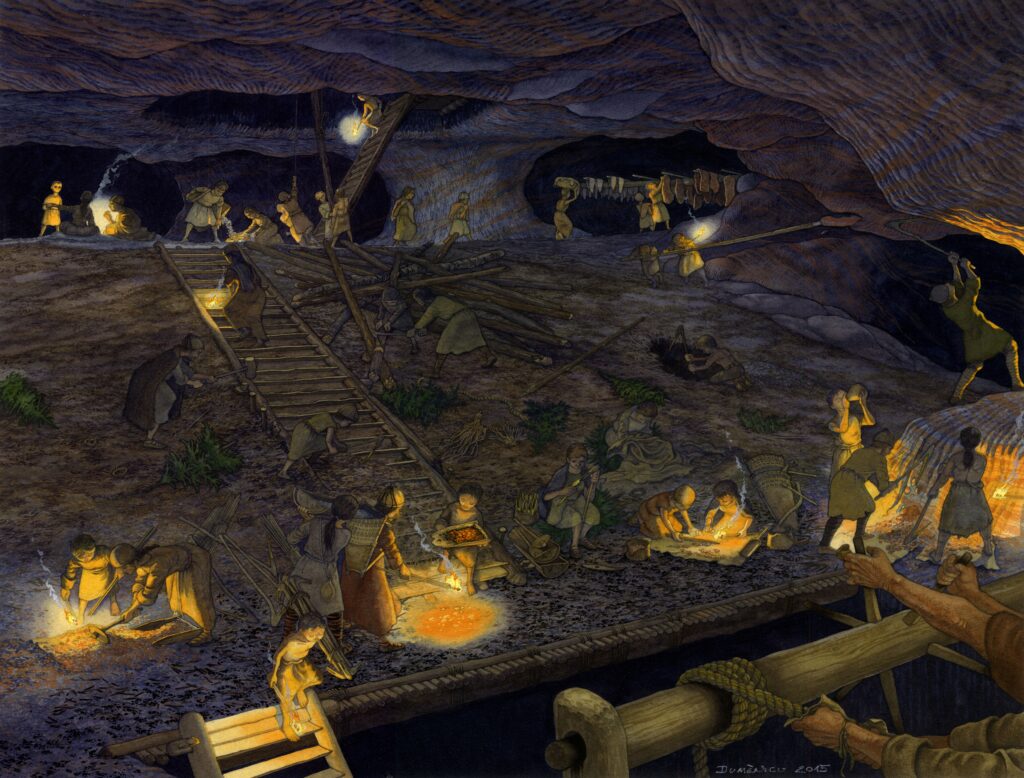
The scale of the chambers is matched by the extraordinary deposits preserved on their floors. In some areas, mining debris accumulated to a depth of as much as nine meters, forming a dense record of activity inside the prehistoric mine.
The layers contain burned wooden splints used for lighting, damaged tools, fragments of clothing and other material discarded during mining. Salt preserved many of these objects in conditions that would rarely occur at an ordinary archaeological site.
Among the finds are textiles, wooden bowls containing traces of food and human excrement left behind by the people who worked underground. These remains give archaeologists evidence not only about mining techniques, but also about diet, clothing and everyday working conditions.
Researchers may also be able to recover genetic information from the deposits. Human DNA and biological traces from consumed foods can survive in the sediments, potentially allowing scientists to reconstruct aspects of the miners’ lives that tools and architecture alone cannot reveal.
Hallstatt’s Salt Turned the Mine Into an Archaeological Archive
Hallstatt has long been known for its exceptional preservation conditions. The salt-rich environment slows biological decay, allowing materials such as wood, leather, textiles and food remains to survive for thousands of years.
At most prehistoric sites, archaeologists are left mainly with stone, ceramics and metal after organic materials disappear. Hallstatt is different because even everyday waste can remain preserved, turning the mine into an unusually detailed archive of ancient working life.
The newly investigated chambers therefore provide more than evidence for the scale of salt production. Their combination of architecture, tools, clothing, food residues and biological material offers a rare opportunity to study the people who actually worked inside the mountain.
A Mining Industry That Survived Repeated Disasters
The underground complex belongs to a much longer mining tradition at Hallstatt. Evidence from the high valley shows human activity in the area around 7,300 years ago, while salt extraction expanded dramatically during later prehistoric periods.
By around 1200 BC, production had reached a scale researchers describe as approaching industrial levels. Mining repeatedly faced major disruptions, however, as powerful landslides entered underground workings and filled sections of the mine with material from the surface.
Despite these disasters, salt production repeatedly resumed. Brandner has described the Hallstatt mining community as highly resilient, noting that miners could restore production only a few years after some destructive events.
One particularly severe catastrophe around 350 BC appears to have devastated part of the mining landscape. It has also been associated with Hallstatt’s famous “Man in the Salt,” the preserved body of a miner discovered underground in 1734 whose prehistoric age was not recognized at the time.
New Evidence for Changing Iron Age Technology
The newly identified chambers are particularly important because this phase of Iron Age mining has remained comparatively poorly understood. Initial finds already indicate changes in equipment and working methods that distinguish this period from earlier phases of salt extraction.
Researchers have documented different ways of attaching handles to mining tools, suggesting that technology continued to evolve during the Iron Age. Such changes indicate that the Hallstatt miners were adapting both their equipment and their methods as underground conditions and production needs changed.
The finds also show striking similarities to material recovered at Dürrnberg near Hallein, another major prehistoric salt-mining center where intensive extraction began during the sixth century BC. Those parallels may eventually help researchers determine whether mining knowledge, technologies or labor traditions circulated between Alpine salt-producing communities.
Much of Hallstatt Still Remains to Be Reexamined
NHM Wien is also working with Salinen Austria and Salzwelten to reopen older archaeological areas that have become difficult or unsafe to reach. Some access tunnels are between 200 and 300 years old and require stabilization before archaeologists can return.
Reopening these passages will allow researchers to revisit important findspots with analytical methods unavailable to earlier generations. The newly identified Iron Age chambers show why such work could substantially change what is known about prehistoric mining at Hallstatt.
Rather than revealing a single isolated cavity, the investigations have exposed an extensive underground system shaped by geology, technology and generations of mining. The tools, clothing, food remains, and biological traces preserved within it now offer researchers a rare chance to reconstruct both the scale of prehistoric salt production and the lives of the people who sustained it.
