

Archaeologists excavating the Vrelo–Šarkamen imperial complex in eastern Serbia have uncovered an exceptionally preserved private Roman bath built into the lowest level of a monumental palace tower. In information provided directly to Arkeonews, the Vrelo–Šarkamen excavation team said the newly uncovered bath currently has no known direct architectural parallel elsewhere in the Roman Empire.
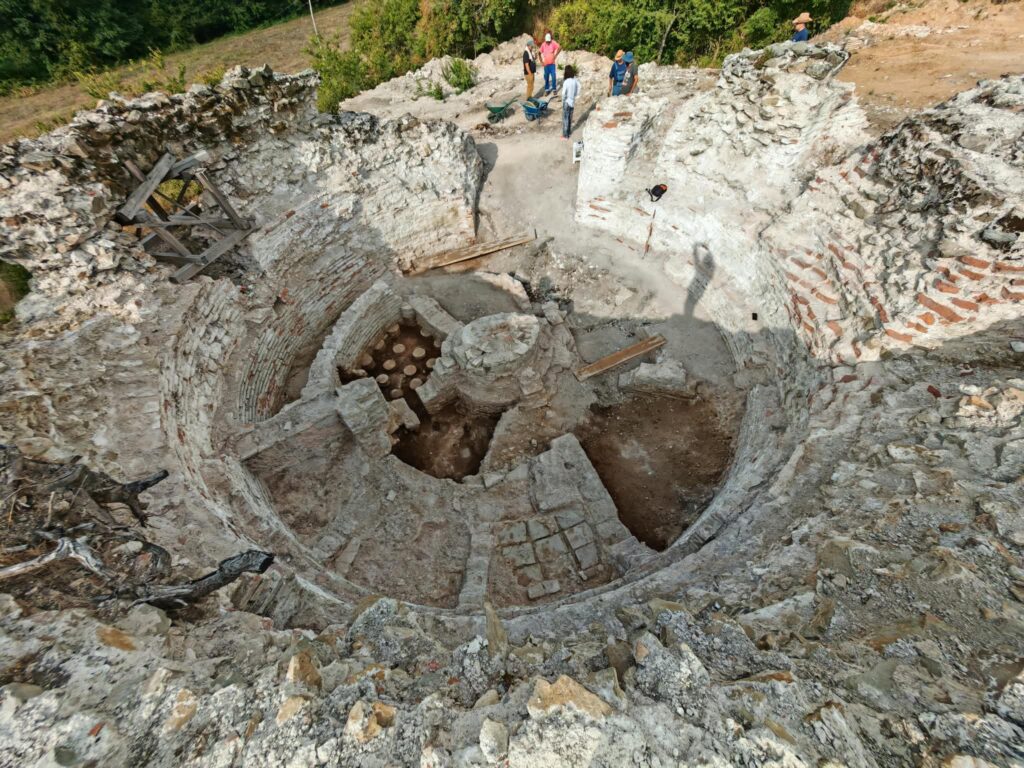
The circular balneum, or private bath suite, occupied the south-western corner tower of a fortified residence associated with the Roman tetrarch Maximinus Daia, one of the rulers of the early fourth-century Tetrarchic period. Archaeologists identified three bathing pools or tubs, a steam room, a furnace, a remarkably well-preserved underfloor heating system and the emplacement that once held a copper vessel used to heat water.
The discovery emerged from the latest archaeological campaign at Vrelo–Šarkamen, conducted by the Institute of Archaeology in cooperation with the Museum of Krajina, with support from the Ministry of Culture of the Republic of Serbia. The excavations are directed by Dr Marija Jović, Research Associate at the Institute of Archaeology, and Gordan Janjić, MA, Museum Advisor at the Museum of Krajina.
Their interdisciplinary team also includes Dr Igor Bjelić, Senior Research Associate and architect; Dr Ljubomir Jevtović, Research Associate; Borisav Marković, surveyor; and Konstantin Janjić, architecture student. Their combined work in archaeology, architecture and field documentation has been essential to understanding the unusually complex layout of the Šarkamen residence and reconstructing how the newly discovered bath functioned.
The find adds a new dimension to Šarkamen, already one of Serbia’s most important Late Antique archaeological sites and known for the discovery of an imperial mausoleum and an extraordinary assemblage of gold jewellery three decades ago. The newly uncovered bath suggests that the fortified residence incorporated an even more sophisticated combination of architecture, engineering and high-status private life than previously recognized.
A Roman bath built into a monumental tower
The location of the bath is what makes the discovery particularly striking. Rather than occupying a separate wing of the palace, the balneum was adapted to the interior of the monumental south-western corner tower and followed a circular plan beneath a dome pierced by six window openings.
According to the excavation team, incorporating six openings into the domed structure represented a demanding architectural and engineering undertaking. The arrangement suggests that the builders were not simply trying to fit a functional bathing installation into the tower; lighting, circulation and the experience of the interior appear to have been considered as part of the overall design.
Excavations have also revealed a clear functional division within the complex. One section was reserved for the technical infrastructure required to operate the bath, while the other contained spaces intended for bathing, relaxation and leisure, separating service activity from the areas used by the palace’s high-status occupants.
An exceptionally preserved Roman heating system
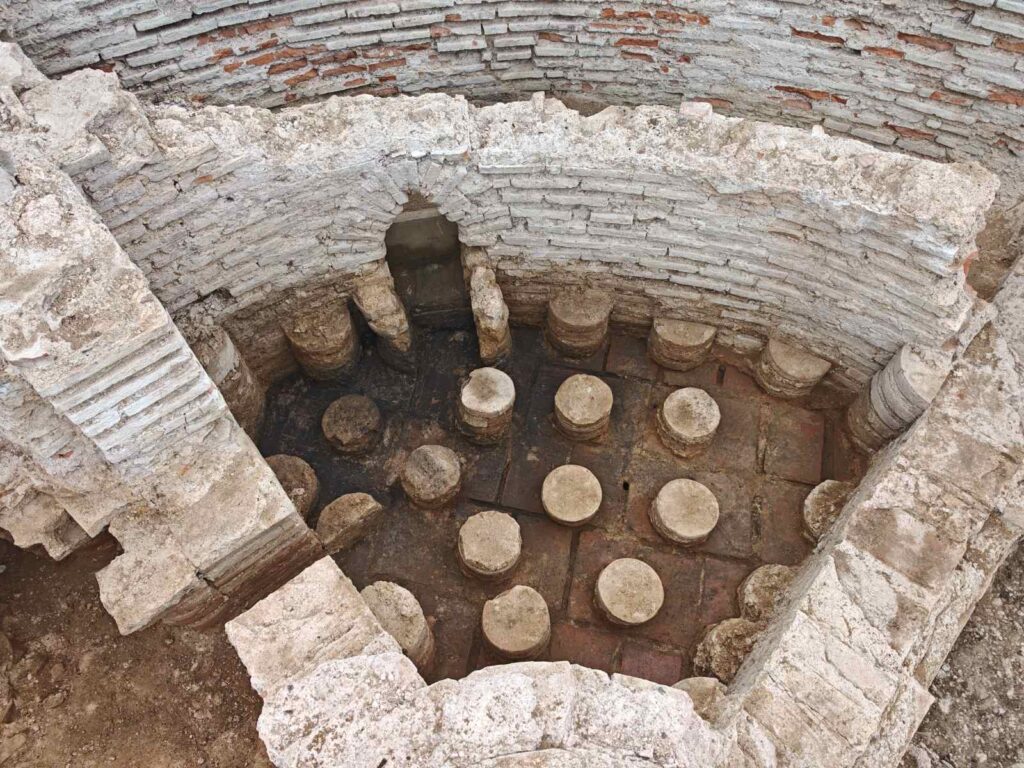
At the heart of the technical section was the praefurnium, the furnace that supplied heat to the bath. Hot air circulated beneath the raised floors through a hypocaust system supported by circular pilae, allowing the rooms above to be heated from below.
At Šarkamen, the hypocaust survives in an exceptionally complete state. Its preservation gives archaeologists an unusual opportunity to reconstruct not only the architectural layout of the bath but also the way heat was distributed through the building and how its technical infrastructure functioned.
Researchers also identified the emplacement that once supported a copper boiler used to heat water for the bath. The boiler itself has not survived, something the team considers unsurprising because copper was valuable and frequently recycled after Roman buildings ceased to function.
Even without the vessel, the surviving installation is important because it allows the original position of the boiler and its relationship with the heating system to be reconstructed. The excavation team notes that surviving Roman copper boilers are exceptionally rare and cites Pompeii as one location where a preserved example is known.
Personnel responsible for operating the bath entered the technical section through a monumental western entrance. This arrangement kept those tending the furnace and maintaining the heating system separate from the palace residents using the bathing areas, revealing a carefully organized division between service circulation and private imperial space.
Three bathing pools and a private steam room
The section intended for bathing has so far produced three pools or tubs together with a sudatorium, a heated room used as a steam bath. In combination with the praefurnium, hypocaust and boiler emplacement, these elements preserve much of the technological sequence required to operate a private Late Roman bath.
The evidence indicates that the structure was considerably more than a practical washing facility. Its heating infrastructure, water system, controlled access and leisure spaces formed a single carefully planned environment designed for high-status residents of the fortified palace.
The position of the balneum within the tower makes that organization especially significant. While private baths were a familiar component of elite Roman residences, the Šarkamen team says no direct parallel is currently known for a bath arranged in this way at the lowest level of a monumental palace corner tower.
Šarkamen was an imperial residence, not an ordinary Roman city
Vrelo–Šarkamen is one of Serbia’s most important Late Antique archaeological sites. The monumental fortified residential complex was constructed in the early fourth century and is associated with Maximinus Daia, a ruler of the Tetrarchic period.
The site should therefore not be understood as a conventional Roman city with an urban civilian population organized around streets, public squares and commercial districts. Its archaeological character is instead defined by a fortified high-status residence, monumental architecture and an associated imperial mausoleum, placing it within the political and architectural world of the Late Roman imperial elite.
Maximinus Daia belonged to the generation of rulers shaped by the Tetrarchy, the system introduced to divide imperial authority among several emperors. Large fortified residences constructed during this period were not simply private homes; they could combine security, ceremonial representation, administrative functions and elite domestic life within a single architectural complex.
This wider setting is essential for interpreting the newly discovered bath. The presence of a technologically sophisticated private balneum inside one of the residence’s monumental towers suggests that comfort and imperial display were incorporated even into parts of the complex that might otherwise appear primarily defensive.
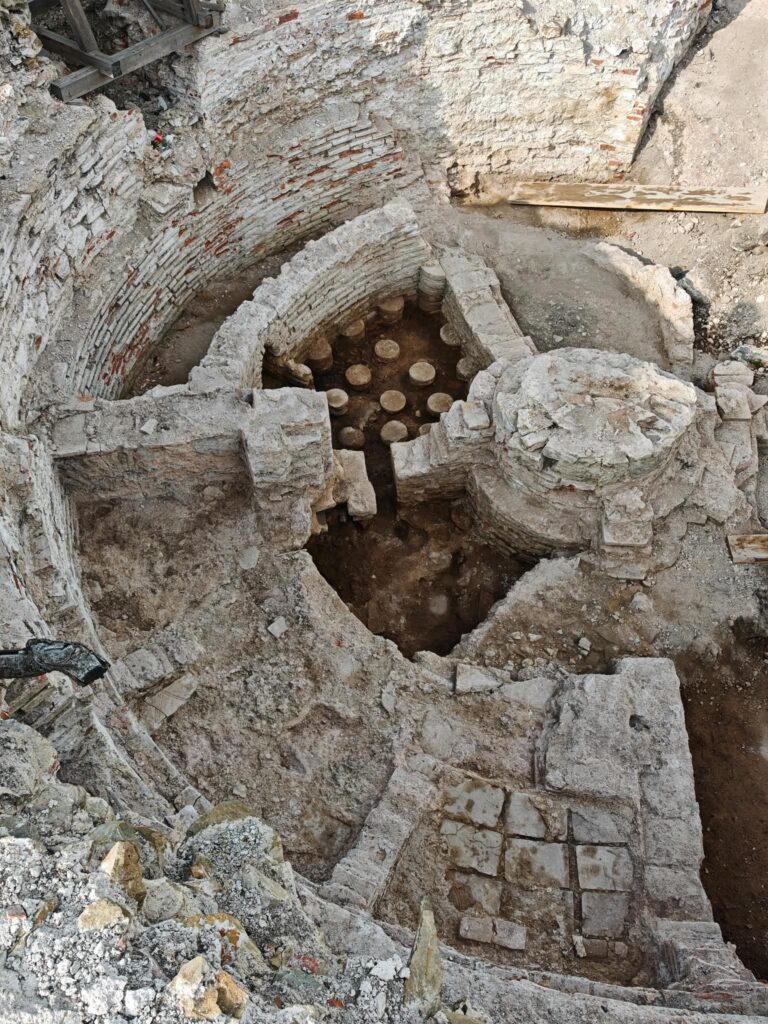
The Roman imperial bath within the south-western tower of the Vrelo–Šarkamen palace, showing the preserved hypocaust pilae and surrounding masonry of the circular bath complex. Photo courtesy of Marija Jović.
Thirty years after Šarkamen’s imperial gold discovery
The new find comes three decades after the discovery that established Šarkamen as an important site for the study of Late Roman imperial culture. Archaeologists investigating the mausoleum uncovered a unique assemblage of gold jewellery, a find that provided crucial evidence for the exceptionally high status of the people connected with the complex.
The bath now reveals wealth and status in a very different form. Instead of precious objects, the evidence survives through architecture and infrastructure: a domed circular chamber, a sophisticated hypocaust, hot-water technology, several bathing installations, a steam room and carefully separated routes for residents and service personnel.
Together, the mausoleum and the newly uncovered balneum reinforce the interpretation of Šarkamen as an exceptionally ambitious Late Roman complex. They also show that imperial status was expressed not only through funerary monuments and luxury objects but through the design of everyday private spaces.
One major question remains: how was the bath entered?
Despite the remarkable preservation of the balneum, archaeologists have not yet established exactly how palace residents reached it. An entrance on the eastern side connects with a paved corridor of the residence, but the difference between the floor levels of the palace and the bath has not yet been explained.
Questions also remain about the monumental western approach to the tower and its relationship with the technical section, while the precise function of several excavated rooms is still under investigation. The discovery therefore opens a new phase of research rather than completing the architectural story of the palace.
Three decades after Šarkamen produced its celebrated imperial gold, the same complex has now revealed another expression of Late Roman elite life: a sophisticated private bath built into a monumental palace tower, combining heating technology, architectural experimentation and carefully organized private space in an arrangement that researchers currently consider without a direct known parallel in the Roman Empire.
Archaeological Institute, Institute of National Importance for the Republic of Serbia
