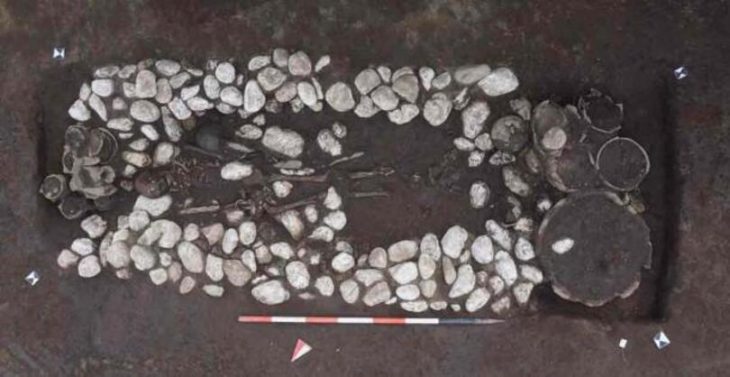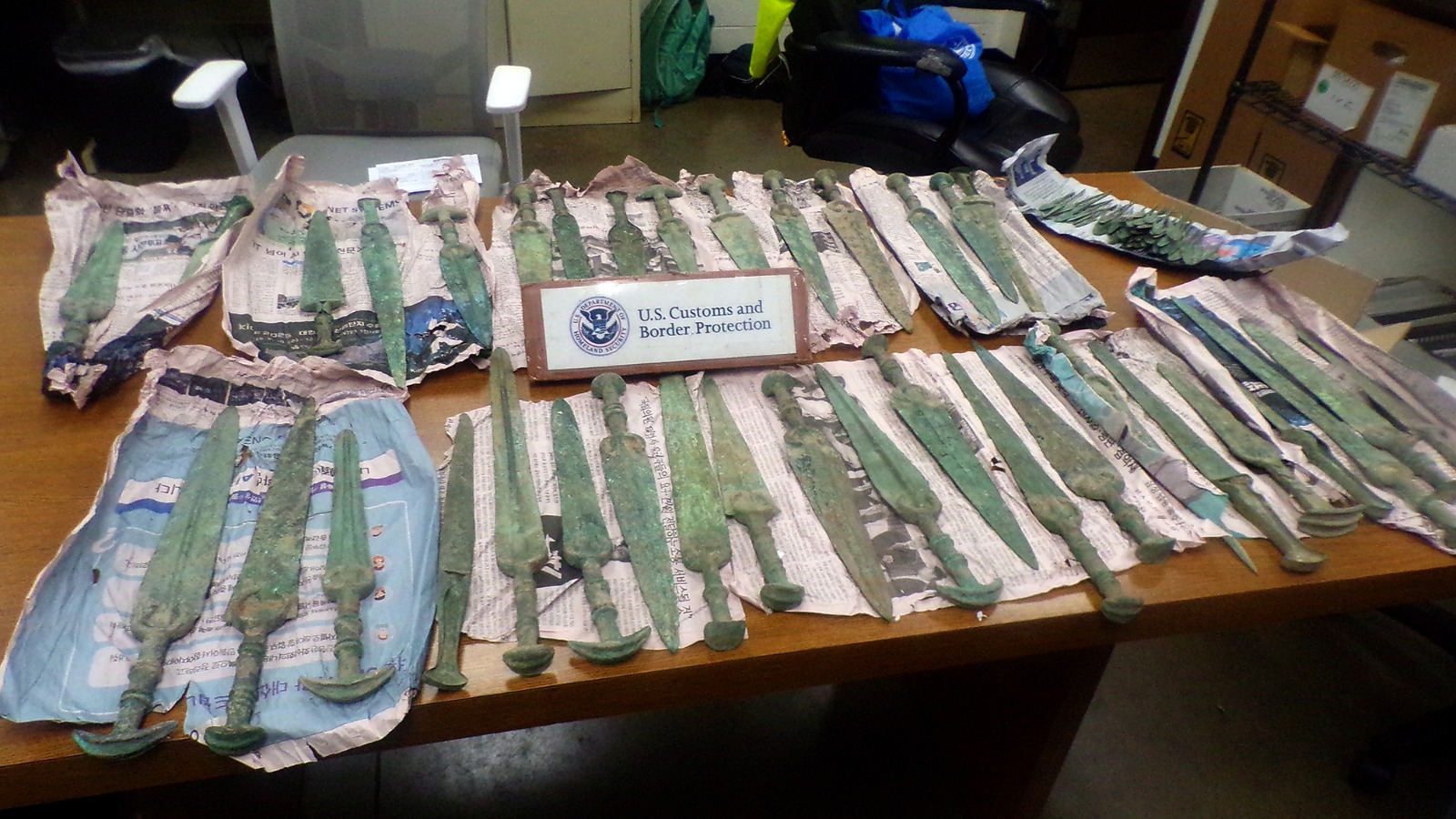
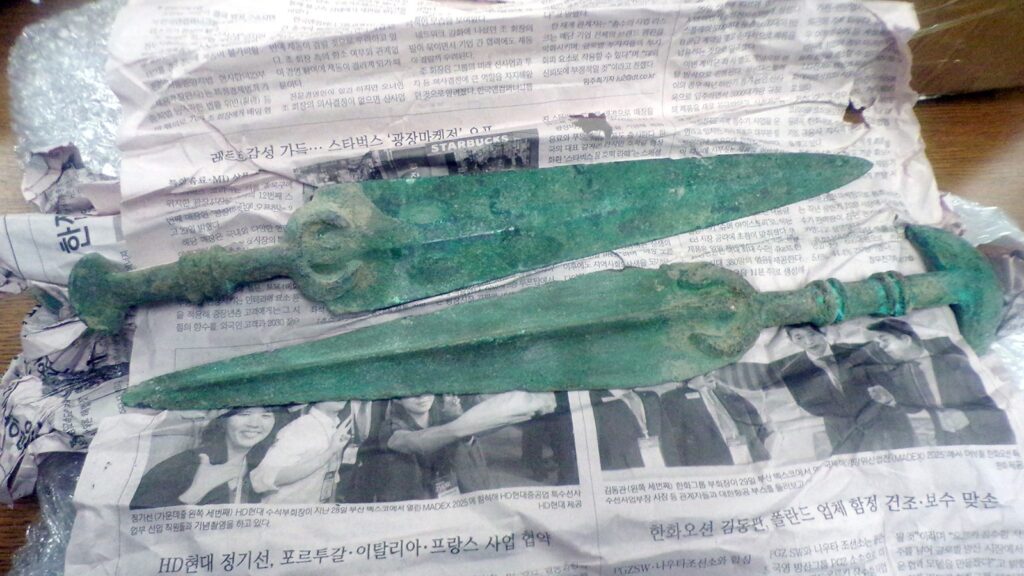
Officers with U.S. Customs and Border Protection (CBP) recently uncovered a remarkable piece of ancient history at the Port of Philadelphia, intercepting a shipment of Bronze Age swords and arrowheads believed to date back nearly 4,000 years. The copper-alloy weapons, traced to northeastern Iran near the Talish Mountains along the southwestern Caspian Sea, are suspected to have been illegally excavated from burial sites and smuggled into the United States.
Bronze Age Artifacts Discovered in Express Shipment
The discovery began when CBP officers examined a shipment that arrived on October 16 aboard an express delivery flight from the United Arab Emirates. The cargo, declared as “metal decoration articles,” was destined for an address in Jacksonville, Florida.
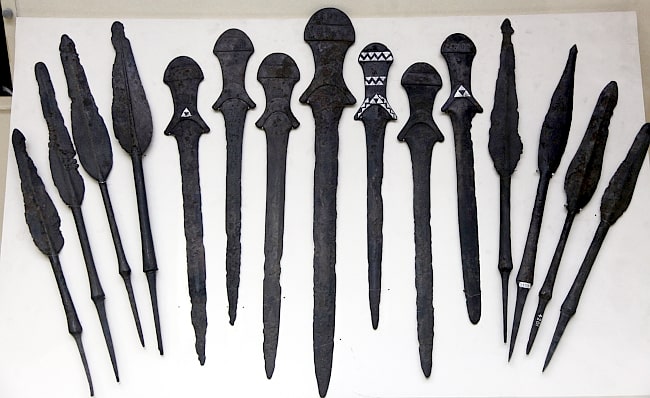
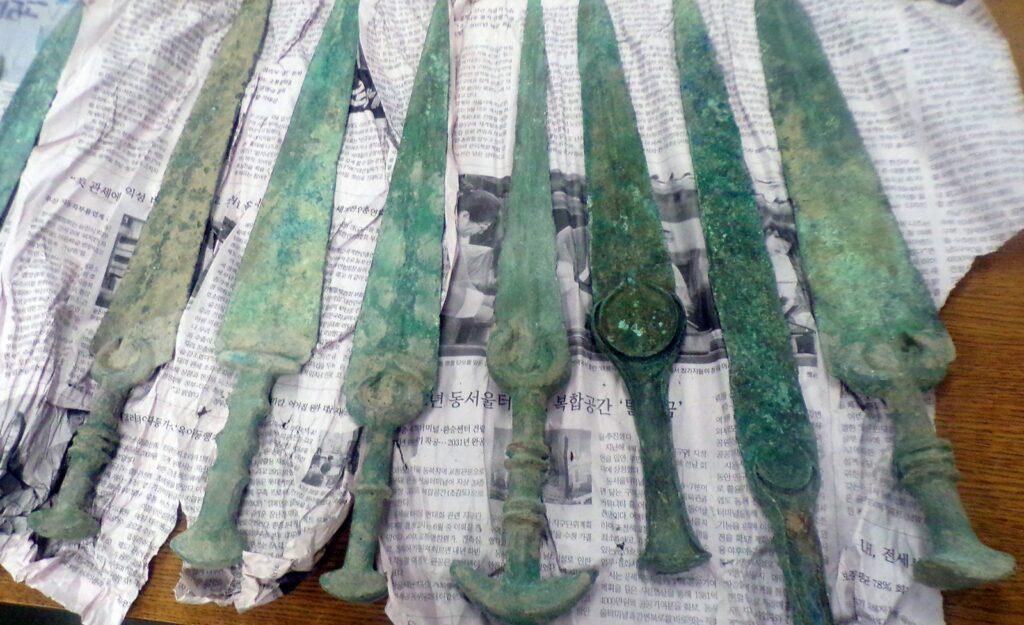
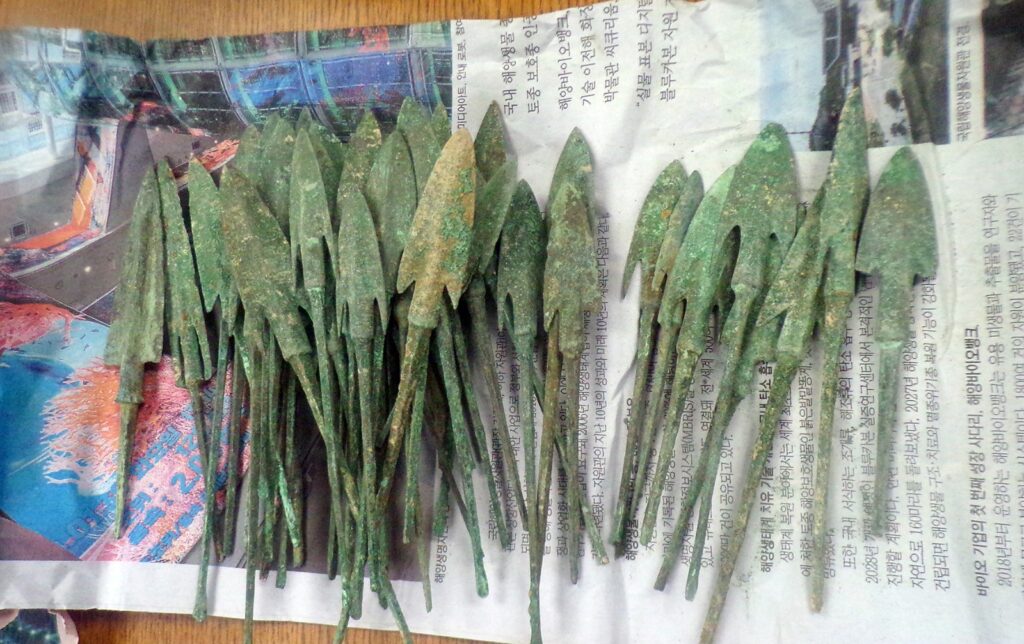
During a routine inspection, officers conducted an X-ray scan and noticed objects resembling swords. Upon opening the shipment, they discovered 36 copper-alloy short swords and 50 copper-alloy arrowheads. Recognizing the possibility that the items were cultural artifacts, officers detained the shipment for further investigation.
CBP contacted the agency’s National Targeting Center Antiquities Unit, which sought assistance from an archaeologist affiliated with a Philadelphia university who specializes in Middle Eastern archaeology. On February 13, the expert authenticated the weapons as genuine antiquities dating to the later second millennium BCE (1600–1000 BCE), placing them firmly within the Bronze Age.
Origins in Iran’s Talish Mountains Region
The artifacts are believed to originate from an area near the lush Talish Mountains in northeastern Iran, along the southwestern shores of the Caspian Sea. The Talish region has long been recognized as a culturally rich and strategically significant corridor between the Iranian plateau and the Caucasus.
📣 Our WhatsApp channel is now LIVE! Stay up-to-date with the latest news and updates, just click here to follow us on WhatsApp and never miss a thing!!
During the late Bronze Age, communities in this region were part of a dynamic network of trade and cultural exchange that connected Mesopotamia, the Caucasus, and Central Asia. Archaeological research indicates that societies in the Talish Mountains area practiced advanced metallurgy, particularly in copper and bronze production. The presence of finely crafted short swords and arrowheads aligns with known burial traditions in the region, where weapons were often interred with the deceased as symbols of status, warrior identity, or clan affiliation.
Excavations conducted over the past century have revealed burial mounds, fortified settlements, and evidence of complex social hierarchies. Metal objects from this era frequently display distinctive forms and casting techniques unique to the southern Caspian zone. The intercepted swords, characterized by their short blades and copper-alloy composition, are consistent with weapon typologies attributed to communities inhabiting the Talish highlands and surrounding lowlands.
Scholars believe that these Bronze Age populations relied on mixed economies that included agriculture, animal husbandry, and regional trade. Their strategic geographic position allowed them to control mountain passes and facilitate exchange routes linking different civilizations. As a result, material culture from the Talish region often reflects both local innovation and broader intercultural influences.
Suspected Illicit Excavations
Authorities suspect that the seized antiquities were derived from unauthorized excavations of burial sites. Looting of archaeological sites remains a significant global issue, particularly in regions with rich but vulnerable cultural heritage. When artifacts are removed from their original context, invaluable historical information is permanently lost.
“Customs and Border Protection officers strive to rescue cultural artifacts from the grips of illicit international traders who plunder and exploit another nation’s heritage for profit,” said Elliot N. Ortiz, CBP’s Acting Area Port Director in Philadelphia. He emphasized that deceptive smuggling practices not only violate U.S. import laws but also undermine global efforts to preserve cultural history.
Cultural Property Laws and U.S. Import Restrictions
Many countries, including Iran, maintain strict laws protecting cultural property. These typically include national ownership statutes and export controls governing antiquities. Importing archaeological artifacts into the United States requires proper documentation, including a valid export permit issued by the country of origin. Even items purchased legally abroad may not qualify for lawful importation without such authorization.
CBP officials warn that fraudulent export certificates are sometimes used by traffickers seeking to legitimize illicit artifacts. In addition, the United States may impose specific import restrictions in response to requests from foreign governments seeking to safeguard their cultural heritage.
Safeguarding History at America’s Ports of Entry
The seized swords and arrowheads will remain in CBP custody until a final legal disposition is determined. The case highlights the broader mission of CBP’s Office of Field Operations, whose officers screen international travelers and cargo at U.S. ports of entry.
Beyond intercepting narcotics, counterfeit goods, weapons, and prohibited agricultural products, CBP also plays a critical role in preventing the illegal trade of cultural artifacts. Protecting antiquities ensures that archaeological heritage remains accessible for legitimate research and public education rather than disappearing into private collections.
The Philadelphia seizure underscores how modern border enforcement can intersect directly with ancient history. Thanks to vigilant inspection and expert collaboration, weapons forged nearly four millennia ago in the shadow of the Talish Mountains have been preserved—offering scholars and the public another opportunity to connect with the distant past.
U.S. Customs and Border Protection (CBP)
Cover Image Credit: U.S. Customs and Border Protection (CBP)