19 January 2026 The Future is the Product of the Past

The ruins of a temple dedicated to Goddess Kubaba found for the first time in ancient city of Kastabala, southern Türkiye

Ruins of a temple belonging to the goddess Kubaba were found in the Ancient City of Kastabala.

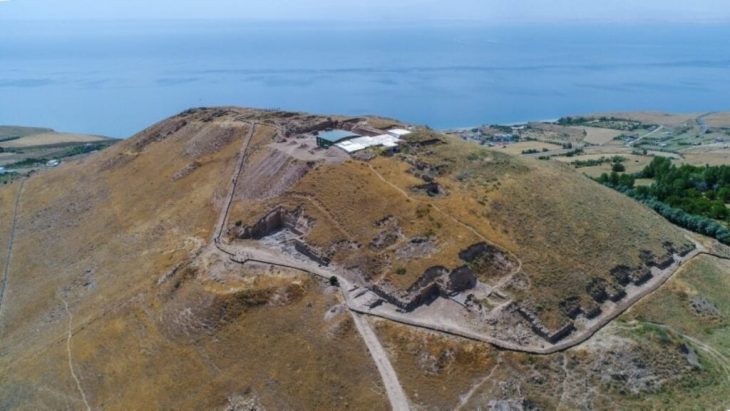
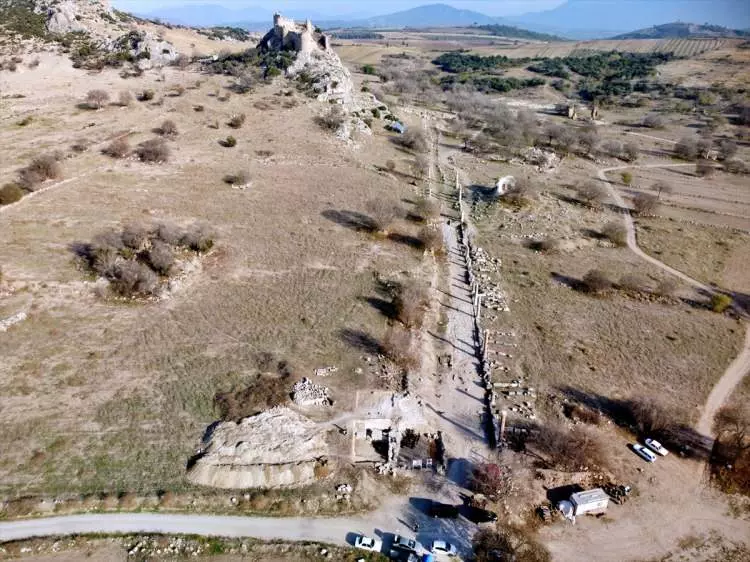
The ancient city of Kastabala is situated approximately 12 kilometers north-northwest of Osmaniye province, along the road from Cevdetiye Town to Karatepe Museum, in the middle of Kesmeburun, Bahçe and Kazmaca villages.

Kastabala, located in the southern region of Türkiye, is an ancient city steeped in history and mythology. Situated in the province of Osmaniye, this archaeological site showcases remnants of a rich past dating back to the Hittite and Assyrian periods. The city was a significant center during the Hellenistic and Roman eras, boasting temples, city walls, and various structures that reflect its cultural and religious significance.

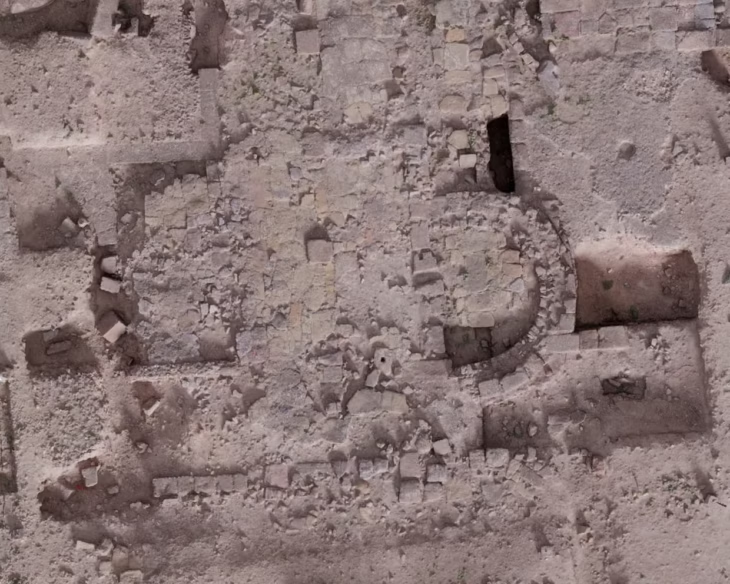
During the excavations started at the end of the historical colonnaded street, ruins of the temple built by the Luwians, who are considered the oldest indigenous people of Anatolia, for their goddess Kubaba were discovered.
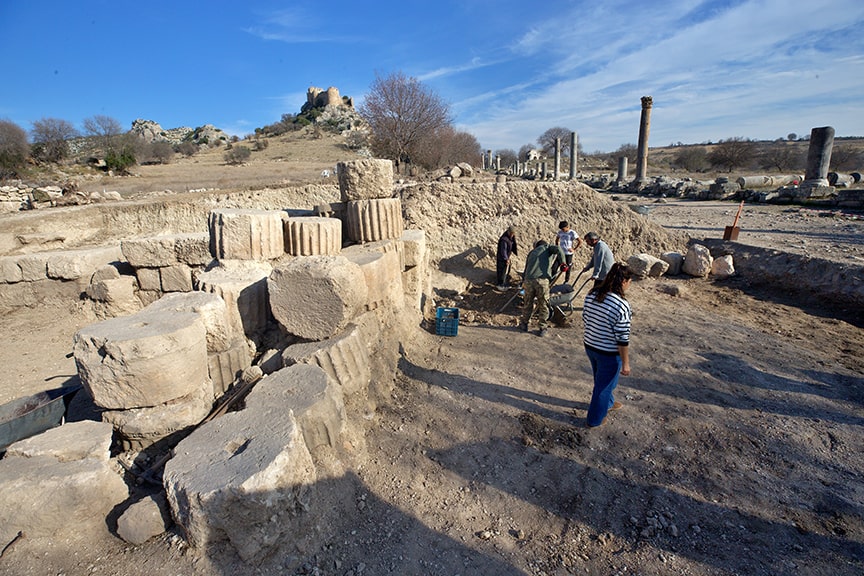
Photo: AA

Head of the excavation, Osmaniye Korkut Ata University (OKU) Archaeology Department Faculty Member Associate Professor Faris Demir told Anadolu Agency (AA) correspondent that the ancient city is the oldest sacred city in the plain Cilicia region.


📣 Our WhatsApp channel is now LIVE! Stay up-to-date with the latest news and updates, just click here to follow us on WhatsApp and never miss a thing!!


Explaining that the ancient city was located in the center of the cultural region of the Luwians, Demir said:

“During the colonnaded street excavations, a building ruin, a temple, that we date to the Archaic period, that is, 540 BC, was unearthed. In Aramaic inscriptions located in the hinterland of Kastabala, the lands of Kastabala and Kubaba are mentioned. This building ruin we unearthed must be a temple belonging to the goddess Kubaba.”
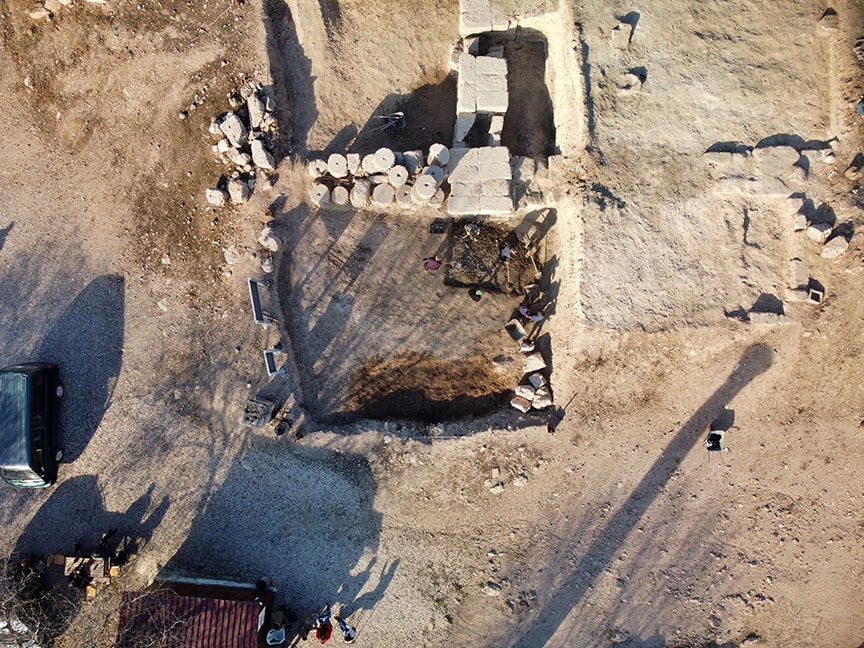
Photo: AA

 “The priests of this Archaic temple walked on hot coals with bare feet, without feeling any pain. These ruins, which provide extraordinary information to Anatolian archeology, made us very excited.”

Demir stated that the excavations in the ancient city of Kastabala will continue to provide extraordinary information to Anatolian archaeology.

The ruins of a temple dedicated to Kubaba were found for the first time

Demir also gave information about Goddess Kubaba and said:

“Goddess Kubaba is a local Anatolian goddess. The fact that we came across a temple of this goddess made us very excited. It is the first time that such a temple ruins belonging to Kubaba have been found in Anatolian archeology.”
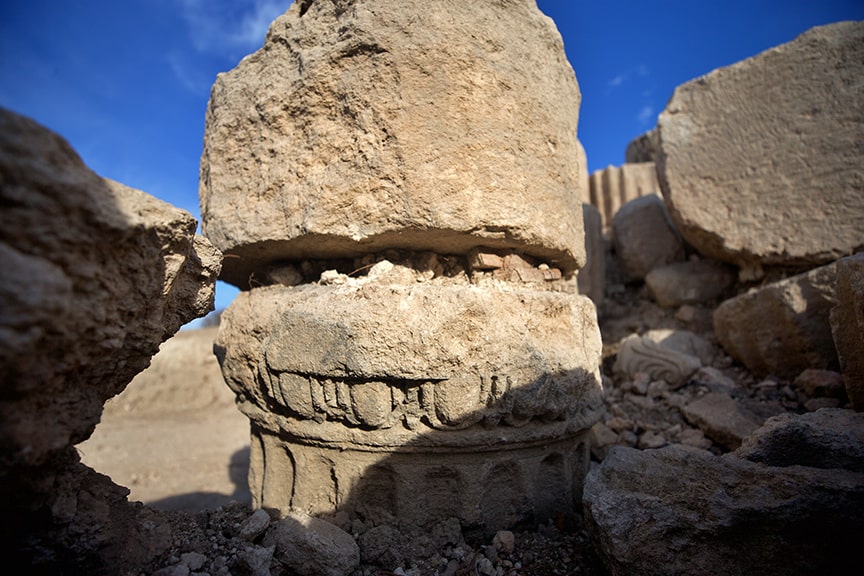
Photo: AA

Kubaba usually was represented as a dignified figure draped in a long robe, either standing or seated and holding a mirror. Her character is poorly known. She is first documented in texts from Kanesh and Alalakh, though her main cult center was Carchemish.

Cover Photo: AA

Related Articles

In Jerusalem, a 2700-year-old private toilet from the First Temple era was unearthed

5 October 2021

5 October 2021

The Israel Antiquities Authority discovered a private toilet from the First Temple Period on the Armon Hanatziv promenade in Jerusalem,...

Well-Preserved Hittite “Bird Omen Text” Discovered at Kayalıpınar–Samuha, a Key Religious Hub of the Ancient Empire

24 July 2025

24 July 2025

Archaeologists working at the ancient Hittite settlement of Kayalıpınar, located in Türkiye’s Sivas province, have uncovered a remarkably well-preserved clay...

Prehistoric Masterpiece Discovered in Northern Sweden: White Quartzite Arrowhead

12 July 2025

12 July 2025

A bifacially crafted arrowhead made of white quartzite has become the most remarkable discovery at an archaeological excavation in northern...

An 8,500-year-old trepanned skull discovered in Çatalhöyük

23 December 2023

23 December 2023

Traces of trepanation (skull drilling operation) were found on a skull found in the 9,000-year-old Çatalhöyük, near the modern city...

Well-Preserved Wooden Houses Over 2,000 Years Old Discovered in Zhejiang, China

15 March 2025

15 March 2025

In a remarkable archaeological find, researchers in Shaoxing, Zhejiang Province, China, have uncovered exceptionally well-preserved wooden houses dating back over...

The bronze age village Afragola buried by the Plinian eruption of mount Vesuvius 4,000 Years Ago

30 September 2022

30 September 2022

Mount Vesuvius’ Plinian eruption about 4,000 years ago—2,000 years before it buried the Roman city of Pompeii—left remarkable preservation of...

The Lion of Venice was Made in China: : Isotopic Analyses and Stylistic Comparisons Prove it

16 September 2024

16 September 2024

Recent scientific studies have revealed that the famous bronze-winged lion above one of the two columns in Piazzetta San Marco,...

A Roman sarcophagus containing two skeletons was found in Bath, England

29 June 2021

29 June 2021

Stone walls, a Roman sarcophagus, and a cremation burial have been unearthed in a renovation project at the Bathwick Roman...

Bosphorus Was Frozen, People Crossed By Walking

14 February 2021

14 February 2021

The calendars showed the year 1954. Istanbul was experiencing an extremely freezing winter after many years. Heavy snowfall, hard enough...

Europe’s earliest cities had a predominantly vegetarian diet

27 December 2023

27 December 2023

The population of the Copper Age mega-sites in what is now Ukraine and Moldova had a predominantly vegetarian diet. In...

A rare reliquary discovered during excavations in Poland

19 October 2023

19 October 2023

Archaeologists have unearthed a rare enkolpion -a medallion with an icon in the center worn around the neck by Eastern...

2,000-year-old Roman Military Sandal with Nails Found in Germany

25 June 2024

25 June 2024

Archaeologists have discovered the remains of a 2,000-year-old Roman Military Sandal near an auxiliary Roman camp in Germany. Archaeologists from...

Excavations show the Temple of Poseidon at Samikon is more Monumental than Previously Assumed -New Discoveries

3 November 2024

3 November 2024

New excavations by archaeologists from the Austrian Academy of Sciences and the Greek Ministry of Culture in Kleidi-Samikon in the...

An inscription written in both runic and Latin script on a church wall in Denmark turned out to be still a legally significant promissory note

31 May 2023

31 May 2023

An inscription in both runic and Latin script on a church wall in Denmark turned out to be legally valid...

A Roman tomb where magical nails were used to fend off the ‘restless dead’ has been discovered in Türkiye

15 March 2023

15 March 2023

In the ancient city of Sagalassos in southwestern Türkiye, archaeologists have identified an unusual burial practice from the early Roman...