
23 June 2026 The Future is the Product of the Past

The Roman villa in North Yorkshire is described as the first of its kind

A Roman villa has been found at a construction site in North Yorkshire, considered the first of its kind.

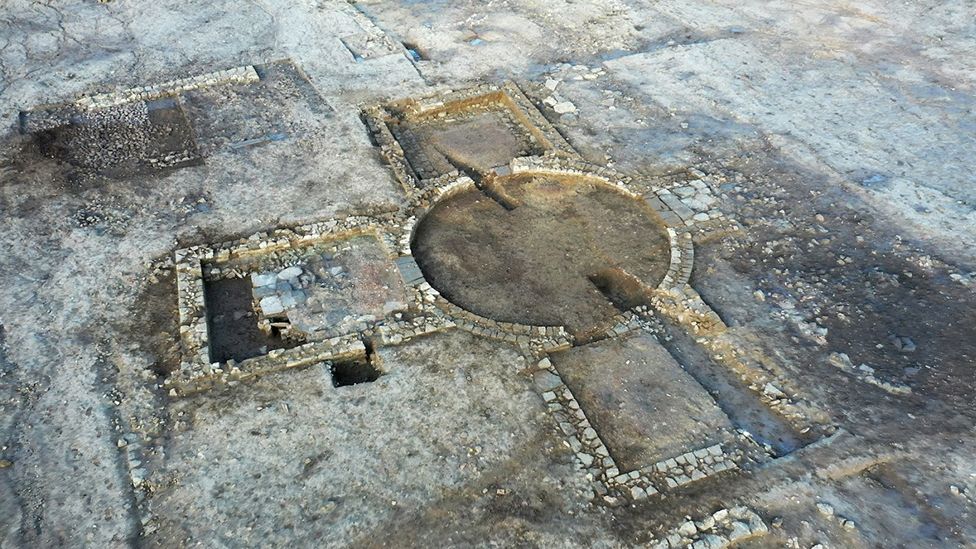
Remains of the large “Remains of the large “stately house” and bath were found in Scarborough, North Yorkshire. The building complex consists of a circular room and a bathhouse.

According to the news of the BBC, Historic England said the type of layout has “never been seen in Britain” and maybe the first example “within the whole former Roman Empire”.

Inspector of ancient monuments Keith Emerick said it was “more than we ever dreamed of discovering”.

The remains were discovered on the site of a new housing development being built in the Eastfield area of Scarborough.


📣 Our WhatsApp channel is now LIVE! Stay up-to-date with the latest news and updates, just click here to follow us on WhatsApp and never miss a thing!!


The excavations revealed a large complex of buildings, including a circular central room with a number of rooms leading off it and a bathhouse.

Mr. Emerick said it was not clear what the building was used for but described it as a Roman version of a stately home, possibly owned by somebody of wealth and status.
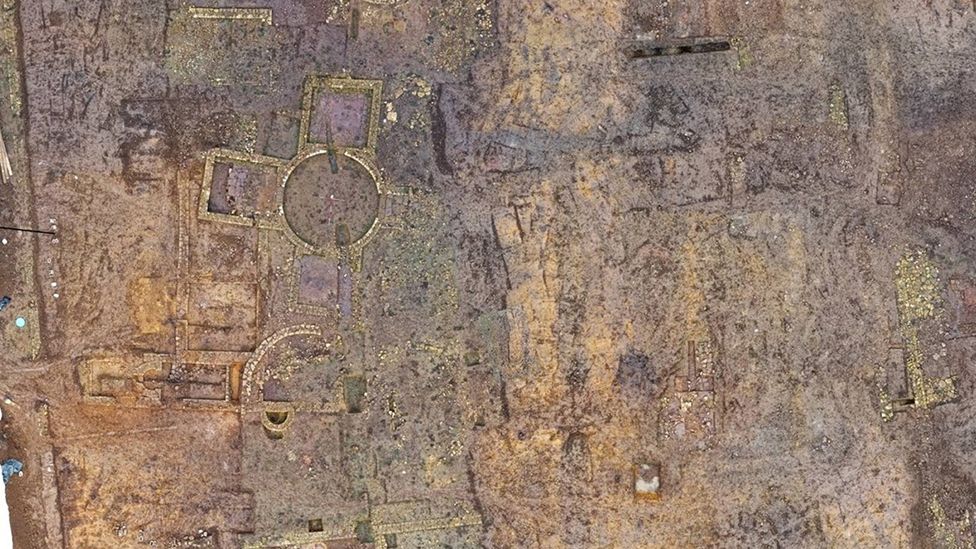
The site will be reburied under a public space in the new housing development

He added: “We’ve spoken to a number of leading Roman academics about it and we’re all trying to find a comparable site and we are struggling.

“So in that sense, it is really significant. It’s really exciting as well”.

He said the villa may have later been adapted for religious purposes: “One of the descriptions we had was that it is something like a religious building that is almost like a gentleman’s club, there’s a bathhouse as well. So it’s a really interesting hybrid building at the moment.”

In order to protect the discovery housing developer, Keepmoat has altered its plans so the remains will be conserved beneath a public open space rather than built on as originally intended.

Mr. Emerick said the site will be designated as a national scheduled monument and he hoped in the future it may be made accessible to the public.

Related Articles

19 funerary tombs from Roman times were discovered in Tartus, Syria

27 May 2022

27 May 2022

During search and excavation operations in the archaeological area of Amrit in Tartus, Syria, a joint excavation team from the...

Cristești Excavation Reveals Rare Roman Cemetery with Mass Child Grave and Military Connections

2 April 2026

2 April 2026

A significant archaeological discovery in Cristești, Mureș County, in central Romania, is offering fresh insight into life—and death—in the Roman...

An amateur archeologist has discovered a Roman war site

1 November 2021

1 November 2021

Thanks to the insistence of an amateur archaeologist, a Roman battlefield in Switzerland has been identified. Shortly before the birth...

Scientists unlock the ‘Cosmos’ on the Antikythera Mechanism

13 March 2021

13 March 2021

Scientists may have finally made a complete digital model of the 2000-year-old Cosmos panel of a mechanical device called the...

The 1800-year iron mask unearthed in Turkey is proof of the first military base of the Roman period in the Western Black Sea Region

23 November 2021

23 November 2021

An iron face mask used by a skilled member of the Roman cavalry 1,800 years ago has been discovered in...

Metal signature of Roman 19th Legion identified at Teutoburg battle site that shook Rome in AD9

5 December 2022

5 December 2022

Researchers in Germany have identified the metallurgic signature of the Roman 19th Legion in artifacts recovered from the Battle of...

Columns in Lagina Hecate Sanctuary Rise Again

19 February 2021

19 February 2021

Lagina Hecate Sanctuary is located in Yatağan district of Muğla. It is an important sacred area belonging to the Carians...

A marble slab with an inscription from the 2nd century was discovered during excavations in Bulgaria

18 October 2023

18 October 2023

Archaeologists discovered a 1,900-year-old marble slab bearing an ancient Greek inscription in the Roman Baths of Hisarya, a small resort...

Archaeologists Unearth Roman Archive of Ancient City of Doliche

20 November 2023

20 November 2023

Archaeologists from the Asia Minor Research Center at the University of Münster have uncovered the municipal archive in the ancient...

Offerings to goddess Demeter uncovered in archaic temple on Crete island, Greek

17 November 2022

17 November 2022

Nestled between two mountain peaks overlooking the harbor, excavations in the ancient city of Phalasarna revealed hundreds of offerings to...

Mystery of the 1,700-year-old Mosaic Solved: The Medallion in the Mosaic uncovered to be the Symbol of a Roman Military Unit

10 August 2024

10 August 2024

The mystery of the 1,700-year-old mosaic, which was found during excavations in Amasya province in northern Turkey 11 years ago...

Unprecedented Roman Painting Technique Discovered in Cartagena: Scientists Reveal the Secret of Ancient “Red Gold”

26 February 2026

26 February 2026

A groundbreaking archaeometric study has uncovered an unprecedented Roman painting technique in southeastern Spain, shedding new light on how elite...

Archaeologists discovered a 2,000-year-old rock-carved face at Spain’s Tossal de La Cala castle

20 May 2023

20 May 2023

Archaeologists have discovered a rock-carved face at Toscal De La Cala, a Roman fort in Benidorm, on the east coast...

1700-Year-Old ‘Cursed’ Sarcophagus on Display in Amasya Museum

30 March 2021

30 March 2021

Expressions made of Greek letters were encountered in the Roman sarcophagus found in the rescue excavation carried out by the...

Unique 1,850-Year-Old Roman Thermal Structure Unearthed in Antalya’s Ancient City of Myra

9 January 2026

9 January 2026

Archaeologists in southern Türkiye have uncovered an extraordinary 1,850-year-old Roman thermal structure in the ancient city of Myra, a discovery...