
8 November 2025 The Future is the Product of the Past

Six New Aramaic Inscriptions Unearthed at Ancient City of Zernaki Tepe in Eastern Türkiye

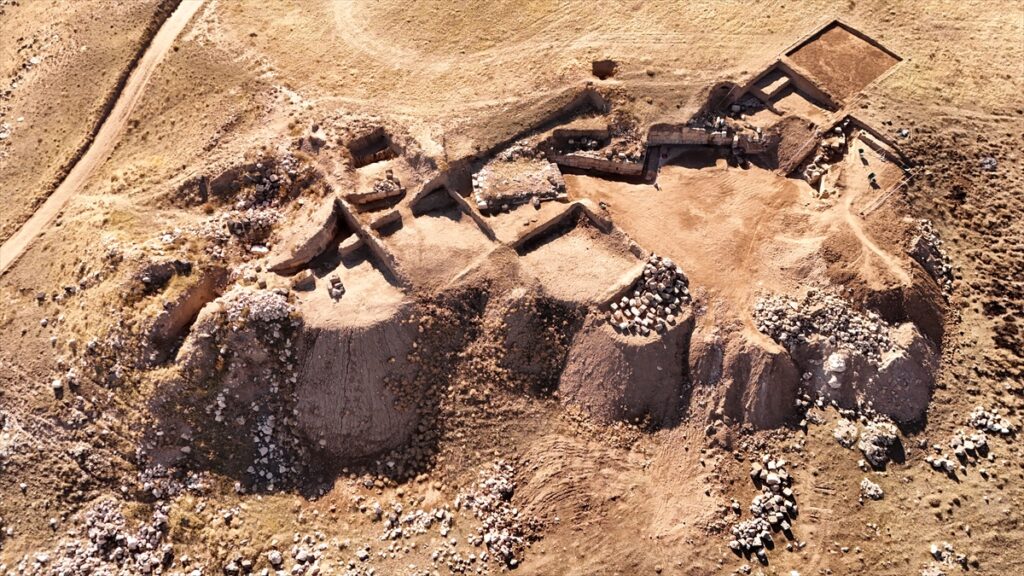
Archaeologists have discovered six new Aramaic inscriptions at Zernaki Tepe, a 3,000-year-old ancient city in eastern Türkiye’s Van Province. The findings — including several deliberately erased inscriptions — shed new light on the Parthian-era presence in Eastern Anatolia and reveal traces of political conflict between ancient powers that once dominated the region.

Located in Erciş district’s Yukarı Işıklı neighborhood, Zernaki Tepe spans an impressive 270 hectares, making it one of the largest known ancient urban centers in Eastern Anatolia.

Excavations are being carried out under the supervision of the Van Museum Directorate, with academic consultancy from Professor Rafet Çavuşoğlu, dean of the Faculty of Letters and head of the Archaeology Department at Van Yüzüncü Yıl University. The project is supported by the Van Governor’s Office and the Erciş District Governorate.

Parthian Influence and Erased Inscriptions

The newly discovered inscriptions, four of which were carved into the city’s defensive walls, are written in Aramaic — the administrative and cultural language of the Achaemenid and Parthian Empires.

Their discovery points to a Parthian-era settlement that may have served as a key frontier post between the Iranian and Anatolian worlds.


📣 Our WhatsApp channel is now LIVE! Stay up-to-date with the latest news and updates, just click here to follow us on WhatsApp and never miss a thing!!


Professor Çavuşoğlu explained that three inscriptions had been deliberately erased, suggesting cultural or political upheaval:

“Some of the inscriptions were intentionally scraped off. This likely indicates inter-civilizational conflict or an effort by a later ruling power to erase the traces of the previous one.”

Experts believe that these markings could date to a transitional phase following Parthian rule, when emerging local powers and Roman provincial authorities sought to replace earlier symbols and administrative languages — a process often observed in frontier regions of ancient Anatolia.
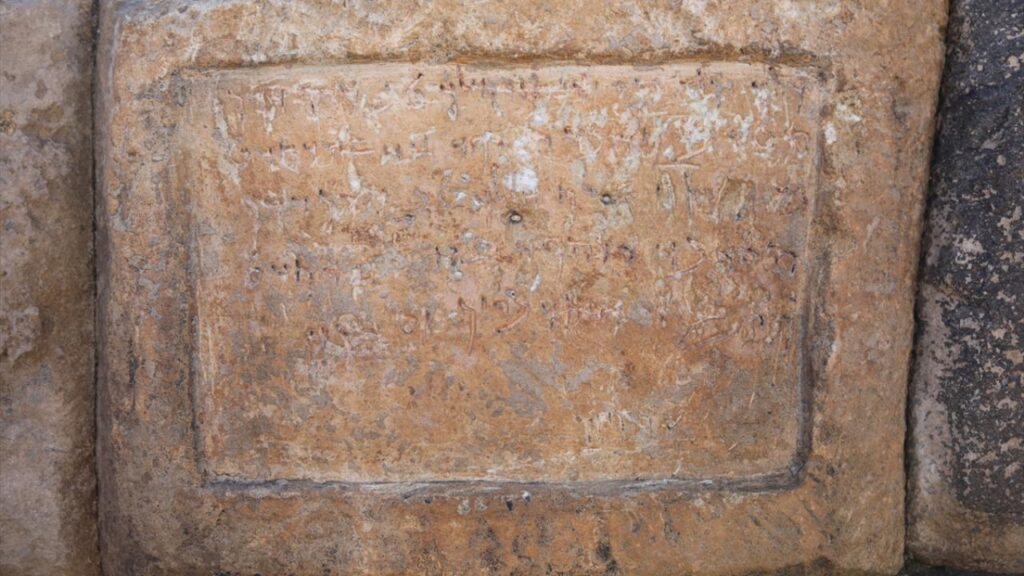

Archaeologists have discovered six new Aramaic inscriptions at Zernaki Tepe, a 3,000-year-old ancient city in eastern Türkiye’s Van Province.
Archaeologists have discovered six new Aramaic inscriptions at Zernaki Tepe, a 3,000-year-old ancient city in eastern Türkiye’s Van Province. Credit: AA

A City Between Empires

Archaeological and historical evidence suggest that Zernaki Tepe thrived after the collapse of the Urartian Kingdom (9th–6th century BCE), when the Medes and later the Achaemenid Persians absorbed the region.

By the Hellenistic age, under the Seleucid Empire, the city adopted a grid-planned layout, resembling classical Hippodamian urban design.

When the Parthians extended their control westward in the 2nd century BCE, they inherited these urban foundations, transforming Zernaki into a fortified frontier settlement that mirrored both Iranian and Anatolian traditions.

Engineering and Infrastructure

Excavations have also uncovered oval-shaped bastions, drainage channels, and fortification walls nearly 4.25 meters thick and three meters high, built from a combination of limestone and basalt.

The city’s drainage system, designed to discharge accumulated water from within the walls, demonstrates advanced urban planning and long-term occupation.

“This system shows a deliberate understanding of hydraulic engineering,” Çavuşoğlu said. “It’s clear that this was not a short-lived military base but a planned and sustainable urban settlement.”
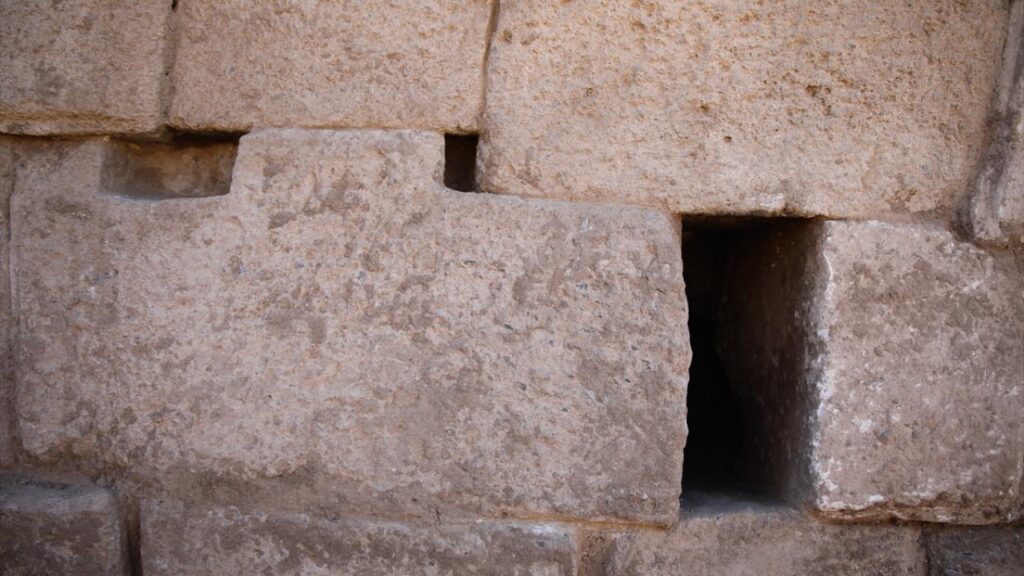
The findings — including several deliberately erased inscriptions. Credit: AA

Erased Memory in Stone

Aramaic, once the lingua franca of the Near East, remained in use throughout the Parthian era as a language of administration and royal inscription.

The deliberate erasure of certain texts at Zernaki Tepe may reflect a later Roman-era reoccupation, when new rulers sought to impose their own cultural and religious identity.

Professor Çavuşoğlu noted that such actions were “a symbolic form of rewriting history — an act used by later powers to erase or neutralize the presence of their predecessors.”

Zernaki Tepe’s Rediscovery

District Governor Murat Karaloğlu highlighted the importance of the site:

“With these six new inscriptions, the total number of Aramaic texts found here has reached fourteen. We believe this area marks the monumental entrance to the ancient city, which could date back around 3,000 years.”

Each newly uncovered stone fragment offers another piece of the long-forgotten political puzzle of Eastern Anatolia.

As researchers continue to unearth Zernaki Tepe’s buried past, one thing becomes clear: every erased word in stone carries the echo of an empire that refused to be forgotten.

Cover Image Credit: AA

Related Articles

Archaeologists discover rare Caanite inscription on ancient ivory comb

12 November 2022

12 November 2022

Israeli archaeologists discovered a rare inscription on an ivory comb that sheds new light on the Canaanite language’s use some...

Archaeologists Reconstruct the Face of a 7th-Century Anglo-Saxon Woman Buried with “Trumpington Cross”

21 June 2023

21 June 2023

In a remarkable archaeological discovery near Cambridge, England, the face of a 7th-century Anglo-Saxon woman buried with a rare gold...

Researchers Define the Borders of El Argar, the First State-Society in the Iberian Peninsula

18 March 2025

18 March 2025

Recent research conducted by scholars from the Autonomous University of Barcelona (UAB) and the Max Planck Institute for Social Anthropology...

“Mosaic of the Wine Harvest” mosaic to be exhibited in November in Turkey’s Hatay

26 October 2021

26 October 2021

The mosaic depicting the grape harvest, which is considered to date from the Late Roman period, equivalent to the 5th...

2,700-year-old bronze figurine found in Germany’s Tollence River: goddess or weight?

9 April 2022

9 April 2022

A Bronze Age female figurine discovered in the Tollense River in northern Germany may have been a goddess, part of...

“Urartian Royal garbage dump” was found during excavations at Ayanis Castle

3 September 2022

3 September 2022

During the excavations carried out in the Ayanis Castle, which was built by the Urartian King Rusa II on the...

A 2,500-year-old Slate Tablet Containing Paleo-Hispanic Alphabet Found

15 June 2024

15 June 2024

Experts analyzing the symbols on a 2,500-year-old tablet recently discovered in Spain have uncovered a mysterious ancient alphabet. According to...

New study says earliest recorded kiss occurred 4500 years ago in Mesopotamia

18 May 2023

18 May 2023

The University of Copenhagen according to researchers, humanity’s earliest recorded kiss occurred around 4,500 years ago in the ancient Middle...

Rare 2,800-year-old Assyrian Scarab Seal-Amulet Found in Tabor Nature Reserve

12 February 2024

12 February 2024

A hiker in northern Israel found a rare scarab seal-amulet from the First Temple period on the ground in the...

Grain Barns dating back 6,000 years unearthed in China

15 December 2022

15 December 2022

Chinese archaeologists have revealed a cluster of 16 ancient granaries that traced back to the mid-late period of the Yangshao...

Archaeologists have discovered sandstone blocks belonging to a pharaoh’s temple covered with hieroglyphs in Sudan

2 March 2023

2 March 2023

Polish archaeologists have discovered sandstone blocks belonging to a pharaoh’s temple covered with hieroglyphs during excavations at Old Dongola in...

Rare Celtic Helmet Unearthed in Poland, the Oldest Ancient Helmet Ever Uncovered in the Country

9 September 2024

9 September 2024

Archaeologists have discovered a rare Bronze helmet from the 4th century BC, along with 300 Celtic treasures, including axes, spearheads,...

Battle of the Egadi Islands: Rome’s deadly weapons discovered off Sicily

3 September 2021

3 September 2021

Underwater archaeologists from the Soprintendenza del Mare Regione Siciliana, RPM Nautical Foundation, and the Society for the Documentation of Submerged...

The Oldest “Book” of Europe: Derveni Papyrus

4 September 2022

4 September 2022

The Derveni papyrus is considered Europe’s oldest legible manuscript still in existence today. It is an ancient Greek papyrus roll...

Scientists find the oldest evidence of humans in Israel -a 1.5 million-year-old Human vertebra

3 February 2022

3 February 2022

An international group of Israeli and American researchers, an ancient human vertebra has been uncovered in Israel’s Jordan Valley that...