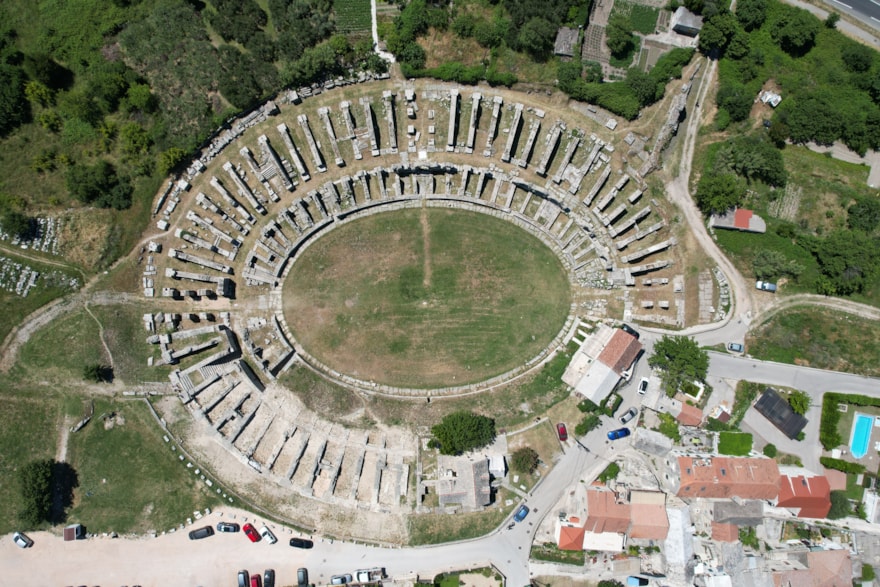
The ancient city of Salona, once the thriving capital of the Roman province of Dalmatia, continues to reveal new secrets as conservation teams carry out extensive restoration work at its monumental amphitheatre near Split. While visitors walk among the ruins, photograph towering stone walls and use digital tools to reconstruct the past, a meticulous and demanding preservation effort is unfolding quietly behind the scenes.
Ancient Tunnel and 2,000-Year-Old Engineering Revealed at Salona Amphitheatre
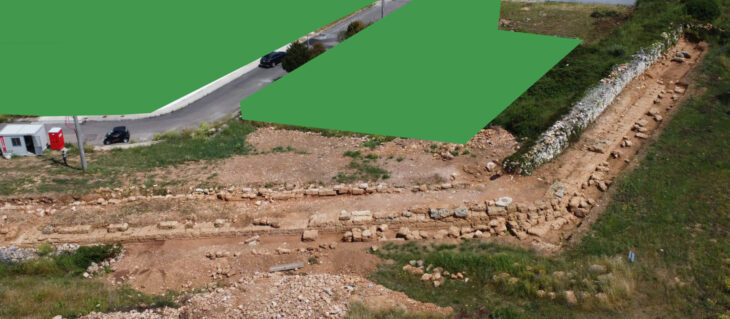
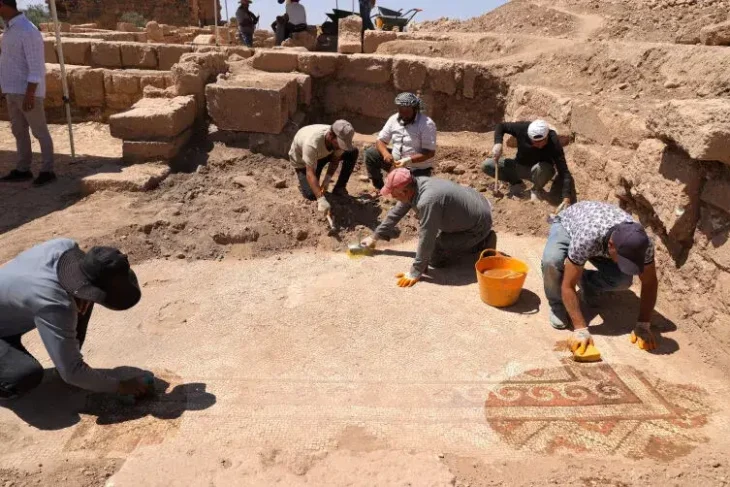
In 2025, experts resumed cleaning and arranging the northern section of the amphitheatre’s seating area. During this process, they uncovered and documented a stretch of ancient pavement that had remained hidden beneath layers of soil for decades. The discovery provides valuable insight into how spectators once circulated through the structure and how the arena complex functioned during public spectacles nearly two millennia ago.
One of the most remarkable findings emerged at the western entrance to the arena, known in Latin as the porta pompae. After removing accumulated soil and scattered stone deposits, archaeologists discovered original iron clamps still binding together massive stone blocks. Nearly 2,000 years old, these clamps continue to perform their original structural role — a powerful testament to Roman engineering precision and durability.
The amphitheatre of Salona, believed to have been built in the 2nd century AD, could accommodate between 15,000 and 18,000 spectators. It stood as a symbol of Roman authority and urban sophistication on the eastern Adriatic coast. Events held here included gladiatorial combats (munera) and animal hunts (venationes), spectacles that were deeply embedded in Roman social and political life.
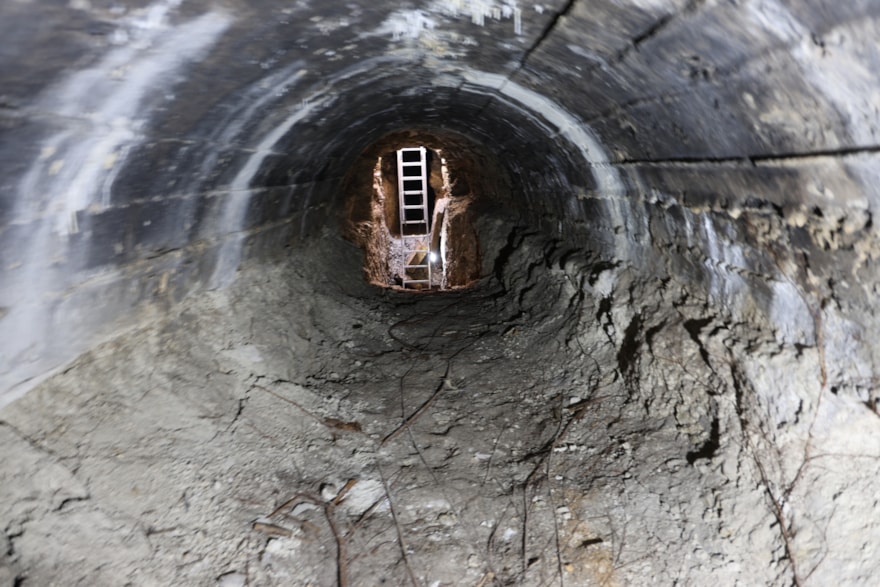
Reopening the “Gate of Death” – Porta Libitinae
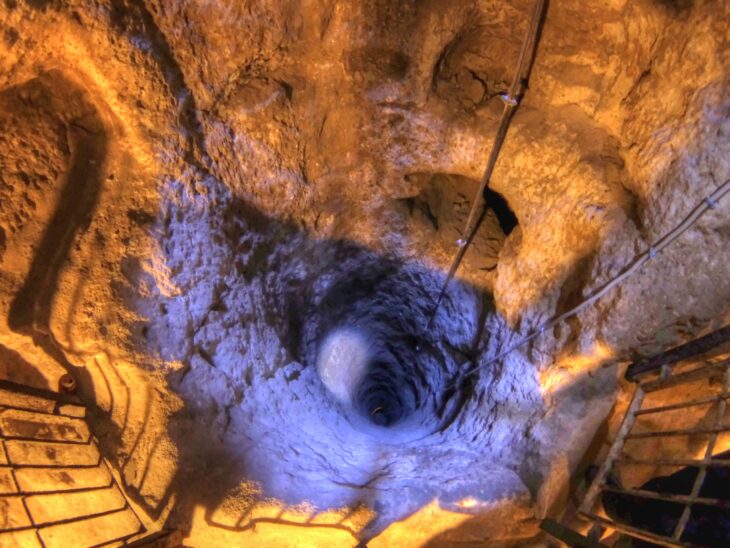
Among the most historically charged areas of the site is the recently reopened underground corridor extending approximately 90 metres southward from the Porta Libitinae — the so-called “Gate of Death.”
📣 Our WhatsApp channel is now LIVE! Stay up-to-date with the latest news and updates, just click here to follow us on WhatsApp and never miss a thing!!
The Libitina was the Roman goddess associated with funerals and burial rites. In Roman culture, her name became closely linked with death administration and mortuary rituals. Fees for funerals were sometimes paid at temples dedicated to her, and her symbolism extended into the architecture of amphitheatres across the empire.
In arenas like Salona’s, the Porta Libitinae served a grim yet practical purpose: it was the exit through which wounded or slain gladiators and animals were removed from public view. This spatial separation reinforced the theatrical choreography of Roman spectacles. While the main ceremonial entrance — the porta pompae — was associated with processions and pageantry, the Gate of Death marked the silent, unseen aftermath of combat.
The reopening of this tunnel not only enhances scholarly understanding of amphitheatre logistics but also strengthens the interpretive potential of the site for visitors. Walking through the corridor offers a tangible connection to the hidden mechanisms of Roman entertainment culture — the machinery, personnel movement and carefully structured symbolism that sustained the spectacle.
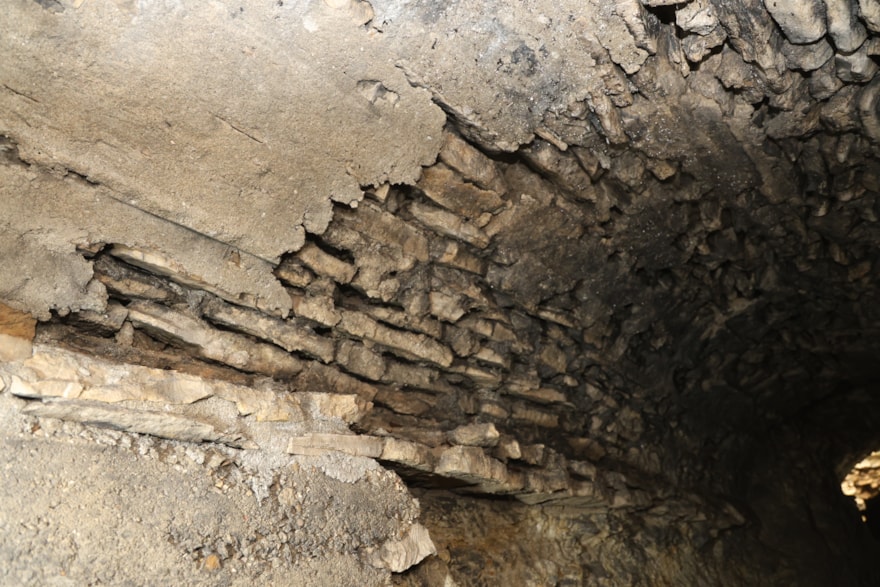
Conservation Challenges and Responsible Heritage Protection
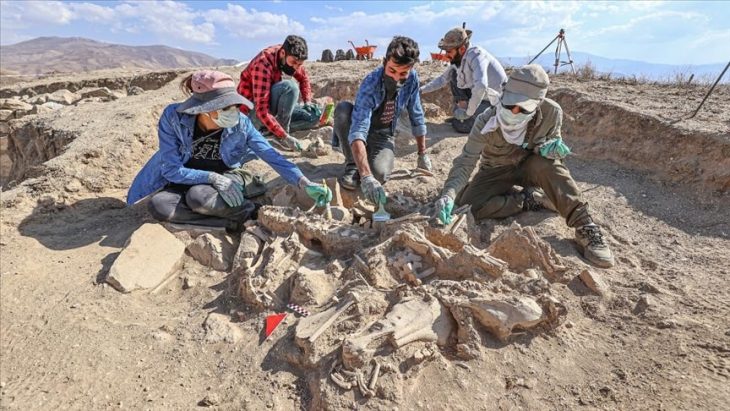
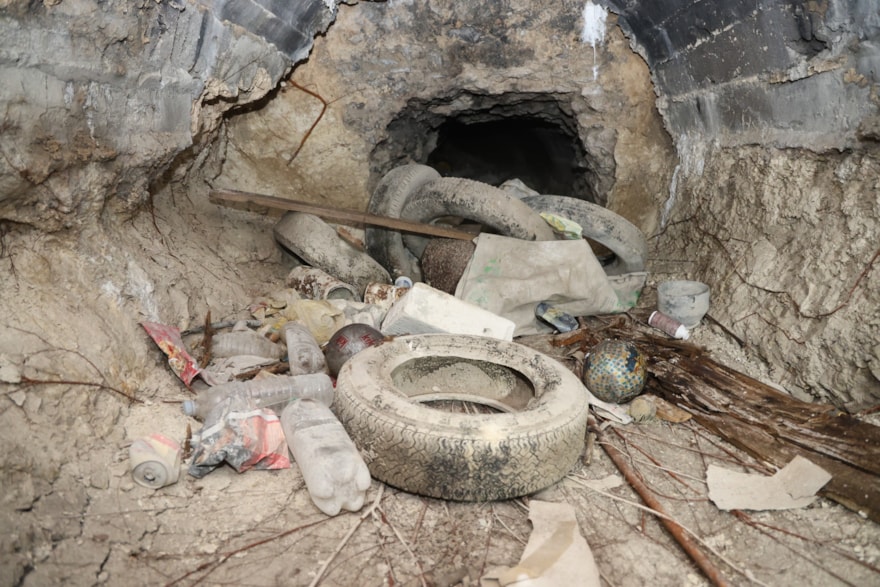
However, archaeologists working inside the tunnel encountered more than ancient history. Over time, irresponsible individuals had left behind significant quantities of construction debris, waste and discarded objects. All of it had to be carefully removed.
Importantly, stone uncovered during the clean-up has been separated and preserved for reuse in future conservation interventions. At Salona, experts emphasise that no fragment is merely “a stone.” Each block forms part of a complex architectural and historical system. Reusing original material ensures structural authenticity and aligns with international conservation standards.
To further protect the amphitheatre, an excavation has been prepared for the installation of a ramp designed to regulate unauthorised access and prevent vandalism. Such infrastructure improvements are essential for the long-term preservation of one of Croatia’s most valuable archaeological monuments.
Future Plans for the Salona Amphitheatre
Additional conservation of the northern seating area is planned, alongside continued archaeological research. Newly discovered artefacts — described by experts as particularly attractive finds — are currently undergoing analysis and will be presented to the public in due course.
The broader goal is threefold:
To safeguard the amphitheatre for future generations
To present it to the public in a contemporary yet respectful manner
To use it as an exceptional setting for carefully managed cultural events
Salona is not a public park, despite being open to visitors. It is one of Croatia’s most significant archaeological sites and part of the country’s most valuable cultural heritage. Preservation depends not only on professional conservation work but also on responsible visitor behaviour — refraining from climbing walls, removing stones or damaging structures.
As research continues, Salona is steadily reclaiming its voice as a key urban centre of the ancient Adriatic world. The reopening of the Gate of Death and the discovery of still-functional Roman iron clamps remind us that beneath every layer of soil lies another chapter waiting to be told.
And Salona, it seems, still has many stories left to reveal.
Archaeological Museum in Split
Cover Image Credit: Archaeological Museum in Split