
In a landmark act of cultural cooperation, authorities in Portugal have formally returned three pre-Hispanic archaeological objects to Mexico—marking the first time the European nation has restituted cultural property to the Latin American country. The pieces, representing distinct civilizations and periods of ancient Mesoamerica, were handed over to the Mexican Embassy in Lisbon on February 12, 2026, and will soon be repatriated via diplomatic pouch.
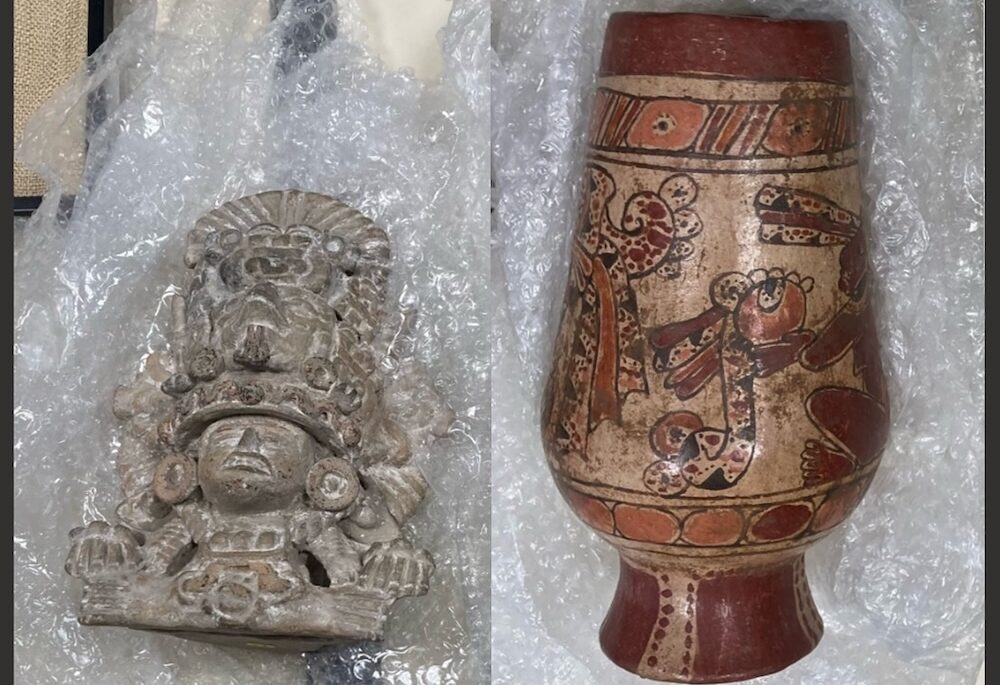
The restitution includes a West Mexican ceramic female figure from present-day Jalisco, a Classic-period Maya polychrome vase, and a Zapotec funerary urn depicting the rain deity Cocijo. Mexican officials hailed the return as a milestone in international collaboration against the illicit trafficking of cultural heritage.
A Fertility Figure from Ancient Jalisco
The most visually striking of the returned works is a 43-centimetre-tall ceramic female figure created between 300 and 600 CE. The sculpture belongs to the Tala-Tonalá style of the Tumbas de Tiro (shaft tomb) tradition, which flourished in what is now the western Mexican state of Jalisco.
Seated on her knees, the figure is depicted bare-chested and wearing a skirt and a distinctive conical headdress. Her shoulders display incised scarification marks, while delicate clay applications and burnished surfaces attest to sophisticated ceramic techniques. Scholars associate such figures with fertility, maternity, and ancestor veneration rituals.
The Tumbas de Tiro cultural tradition is known for its elaborate underground shaft-and-chamber tombs, where ceramic sculptures depicting men, women, couples, ballplayers, musicians, and animals were placed as funerary offerings. These objects offer rare insights into daily life, gender roles, and spiritual beliefs in western Mesoamerica—an area once less studied than central Mexico or the Maya region.
The figure had reportedly been announced for auction in 2024 before Portuguese authorities intervened. It was subsequently investigated by the Lisbon Public Prosecutor’s Office and recovered with the cooperation of Portugal’s Judicial Police.
A Maya Elite Vessel from the Classic Period
The second artifact is a finely painted Maya polychrome vase dating to the Classic period (600–900 CE), a time often described as the height of Maya artistic and political achievement. Likely originating in southeastern Mexico—possibly the region encompassing parts of Chiapas, Tabasco, or the Yucatán Peninsula—the cylindrical vessel is decorated with scenes of elite figures accompanied by hieroglyphic texts.
Polychrome vases of this type were often used for ritual consumption of cacao, a beverage of deep ceremonial and social significance in Maya society. The glyphic bands frequently record dedicatory texts, naming the owner of the vessel and its intended contents. Some such vessels have been crucial in deciphering Maya writing, providing names of rulers, titles, and mythological references.
During the Classic period, powerful Maya city-states such as Calakmul, Palenque, and Yaxchilán flourished, producing some of the most refined ceramics in the ancient Americas. While the precise archaeological provenance of the returned vase remains under study, specialists from Mexico’s National Institute of Anthropology and History (INAH) confirmed its authenticity based on stylistic and iconographic analysis.
The vase was seized by the Public Prosecutor’s Office in the Portuguese province of Guimarães before being transferred for restitution.
A Zapotec Urn Depicting Cocijo
The third object is a Zapotec funerary urn from the Central Valleys of Oaxaca, dated between 600 and 1200 CE. The urn portrays Cocijo, the Zapotec deity of rain, lightning, and thunder—one of the most important gods in the Zapotec pantheon. Cocijo is typically represented with a distinctive mask-like face, often featuring a bifurcated tongue and stylized lightning or rain motifs.
Zapotec urns were frequently placed in tombs and temple contexts, particularly in and around the ancient city of Monte Albán, the political and ceremonial heart of Zapotec civilization. These urns functioned not merely as containers but as sacred effigies linking the deceased to divine forces and ancestral lineage.
The Zapotec civilization, which emerged around 500 BCE, developed one of Mesoamerica’s earliest writing systems and complex urban planning traditions. By the time this urn was produced, Zapotec culture had evolved through centuries of regional interaction and transformation.
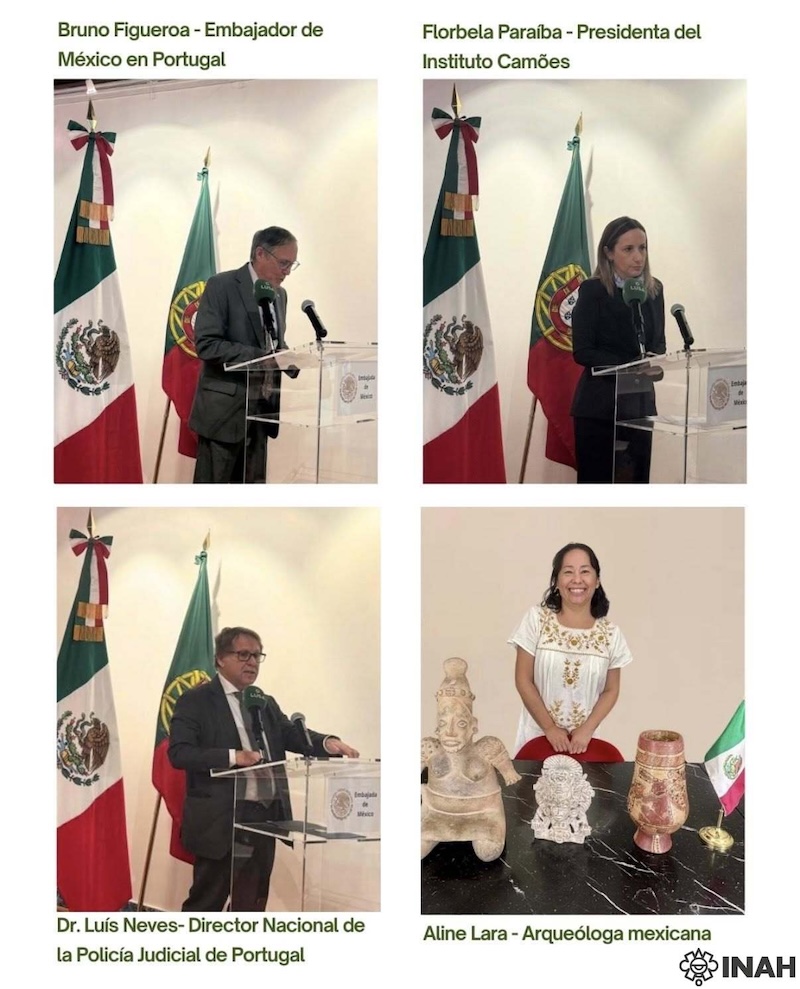
The urn was confiscated by the Public Prosecutor’s Office of Évora-Estremoz in Portugal and later authenticated through in situ examination by Mexican archaeologist Aline Lara Galicia of the University of Seville’s Atlas research group.
Cultural Diplomacy and Heritage Protection
Mexico’s Secretary of Culture emphasized that each restitution restores memory and identity to the nation. The collaborative effort involved Mexico’s Secretariat of Foreign Affairs, the Secretariat of Culture, INAH specialists, Portuguese judicial authorities, and the Camões Institute for Cooperation and Language.
This return reflects a broader international trend toward repatriation of cultural property removed through illicit excavation, trafficking, or unauthorized sale. For Mexico, whose archaeological heritage spans Olmec, Maya, Zapotec, Teotihuacan, and many other civilizations, such recoveries are central to cultural policy and historical justice.
As these three objects prepare to return home, they carry with them not only artistic and historical value, but also renewed affirmation of the global responsibility to protect humanity’s shared past.
Cover Image Credit: INAH
