At the northern edge of the Roman Empire, where winds swept across Britain’s frontier and soldiers guarded the boundary of imperial power, writing was just as essential as warfare. A new scientific study has revealed that Roman soldiers stationed at the fort of Vindolanda produced their own ink locally—using ancient techniques that had already become outdated elsewhere in the Mediterranean world.
The research, published in the Journal of Analytical Methods in Chemistry, offers the first detailed chemical analysis of the inks used in the famous Vindolanda writing tablets. By combining cutting-edge imaging and spectroscopy with archaeological investigation, scientists from the British Museum and collaborating institutions uncovered how soldiers on Rome’s distant frontier relied on traditional methods to create the ink used for letters, reports, and administrative records.
A Window into Everyday Life on Rome’s Frontier
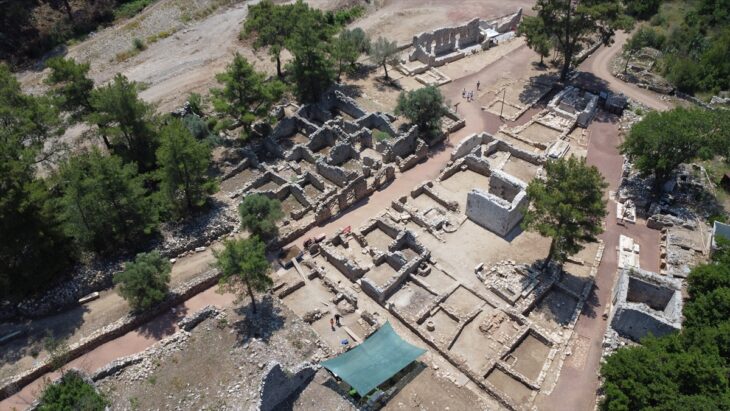
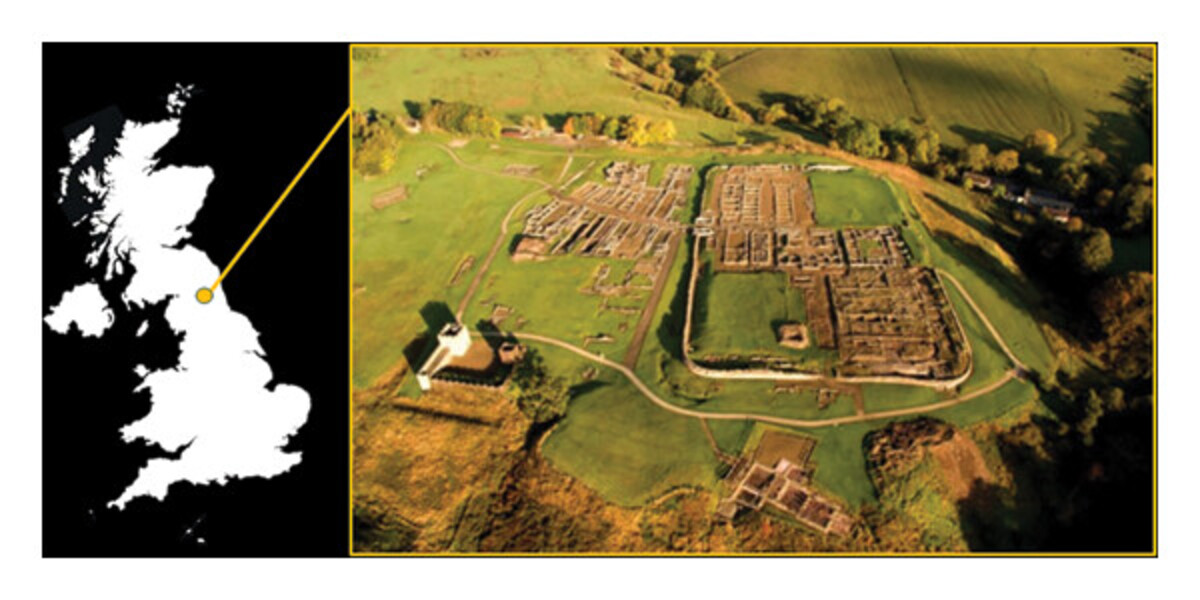
Vindolanda, located just south of Hadrian’s Wall in northern England, is one of the most important archaeological sites in Roman Britain. The fort served as a military and civilian settlement from the late first century AD and has produced thousands of artifacts that illuminate daily life on the imperial frontier.
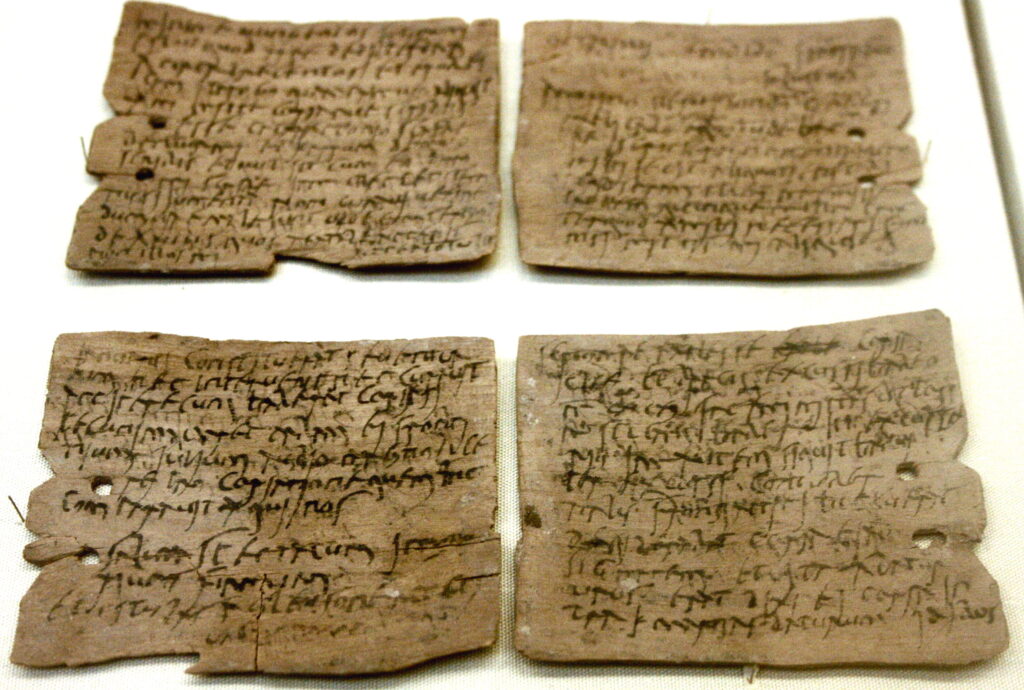
Among its most remarkable discoveries are more than 1,300 thin wooden writing tablets roughly the size of modern postcards. Preserved for nearly two millennia in waterlogged, oxygen-free soil, these fragile documents contain handwritten messages from soldiers and civilians who once lived at the fort.
The texts reveal an intimate portrait of life in a Roman garrison. Some tablets contain official military communications and supply records listing items such as beer, clothing, and equipment. Others are deeply personal, including letters between family members and invitations to social gatherings. Together they form the oldest and largest archive of written material from Roman Britain.
📣 Our WhatsApp channel is now LIVE! Stay up-to-date with the latest news and updates, just click here to follow us on WhatsApp and never miss a thing!!
Yet despite decades of research into the texts themselves, historians knew surprisingly little about the ink used to write them.
Unlocking Ancient Ink Without Touching the Tablets
Studying the composition of the ink presented a major challenge. The tablets are extremely fragile—often less than a millimeter thick—and removing samples or even handling them directly could damage the artifacts.
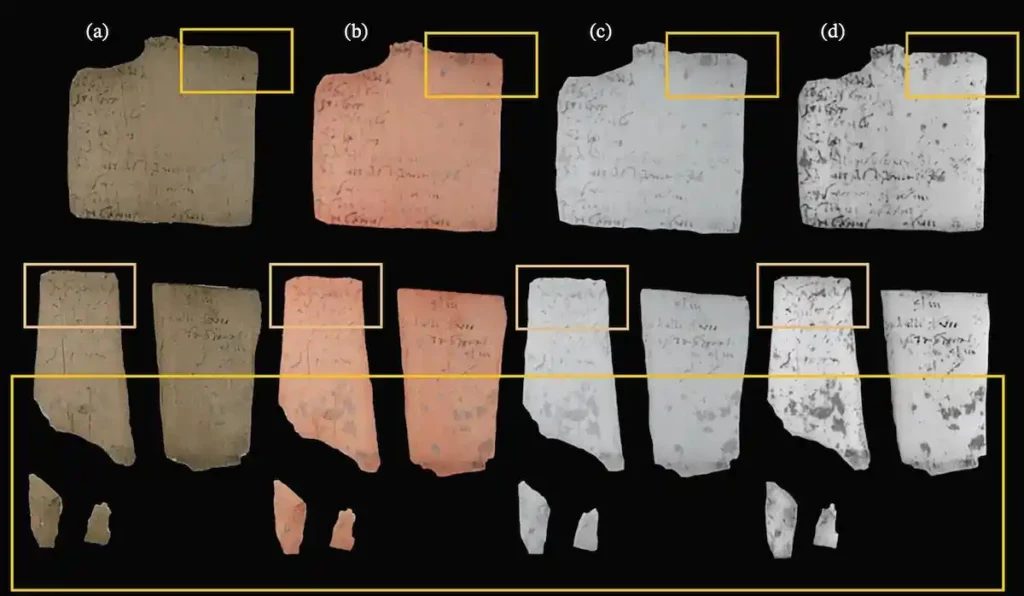
To overcome this obstacle, researchers developed a fully non-invasive analytical protocol. The team first applied multispectral imaging, photographing the tablets under different wavelengths of light beyond the visible spectrum. Infrared imaging revealed that the writing remained opaque, confirming that the texts were written with carbon-based inks rather than metal-based formulas.
Once the ink type was established, scientists used Raman spectroscopy to analyze the molecular structure of the carbon pigments. This technique allows researchers to identify specific carbon sources by detecting subtle variations in how molecules vibrate under laser light. The resulting spectral “fingerprints” were then compared with reference samples of historical pigments.
Additional methods, including X-ray fluorescence and electron microscopy, helped identify trace elements such as calcium, potassium, and iron. These chemical signatures provided clues about the materials used to produce the ink and the environments in which it was manufactured.
Five Distinct Ink Recipes
Although the tablets appear to be written with similar black ink, the analysis revealed a surprising diversity of recipes. The researchers identified at least five different types of carbon-based ink.
Most of the tablets were written using charcoal derived from burned plants or wood, suggesting that these inks could be produced quickly from locally available materials. Another type of ink, known as bistre, likely originated from soot produced by burning resinous wood or other organic substances.
More unusual were two rare inks discovered in individual tablets. One contained the chemical signatures of “vine black,” a pigment made from charred grapevines and wine residues. Another sample showed evidence of bone black, produced from calcined animal bones.
The presence of such varied materials indicates that ink production at Vindolanda was not standardized. Instead, scribes likely used whatever resources were available in the fort or its surrounding workshops.
Ink Production on the Roman Frontier
The study also sheds light on how ink may have been manufactured inside the fort itself. None of the surviving tablets mention the purchase or delivery of ink supplies, despite detailed references to other goods such as food, clothing, and tools.
This absence suggests that ink was produced locally rather than imported from other parts of the empire.
Researchers believe the process may have taken place in workshops already operating inside the military settlement. Roman forts typically employed skilled craftsmen known as immunes—specialists exempt from routine duties who worked as blacksmiths, armorers, or builders.
These artisans had access to high-temperature furnaces used for metalworking or pottery. The same equipment could easily have been used to produce charcoal or soot for ink.
Chemical traces found in the tablets support this theory. Some samples contained quartz, silicates, and other mineral particles likely scraped from furnace walls along with the soot used as pigment.
A Rare Imported Ink
One particularly intriguing discovery involved the tablet containing vine-based ink. Grapevines were not widely cultivated in northern Britain during the Roman period, and wine itself was typically imported from continental Europe.
The tablet associated with this ink appears to have been written by a Roman officer, possibly outside Vindolanda at another nearby fort. This suggests the ink may have been imported or brought from another region of the empire.
Researchers believe vine black was considered a higher-quality pigment with a distinctive bluish tone, possibly reflecting the higher social status of the writer.
Preserving a Fragile Archive
Beyond revealing how the inks were made, the research also provides important tools for preserving the tablets themselves.
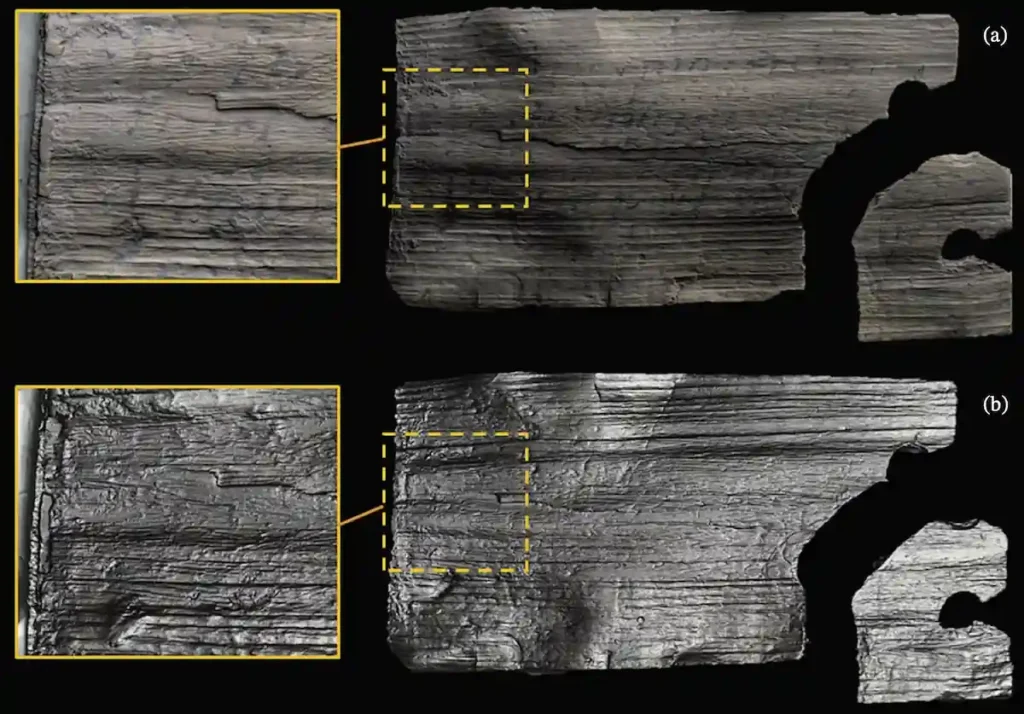
Multispectral imaging and digital microscopy allowed scientists to map the condition of the ink and wooden surfaces in unprecedented detail. They identified areas where mineral deposits have damaged the writing, as well as the presence of vivianite—a bluish mineral formed in oxygen-poor environments that helped preserve the artifacts.
The new analytical protocol can now be applied to hundreds of additional tablets that remain unstudied in museum collections.
Ancient Traditions on the Edge of Empire
Perhaps the most fascinating insight from the study is how technological change spread unevenly across the Roman world.
By the third century AD, scribes in parts of Egypt and the eastern Mediterranean were already experimenting with metal-based inks that would later evolve into iron-gall inks used throughout the Middle Ages.
But at Vindolanda, thousands of kilometers away on Rome’s northern frontier, soldiers continued using traditional carbon inks that had been in use for centuries.
The discovery highlights how local resources, craft traditions, and frontier conditions shaped daily life in the Roman Empire. Even at its most distant outposts, the empire’s soldiers maintained a thriving written culture—one sustained by ingenuity, craftsmanship, and a few simple ingredients burned into black ink.
Vasco G, Dyer J, Hobbs R, Cartwright CR, Buccolieri A. The Making of the Vindolanda Wooden Writing Tablets: A Noninvasive Multianalytical Protocol for the Characterisation of Black Roman Inks. Journal of Analytical Methods in Chemistry. (Open Access) 2026 Feb 8;2026. doi:10.1155/jamc/5142007
Cover Image Credit: The fort and garrison settlement at Vindolanda. The Vindolanda Trust