
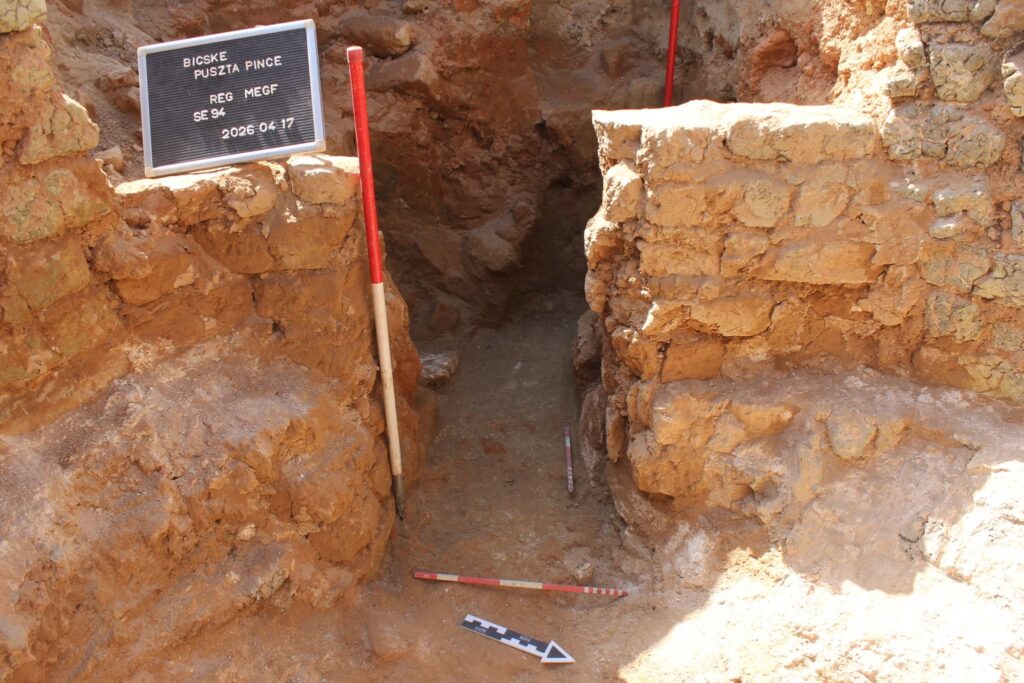
Archaeologists working near Bicske in Fejér County, Hungary, have uncovered an exceptionally well-preserved Roman lime kiln, a discovery that offers a rare look at the industrial side of life in ancient Pannonia.
The excavation was carried out in connection with the expansion of the M1 motorway, under the commission of the National Archaeological Institute of the Hungarian National Museum. According to a statement by the Archaeological Heritage Protection and Scientific Department of the Szent István Király Museum, the fieldwork was led by archaeologist Alexandra Kiss, with museum specialists and volunteers taking part in the investigation.
A landscape used for centuries
The newly reported finds show that the area around Bicske was not occupied in a single period only. Instead, the site preserves traces of repeated use across a long span of history.
Previous investigations in the same area had already revealed part of a Roman-period settlement, a section of an Árpád-era settlement, and three Roman child burials. The latest spring campaign added further early Roman and late Árpád-period settlement features, as well as storage pits and other sunken features from the late medieval and Ottoman periods.
That sequence is important. It suggests that the land near Bicske remained attractive for settlement, production, and storage across very different political and cultural eras.
A Roman kiln preserved in rare condition
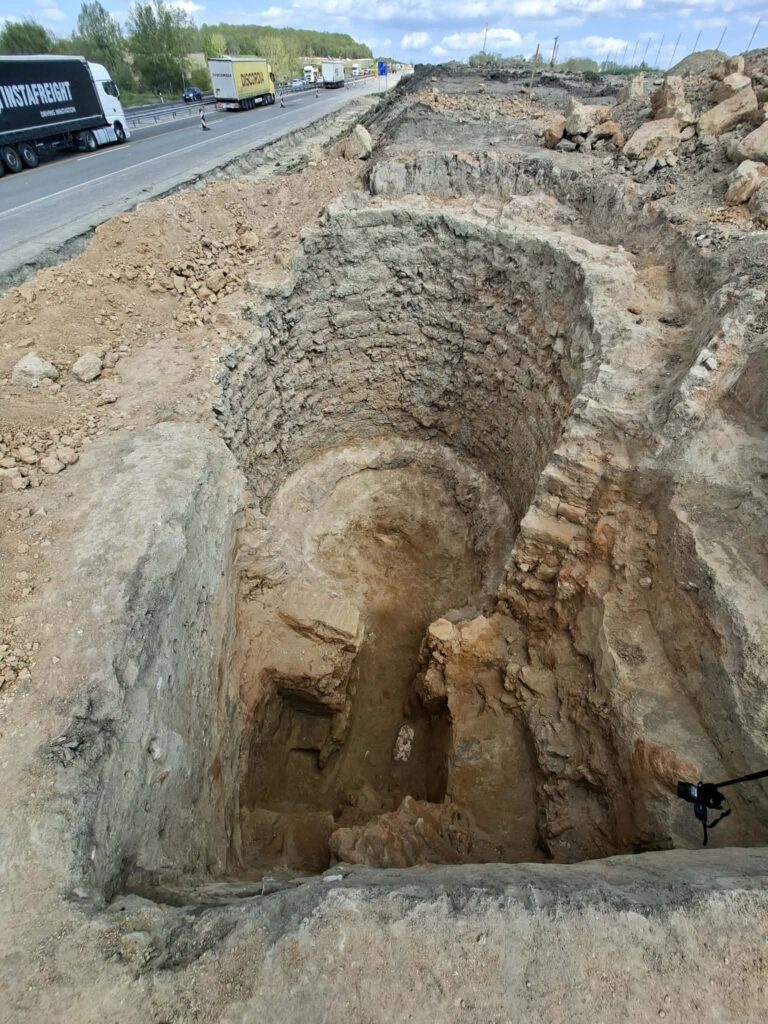
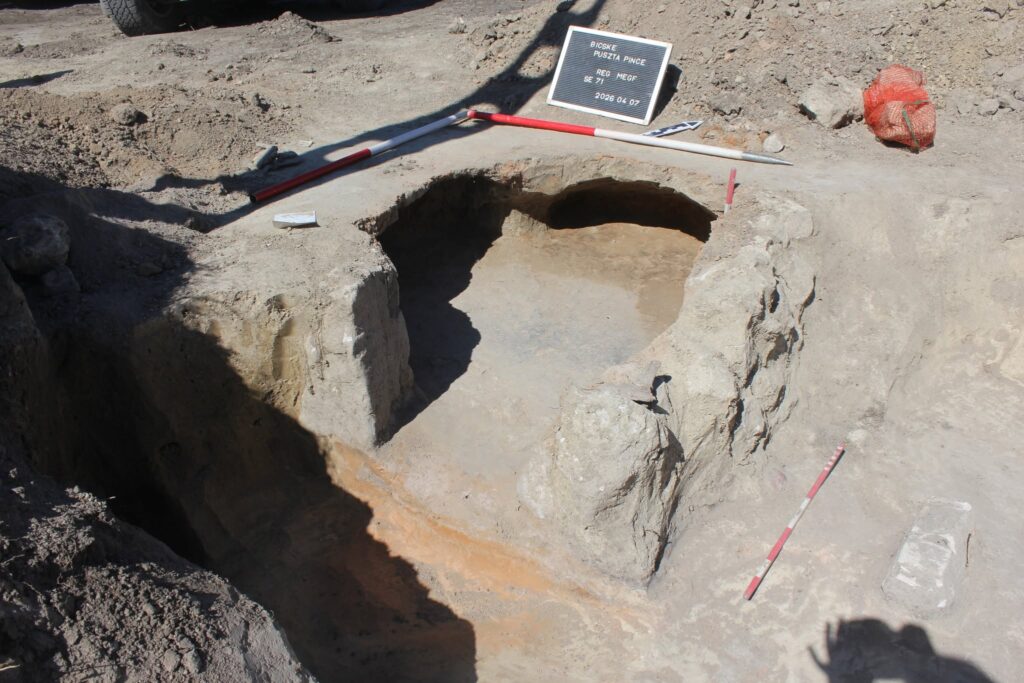
The most significant find is a Roman-period lime kiln built into the natural slope of a hill. The circular structure measured about 230 centimeters in diameter and reached a depth of roughly 3 meters.
Its walls were made of mudbrick and strengthened with clay plaster. Archaeologists also identified a west-facing firing opening and a ledge running around the base of the wall. This ledge would have supported the limestone before firing.
The lower part of the kiln survived in unusually good condition. A thin layer of lime remained on the base and side walls, a direct trace of the kiln’s original function. Fragments of Roman tegula roof tiles and a grey S-profile bowl from the lower fill also helped archaeologists date the structure.
Lime kilns were essential to Roman construction. Burned limestone produced quicklime, a key material for mortar, plaster, and other building works. Finds like this therefore point not only to settlement, but also to the practical infrastructure behind Roman building activity.
A rare parallel to Aquincum’s Roman kilns
The condition of the kiln makes the discovery especially valuable. According to the museum’s statement, a Roman lime kiln preserved in a comparable state was last found in Hungary in the early 20th century during Bálint Kuzsinszky’s excavations at Aquincum.
That comparison gives the Bicske find wider importance. Aquincum, located in present-day Óbuda in Budapest, was one of the major Roman centers of Pannonia. It developed from a military and civilian settlement on the Danube frontier and later became an important urban center of Pannonia Inferior.
Bicske was not Aquincum, but it belonged to the broader Roman world of Transdanubia. Fejér County lay within the provincial interior of Roman Pannonia, where rural settlements, roads, production sites, and burial grounds formed the economic background of the better-known military and urban centers.
The kiln therefore adds a small but clear piece to that larger picture. It shows how local landscapes supported Roman construction and settlement beyond the big cities and forts.
Motorway archaeology brings hidden sites to light
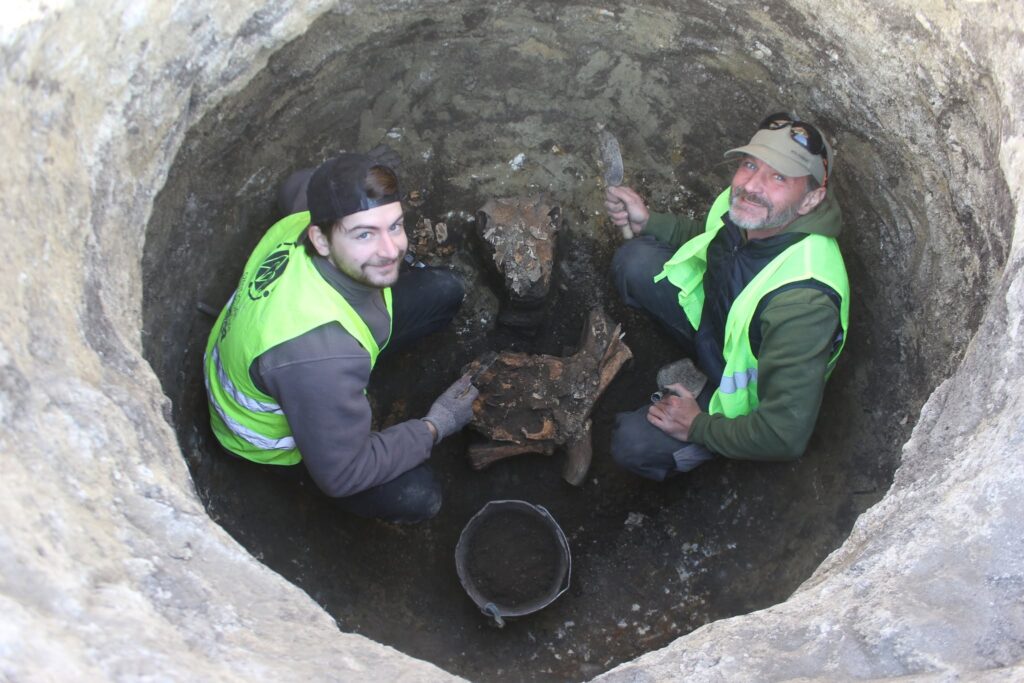
The discovery also highlights the role of rescue archaeology in modern Hungary. Large infrastructure projects, including motorway expansions, often expose archaeological remains that would otherwise stay underground.
Near Bicske, the M1 motorway work has already brought to light Roman, medieval, and Ottoman-period evidence. The latest kiln now gives archaeologists one of the clearest known examples of Roman lime production in Hungary.
For a site found beside a modern transport corridor, the result is striking: beneath today’s road network, archaeologists have uncovered traces of an older landscape shaped by Roman industry, medieval settlement, and centuries of continued human use.
SZIKM Régészeti Örökségvédelmi és Tudományos Osztály
Cover Image Credit: SZIKM Régészeti Örökségvédelmi és Tudományos Osztály Via Facebook
