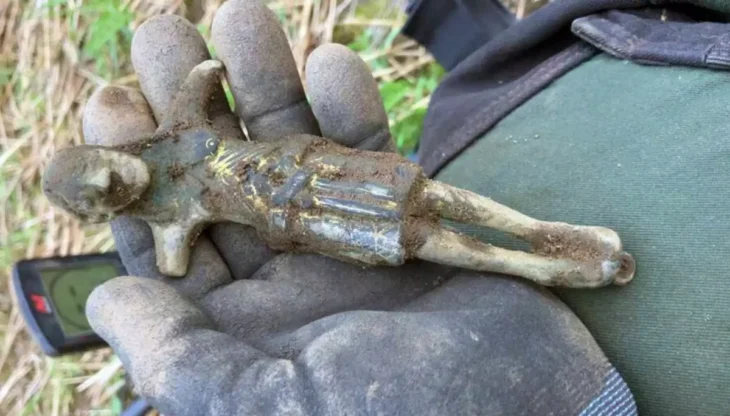
An apparently exceptional archaeological discovery has been made in the mountainous landscape of the Serra de Tramuntana. A small bronze bull head, believed to date back to the post-Talayotic period, was recently found by a hiker and handed over to authorities for study. The artifact may offer valuable new insights into the ancient societies that inhabited the island more than 3,000 years ago.
The discovery was reported by the archaeological research and heritage dissemination association ArqueoTramuntana and delivered by the group Almallutx to the Consell de Mallorca for official examination. The bronze piece was found by excursionist Josep M. Buils, who promptly notified researchers about the find.
A Rare Bronze Artifact from Ancient Mallorca
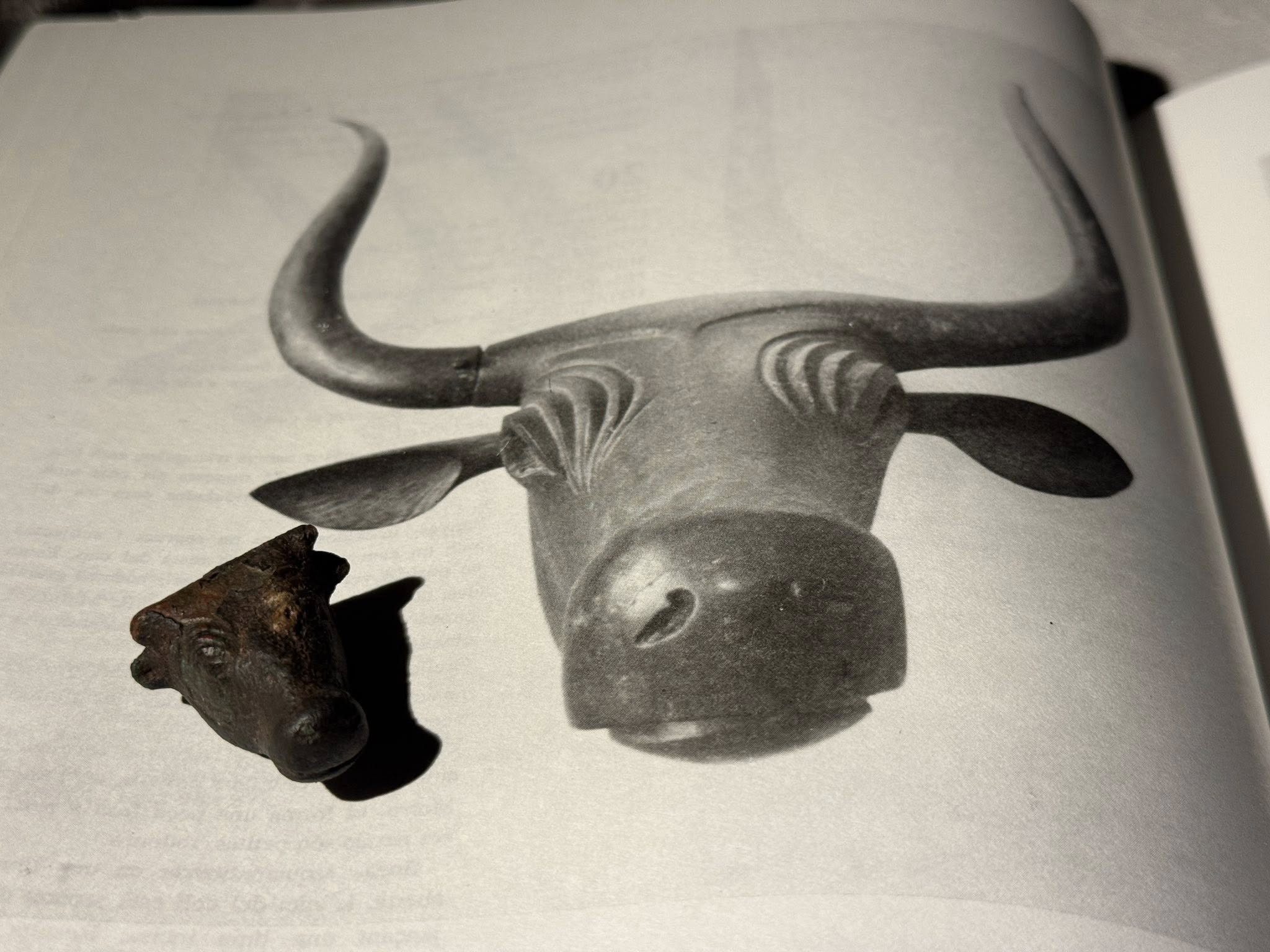
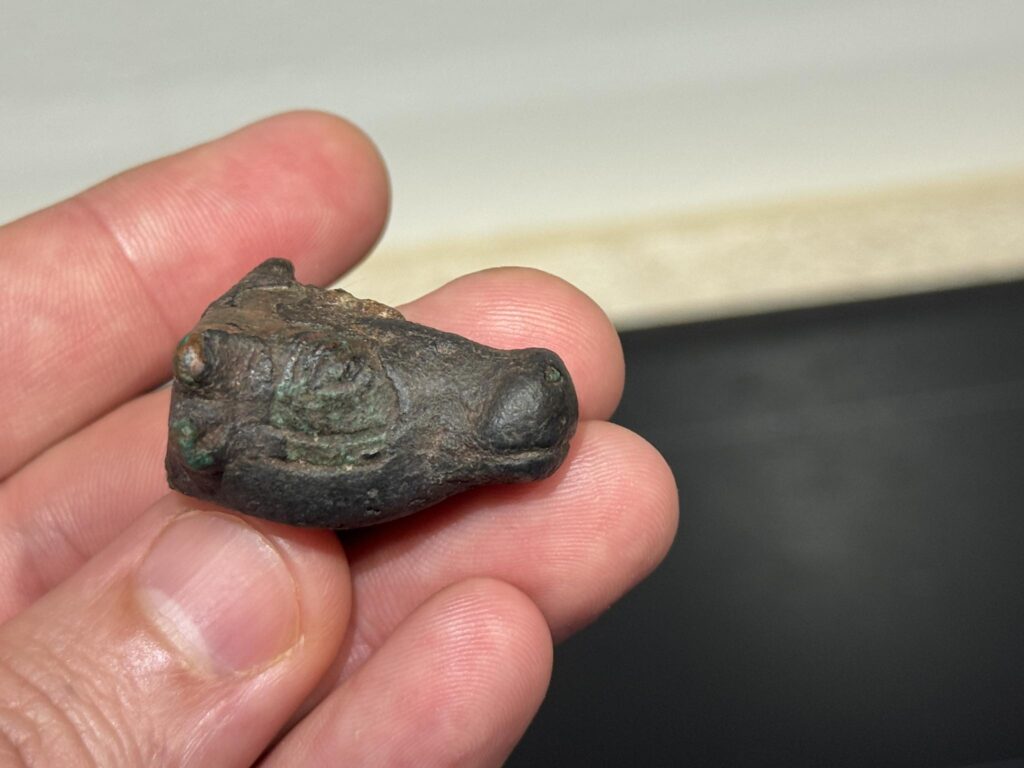
The artifact is a small but remarkably well-preserved bronze bull head. Despite its modest size, the piece clearly displays recognizable features of the animal, including the muzzle and eyes. These details are rendered in a stylized yet identifiable form typical of prehistoric Mediterranean artistic traditions.
Archaeologists believe the object once formed part of a larger sculpture or decorative element. Its compact size suggests it may have been attached to a ceremonial object, shrine element, or decorative structure. Similar bull representations are already known in the Balearic archaeological record, but bronze examples are relatively rare, making this find particularly noteworthy.
According to researchers from the Almallutx group, representations of bulls in prehistoric Mediterranean cultures often held ritual or symbolic meaning. Bulls were widely associated with strength, fertility, and protection—concepts deeply embedded in ancient agrarian societies.
📣 Our WhatsApp channel is now LIVE! Stay up-to-date with the latest news and updates, just click here to follow us on WhatsApp and never miss a thing!!
Understanding the Post-Talayotic Culture
The artifact is believed to belong to the post-Talayotic cultural phase in Mallorca, which developed toward the end of the Bronze Age. This culture followed the earlier Talayotic period, famous for its monumental stone towers known as talayots.
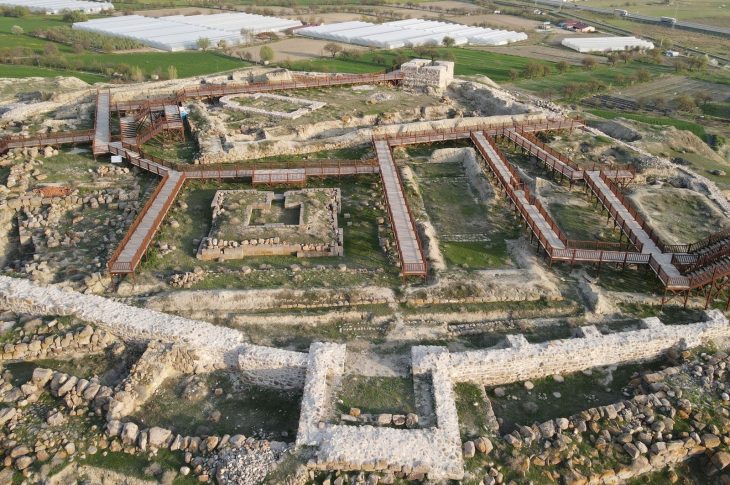
Post-Talayotic communities on Mallorca lived in fortified settlements and demonstrated advanced skills in metallurgy, pottery production, and ritual architecture. Archaeological evidence suggests that symbolic objects and animal representations played an important role in their spiritual life.
Bull imagery appears frequently in prehistoric Mediterranean art and is thought to represent fertility, power, and the cyclical forces of nature. Such symbols were likely connected to communal rituals designed to ensure prosperity and protection for local communities.
Finds like the newly discovered bronze bull head help researchers reconstruct the beliefs and daily lives of the island’s early inhabitants. They also highlight the technological capabilities of these societies, particularly their ability to craft artistic metal objects during a time when bronze metallurgy was still developing.
Future Study and Public Exhibition
The artifact has now been transferred to the Consell de Mallorca, where specialists will conduct detailed archaeological and metallurgical analyses. Researchers hope to determine the object’s precise age, production technique, and possible original context.
If confirmed as a post-Talayotic artifact, the bronze bull head could become an important addition to the island’s prehistoric heritage collection. Plans are already being considered for the piece to be displayed in a museum, allowing the public to view this rare fragment of Mallorca’s ancient past and compare it with other bull representations discovered across the Balearic Islands.
For archaeologists, even a small artifact like this can open new windows into the symbolic world of prehistoric Mediterranean societies—reminding us that the mountains of the Serra de Tramuntana still hold many secrets waiting to be uncovered.
Cover Image Credit: Almallutx: ArqueoTramuntana via Facebook