
24 January 2026 The Future is the Product of the Past

Rare 2,000-Year-Old Hasmonean Oil Lamp and Writing Stylus Unearthed Near Jerusalem

Archaeologists working near Jerusalem have uncovered a rare 2,000-year-old oil lamp and a writing stylus dating to the Hasmonean period, offering new evidence of organized Jewish life during the Second Temple era.

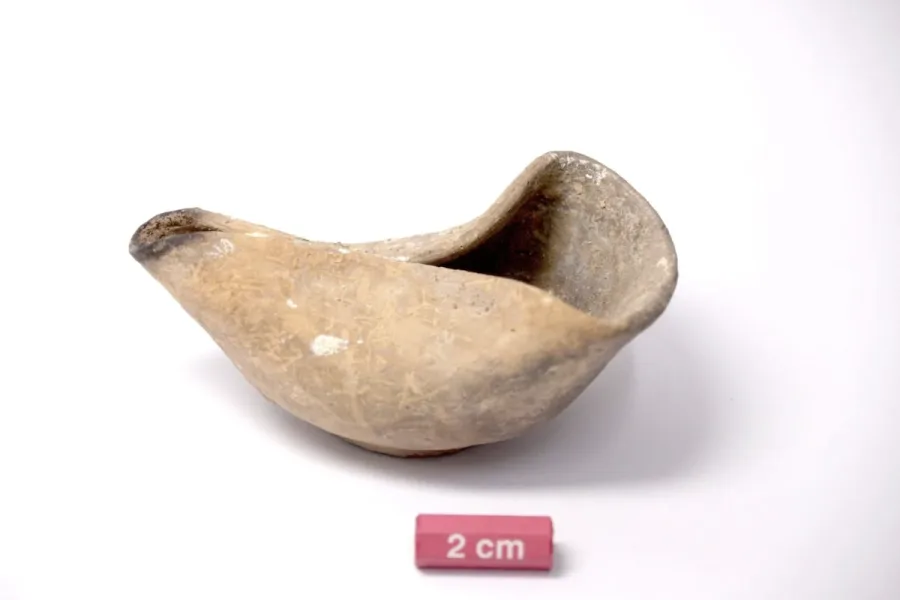
As the first candle of Hanukkah is lit each year, it recalls resilience, continuity, and the enduring power of light. This season, that symbolism took on a tangible form near Jerusalem, where archaeologists uncovered a rare clay oil lamp dating back to the Hasmonean period—nearly two millennia ago. Discovered at the historic site of Nabi Samuel, northwest of the city, the artifact offers compelling evidence of Jewish life during the era of the Second Temple.

The find emerged during ongoing archaeological work conducted by Israel’s Civil Administration through the Coordination of Government Activities in the Territories (COGAT). Within the organization, a specialized unit known as KAMAT Archaeology is responsible for excavations, documentation, and preservation across Judea and Samaria. Their work at Nabi Samuel has revealed layers of human activity spanning thousands of years, but the newly uncovered Hasmonean lamp stands out for its cultural and symbolic resonance.

A Window into Hasmonean Daily Life

The small clay lamp—once filled with oil and lit with a simple wick—was a household object, likely used to illuminate homes during long evenings. Its discovery near Jerusalem underscores a settled, organized Jewish presence in the region during the Hasmonean dynasty (circa 140–37 BCE), a period marked by political independence and religious revival.

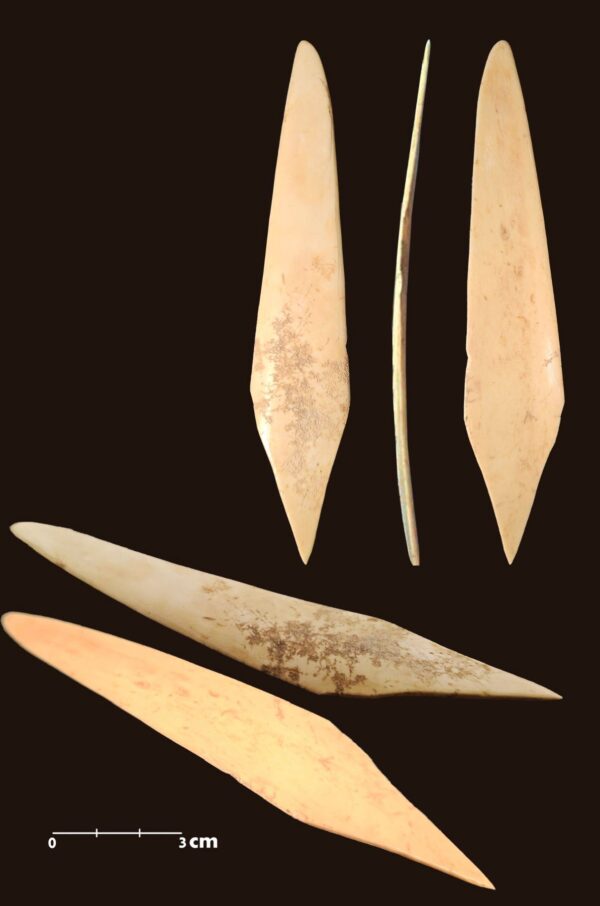
Alongside the lamp, archaeologists also uncovered a stylus, a writing instrument used on wax tablets. This modest tool hints at literacy, administration, and everyday communication—suggesting that life here was not only religiously vibrant but also socially and culturally structured. Together, the artifacts paint a picture of a community engaged in routine tasks, governance, and learning, all within reach of Jerusalem.


📣 Our WhatsApp channel is now LIVE! Stay up-to-date with the latest news and updates, just click here to follow us on WhatsApp and never miss a thing!!


A stylus used for writing on wax tablets. Photo credit: Civil Administration Press Office. Credit: COGAT.

Nabi Samuel: A Strategic Hilltop Through the Ages

Rising approximately 885 meters (2,900 feet) above sea level, Nabi Samuel commands sweeping views of the approaches to Jerusalem. Its strategic importance has attracted settlers, soldiers, and worshippers for millennia. Excavations reveal an extraordinary sequence of occupation layers—from the Israelite and Persian periods to the Hasmonean era, and later through the Crusader and Ottoman times.

Among the most prominent remains are the foundations of a massive Crusader fortress and a mosque traditionally associated with the tomb of the biblical prophet Samuel. This dense archaeological tapestry makes Nabi Samuel one of the most significant sites for understanding the political, military, and religious history of the Jerusalem hinterland.

Archaeology as Cultural Memory

The Hasmonean lamp and stylus now join a growing list of discoveries made by KAMAT Archaeology in recent years. Using modern surveying techniques and meticulous documentation, the team aims not only to uncover artifacts but also to preserve them and make their stories accessible to the public.

Benjamin Har-Even, head of KAMAT Archaeology, emphasized the timing of the discovery during Hanukkah. The festival commemorates the endurance of the Jewish people and the rededication of the Temple in Jerusalem. Finding a lamp from the Hasmonean period—an era directly tied to the Hanukkah story—adds a powerful layer of meaning. It is a reminder that the traditions celebrated today are rooted in lived experiences from antiquity.

Light That Crosses Millennia

Small archaeological objects often reveal more about the past than monumental ruins. This unassuming clay lamp, once held in a human hand and lit at dusk, bridges past and present. It transforms abstract history into something intimate and immediate—a flicker of light that once chased away darkness in a home near Jerusalem.

As Hanukkah candles glow anew, this ancient lamp tells a parallel story: of continuity, of daily life shaped by faith, and of a people deeply connected to their land. After 2,000 years beneath the soil, its rediscovery allows history itself to shine—quietly, steadily, and with enduring warmth.

Cover Image Credit: A clay lamp from the Hasmonean period found at Nebi Samuel north of Jerusalem, in a discovery made public on December 15, 2025. COGAT

Related Articles

Archaeologists discover Europe’s longest prehistoric mound in the Czechia

22 June 2024

22 June 2024

Czech archaeologists in the Hradec Králové area in East Bohemia have discovered what is probably the longest prehistoric mound in...

A rare 3,300-year-old bronze helmet reaching the present from the Hittite Empire era

17 July 2022

17 July 2022

The 3,300-year-old bronze helmet, which was unearthed during the 2002 excavations in Şapinuva, one of the important cult centers of...

Two unique mid-14th-century shipwrecks discovered in Sweden

22 April 2023

22 April 2023

During an archaeological dig in western Sweden this summer, the remains of two medieval merchant vessels known as cogs were...

Historical Armenian church 500-year-old in southeastern Turkey set to be restored

6 February 2022

6 February 2022

Work has been initiated to transfer the historical Armenian Church, which was built in the 16th century in the province...

9,500-Year-Old Public Building with Red Floor Unearthed at Çayönü Tepesi, Türkiye

7 September 2025

7 September 2025

Archaeologists have unearthed a 9,500-year-old public building with a striking red-painted floor at Çayönü Tepesi, one of the world’s most...

Extraordinary Monumental Roman Burial Mound Discovered in Bavaria Stuns Archaeologists

18 October 2025

18 October 2025

Archaeologists in Bavaria have uncovered what appears to be the foundation of a monumental Roman burial mound, a discovery that...

Unique Roman-Era Association Building Unearthed in Ancient City of Sagalassos

1 October 2025

1 October 2025

Archaeologists uncover a unique Roman-era Association Building in Sagalassos, Türkiye, revealing ancient social life, guilds, and family gatherings. Archaeologists in...

Poland’s largest megalithic cemetery discovered

3 March 2021

3 March 2021

Archaeologists excavated in Poland discovered a large megalithic complex, including dozens of tombs dating back 5,500 years. The site was...

An 800-meter-long colonnaded street from the Roman period discovered in Türkiye’s famous holiday resort Antalya

18 April 2024

18 April 2024

During the archaeological excavations in Hıdırlık Tower, one of the historical symbols of Antalya, the famous holiday resort in the...

A 3300-year-old seal and a dagger/sword reminiscent of Mycenaean swords were discovered in the Heart of western Anatolia

18 July 2022

18 July 2022

A unique 3300-year-old seal and a sword/dagger reminiscent of Mycenaean swords were unearthed during the excavations of Tavşanlı Höyük (Tavşanlı...

Ancient Cave Paintings in Texas Are Thousands of Years Older Than Expected, New Study Reveals

11 January 2026

11 January 2026

Archaeologists working in the canyonlands of southwest Texas have discovered that some of North America’s most iconic cave paintings are...

Before the Hittites: 8,000-Year-Old Rock Art Discovered in Kayseri, Türkiye

6 November 2025

6 November 2025

An extraordinary archaeological discovery in Kayseri’s Develi district has revealed 8,000-year-old rock art engravings, offering new insight into how early...

A Mysterious Human Face Carved on Stone Dated to Bronze Age Discovered in Kazakhstan

21 July 2024

21 July 2024

Kazakhstan’s rich archaeological landscape continues to reveal fascinating details about ancient civilizations. Recent research in the Akmola, and Pavlodar revealed...

The impressive Statue of young Hercules unearthed in Philippi, Northern Greece

24 September 2022

24 September 2022

A larger-than-life youthful Hercules statue dating to the 2nd century A.D. have been found in the ancient city of Philippi...

Jordan’s mysterious ancient wall “Khatt Shebib”

22 October 2022

22 October 2022

The accomplishments of ancient civilizations are typically woefully underappreciated because we stereotype them as primitives who only wore loincloths, and...