

Archaeologists have reopened a Viking Age ship burial on Norway’s western coast and uncovered evidence of a much older grave beneath it. The discovery suggests that people used the site for burials centuries before Vikings placed a ship inside the mound.
The team made the discovery at Grønhaug on Karmøy, an island in Rogaland known for its concentration of monumental burial mounds. According to Science Norway, archaeologists from the University of Stavanger’s Museum of Archaeology found an artificial stone cairn beneath the Viking monument that likely dates to the Bronze Age.
If further dating confirms that interpretation, Grønhaug will preserve evidence of two major phases of burial activity at the same location: an older prehistoric grave and a later Viking Age ship burial.
Archaeologists return to a ship grave first explored in 1902
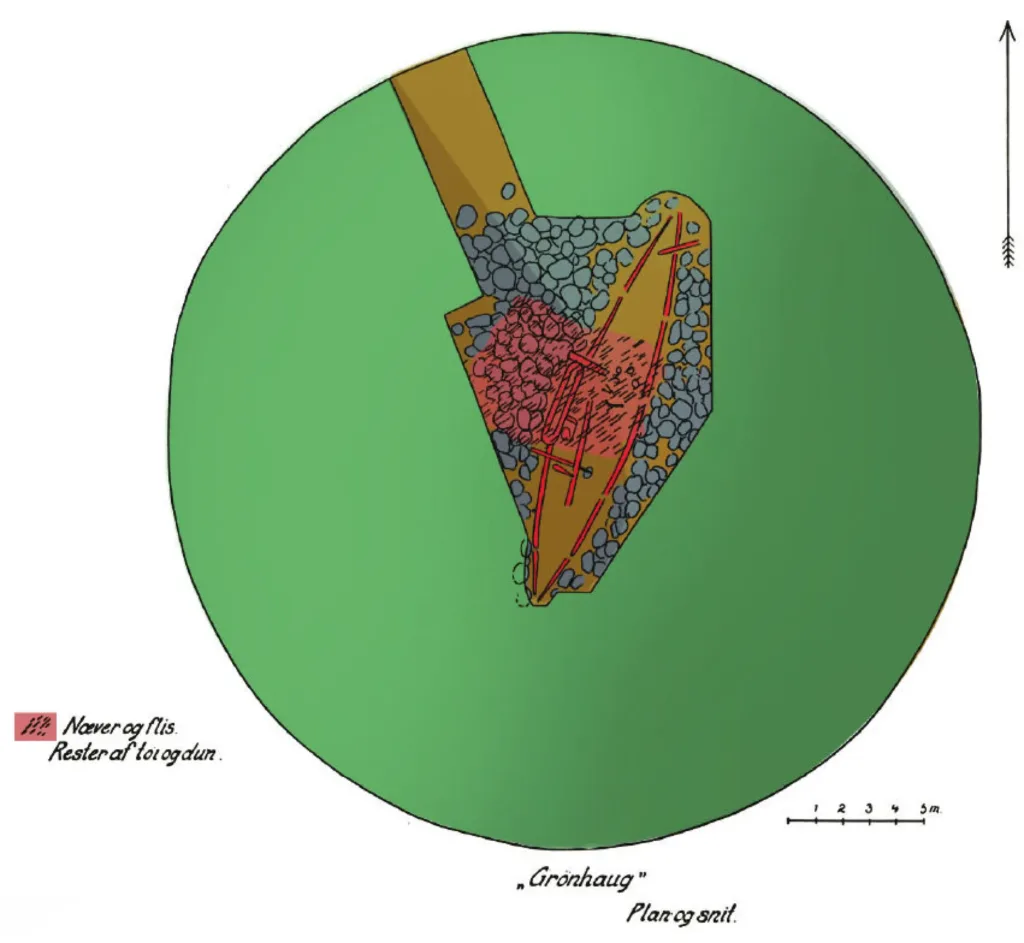
Norwegian archaeologist Haakon Schetelig first explored Grønhaug in 1902 and confirmed that the mound contained a ship. Researchers estimate that the vessel measured around 15 metres (49 feet) long.
During Schetelig’s excavation, his team removed several loose pieces of ship planking from around the oar holes and transported them to Bergen. However, they left much of the surviving wood inside the mound because its soft condition made recovery difficult.
More than a century later, archaeologists Marie Ødegaard and Håkon Reiersen of the University of Stavanger have returned to Grønhaug to assess what remains and investigate the mound’s preservation conditions.
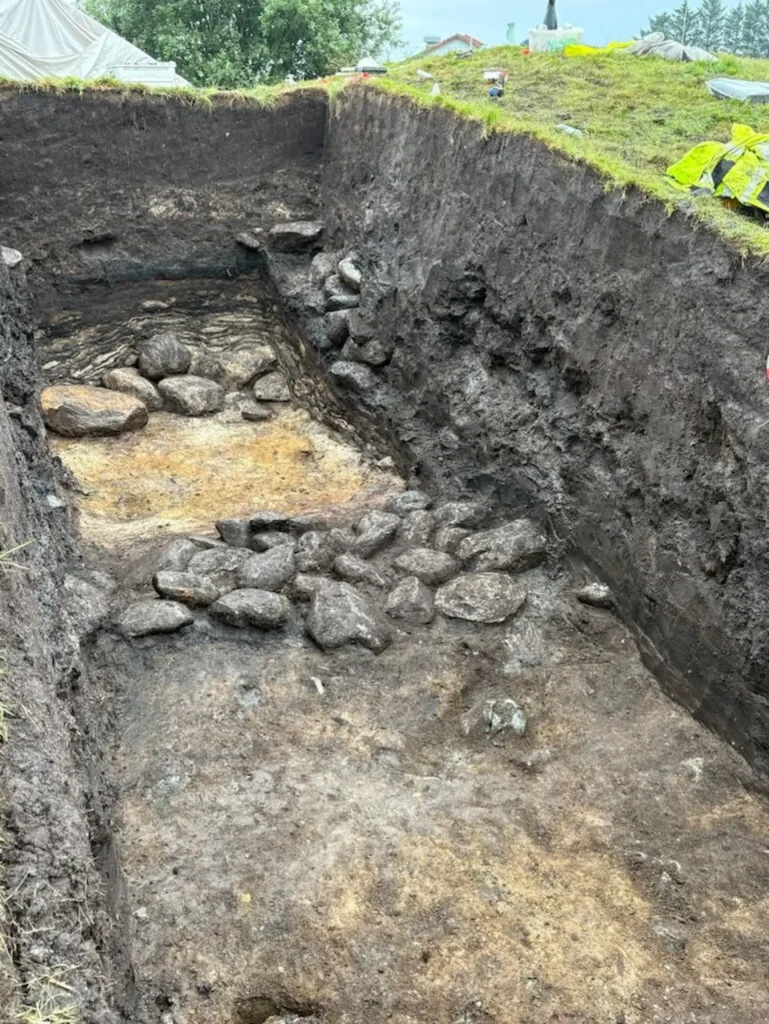
The team has reopened roughly the same trench that Schetelig excavated in 1902 and extended it slightly. Rather than excavating the entire monument, the researchers are carrying out a limited investigation designed to collect samples and examine the surviving archaeological layers.
So far, they have found one or two metal rivets that probably came from the ship. They have also recovered pieces of timber that Schetelig apparently discarded during the earlier excavation.
The timber seems to come from pine rather than oak. Viking shipbuilders commonly used oak for hulls, although they could use pine for other structures. Ødegaard suggested that the surviving wood may therefore have belonged to a roof, a superstructure or another object associated with the burial.
Viking Age plants survived under the mound
The exceptional preservation of organic material inside Grønhaug has given archaeologists another unexpected discovery.
When the team reached the ancient ground surface that existed before people constructed the Viking mound, they could still identify vegetation growing there at the time of the burial.
Ødegaard told Science Norway that she could see blueberry plants and heather, including specimens that still retained their leaves.
The plants provide an unusually direct glimpse of the landscape that Vikings covered when they constructed the burial mound. They may also reveal when the builders carried out the work.
Because leafy vegetation remained on the ground, the archaeologists believe people probably constructed the mound during the warmer half of the year.
The discovery also demonstrates how effectively parts of Grønhaug have preserved fragile organic material. Although the ship itself has deteriorated badly and people looted the grave in antiquity, layers of soil and turf protected some materials for more than 1,000 years.
A much older grave lies beneath the Viking ship burial
The most significant discovery, however, came from below the Viking Age layers.
As archaeologists excavated deeper into Grønhaug, they uncovered an artificial stone cairn beneath several layers of soil and turf. They also identified stones arranged around the base of the structure, forming what archaeologists call a kerb.
The team believes this lower monument probably belongs to the Bronze Age.
Several other burial mounds on Karmøy date to periods much earlier than the Viking Age, including the Bronze Age. The new evidence suggests that the Vikings did not choose untouched land when they created the Grønhaug ship burial.
Instead, they appear to have placed their ship grave directly over an already ancient funerary monument.
The older mound may even have provided a platform for the later Viking burial. That raises the possibility that the Viking builders deliberately incorporated a much older monument into their own funerary landscape rather than selecting the location by chance.
Researchers now plan to date samples from the lower structure more precisely. Until those analyses provide firmer results, the Bronze Age identification remains provisional.
New samples could settle a long-running dating debate
Archaeologists have also debated the age of the Grønhaug ship burial itself.
Earlier studies placed the ship around AD 780 and suggested that people created the burial roughly a decade later. That chronology would place Grønhaug near the conventional beginning of the Viking Age.
More recent analyses tell a different story.
Reviews of dendrochronological and radiocarbon evidence point instead to a date around AD 864, placing the ship firmly within the Viking Age.
Ødegaard and her colleagues hope the new excavation will provide samples that can narrow the chronology further, both for the Viking ship grave and for the older burial monument underneath it.
The Norwegian Directorate for Cultural Heritage commissioned the investigation in cooperation with Rogaland County Municipality. The work also forms part of a broader effort to assess Viking sites that Norway could propose for future inclusion on the UNESCO World Heritage List.
Grønhaug therefore offers archaeologists more than the remains of a Viking ship. Beneath the famous burial, they have uncovered evidence that people had already marked this landscape as a place for the dead many centuries earlier.
