
6 December 2025 The Future is the Product of the Past

Neolithic Twin of Knossos: First 8,800-Year-Old Architectural Remains Unearthed on Gökçeada

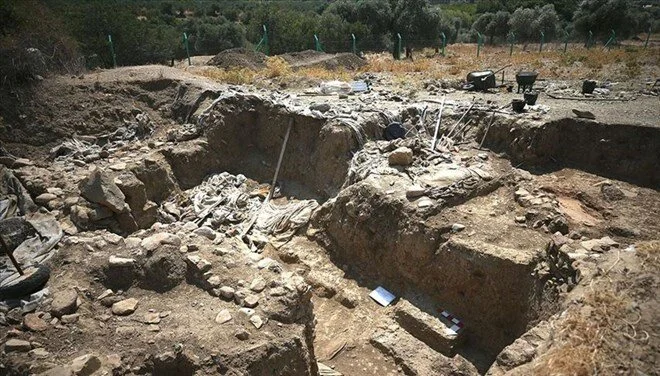
Archaeologists excavating the Uğurlu-Zeytinlik Mound on Türkiye’s westernmost island in the Aegean Sea, Gökçeada (Imbros), have uncovered something never before seen in Aegean prehistory: the first architectural remains belonging to the earliest farming communities of the Aegean Islands.

The discovery, dated to around 8,800 years ago, places Uğurlu alongside Knossos on Crete as the only settlements in the Aegean Islands belonging to the first agricultural societies.

“The First Time We Have Encountered Such Architecture”

Speaking about the groundbreaking find, excavation director Prof. Dr. Burçin Erdoğu explained:

“This type of architecture has been encountered for the first time in the Aegean Islands, which makes it extremely valuable for us. We have identified a building style that is round in plan, with sunken floors, constructed using what we call the wattle-and-daub technique. The Uğurlu settlement, together with Knossos on the island of Crete, is the only settlement across the Aegean Islands belonging to the earliest farming communities. In this context, I can say that we have uncovered the architecture of the earliest farming communities in the Aegean Islands for the very first time.”

This statement underscores the discovery’s significance—not just for Türkiye, but for the history of the entire Aegean basin.


📣 Our WhatsApp channel is now LIVE! Stay up-to-date with the latest news and updates, just click here to follow us on WhatsApp and never miss a thing!!


Houses of the First Island Farmers

During the latest excavation season, archaeologists uncovered five domestic structures dated to circa 6800 BCE. These early houses feature circular plans, recessed floors, and reed-based wattle-and-daub construction, representing the earliest farming architecture ever documented on an Aegean island.

Until now, there was no architectural evidence to show how the first farming communities of the Aegean built their homes or organized their settlements. Uğurlu has now provided the first physical footprint of island farmers, transforming speculation into tangible reality.
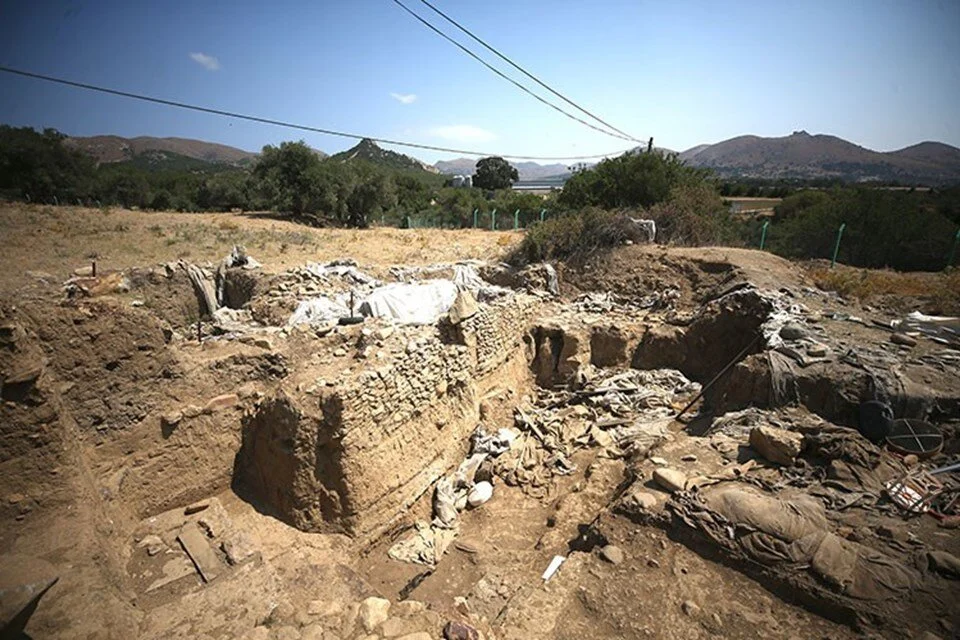
Archaeologists have uncovered five prehistoric buildings dating back 8,800 years at the Uğurlu-Zeytinlik Mound on Gökçeada (Imbros), Türkiye’s westernmost island in the Aegean Sea. Credit: AA

Why Architecture Matters

While evidence of farming practices such as crop cultivation and animal domestication had been documented in the region, architecture provides the clearest proof of permanent settlement and social organization. Until now, scholars had no architectural remains showing how the first Aegean farmers lived.

The discovery at Uğurlu changes this entirely. The structures confirm that early settlers were not temporary visitors but established communities, shaping the island landscape with enduring homes. This makes the site invaluable for understanding how farming lifeways took root across the Aegean Sea.

Farming, Herding, and Exchange

The significance of Uğurlu lies not only in its architecture. Botanical evidence reveals domesticated crops such as wheat, barley, and peas, proving that the first settlers brought agriculture from mainland Anatolia. Animal bones show that sheep, goats, cattle, and pigs were also part of their subsistence system.

Finds of obsidian from Melos and flint from both Anatolia and the Balkans confirm that these early islanders were integrated into long-distance exchange networks nearly nine millennia ago. Far from being isolated, Uğurlu was a crossroads of innovation and interaction in the Neolithic Aegean.

A Twin to Knossos

For decades, Knossos on Crete stood alone as the earliest known farming settlement in the Aegean. With the discoveries on Gökçeada, scholars can now identify a second, equally early site that belonged to the very first wave of island farmers.

This positions Uğurlu-Zeytinlik as a twin foundation of Aegean Neolithic culture, bridging Anatolia and the Aegean, and reshaping the understanding of how farming spread across seas as well as over land.
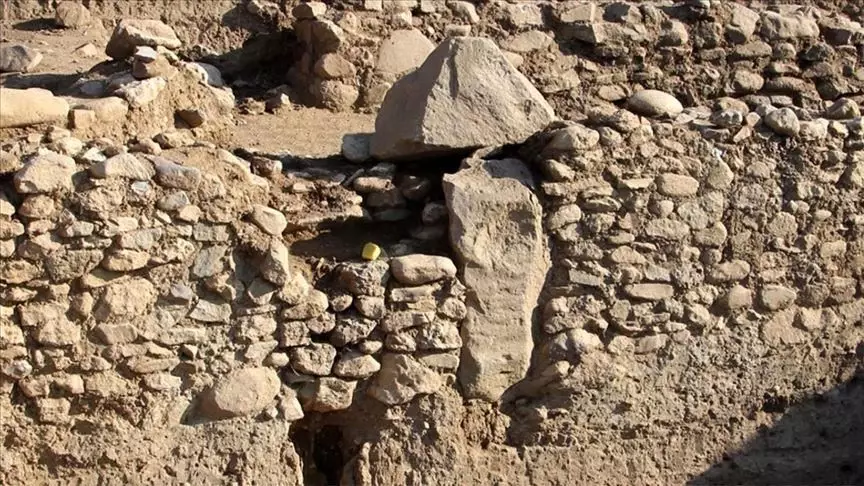

A monument believed to be around 8,000 years old was unearthed earlier at Uğurlu Höyük in northwestern Turkey. The latest discovery on Gökçeada revealed the first 8,800-year-old architectural remains of early farming communities in the Aegean Islands. Credit: AA

Rewriting the Origins of Aegean Civilization

The revelation that the earliest Aegean farming architecture has finally been uncovered challenges older narratives and expands the map of Neolithic life in the islands. It proves that permanent settlement and architectural innovation were not limited to Crete, but were also firmly rooted in the northern Aegean nearly 9,000 years ago.

As excavations continue, Uğurlu is expected to provide even deeper insights into how agriculture, architecture, and social complexity spread across island landscapes—marking it as one of the most important archaeological sites in the region.

Conclusion

The Uğurlu-Zeytinlik Mound on Gökçeada has delivered a discovery of unparalleled importance: the very first farming architecture of the Aegean Islands. Through its round, sunken, reed-woven houses, the site reveals how the first island farmers lived, worked, and connected with neighboring regions.

By standing shoulder to shoulder with Knossos, Uğurlu not only rewrites the earliest chapter of Aegean prehistory—it firmly anchors Gökçeada in the story of how humanity’s first farmers shaped the islands of the Aegean Sea.

Cover Image Credit: AA

Related Articles

Scotland’s Giant Neolithic Timber Hall Discovered—Built 1,000 Years Before Stonehenge

8 July 2025

8 July 2025

Archaeologists uncover one of the largest Neolithic timber halls in Scotland, revealing a long-lost site of prehistoric gatherings, rituals, and...

Temple and Warrior’s Armor from the 5th–7th Centuries Unearthed in Uzbekistan’s Kanka Settlement

1 November 2025

1 November 2025

Archaeologists in Uzbekistan have uncovered the remains of a temple and fragments of early medieval armor within the Kanka settlement,...

4500-year-old tiger-patterned ritual weapon uncover in east China

4 April 2023

4 April 2023

Archaeologists discovered an extremely rare stone relic, an axe-shaped weapon used for rituals in ancient China, engraved with a tiger...

Archaeologists in the Tangier Peninsula Discovered Three Ancient Cemeteries, Including a Stone Burial Dating to Around 4,000 Years Ago

17 May 2025

17 May 2025

A significant archaeological discovery in northern Morocco’s Tangier Peninsula, situated just south of the Strait of Gibraltar, has led to...

Face of the Picts? Rare Carved Stone Discovered at Scottish Hillfort

19 September 2025

19 September 2025

A remarkable discovery at a hillfort in Fife has brought archaeologists face-to-face with Scotland’s enigmatic Pictish past. A carved stone,...

Archaeologists Discover 40,000-Year-Old Evidence of Neanderthal Habitation in Ghamari Cave, Iran

13 March 2025

13 March 2025

Iranian archaeologists have made a groundbreaking discovery in Ghamari Cave (also known as Qamari Cave), located near Khorramabad in Lorestan...

Thor’s hammer amulet discovered in Sweden

23 October 2022

23 October 2022

Archaeologists have unearthed the Thor’s Hammer amulet, which they call “one of its kind” in Ysby in southwestern Sweden’s Halland...

Drought accelerated Hittite Empire’s collapse

9 February 2023

9 February 2023

Researchers have offered new insight into the abrupt collapse of the  Hittite Empire in the Late Bronze Age, with an...

A New Study: The Great Sphinx of Giza may have been blown into shape by the wind

1 November 2023

1 November 2023

The theory, occasionally raised by others, that the Great Sphinx of Giza may have been a lion-shaped natural landform that...

New Insights From Researchers About The World’s Longest Aqueduct

11 May 2021

11 May 2021

The Roman Empire’s aqueducts are magnificent specimens of the art of architecture. Although centuries have passed since these aqueducts were...

Viking Ship Burials Shrouded in Mystery on Danish Island

25 May 2021

25 May 2021

Archaeologists studying the origins and makeup of the Kalvestene burial field, a famed place in Scandinavian legend, have undertaken new...

Lost Coptic City in Egypt’s Western Desert Unearthed: A Glimpse Into Christianity’s Dawn in the Land of the Pharaohs

12 August 2025

12 August 2025

In the vast silence of Egypt’s Western Desert, archaeologists have stumbled upon a remarkable piece of history — the ruins...

A New Hypothesis Tries to Explain What Triggers People’s Big Brains

14 March 2021

14 March 2021

The big brain is the decisive feature of our species. Not only are they the most complex organs in the...

A marble slab with an inscription from the 2nd century was discovered during excavations in Bulgaria

18 October 2023

18 October 2023 3

Archaeologists discovered a 1,900-year-old marble slab bearing an ancient Greek inscription in the Roman Baths of Hisarya, a small resort...

Ancient Baekje Tombs in Korea Unearth Gold Ornaments and Pottery Treasures

31 August 2025

31 August 2025

A major archaeological discovery has been made in Jeongeup, South Korea, where the Eunsun-ri and Dogye-ri tomb clusters have yielded...