
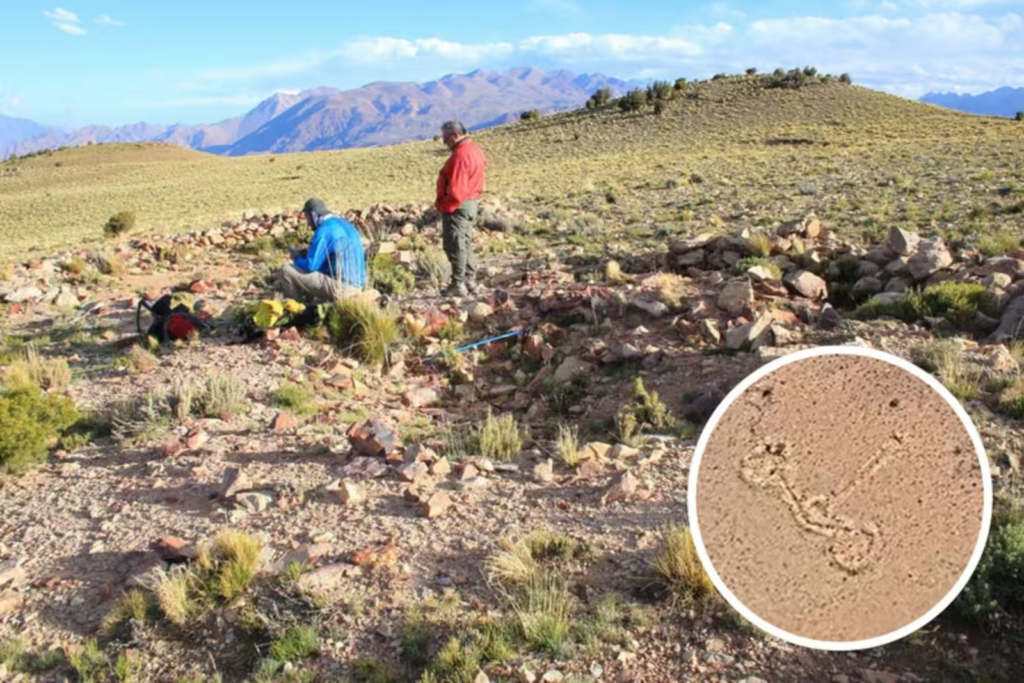
High in the Andes of western Argentina, more than 3,000 meters above sea level, archaeologists are preparing to investigate a strange arrangement of stone circles, corridors and rectangular spaces unlike anything previously documented in Mendoza.
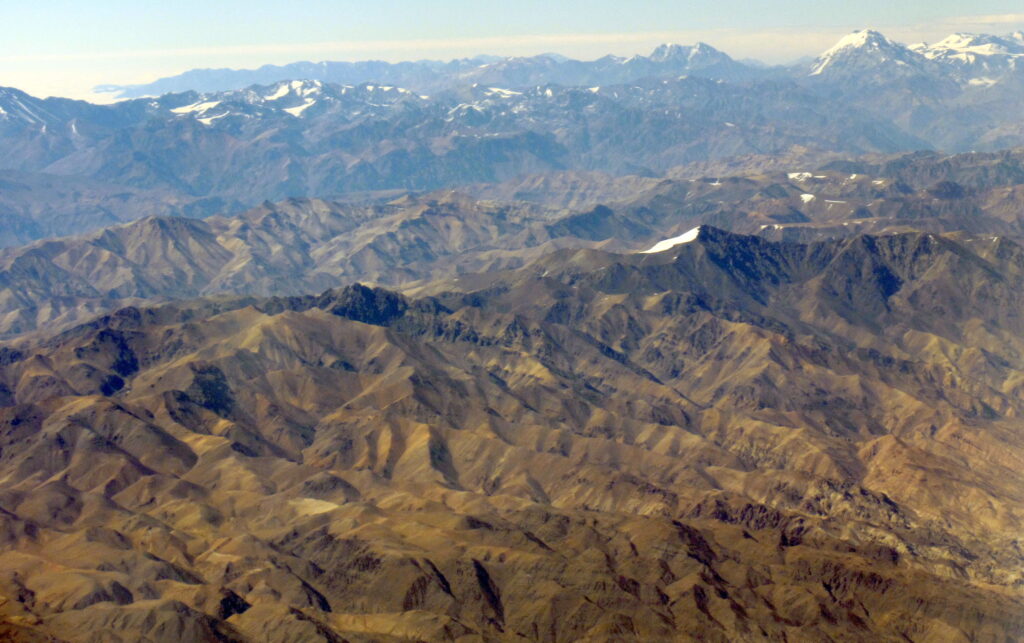
The site lies in the remote Cordillera del Tigre, where the landscape is so difficult to reach that the first clue did not come from the ground. It came from Google Earth.
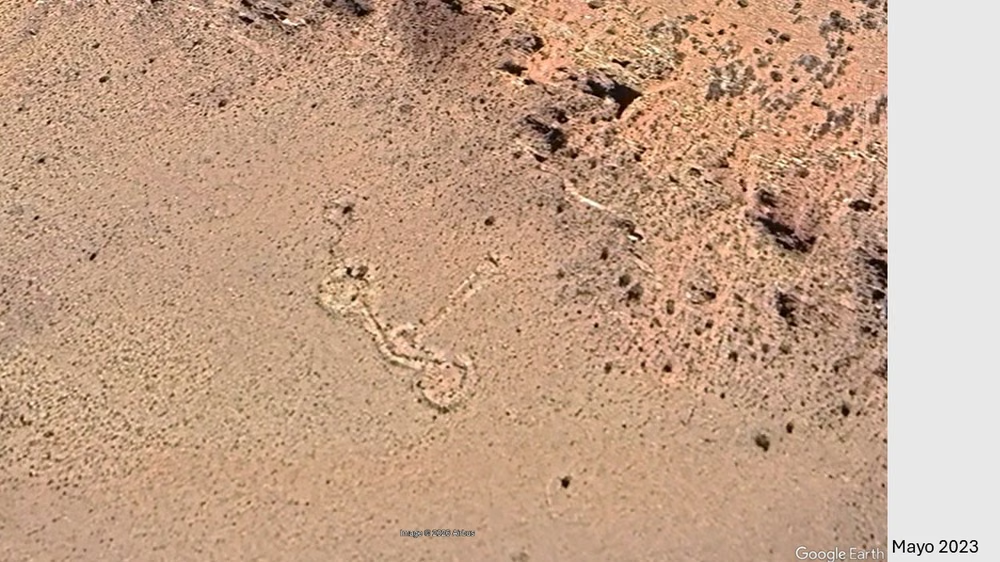
Mountaineer Carlos Gobbi noticed unusual geometric shapes in satellite imagery while studying the mountains. From above, the features appeared as a series of large circular structures linked by narrow passages, with additional rectangular areas forming part of a much broader pattern.
What looked clear on a screen proved far harder to understand on the ground.
After unsuccessful attempts to reach the location, Gobbi finally made it to the site in early 2026 following a journey of several days through the high Andes. There was no nearby water source, no phone signal, and little in the landscape to suggest that such an elaborate arrangement of stone structures was waiting there.
Once at the site, he found low stone walls and passages, with some sections partly buried or built into trenches. Seen from ground level, the structures do not immediately reveal the geometric pattern that becomes obvious in satellite imagery.
That difference between the view from the ground and the view from above is now one of the central questions facing archaeologists.
Circles up to 35 meters across
Gobbi documented several circular structures connected by corridors. According to Los Andes, the circles measured between approximately 27 and 35 meters in diameter, making them far too large to be dismissed as small domestic features.
He later shared the photographs and coordinates with archaeologists Cristina Prieto-Olavarría and Horacio Chiavazza, who are now leading the investigation.
Prieto-Olavarría, a researcher at IANIGLA-CONICET, said that the size and complexity of the structures immediately stood out. Researchers have found no comparable archaeological site in Mendoza, either in published studies or in existing archaeological records.
That does not mean the team already knows what the site represents.
One possibility is that the stone arrangement may be a form of geoglyph: a large human-made design whose overall form is best understood from above. But archaeologists are deliberately treating that interpretation as a hypothesis rather than a conclusion.
For now, even basic questions remain open. Who built the structures, when they were built, and what purpose they served are all unknown.
A settlement, or something more unusual?
The site’s location makes the mystery more difficult.
At more than 3,000 meters above sea level, the area is isolated, exposed, and difficult to access. Researchers have so far reported no obvious concentration of pottery, food remains, or other everyday material that would immediately identify it as a conventional settlement.
That absence has encouraged researchers to consider other possibilities, including ceremonial or symbolic use. But there is not yet enough archaeological evidence to determine whether people lived there permanently, visited the site periodically or used it for a purpose unrelated to ordinary settlement.
The unusual layout adds to the uncertainty. Large circles connected by corridors do not fit comfortably into any well-known archaeological pattern previously identified in Mendoza.
Researchers have also discussed the possibility of a connection with the Inca period or with communities that lived in the Andes before Inca expansion. At this stage, however, there is no secure dating evidence linking the structures to either group.
That distinction matters because the Andes contain archaeological landscapes shaped by many different societies over long periods of time. Assigning the site to the Inca simply because of its high-altitude location would go beyond the available evidence.
Why the site is being compared with geoglyphs
The word “geoglyph” inevitably brings to mind the Nazca Lines of Peru, but the comparison should be treated carefully.
There is currently no evidence connecting the Mendoza structures with Nazca culture or with the famous Peruvian designs. The similarity lies mainly in scale and perspective: the broader form of the site becomes much easier to understand when viewed from above.
In Mendoza, some stone features appear almost ordinary when encountered on foot. Satellite imagery, however, reveals circles, corridors, and rectangular sectors arranged across the landscape in a way that suggests deliberate planning.
That is why the Google Earth image is more than simply an illustration of the discovery. It played a direct role in revealing that the individual stone structures may form part of a single larger design.
Researchers now need to determine whether that apparent design is truly ancient, whether all of its components were built at the same time, and whether the pattern seen from above reflects the original intention of its builders.
An international investigation is beginning
The work forms part of ArqueoAndes, a collaborative research project involving Argentine and Spanish researchers and focused on how human activity transformed the high-altitude landscapes of Mendoza.
Prieto-Olavarría and Chiavazza are leading the archaeological investigation, with researchers connected to CONICET, the National University of Cuyo and the University of Jaén in Spain participating in the wider project.
The next stage will require much more than simply walking the site.
Researchers plan to document the structures systematically, study the surrounding sediments and landscape, and search for material that can provide a reliable date. Environmental evidence may also help reconstruct what conditions were like when the site was in use.
The high altitude makes that work unusually difficult. Snow, weather, and the lack of easy access sharply limit the field season, meaning that much of the detailed investigation must take place during the Andean summer.
Until that happens, the stone circles remain difficult to interpret. They may represent a ceremonial landscape, an unusual settlement, a geoglyph-like construction or something archaeologists have not yet considered.
What is already clear is that the site is unlike anything previously recorded in Mendoza. And unusually, its story began not with a trench or a surface survey, but with a mountaineer looking at a remote patch of the Andes from above.
