
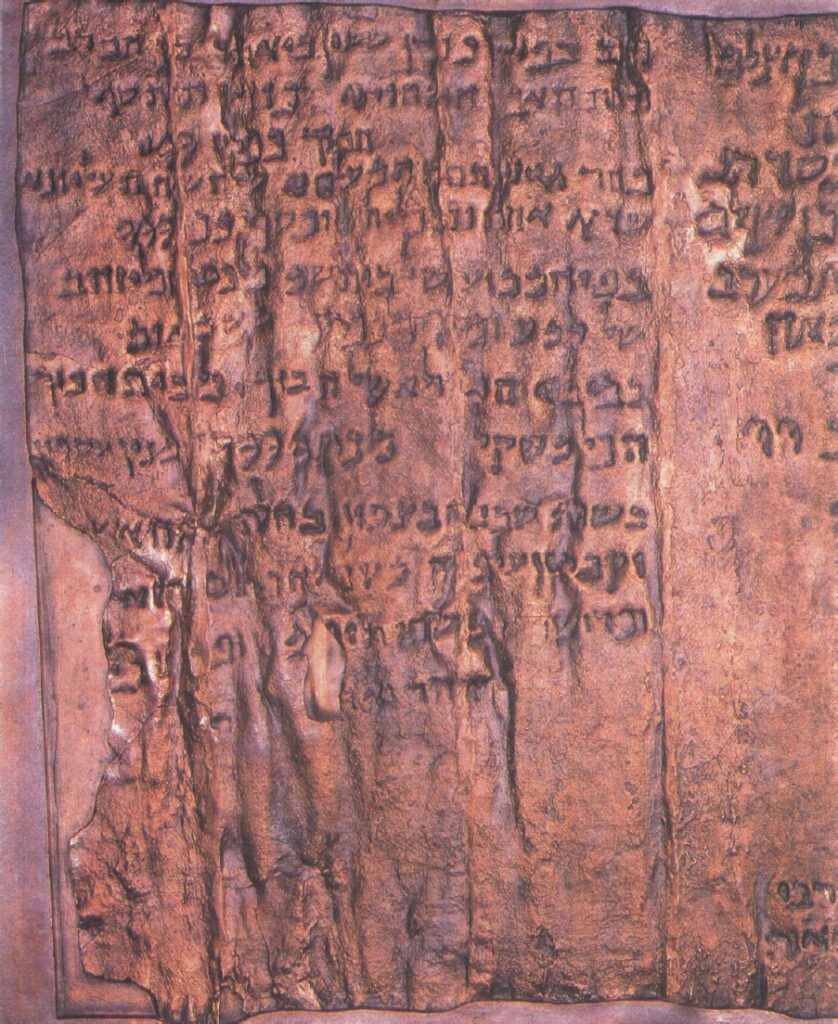
The Copper Scroll has always looked less like a manuscript than a deliberate act of silence.
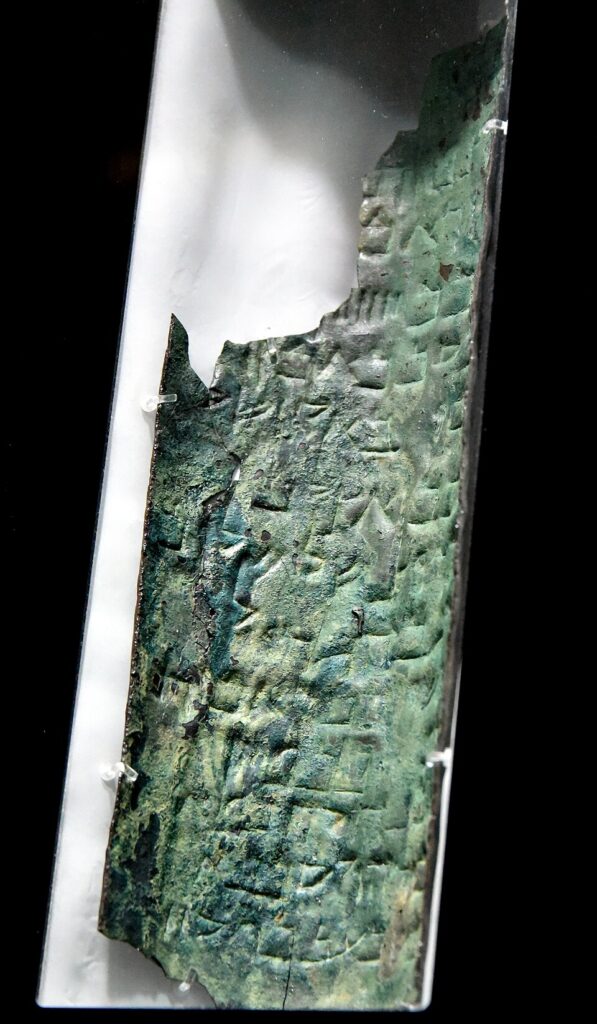
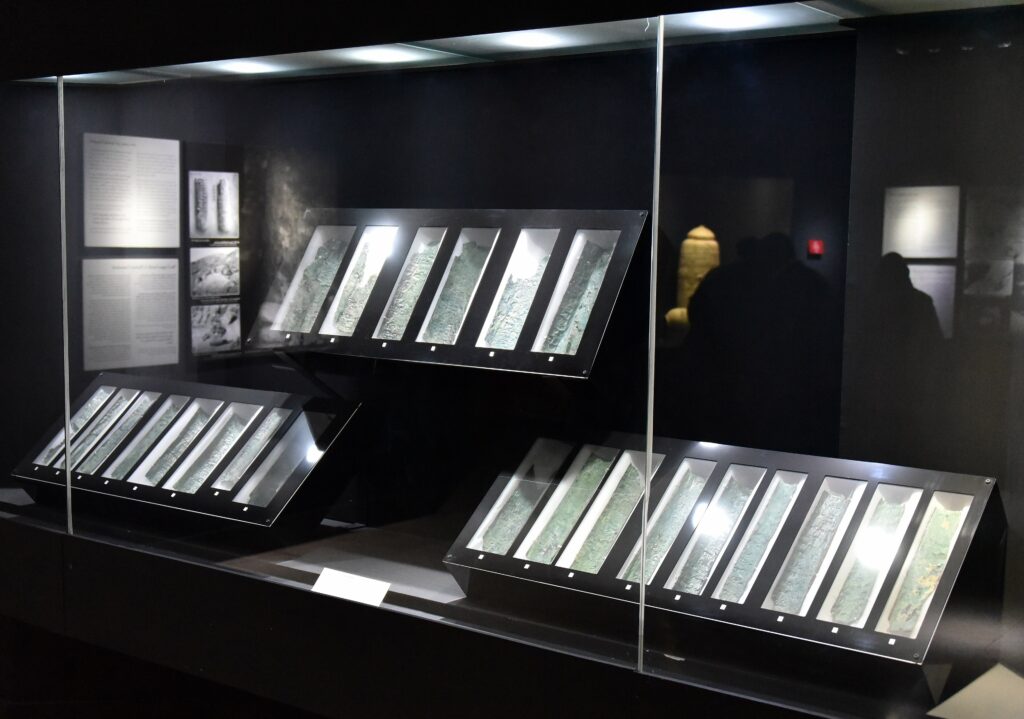
Found in 1952 inside Cave 3 near Qumran, overlooking the Dead Sea, it was unlike the other Dead Sea Scrolls from the moment archaeologists saw it. The others were written on parchment or papyrus. This one was engraved on thin sheets of copper, rolled shut, corroded by time and almost impossible to open without destroying it.
That physical fact matters. A normal scroll invites reading. The Copper Scroll almost resists it. It appears to have been made not for daily use, but for survival. It was a message sealed into metal, hidden in a cave and left for a future that never arrived.
For decades, scholars and treasure hunters have treated it as one of archaeology’s most frustrating maps. Its 64 entries refer to buried gold, silver, vessels, ingots and containers hidden in tombs, cisterns, channels and obscure landmarks across ancient Judea. Yet not one confirmed treasure from the list has ever been recovered.
Now a new interpretation by archaeologist Shimon Gibson suggests the scroll may not have been a treasure map in the ordinary sense. It may have been something more political, more dangerous and perhaps more human: a secret financial record tied to the Bar Kokhba revolt against Rome.
A Treasure List That Refuses to Behave Like a Map
The Copper Scroll reads with strange precision and strange uselessness at the same time.
It gives numbers, weights and locations, but often in a way that collapses under practical scrutiny. A cache may be placed near a stairway, a tomb, a cistern or a gate, but the identifying details are incomplete. The text seems to know exactly what it means, while refusing to tell the reader enough.
That is why the “treasure map” idea has always felt both irresistible and unsatisfactory. If the scroll was designed to help someone recover hidden wealth, why make the directions so difficult? Why engrave them on copper, a material that could not be repeatedly opened and checked? Why hide the record in a remote cave where access itself became part of the problem?
Perhaps the key is that the scroll was never meant to function alone. Its final lines reportedly refer to another document, hidden at a place called Kohlit. That missing companion scroll may have contained the names, confirmations or identifying details absent from the copper text.
If so, the Copper Scroll was not a map for strangers. It was a locked document for insiders.
Bar Kokhba’s Lost Ledger
Gibson’s proposal shifts the scroll from the world of buried treasure into the world of wartime administration.
The Bar Kokhba revolt, fought between 132 and 135 CE, was one of the most violent Jewish uprisings against Roman rule. Led by Simon bar Kokhba, the rebellion briefly revived hopes of Jewish sovereignty in Judea before Rome crushed it with devastating force. Caves in the Judean Desert became refuges, storehouses and last hiding places for rebels and civilians fleeing Roman pursuit.
In that atmosphere, wealth was not merely wealth. It was logistics. It meant weapons, food, loyalty, mobility and political commitment. A rebellion needed money, and money needed records.
This is where the Copper Scroll becomes more interesting. Instead of listing Temple treasure rescued from Roman hands decades earlier, it may record contributions, pledges or assets gathered for the revolt. In modern terms, Gibson compares it to an ancient spreadsheet. But the metaphor should not make the object seem ordinary. This was not office bookkeeping. It may have been a record of families, supporters and sacred commitments that could become a death sentence if captured by Rome.
Seen this way, the scroll’s vagueness is not a flaw. It is a security feature.
The Real Secret May Not Be the Gold
The unseen part of this story is not the treasure. It is the fear.
A list of gold and silver is exciting, but a list of supporters is explosive. If Roman authorities discovered who funded the revolt, punishment could spread far beyond the battlefield. Families, villages and priestly networks could all be exposed.
That may explain the Copper Scroll’s peculiar design. Copper was durable, expensive and difficult to manipulate. It could preserve a record across generations, but it also discouraged casual reading. A hidden metal scroll was not convenient. It was solemn. It was almost ritualistic.
This makes the artifact feel less like an instruction manual and more like a witness statement buried before disaster. Whoever commissioned it may have believed that the revolt would succeed, that Rome would be expelled and that those who had given money or sacred valuables would one day be publicly remembered. Or, more darkly, they may have already suspected that survival was unlikely and wanted the record to outlive them.
That possibility changes the emotional temperature of the scroll st about greed, secrecy or lost riches. It may be about recognition. It may preserve the hope that sacrifice would not vanish without a trace.
End of Days, But Not in the Modern Sense
The phrase “End of Days” can easily distort the subject if handled too dramatically. In the world of Roman Judea, apocalyptic expectation did not necessarily mean a cinematic end of the world. It could mean the end of foreign domination, the restoration of Jerusalem, the renewal of the Temple and the arrival of divine justice through history.
For some supporters of Bar Kokhba, rebellion against Rome may have carried that weight. The war was not simply political. It could be imagined as a decisive confrontation between oppression and restoration.
That does not prove the Copper Scroll was a messianic document. But it may help explain why someone would engrave an inventory of wealth onto metal and hide it for the future. Money, in this setting, could become more than finance. It could become testimony. A contribution to revolt might also be a contribution to redemption.
Joan Taylor has offered a different but related reading, arguing that the scroll may preserve a record of tithes or sacred wealth connected to the continuation of Jewish cultic life after the destruction of the Jerusalem Temple in 70 CE. This view still places the object in a world waiting for restoration. Gibson emphasizes rebellion finance. Taylor emphasizes sacred continuity. Both interpretations move the scroll away from fantasy treasure and toward collective memory.
A Scroll Made for a Future That Failed
The Copper Scroll endures because it sits at the edge of several stories at once.
It may be a treasure list, but no treasure has appeared. It may record Temple wealth, but the evidence is incomplete. It may be linked to Bar Kokhba’s revolt, but the missing second scroll has not been found. It may speak of sacred donations, war funds or both.
What makes Gibson’s theory compelling is not that it solves every problem. It does not. Its strength is that it takes the scroll’s impracticality seriously. A document that could not easily be read may have been designed less for immediate retrieval than for preservation, concealment and future vindication.
The Copper Scroll may therefore be one of antiquity’s strangest archives of defeat. Not a simple map to gold, but a metal memory of a community that believed history was about to turn. Instead, Rome won, Bar Kokhba died at Betar, and the names behind the treasure disappeared.
What remains is the copper shell of their expectation.
Somewhere in the text, beneath the measurements and vanished landmarks, one can almost hear the logic of people living under imperial pressure: hide the wealth, protect the names, preserve the record, wait for the day when it can be opened.
That day never came. Or perhaps, in archaeological terms, it is still waiting.
Gibson, S. (2025/2026). What was the purpose of the Copper Scroll found in Cave 3Q at Qumran? In Eretz-Israel: Archaeological, Historical and Geographical Studies (Vol. 36, pp. 32–48). Israel Exploration Society.
Cover Image Credit: Part of the Qumran Copper Scroll. Public Domain
