
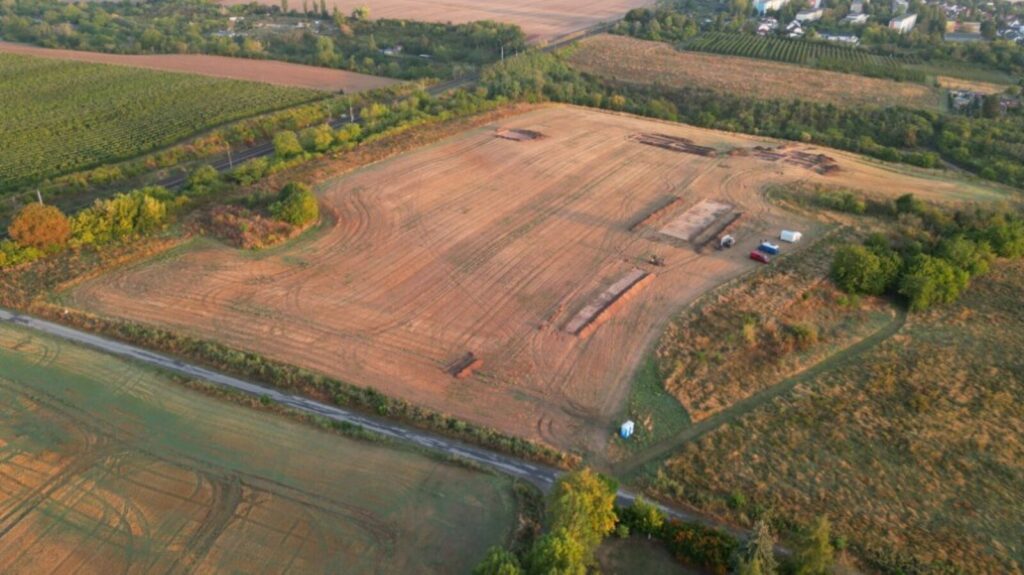
Archaeologists working at a long-lost imperial residence in Germany have uncovered a 1,000-year-old stone building that may once have housed noble guests of Emperor Otto the Great. The find sheds new light on Helfta, an important medieval royal centre that disappeared from the landscape centuries ago.
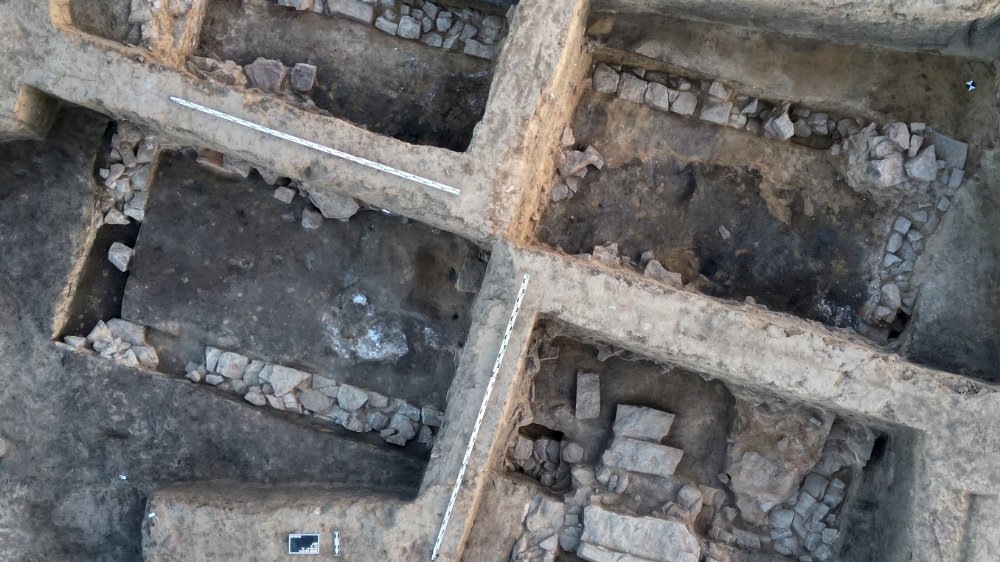
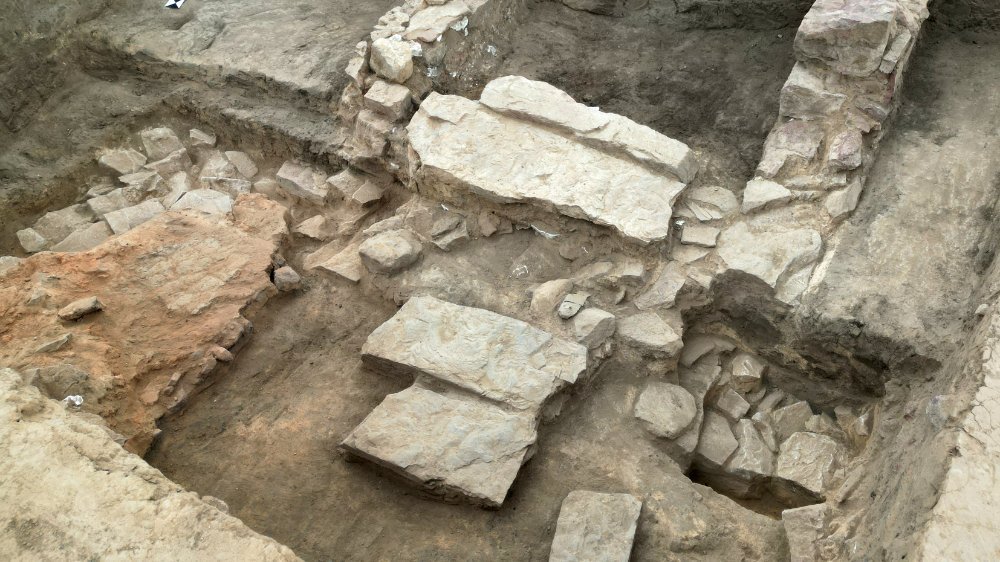
The newly uncovered structure stands beside the former royal palace near Lutherstadt Eisleben in Saxony-Anhalt. Measuring approximately 9 by 5 metres, it contains a cellar and a remarkably well-preserved entrance staircase. Archaeologists think it could have been accommodation for distinguished visitors or the home of an official who managed the palace when the emperor was away.
The State Office for Heritage Management and Archaeology of Saxony-Anhalt announced the discovery on October 12. Professor Felix Biermann is leading the excavations, which started on 31 August and have already revealed several key parts of the medieval complex.
A Forgotten Palace of Otto the Great
For centuries, the royal palace of Helfta existed mainly in historical records. Excavations between 2020 and 2023 finally located its remains on the Kleine Klaus hill, where archaeologists uncovered the foundations of a stone palace and the Church of St. Radegund, which Otto the Great founded before AD 969.
The residence played an important role during the Ottonian dynasty, which ruled much of Central Europe during the 10th century. Historical sources record visits by Otto the Great, his son Emperor Otto II, and Bishop Thietmar of Merseburg, whose chronicles provide valuable accounts of medieval political life.
The newly found building adds another substantial structure to the site. Associated finds date it securely to the 10th century, making it one of the earliest known secular stone buildings in Saxony-Anhalt.
Its precise purpose remains a mystery. Researchers suggest that members of the emperor’s noble entourage may have stayed there, although the building could also have accommodated the burgrave, who oversaw the royal residence in the ruler’s absence.
A Stone Terrace for Imperial Gatherings
Another find gives a sense of how medieval rulers may have exercised power in public. East of the palace, archaeologists uncovered a stone-paved terrace overlooking a courtyard between the royal residence and the church.
They believe the terrace may have served as a platform for outdoor assemblies, allowing the emperor or high officials to address nobles and other visitors. Together with the palace, church, and the newly discovered building, it created an imposing setting designed to display royal authority.
Beyond these grand structures, the digs have also revealed a more ordinary side of Helfta. In the southeastern outer bailey, workers and craftspeople lived in modest sunken-floor houses, typically three to five metres across, with wattle-and-daub walls, wooden or thatched roofs and simple hearths.
Finds of clay weights, crucibles and a lime kiln reveal activities ranging from textile production and metalworking to the manufacture of lime for construction. These workshops and homes illustrate the contrast between the emperor’s monumental stone buildings and the everyday world of the people who supported the royal court.
Silver Coins, Jewelry and an Ancient Bone Flute
The excavations have also produced a remarkable collection of medieval objects. Among them are silver coins dating from the 10th to the 15th centuries, Ottonian earrings and enamelled brooches, including an unusual crescent-shaped fibula.
One especially interesting find is a bone flute that is still almost playable after centuries underground. Archaeologists also recovered iron arrowheads, pottery with characteristic Slavic wave patterns, and a fragment of an antler casket from around AD 1000 decorated with concentric circles.
Together, the objects provide glimpses of the people who inhabited Helfta across several centuries, from the imperial court and its craftspeople to the later medieval communities that occupied the hill.
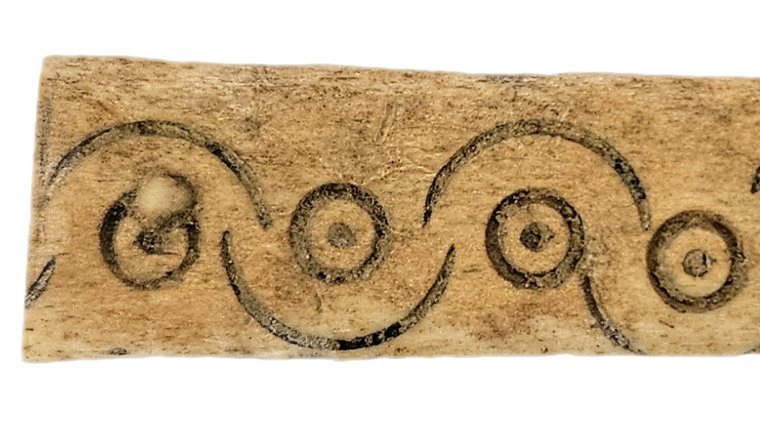
A fragment of an antler casket decorated with concentric circular motifs, dating to around AD 1000, discovered during excavations at the medieval royal palace of Helfta in Germany. Credit: Andreas Kieseler / State Office for Heritage Management and Archaeology of Saxony-Anhalt
A Castle Built Over the Imperial Past
Helfta gradually lost its importance as a royal centre, but the hill continued to attract powerful families. During the 12th century, the noble Hackeborn family established a smaller fortified castle on part of the former imperial site.
Current excavations have exposed sections of its defensive walls, cellars, and foundations of timber-framed buildings, along with the remains of a larger residential structure. Archaeologists have also investigated a second underground passage dating to the late medieval period and additional graves associated with the Church of St. Radegund.
The Hackeborn family had connections to two prominent medieval religious figures, Gertrud and Mechthild of Hackeborn, who became influential members of the nearby Helfta convent. Researchers believe the castle may have been their family home, but they have not yet established this connection conclusively.
Excavations will continue until October 24, with approximately 20 volunteers supporting the archaeological team. As more of Helfta’s buried buildings and everyday objects come to light, a clearer picture is emerging of a royal centre where imperial ceremonies, skilled craftsmanship and ordinary medieval life once existed side by side.
State Office for Heritage Management and Archaeology of Saxony-Anhalt (LDA)
