
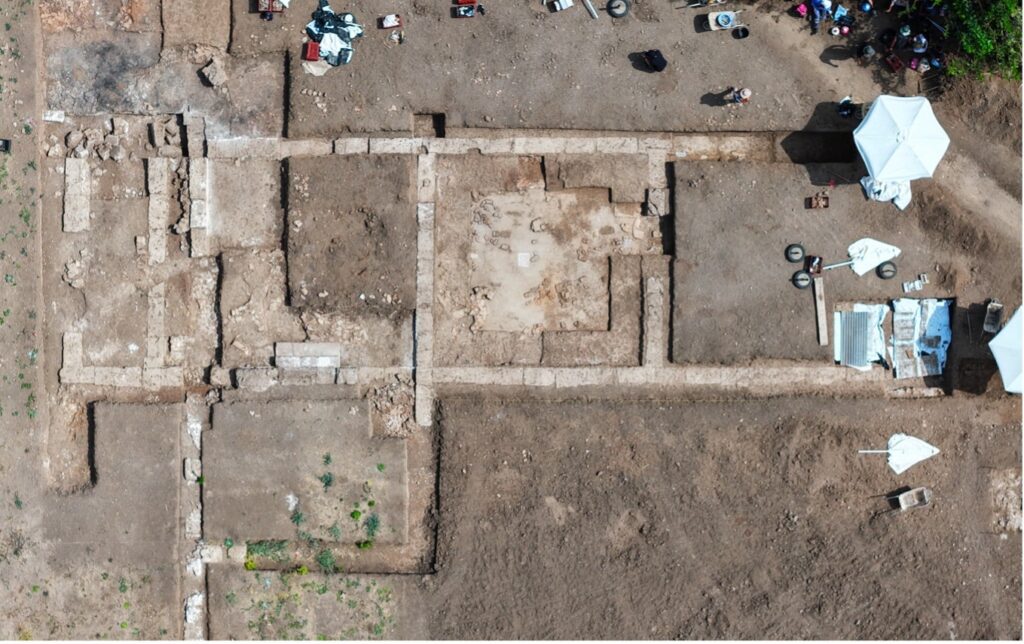
Archaeologists working at ancient Mieza in northern Greece have uncovered new sections of the Royal Gymnasium, a monumental complex associated with the education of young members of the Macedonian elite. The latest excavations have revealed a large three-part building in the area identified as the Didaskaleion, including two banquet halls with mosaic floors and raised platforms for dining couches.
Located near modern Naousa, the gymnasium dates to the mid-4th century BC, during the reign of Philip II. Researchers increasingly associate the complex with the institution where Aristotle is believed to have taught the young Alexander and other sons of prominent Macedonian families.
Two mosaic-floored banquet halls emerge
This year’s excavation concentrated on the eastern part of the complex, where archaeologists have identified lecture rooms equipped with stone benches. Within the same area, known as the Didaskaleion, the team uncovered a three-part structure covering more than 160 square meters.
At its center was an antechamber flanked by two andrones, formal rooms traditionally used for communal dining and symposia. Mosaic floors survive in both rooms, while raised platforms around their edges once supported dining couches.
Each hall could accommodate ten couches, providing space for at least 20 diners. The arrangement suggests that communal meals formed an important part of life inside the gymnasium, alongside physical training and instruction.
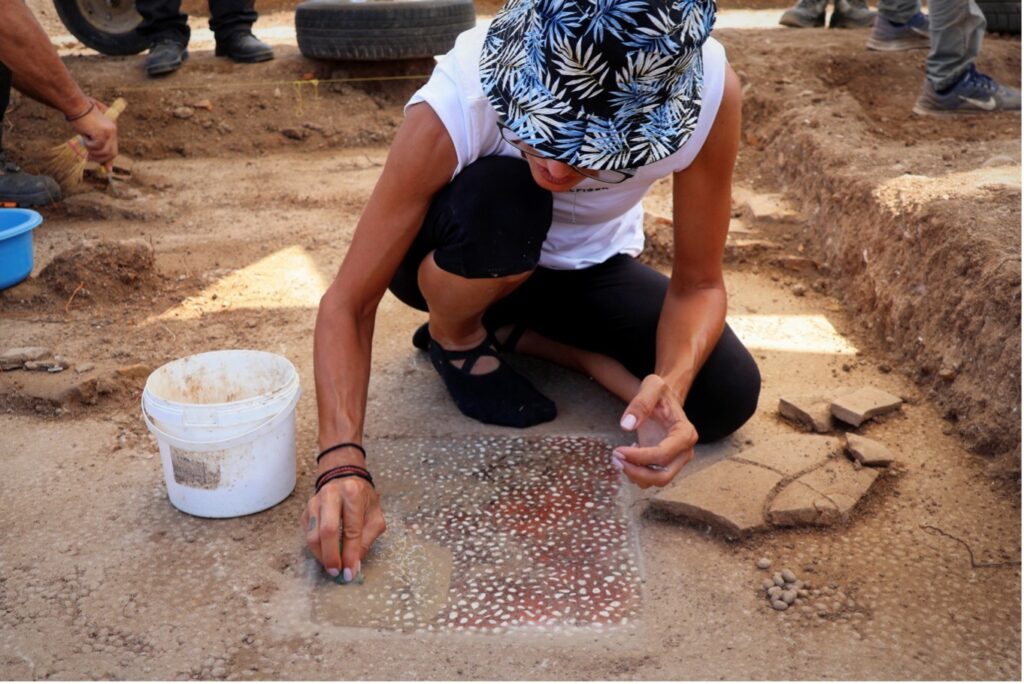
The quality and construction of the mosaic floors are particularly notable. According to Greece’s Ministry of Culture, they show striking similarities to floors found at the royal palace of Aigai, strengthening the architectural connection between the gymnasium and the Macedonian royal environment.
A complex built on a monumental scale
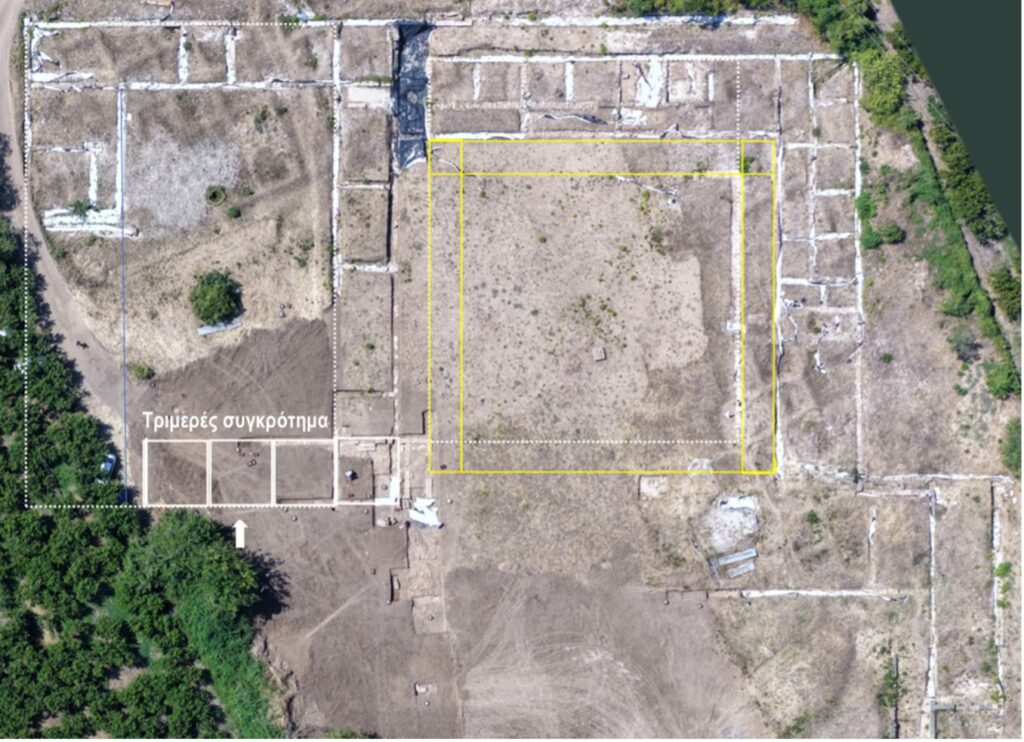
The latest discoveries expand a picture that began to emerge more clearly during earlier excavation seasons. Research announced in 2025 showed that the gymnasium was planned as a single monumental complex in the middle of the 4th century BC.
Builders reshaped the natural bedrock to create three enormous, level terraces arranged in a carefully controlled sequence. These supported different parts of the complex, including the palaestra, the educational areas and the xystos, a covered running track extending for almost 200 meters.
The architecture also shows close similarities to the palace at Aigai. High-quality white plaster survives on walls and architectural elements, while substantial limestone foundations remain preserved in several parts of the site.
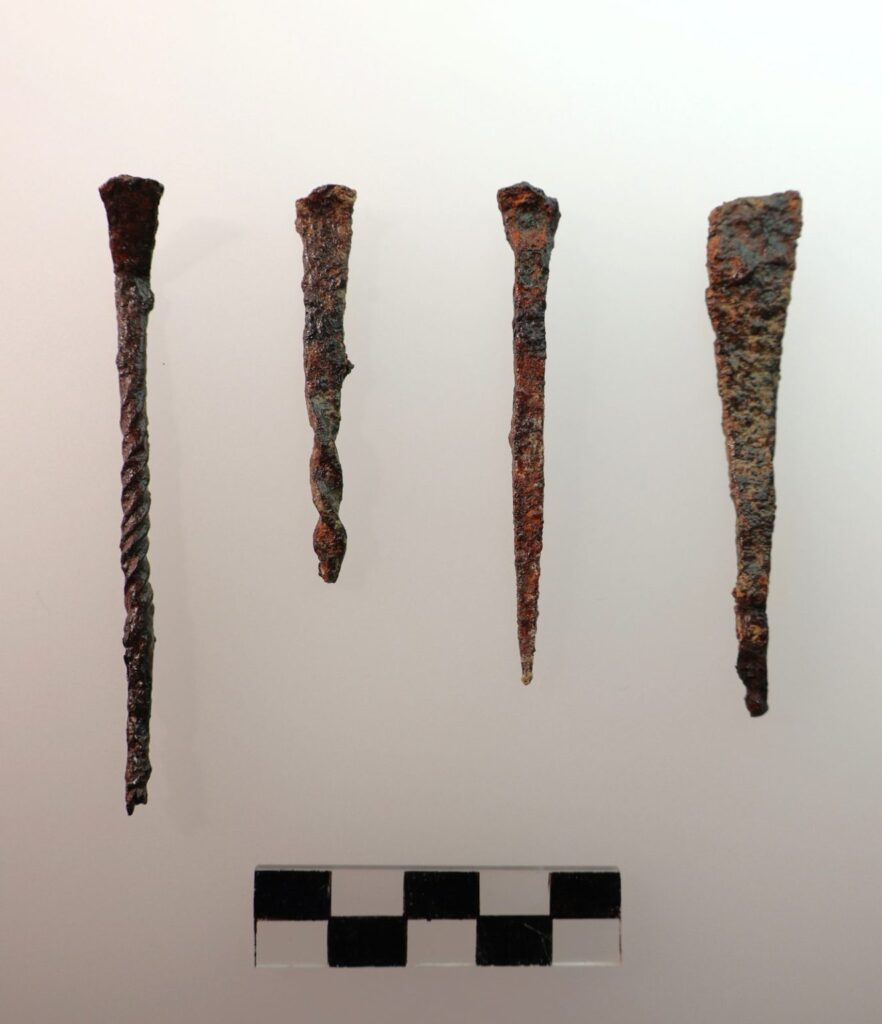
Among the smaller finds recovered during earlier work were fragments of Panathenaic amphorae, probably connected with the use of fine olive oil by athletes. Archaeologists also found four writing styli, objects that offer a more personal glimpse into the educational activity that once took place inside the complex.
New details from the palaestra
Excavations in the palaestra have now added further pieces to the architectural puzzle. Researchers uncovered fragments of Ionic architectural decoration as well as a rare section of a corner Doric architrave belonging to the peristyle.
The latter discovery is especially useful for archaeologists attempting to reconstruct the original appearance of the palaestra. Although much of the complex was dismantled in antiquity, walls, floors and architectural fragments survived beneath destruction and fire layers.
Together with the newly uncovered banquet rooms, these remains suggest a carefully organized institution in which different spaces served distinct functions. Athletic training, teaching, dining and social interaction were not separated into entirely independent spheres but formed part of the same educational environment.
Mieza and the education of Alexander’s generation
Ancient Mieza occupies a distinctive place in the history of Macedonia because of its association with Aristotle and the young Alexander. Ancient literary sources place Aristotle’s teaching activities in the area, while modern archaeological research has increasingly shifted attention toward the monumental gymnasium as the most plausible institutional setting for that education.
The new discoveries do not prove that Alexander personally sat in one particular room or attended meals in the newly uncovered halls. They do, however, reveal the kind of environment in which members of the Macedonian elite were educated during the period in which he grew up.
The combination of lecture spaces, athletic facilities, monumental architecture and formal dining rooms suggests that education at Mieza extended far beyond classroom instruction. Young men were trained physically, intellectually and socially within an institution closely connected to the royal world of Philip II.
With large parts of the complex still unexcavated, the Royal Gymnasium is likely to provide further evidence about how Macedonia prepared the generation that would eventually accompany Alexander into one of the most far-reaching military campaigns of the ancient world.
