
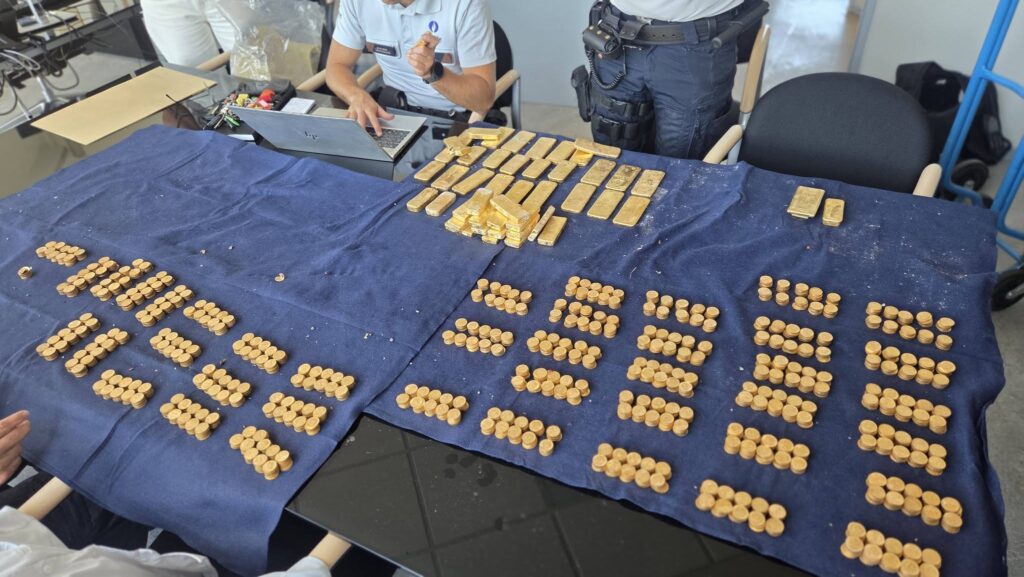
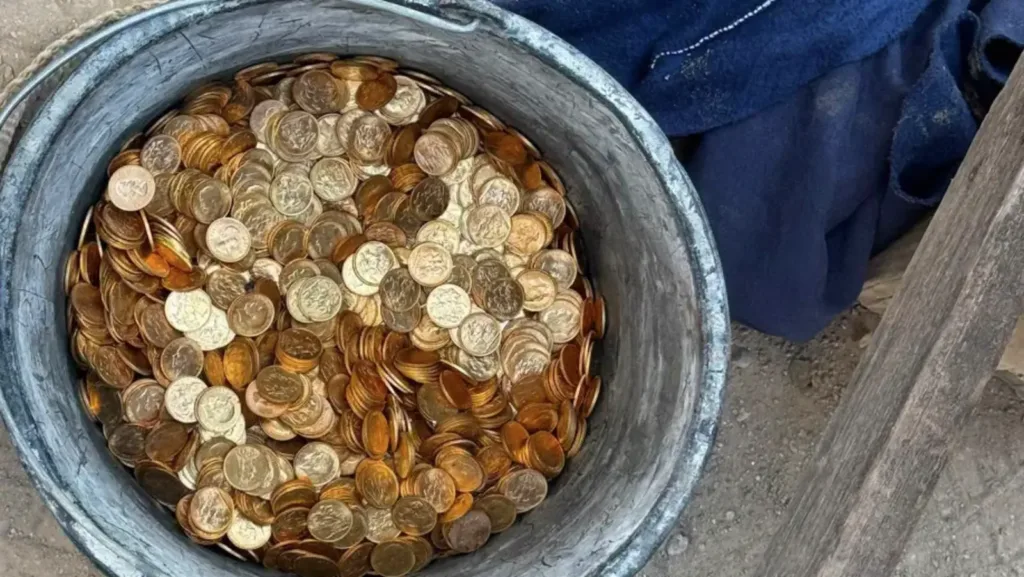
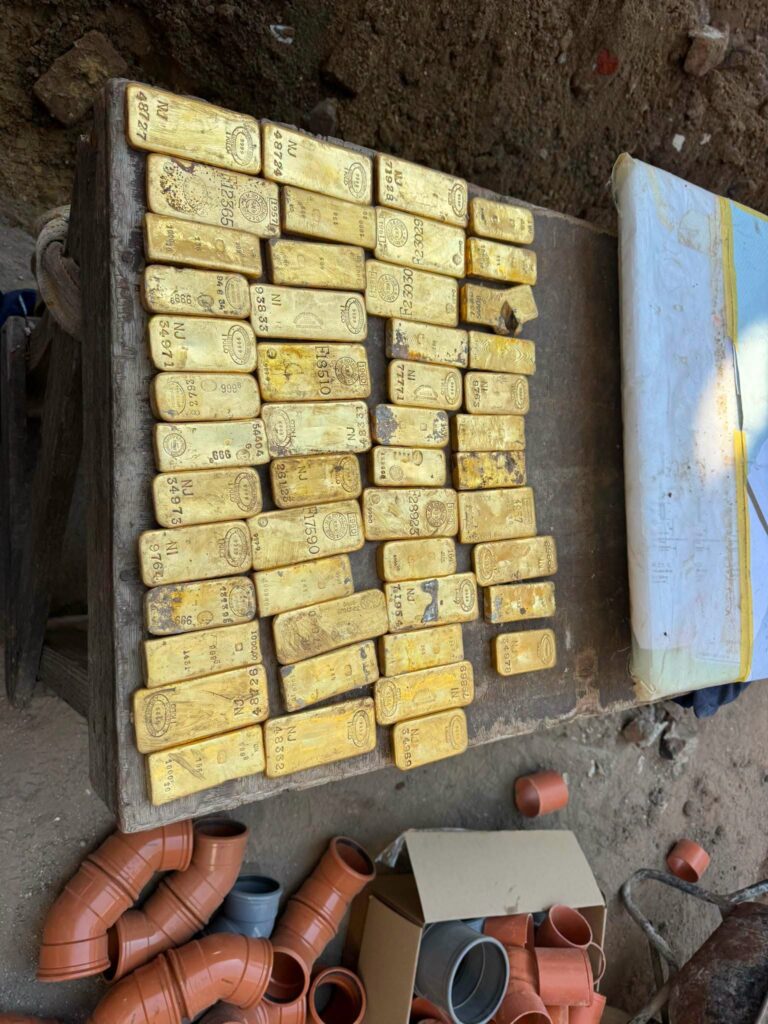
Construction workers renovating a building in the Belgian city of Dendermonde have uncovered an extraordinary hidden cache containing more than 40 gold bars and at least 4,000 old coins, apparently concealed inside a chest built into a cellar wall.
The discovery was reported by VRT NWS and was made at a property in Sint-Gillis-Dendermonde, East Flanders. Although the quantity of coins and the deliberate concealment of the cache immediately raise historical questions, authorities have not yet established when the gold was hidden, who placed it there, or how old the coins actually are.
The treasure was discovered in a building now used by social welfare organization CAW Oost-Vlaanderen. According to reports, the property had served as the home of a brewer from around 1900, providing an intriguing historical connection to the site. There is currently no evidence, however, linking the former resident to the gold.
A chest hidden inside the cellar
Workers from construction company De Brand encountered the cache while carrying out renovation and demolition work at the property.
Eighteen-year-old worker Kobe told VRT NWS that the discovery began during groundworks connected with the installation of a sewer pipe. After part of the foundations was removed, the workers began seeing what initially appeared to be ordinary coins.
“At first I thought they were €1 coins,” he said.
The situation changed when additional objects appeared, including pieces of gold and eventually numerous bars. Site manager Mario said the team continued uncovering coins and ingots as they investigated the area.
The valuables had been placed in a chest concealed within the cellar structure, suggesting that whoever deposited them had deliberately intended to keep them out of sight.
Reports indicate that the cache contained at least 4,000 old coins and more than 40 gold bars. The ingots are reportedly numbered, although no detailed inventory of their markings has yet been released.
The estimated value of the discovery is around €9 million.
Could it be a historical hoard?
From an archaeological perspective, the manner in which the objects were deposited is particularly interesting.
Groups of coins, precious metals or other valuable objects intentionally hidden together are commonly described as hoards. Such deposits can sometimes provide evidence for periods of political instability, warfare, economic crisis or personal attempts to protect wealth.
But in Dendermonde, it is still too early to determine whether the discovery represents an archaeological or historically significant hoard.
Authorities have not released photographs or a scholarly identification of the individual coins, and no information has yet been provided about their dates, denominations, rulers or mints.
Those details could dramatically change the interpretation of the discovery. If the coins span older historical periods, they could help establish when the collection was assembled. If they prove relatively modern, the explanation for the hidden gold may lie much closer to the present.
The building’s connection with a brewer from around 1900 adds another possible line of inquiry, but there is currently nothing demonstrating that the treasure was concealed during that period.
Investigators are examining another possibility
The workers immediately informed their employer, the building owner and the police rather than attempting to remove the treasure themselves.
Police subsequently transferred the gold to a secure location, while the East Flanders public prosecutor’s office opened an investigation into its provenance and legal ownership.
Investigators are not assuming that the cache is necessarily historical.
Geert Hillaert of CAW Oost-Vlaanderen acknowledged that the gold could potentially have been connected with fraudulent or illegal activity and deliberately concealed inside the property.
That possibility means the investigation will have to establish not only the age of the coins and bars, but also whether the valuables can be connected to any previous owner, resident or criminal investigation.
It is also not yet known who will ultimately be entitled to the gold.
The construction workers have expressed hope that they might receive some form of finder’s reward, but no decision has been announced. CAW Oost-Vlaanderen has said that if the organization eventually receives the treasure or its value, the money would be used to expand assistance for homeless and vulnerable people across East Flanders.
The coins may provide the answer
The discovery has already attracted large numbers of curious visitors and would-be treasure hunters to the site. Police have warned people to stay away, noting that the building is being demolished and that heavy machinery, excavations and unstable areas make the location dangerous.
Authorities also say the site has been thoroughly searched and that no additional treasure is expected to remain.
For now, the most important evidence may be the thousands of coins themselves.
Their inscriptions, portraits, mint marks, denominations and dates could reveal when the cache was accumulated and provide a terminus for when it could have been concealed. The numbered gold bars may offer additional clues about their manufacturer, ownership history or circulation.
Until those objects are properly identified, however, the discovery remains difficult to classify.
What is clear is that someone deliberately placed an enormous quantity of gold inside a chest and concealed it within the cellar of a building in Dendermonde. Whether that happened decades ago, more than a century ago, or under circumstances connected to a much more recent event is now the central question facing investigators.
Source: Politie Dendermonde (Dendermonde Police)
