
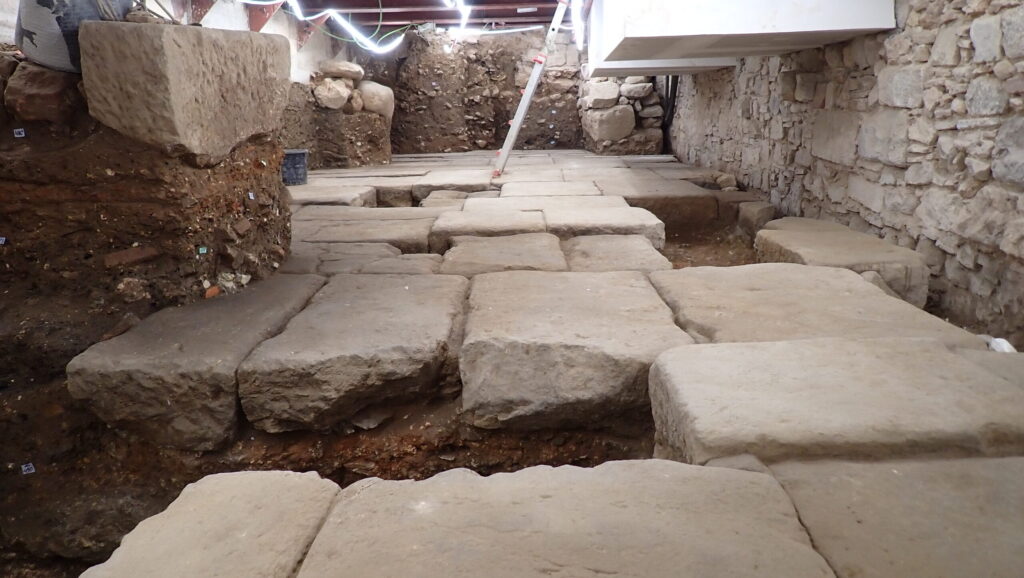
A remarkable archaeological discovery beneath a hotel in Barcelona’s historic center is forcing historians to rethink the layout of the ancient Roman city of Barcino. During renovation works at the Gran Hotel Barcino, archaeologists uncovered a monumental stone pavement that once formed part of the city’s forum—the civic and political heart of Roman life nearly 2,000 years ago.
The find, buried more than two meters below modern street level, dates to the founding decades of the Roman colony between 15 and 10 BC. Experts say the pavement is not only the earliest example of monumental public paving discovered in Barcelona but also a key piece of evidence that could fundamentally change how scholars understand the urban plan of Roman Barcino.
A Forum Hidden Beneath the City
The discovery was made during expansion work at the Gran Hotel Barcino on Carrer d’Hèrcules in Barcelona’s Gothic Quarter. The project initially involved installing a new elevator shaft, a routine construction task that required a small preventive archaeological inspection.
But when workers reached a depth of about 2.5 meters, archaeologists encountered something unexpected: large stone slabs forming an ancient paved surface.
What began as a small excavation area of just six square meters quickly expanded to about 80 square meters after experts realized the importance of the find. The archaeological intervention ultimately lasted more than two years, from June 2023 to July 2025, and revealed one of the most significant remnants of Roman Barcelona discovered in decades.
At the center of the excavation lies a monumental pavement made of stone quarried from Montjuïc, the hill overlooking Barcelona that has supplied building material for the region since antiquity.
Engineering the Heart of a Roman City
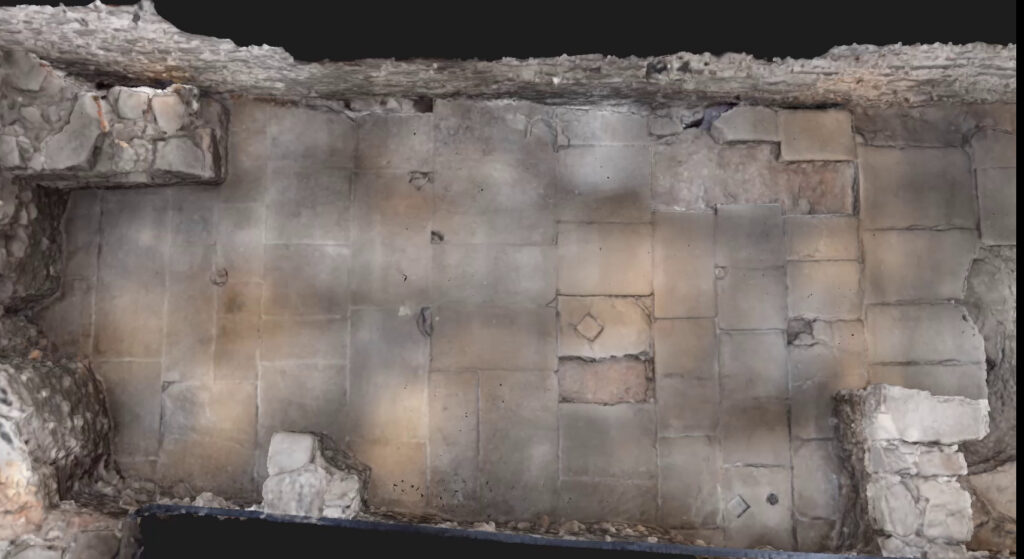
The pavement covers approximately 42 square meters and consists of massive rectangular slabs carefully cut and laid to create a stable surface.
Some of the blocks measure up to 149 centimeters long and 118 centimeters wide, with thicknesses ranging from 18 to 35 centimeters. The variation in thickness allowed Roman builders to compensate for irregularities in the natural bedrock beneath the site, ensuring a level and durable surface.
Such large, precisely fitted stones were typically used in important civic spaces—places designed to impress residents and visitors alike.
“The scale and quality of the pavement indicate that it belonged to a major public area,” archaeologists involved in the project explained.
The slabs were arranged in rows oriented northwest to southeast, a configuration that aligns parallel to the decumanus, the main east–west street that structured Roman urban planning.
This seemingly technical detail may hold the key to rewriting the history of the city.
A 90-Degree Turn in Roman Barcelona
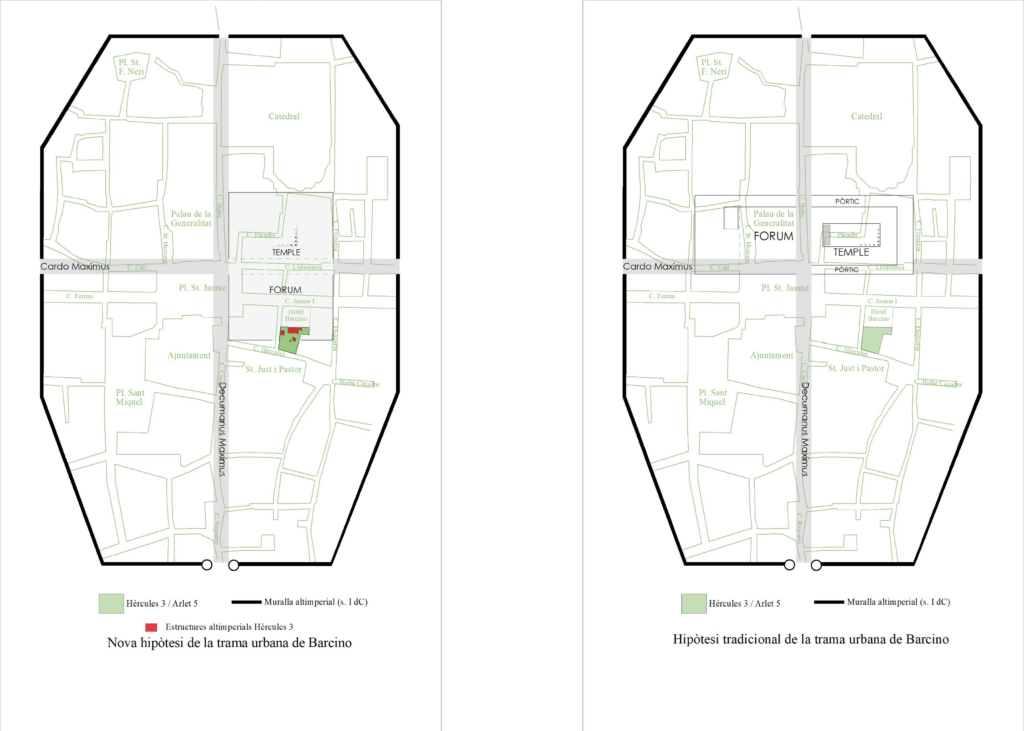
Roman cities were traditionally organized around two main axes: the cardo, running north–south, and the decumanus, running east–west. Where these streets intersected stood the forum—the city’s central plaza where political decisions were made, markets operated, and religious ceremonies took place.
For decades, historians believed the forum of Barcino was aligned parallel to the cardo and occupied an area near the modern Palau de la Generalitat and Plaça Sant Jaume.
The newly discovered pavement tells a different story.
Because the slabs run parallel to the decumanus and perpendicular to the cardo, archaeologists now believe the forum may actually have been oriented along the east–west axis.
If confirmed, this would mean the forum’s layout was effectively rotated 90 degrees from what historians previously believed.
The reinterpretation could reshape scholars’ understanding of the spatial organization of Roman Barcelona and the arrangement of its public buildings.
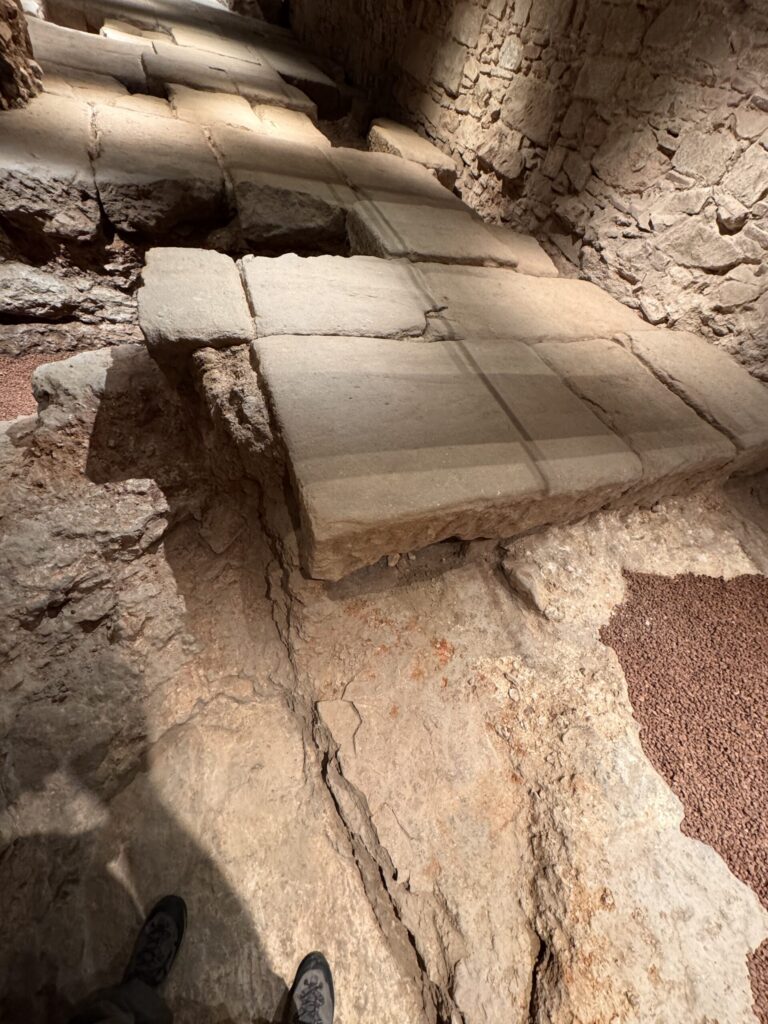
Roman pavement discovered beneath the Gran Hotel Barcino. Credit: Anna Lázaro (Barcelona Archaeology Service).
Beyond the Pavement: A Complex Urban Landscape
The excavation revealed more than just paving stones. Nearby archaeologists found a substantial Roman concrete structure along with two square wells more than 2.6 meters deep.
These wells were connected by a siphon system, a hydraulic mechanism used by Roman engineers to regulate water flow between reservoirs. Such infrastructure suggests the area may have been part of a sophisticated water management system, possibly linked to a fountain or ornamental installation within the forum.
More than 150 fragments of imported marble were also recovered during the excavation. The materials came from quarries across the Mediterranean, including Carrara in Italy, regions of Greece, the Aegean islands, Anatolia, and Egypt.
Their presence indicates that the forum area was once richly decorated with expensive architectural elements.
The site also preserves traces of later centuries. Archaeologists documented evidence of the forum’s decline in the early 5th century AD, when the civic functions of the plaza faded during the political upheavals of the late Roman Empire.
Later layers reveal domestic buildings from late antiquity, medieval modifications, and even a grain storage silo from the Gothic period.
Preserving the Past in a Modern City
Rather than removing the remains, the owners of the hotel adapted their construction plans to preserve the archaeological site.
The pavement and surrounding structures have now been stabilized and integrated into the building’s underground level. The remains will remain in their original position and will be visible inside the hotel’s facilities.
Although the space will primarily be accessible to hotel guests, city officials say guided visits may occasionally be organized in coordination with Barcelona’s archaeological authorities.
A New Chapter for the Origins of Barcelona
The discovery underscores the importance of preventive archaeology in cities with long and complex histories.
Barcelona’s Roman origins date back to the colony of Iulia Augusta Faventia Paterna Barcino, founded under Emperor Augustus more than two millennia ago. The city was built on Mons Taber, a small hill near the Mediterranean coast, where the forum once served as the center of civic life.
Until now, the most visible surviving element from that ancient plaza was the Temple of Augustus, whose four towering columns still stand hidden within a courtyard nearby.
The newly uncovered pavement offers the first clear physical evidence of the forum’s ground surface—and perhaps its true orientation.
For archaeologists, it is a discovery that quite literally changes the map of Roman Barcelona.
Servei d’Arqueologia de Barcelona
Cover Image Credit: Monumental stone pavement from the Roman forum of Barcino discovered beneath the Gran Hotel Barcino in Barcelona. Jordi Amorós (Ager arqueologia)
