
A rare bronze sword dating back nearly 2,700 years has been discovered during a legal metal-detecting search in northern Poland, offering a striking glimpse into the final centuries of the Bronze Age in the Gdańsk region.
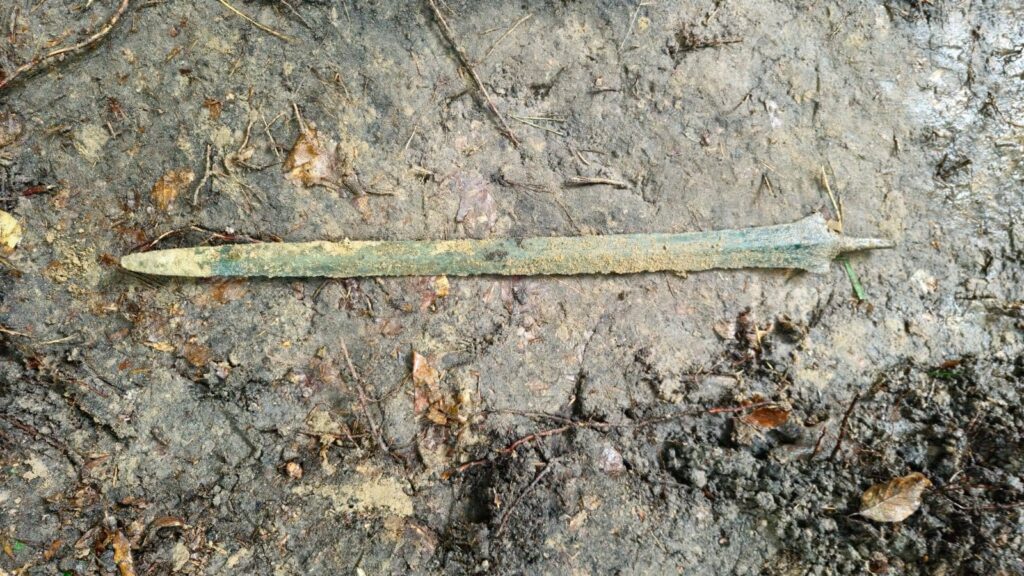
The weapon was found in the Gdańsk Forest District by Polish detectorist Marcin Wiśniewski, who is already known to heritage officials for earlier prehistoric discoveries in the same area. According to the Pomeranian Provincial Conservator of Monuments, the sword was made of bronze and has been preliminarily dated to the fifth period of the Bronze Age, around 900–700 BC.
A rare find from the forests near Gdańsk
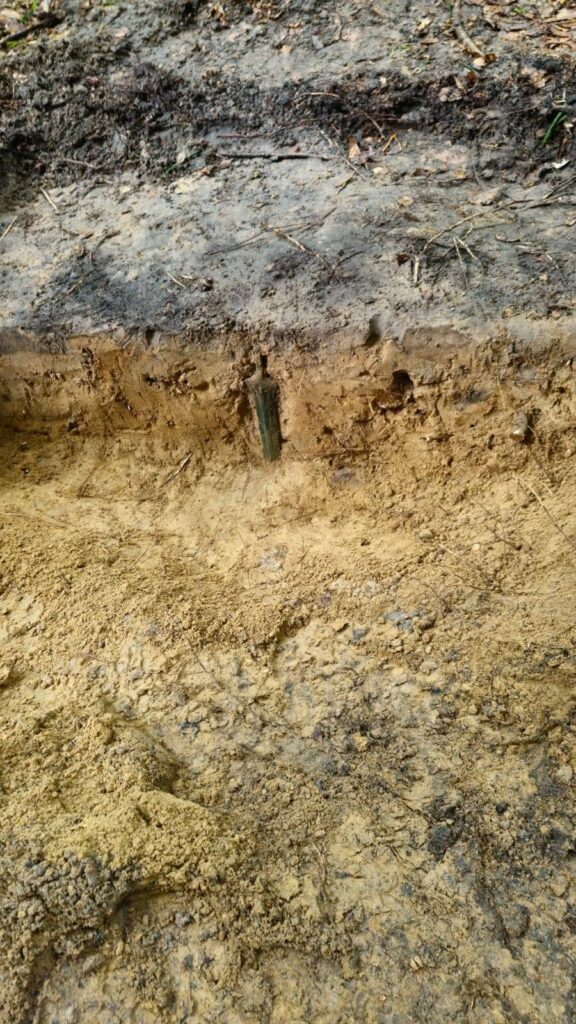
Wiśniewski was searching legally in woodland near Gdańsk when his detector signaled an object beneath the soil. As he carefully cleared the area, part of a blade appeared in the ground. TVP World reported that the detectorist described the moment as overwhelming, saying he was moved to tears when he realized what he had found.
The sword was reportedly embedded vertically in the earth. That position immediately makes the discovery more intriguing, although archaeologists have not yet determined whether it was lost, hidden, ritually deposited, or deliberately placed in the ground for another reason.
Fearing that the artifact could be damaged or stolen, Wiśniewski covered the spot with branches and waited for officials. After the discovery was reported, staff from the archaeological monuments department of the Pomeranian heritage office recovered the sword using archaeological procedures, working together with the finder.
Pomeranian Provincial Conservator of Monuments Dariusz Chmielewski will make the final decision on which museum will receive the artifact.
Not the first Bronze Age sword from the area
The new discovery is not an isolated case. Heritage officials noted that in the 1920s, two bronze antenna swords were found in a peatland at Rynarzewo, also within the area of today’s Gdańsk Forest District. Those artifacts were transferred at the time to the Provincial Museum in Gdańsk but disappeared during World War II.
That detail gives the new sword added importance. It is not only a rare prehistoric weapon. It also partly restores a category of evidence that was once known from the region but later lost through the destruction and displacement of wartime collections.
Bronze Age Pomerania and the world of metal, amber and ritual deposits
Between about 900 and 700 BC, the southern Baltic zone was part of a changing prehistoric landscape. Much of present-day Poland was connected with the Lusatian cultural sphere, a Late Bronze Age and Early Iron Age tradition associated with cremation cemeteries, fortified settlements, bronze objects and broad links across Central Europe.
In northern Poland, including Pomerania, local communities developed their own regional character. By the early Iron Age, the area became strongly associated with Pomeranian cultural traditions, including distinctive burial customs and long-distance exchange networks. Amber from the Baltic coast was especially important, moving through trade routes that connected the southern Baltic with Central Europe and, eventually, the Mediterranean world.
Bronze swords from this period were not everyday tools. They required access to metal, technical skill and social status. In many parts of Bronze Age Europe, swords could serve as weapons, symbols of authority, prestige objects, or offerings placed in wetlands, rivers, graves, hoards or isolated deposits.
For that reason, the Gdańsk forest sword raises larger questions. Was it the possession of a local warrior or leader? Was it hidden during a moment of danger? Or was it placed in the ground as part of a ritual act? For now, the answer remains open.
What is clear is that the discovery adds a valuable new piece to the prehistoric map of Gdańsk Pomerania. Nearly three millennia after it was left in the earth, the bronze sword has returned as evidence of a region that was far from peripheral. It belonged to a dynamic northern world of metalwork, exchange, ritual practice and communities living along the Baltic edge of Europe.
Pomorski Wojewódzki Konserwator Zabytków
Cover Image Credit: Marcin Wiśniewski – Pomorski Wojewódzki Konserwator Zabytków
