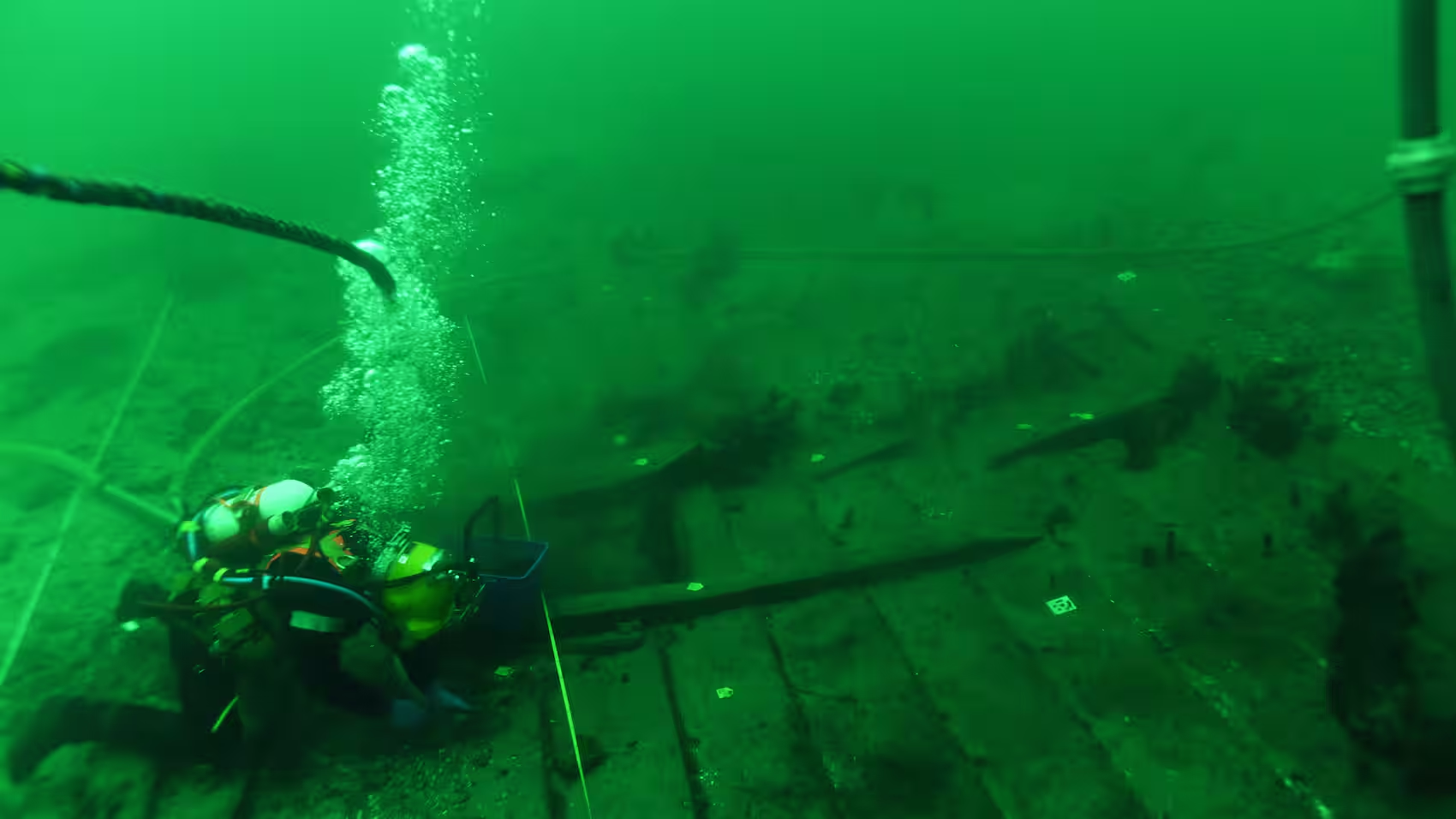
A remarkable archaeological discovery has been made off the coast of Copenhagen: a 600-year-old shipwreck, now identified as the largest cog ship ever found. Estimates suggest the vessel could carry up to 300 tons of cargo, marking it as a major milestone in maritime history.
The ship, dubbed Svælget 2, had rested undisturbed for six centuries at a depth of 13 meters in the Øresund Strait. Marine archaeologists from the Viking Ship Museum in Roskilde, including Otto Uldum, expressed immense excitement at the find. “It is incredible that this ship, the largest of its type, once sailed through Danish waters. It was the medieval equivalent of the Emma Maersk (a modern giant cargo ship known for carrying massive loads),” said historian Cecilie Nielsen from DR TV.
An Exceptional Find
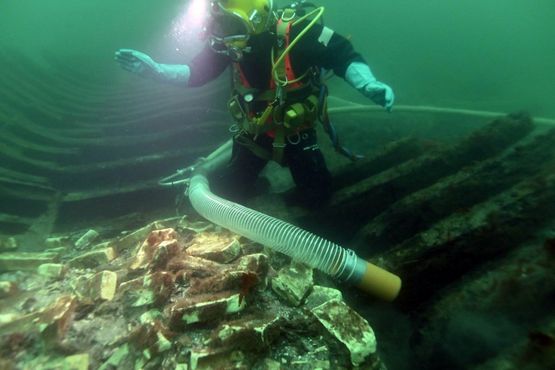
The excavation of Svælget 2 involved 289 dives over more than two and a half years. Archaeologists recovered and examined the ship’s hull, which is astonishingly well-preserved from keel to deck due to its side-on sinking in deep waters. This preservation is rare among medieval cogs, which are usually found in fragments closer to shore.
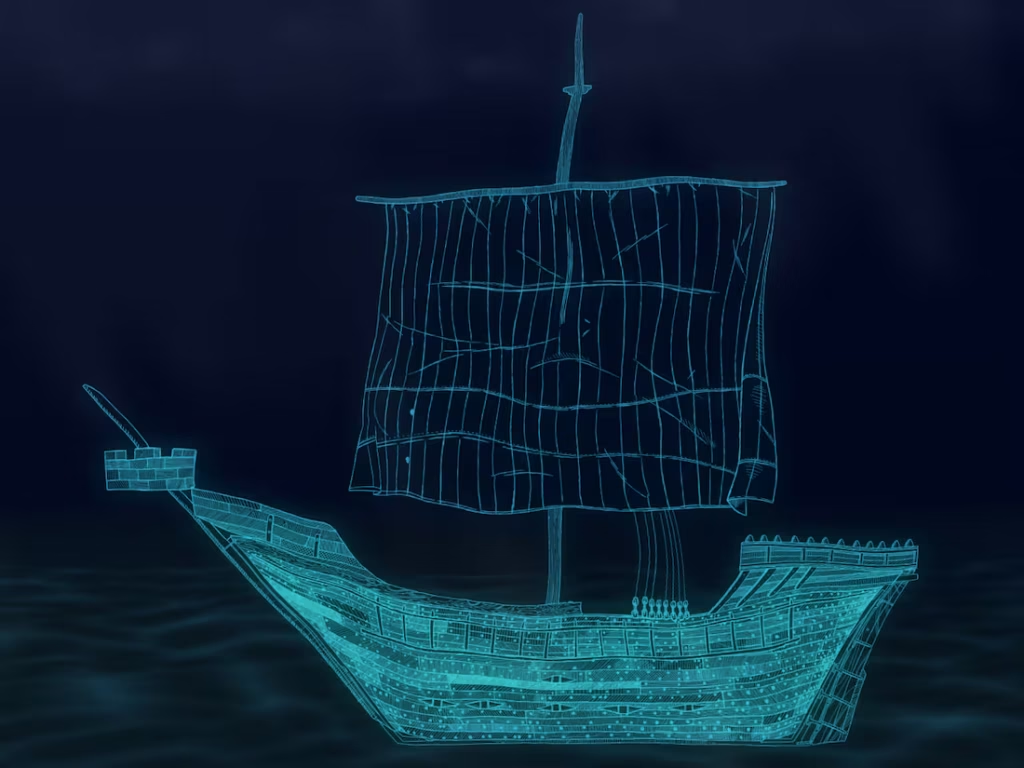
Alongside the hull, the team discovered remnants of the ship’s forecastle and aftcastle—small structures providing shelter for the crew—offering unprecedented insights into 15th-century ship design. Artifacts such as shoes, a comb, a cooking pot, and a wooden tray were also recovered, shedding light on daily life aboard.
Designed for Trade
Cogs like Svælget 2 were highly popular in Northern Europe during the Middle Ages, capable of long-distance voyages with minimal crew. Unlike earlier vessels that transported luxury goods in small quantities, cogs enabled the movement of bulk commodities like timber, bricks, and food over great distances. Svælget 2 itself was built using planks imported from Poland, while its frame was constructed from Dutch timber, highlighting the interconnected nature of medieval European trade networks.
📣 Our WhatsApp channel is now LIVE! Stay up-to-date with the latest news and updates, just click here to follow us on WhatsApp and never miss a thing!!
The vessel measured approximately 28 meters in length, nine meters in width, and six meters in height. With a cargo capacity of 300 tons, it is officially the largest cog discovered to date, reflecting the ambitious scale of medieval commerce. “This ship proves that ordinary goods were traded extensively, and merchants built as large vessels as possible to transport them efficiently,” explained Uldum.
A Ship Built for Business, Not Longevity
Interestingly, Svælget 2 was not built to last. Archaeologists noted that the planks were of mediocre quality, some even cracked during construction. Cogs like this were designed for quick profit, potentially repaying their investment after only one or two voyages. Uldum emphasized that shipbuilding, travel, and trade were highly organized businesses in the 15th century, with established financing structures ensuring commercial viability.
Cultural and Historical Significance
The discovery offers valuable insights into medieval Scandinavian maritime culture. The ship included a stone-built galley, indicating the crew could prepare hot meals while at sea, a detail rarely preserved in other finds. Moreover, the artifacts and construction techniques provide a snapshot of trade and daily life in the Øresund region during the reign of Queen Margrethe I.
For Denmark, the find underscores the country’s historical role in European trade networks. “The way we transported goods in the Middle Ages laid the foundation for modern logistics and commerce in Northern Europe,” noted Cecilie Nielsen. “It’s fascinating to see how similar patterns continue today, even if the cargo has changed.”
Preservation and Public Access
Currently, the wreck of Svælget 2 is undergoing extensive conservation at the National Museum in Brede. Meanwhile, the Viking Ship Museum in Roskilde has opened a special exhibition focusing on marine archaeology and the ship itself. The recovery operation, including the dramatic sawing and lifting of the ship’s keel, was documented in the DR TV series Gåden i Dybet (“The Mystery in the Deep”), giving viewers a firsthand look at the painstaking work behind the discovery.
This extraordinary find not only expands our understanding of medieval shipbuilding and trade but also connects contemporary audiences with Denmark’s maritime heritage, proving that even centuries-old wrecks can reshape our understanding of history.
Cover Image Credit: Viking Ship Museum