
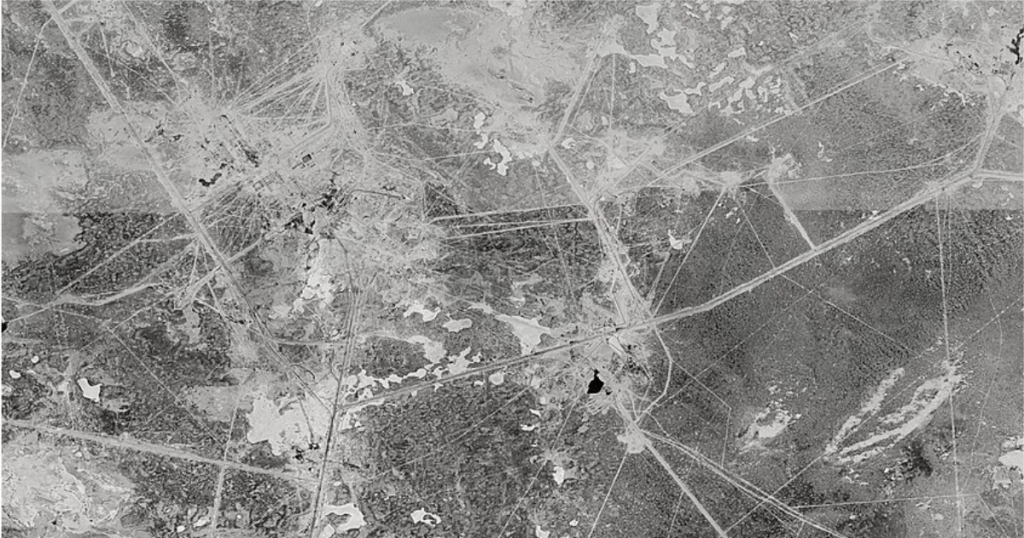
Researchers have used satellite photos for decades for a wide range of purposes, and these images are now widely available. However, researchers have recently found a new use for them. They are using Cold War-era CORONA spy satellite images, which governments declassified in the 1990s, to identify ancient sites in Iraq that have since disappeared from the modern landscape.
The value of CORONA
Researchers from the University of Bologna examined the Abu Ghraib district west of Baghdad, located in the Mesopotamian floodplain, using Cold War-era CORONA satellite images.
Farming, construction, urban expansion, and conflict have erased or damaged numerous archaeological sites across the area, including features that researchers could only identify from the air. Because modern satellite imagery cannot reveal sites that have already disappeared, CORONA provides researchers with a valuable glimpse into the past. Captured during the 1960s and 1970s, before much of the region underwent extensive development and later conflicts, these images preserve a view of the landscape that has largely disappeared today.
Retraining AI
The researchers faced a problem: the AI they had was designed to spot archaeological sites in modern satellite images, not in the blurry black-and-white photographs that CORONA took decades ago. Instead of forcing the old images into a modern system, they retrained the model using CORONA imagery.
The efforts paid off. The new model achieved an IoU score of more than 85 percent and detected sites with about 90 percent accuracy. Both results surpassed the model’s performance on modern satellite images. In this case, training the AI to work with older, messier data turned out to be exactly what the researchers needed.
Tested in real sites
The results became much more meaningful when the researchers put the model to work beyond the computer screen. The model identified four archaeological sites that archaeologists had never recorded, and field teams later visited the locations and confirmed the discoveries.
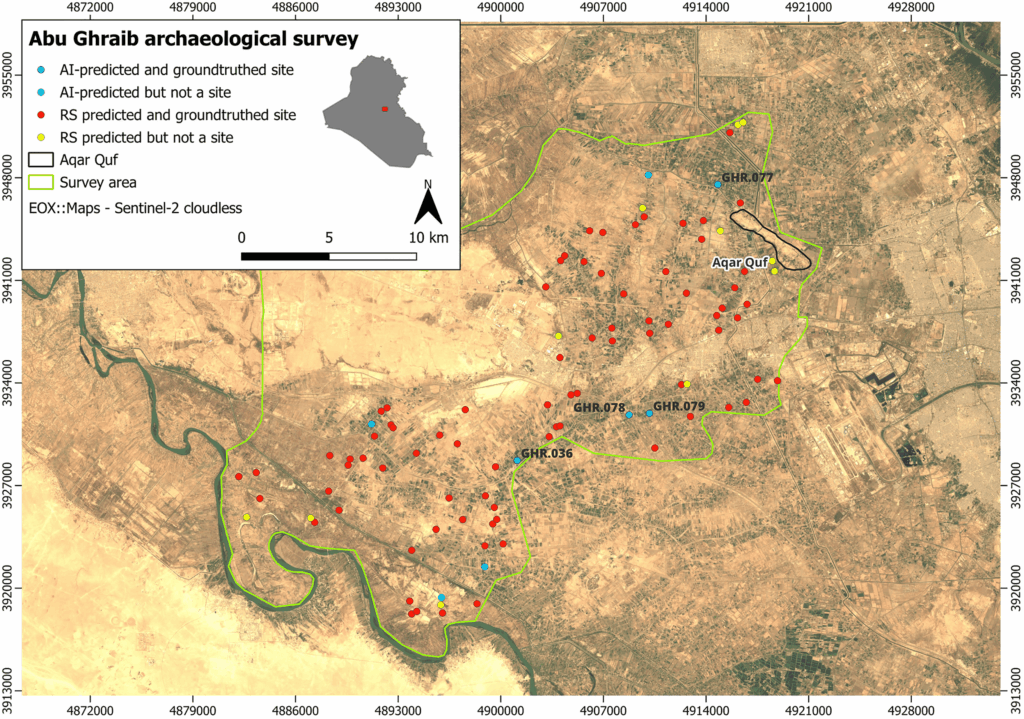
Each site represents a previously unknown piece of Mesopotamia’s past, preserved in satellite photographs that CORONA took more than 50 years ago. Even more remarkably, the modern landscape now hides most of the remains, making them difficult or impossible to see today.
Looking back to move forward
The real value of the project goes beyond finding a few lost sites. CORONA images give archaeologists something modern satellite imagery cannot: a record of the landscape before decades of farming, construction, canal digging, and urban expansion transformed it. By training AI to read these older images, researchers can recover clues that have vanished from the ground but remain preserved in photographs taken more than half a century ago.
That makes the approach especially useful in places where archaeological evidence is disappearing faster than researchers can document it. Instead of treating old satellite images as historical curiosities, the study shows that they can serve as a kind of archaeological time capsule, giving researchers a way to reconstruct landscapes that no longer exist.
