When archaeologists explore prehistoric landscapes, they often expect to uncover pottery fragments, tools, or settlement debris. What they rarely expect is a forgotten river yielding some of the most extraordinary watercraft ever found in Bronze Age Europe. Yet this is exactly what happened in the wetlands near Peterborough, England—an area long known for its archaeological richness, but still capable of surprising even seasoned researchers.
A Hidden Riverbed and an Unexpected Discovery
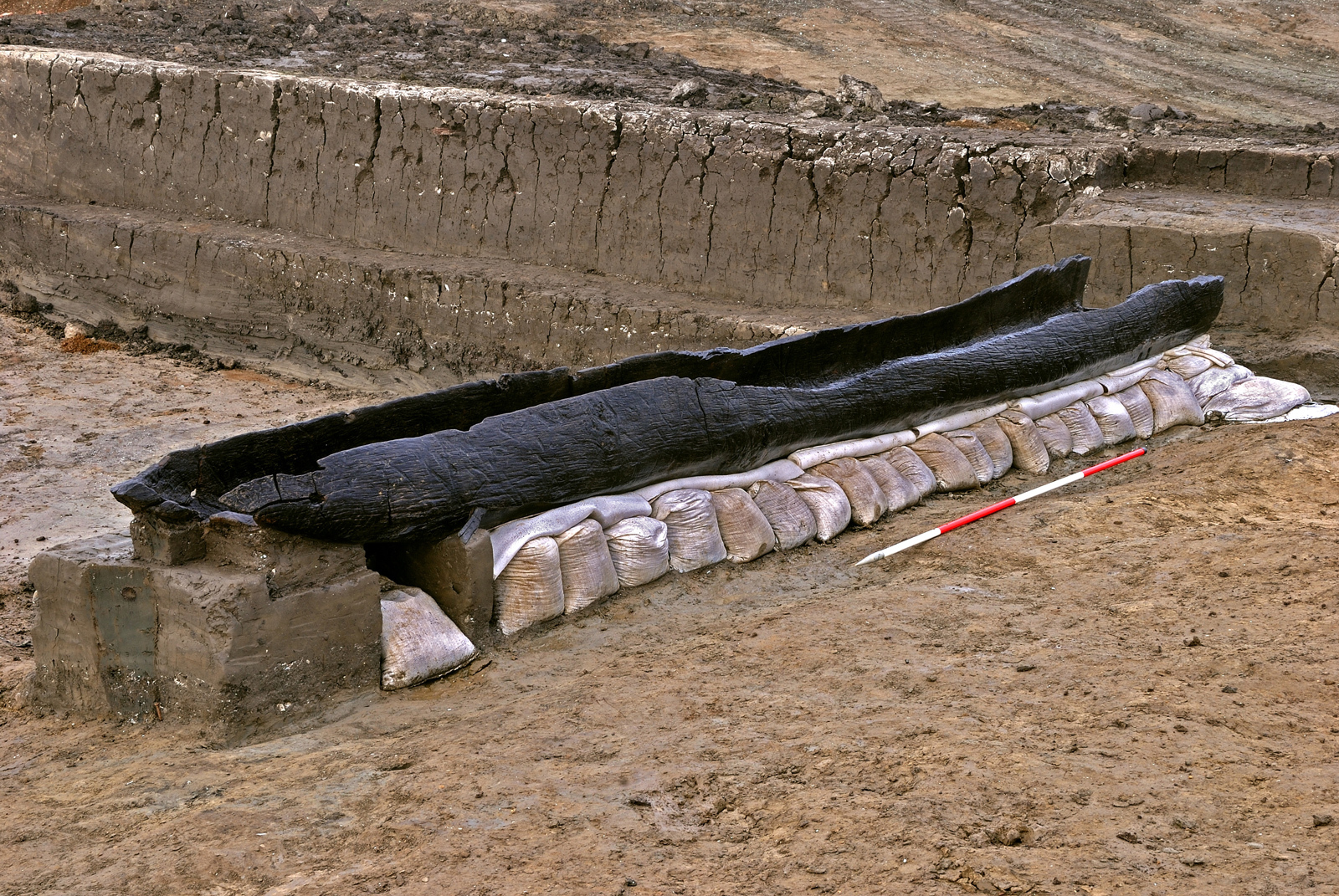
The eastern wetlands of Peterborough, particularly around the famous Flag Fen basin, have produced remarkable artifacts for decades. But the real turning point came when the Cambridge Archaeological Unit investigated a dried, silt-filled branch of an ancient river. What first seemed like a routine survey quickly turned into a once-in-a-generation discovery: nine prehistoric boats, some nearly intact, preserved deep in the anaerobic wetlands.
These watercraft, dating from approximately 1700 to 650 BCE, represent an astonishing range of craftsmanship and style. Some were large and robust; others were smaller, more delicate, and carved for specific functional roles. Their state of preservation stunned experts, offering an unparalleled view into ancient woodworking traditions and waterborne transport.
Why These Boats Matter: A Window Into Bronze Age Life
In the Bronze Age, particularly in lowland fen regions, boats were not optional—they were essential. Waterways acted as transport routes, hunting corridors, communication networks, and trade channels, similar to today’s highways. Communities living near Flag Fen and Must Farm relied heavily on rivers to move goods, travel between settlements, and access resources in the wetlands.
The newly discovered boats—made predominantly from oak and field maple—reveal the precision and labor invested into creating single-log vessels. Tools used to shape and hollow the trunks left marks still visible after 3,500 years. The craftsmanship shows advanced knowledge of wood behavior, buoyancy, and hydrodynamics.
📣 Our WhatsApp channel is now LIVE! Stay up-to-date with the latest news and updates, just click here to follow us on WhatsApp and never miss a thing!!
Their survival also highlights how people adapted to the challenging fen environment. Instead of avoiding the watery landscape, they used it to their advantage, creating a thriving network of settlements connected by boats like these. This makes the finds invaluable for understanding Bronze Age engineering, mobility, trade, and daily life.
Flag Fen and Must Farm: Europe’s Bronze Age Powerhouses
The region is home to Must Farm, often called “Britain’s Pompeii of the Bronze Age” because of its exceptional preservation. Excavations in 2015 revealed stilt houses, wooden tools, pottery, jewelry, and even textiles—artifacts rarely preserved for millennia.
The boats complement these discoveries perfectly. They complete the picture of a complex society that built homes above water, transported goods across muddy landscapes, and crafted sophisticated wooden objects.
Supporting finds—such as a carved stern panel, a beautifully decorated Bronze Age wheel, and numerous small wooden artifacts—show that woodworking was not only functional but also artistic.
Thirteen Years of Conservation: A Race Against Time
Following their recovery in 2011 and 2012, the boats began a long and delicate conservation journey. Preserving waterlogged wood requires advanced techniques to prevent shrinkage and cracking once it dries. To stabilize the vessels, conservators used the same wax-based solution that famously saved the Tudor warship Mary Rose.
For over a decade, the nine boats rested in controlled tanks, absorbing stabilizing agents slowly and evenly. Now, after 13 years, the first three are fully conserved and ready for the public.
Meet the Bronze Age Boats: Dorothy, Alan, and Betty
Archaeologists affectionately named the boats during recovery:
Boat 6—“Dorothy”: A 6.3-meter oak vessel dating to around 1300 BCE. Its long, elegant form demonstrates remarkable woodworking precision.
Boat 7—“Alan”: A compact, 2.2-meter oak boat from around 1400 BCE, likely used for short-distance transport within the wetlands.
“Betty”: The oldest of the three on display—a 76-centimeter field-maple fragment dating to roughly 1700 BCE. While incomplete, it offers crucial insight into early boat-building methods.
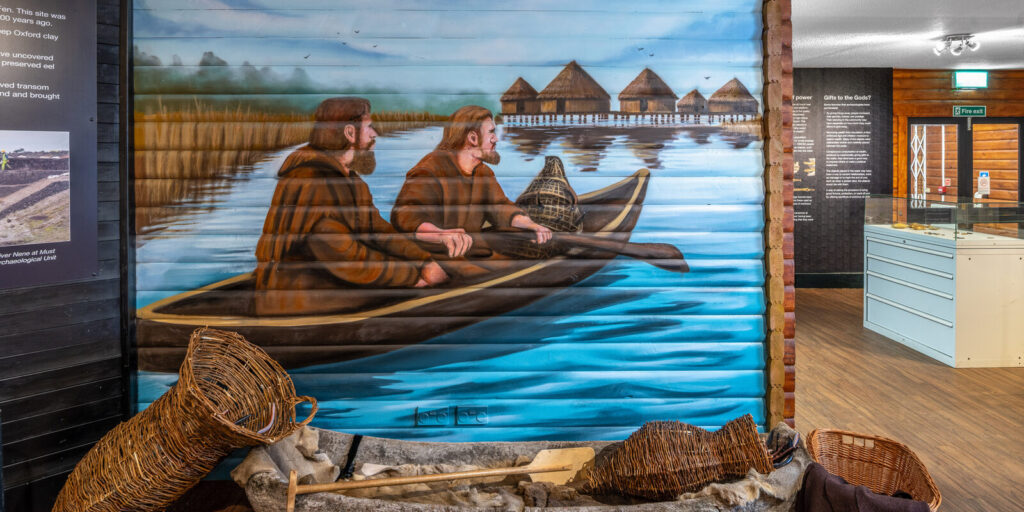
These boats—along with replicas, interpretive displays, and objects from Must Farm—now form part of a new permanent exhibition at the Flag Fen Archaeology Park.
What Comes Next?
Six additional boats remain in conservation baths, with restoration timelines still open. But what has already been achieved is groundbreaking. These vessels, kept safe for millennia by wetland soils, now re-enter the public eye to illuminate the ingenuity and resilience of Bronze Age communities.
Their rediscovery began as an archaeological curiosity, evolved into a major conservation effort, and ultimately became a world-class exhibition. Today, visitors can step closer to a time when waterways shaped society—and when boats like Dorothy and Alan were not relics, but lifelines.
Cover Image Credit: Flag Fen Archaeology Park