
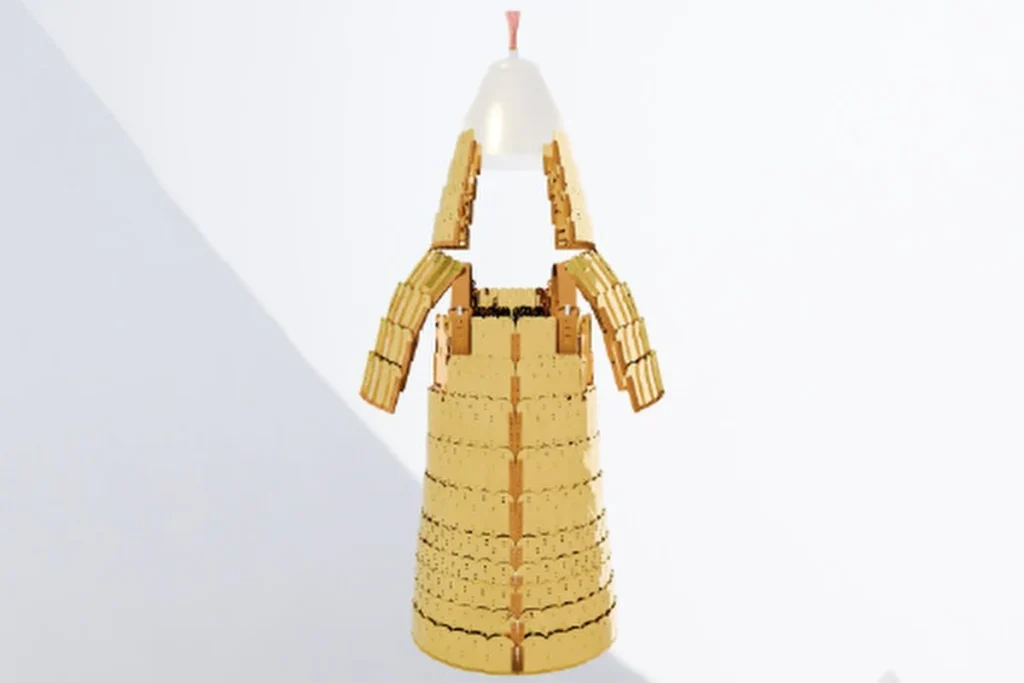
A team of Chinese conservators has unveiled a restored suit of gilded bronze armour from the Tang dynasty, believed to be the only surviving physical example of the legendary “golden armour” described in ancient poetry. The armour was recovered from a royal tomb on the Tibetan plateau and is believed to have belonged to a Tuyuhun king, according to the conservation team.
Historic Discovery in Tibetan Plateau Tomb
The armour was discovered in a royal burial site in Dulan county, northwestern Qinghai province, an important transit point along the ancient Silk Road. The tomb was excavated and salvaged between 2022 and 2025 by the Key Laboratory of Archaeological Sciences and Cultural Heritage at the Chinese Academy of Social Sciences (CASS).
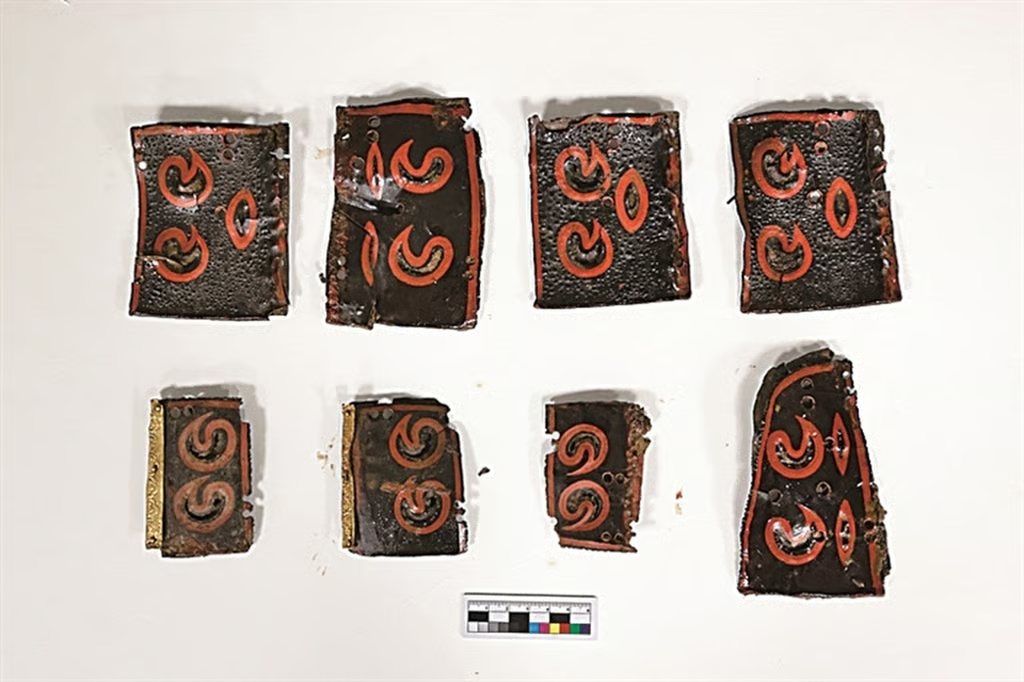
In January 2025, the team revealed the restored armour after years of careful reconstruction. The armour was found in a fragmented and degraded state due to previous looting and early salvage attempts. Conservators described the pieces as fragile and mixed with lacquered armour fragments, making reconstruction extremely difficult.
Restoration Method and Scientific Analysis
To restore the armour, the team used a strategy of “disassembling the whole into parts and reassembling the parts into a whole.” Each plate was cleaned, catalogued, and protected using modern conservation techniques. 3D scanning and microscopy were used to document the armour’s original spatial layout and to analyze its composition.
The team confirmed that the armour was gilded, meaning it was bronze covered with gold leaf or gold plating. This finding supports ancient Tang dynasty poetry that celebrated golden armour as a symbol of power and resilience.
A 2024 excavation report in the journal Archaeology described the find: “Several bronze armour plates were discovered … The plates are nearly rectangular with a semicircular lower edge … A large number of lacquered armour pieces were also found.”
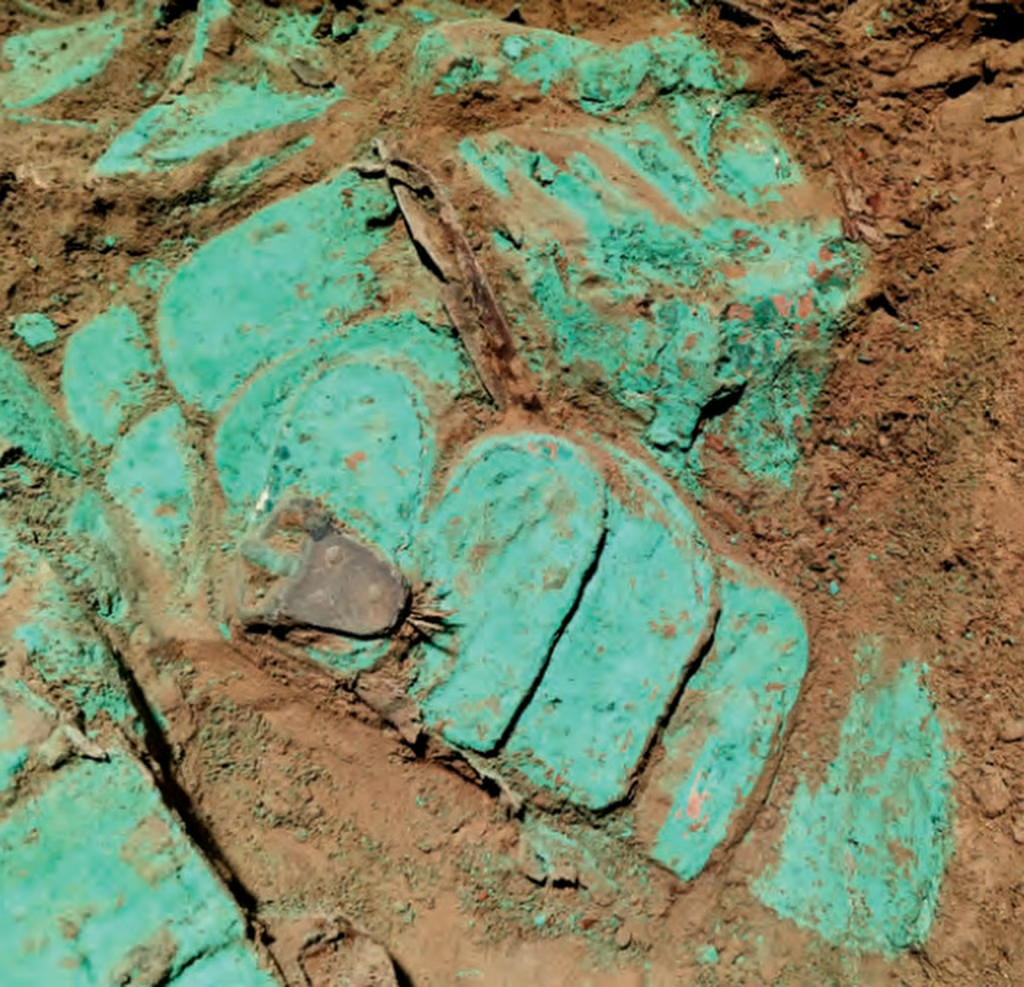
Pieces of the armour pieces pictured during the excavation process. Credit: Chinese Academy of Social Sciences (CASS)- Handout
Video Reconstruction Reveals Original Appearance
Alongside the physical restoration, the conservators produced a video reconstruction showing how the armour likely appeared when it was first worn. The reconstructed suit reflects descriptions from Tang-era poems, including lines that compare armour to “golden scales” glimmering in the sun.
Using tree-ring dating of wooden structures in the tomb and analysis of gold objects and silk textiles, researchers dated the burial to the mid-8th century. The tomb’s occupant was identified as a Tuyuhun king, suggesting that the golden armour was among the most valued possessions of the ruler.
Tuyuhun Kingdom: A Powerful Frontier State
The Tuyuhun kingdom was a major power on China’s western frontier during the early medieval period. Established in the 3rd century, the Tuyuhun controlled strategic routes across the Tibetan plateau and played a key role in Silk Road trade.
The kingdom was later conquered by the Sui dynasty and then by the Tang dynasty, after which it became a vassal state under the Tubo empire (Tibetan Empire). The tomb’s location in Qinghai reflects the historical importance of the region as a cultural and military corridor linking the Tang dynasty and the Tibetan plateau.
Military Culture and Armour in the Tang Era
The discovery also sheds light on the martial culture of the period. The tomb contained not only gilded armour but also equestrian equipment and other types of protective gear, including iron and lacquered armour.
These findings match historical records in the New Book of Tang, written in the 11th century by historian Ouyang Xiu. The text described Tubo armour as “excellent armour covering the entire body, with only openings for the eyes,” suggesting advanced craftsmanship and strong battlefield protection.
A New Physical Proof of Tang Dynasty Poetry
The restored armour provides the first real-world evidence of the “golden armour” that has been celebrated in Tang poetry for centuries. The discovery is significant not only for archaeology and cultural heritage but also for understanding the relationship between literature and historical reality.
As the restored suit is displayed to the public, scholars hope it will offer new insights into the military, artistic, and political life of the Tang era and the powerful Tuyuhun kingdom that once dominated the Silk Road.
Cover Image Credit: Chinese Academy of Social Sciences (CASS)
