
23 June 2026 The Future is the Product of the Past

Hidden Treasure from the Thirty Years’ War: Rare Silver Coins Found in Copper Cauldron in Brandenburg

A rare archaeological discovery in Germany has captivated historians: Silver coins dating back to the early 17th century have been found inside a copper cauldron during excavations at Gotthardtkirchplatz in Brandenburg an der Havel, a historic city in northeastern Germany. The treasure is believed to have been hidden around 1634, during the chaos of the Thirty Years’ War.

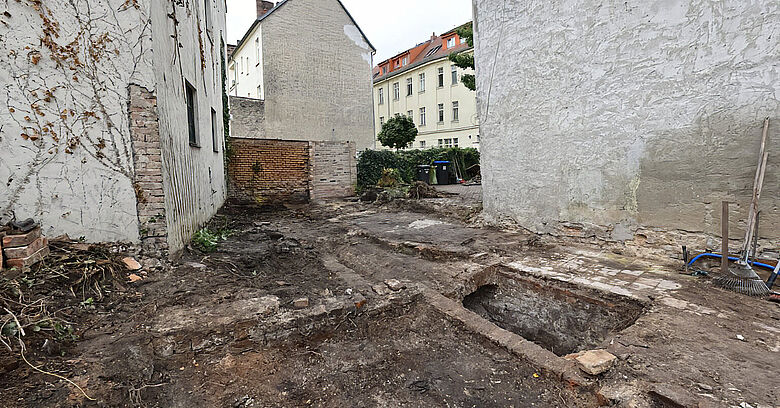
The discovery was made possible by a construction project for a new extension of the Youth Art Gallery Sonnensegel e.V., allowing archaeologists to investigate the site of a former half-timbered house. The building was abandoned and leveled in the 17th century — and now reveals a secret hidden for nearly 400 years.
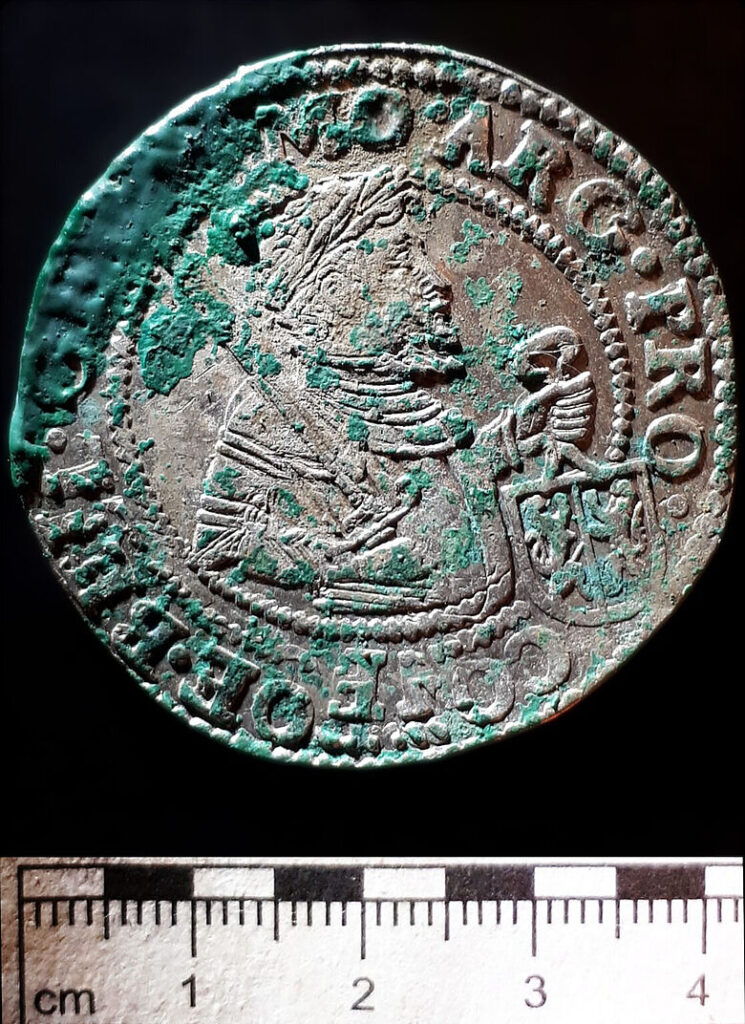
½ Reichsthaler, Netherlands, 1618. Credit: Stefan Dalitz

Rare Coins from Across Europe

The kettle revealed imprints of coins measuring approximately 3 to 4 cm in diameter and 1.5 mm thick. The first coin discovered was a “Dicken” from Zug, Switzerland, dated 1610 and bearing the image of Saint Oswald. This initial find led the team to further sift through excavation debris.

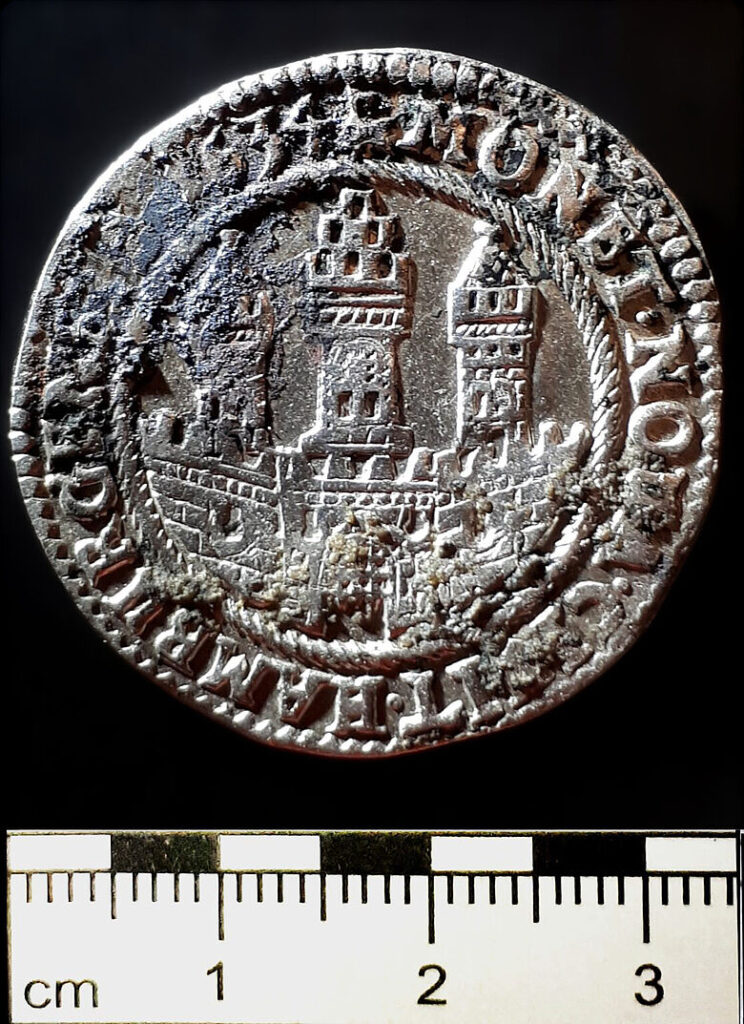
In a remarkable twist, a volunteer monument conservator unearthed a half Dutch Reichsthaler from 1618 — the year the Thirty Years’ War began. The final coin found was a city coin from Hamburg, dated 1634, featuring the name of Holy Roman Emperor Ferdinand II, who also ruled as King of Bohemia.

The wide geographic spread of the coins — from Switzerland, through the Rhineland, to Hamburg — raises compelling questions. Why were only three coins buried in such a large kettle? And what prompted the residents to hide them in the first place?


📣 Our WhatsApp channel is now LIVE! Stay up-to-date with the latest news and updates, just click here to follow us on WhatsApp and never miss a thing!!


1 Thaler, Free City of Hamburg, 1634. Credit: Stefan Dalitz

A Glimpse into Everyday Life and Forgotten Histories

Beyond the coins, the excavation uncovered further evidence of the site’s historic use. Fragments of non-ferrous metal sheets, small slag pieces, and solder droplets suggest that a metalworker or belt-maker once lived and worked in the home. These traces of craftsmanship provide a unique glimpse into the trades practiced during the early 17th century.

Even older layers revealed signs of prehistoric settlement dating back to the post-Ice Age period. Soils from the 12th century were also preserved, showing the Gotthard Church was originally built on an elevated site. An associated medieval cemetery extended across the present-day buildings, used longer than previously thought. Remarkably, the oldest burial uncovered was in a tree-trunk coffin of Slavic origin.
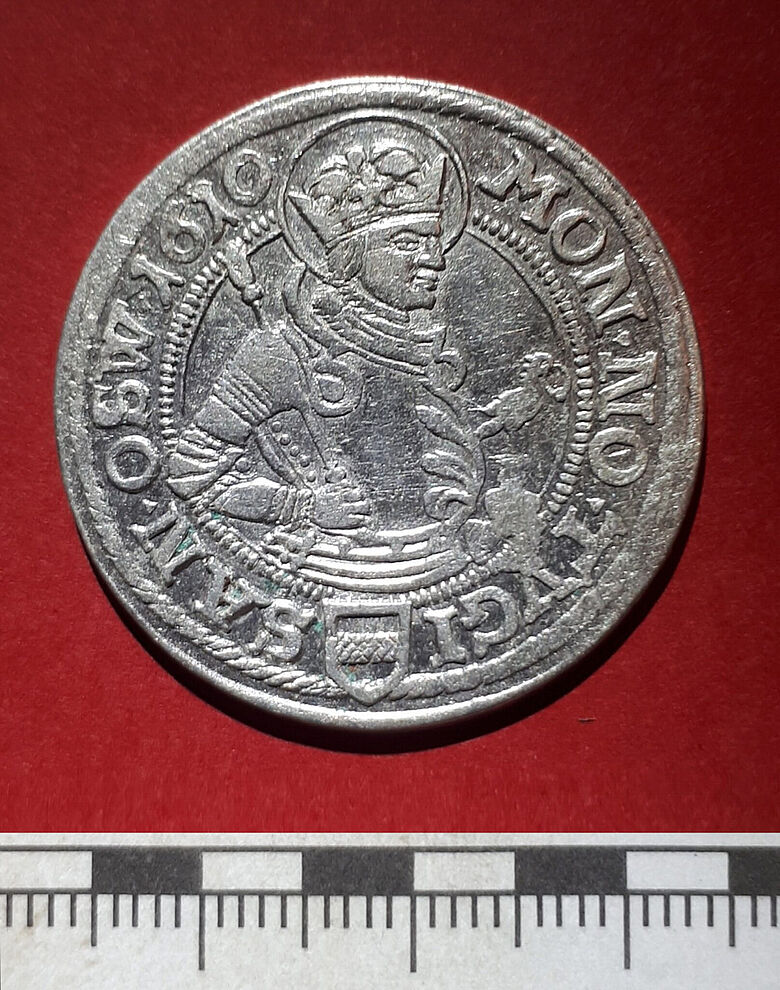
1 Dicken, City of Zug (Switzerland), 1610. Credit: Stefan Dalitz

A Treasure That Sparks Questions

This rare silver find adds another chapter to Brandenburg’s rich historical tapestry. Yet it leaves behind unanswered questions about life during the Thirty Years’ War and the people who lived — and hid their treasures — at Gotthardtkirchplatz.

Though small in number, the silver coins and the copper cauldron that held them offer a powerful connection to a time of war, uncertainty, and survival. Their discovery invites both scholarly interest and public fascination with Brandenburg’s hidden past.

Brandenburgisches Landesamt für Denkmalpflege und Archäologisches Landesmuseum

Cover Image Credit: The excavation site. Credit: Joachim Müller

Related Articles

Mystery of Knaresborough Roman hoard revealed by Newcastle experts

13 January 2024

13 January 2024

Archaeologists at Newcastle University have investigated one of the most unusual late-Roman metalware ever discovered in the British Isles. Although...

Extraordinary 27,000-Year-Old Gravettian Female Figurine Head Discovered at Amiens-Renancourt, Northern France

9 July 2025

9 July 2025

Recent archaeological excavations at the Amiens-Renancourt 1 site in northern France have unveiled an extraordinary Gravettian-era female figurine head, dating...

Archaeologists may have uncovered a 13th-century castle in Shropshire

7 August 2021

7 August 2021

Archaeologists have been working on a mound of land in Wem, Shropshire, that belongs to Soulton Hall, Elizabethan mansion and...

The 2000-year-old origin mystery of the Etruscans solved

25 September 2021

25 September 2021

A genetic analysis of DNA taken from ancient skeletons appears to have answered a conundrum that has captivated researchers for...

1,600-year-old steelyard weight found in Turkey’s ancient city of Hadrianopolis

1 December 2021

1 December 2021

Archeologists have discovered a 1,600-year-old steelyard weight during excavations in the ancient city of Hadrianopolis, located in the Eskipazar district...

Unique and very well-preserved prehistoric engravings found in southwestern Catalonia

23 March 2023

23 March 2023

Significant prehistoric rock art has been discovered in La Febro, in southwestern Catalonia. The team that discovered the art inside...

Shocking Images Appeared As The Waters Recede

8 February 2021

8 February 2021

As the dams recede, the remains of the flooded settlements come to light. This time Kayseri witnessed these images that...

Forget Barter: Ancient Tally Sticks Rewrite the True Story of Money

29 September 2025

29 September 2025

Ancient tally sticks — carved wooden and bone records of debts and taxes — are rewriting what we thought we...

Excavations at a 4th millennium BC settlement uncover evidence for the emergence and rejection of the earliest state institutions in Iraq

6 December 2024

6 December 2024

New excavations of the 4th-millennium B.C settlement at the archaeological site of Shakhi Kora, located in the Iraqi Kurdistan region...

Smiling Medusa Found in Queen Amastris’s City: A Rare Discovery in Northern Türkiye

9 December 2025

9 December 2025

Archaeologists working in the ancient city of Amastris, located in the modern-day town of Amasra in Türkiye’s Bartın province, have...

Archaeologists Uncover a 2,300-Year-Old Fortress City in Uzbekistan’s Kashkadarya Oasis

23 November 2025

23 November 2025

The windswept hills of Uzbekistan’s Kashkadarya Oasis, long known as one of the cradles of human settlement in Central Asia,...

Iron Age Warriors Bend the Swords of Their Defeated Enemies

22 April 2021

22 April 2021

Archaeologists from the Westphalia-Lippe Regional Association (LWL) announced that a metal detector has discovered “one of the largest Iron Age...

Jordan’s mysterious ancient wall “Khatt Shebib”

22 October 2022

22 October 2022

The accomplishments of ancient civilizations are typically woefully underappreciated because we stereotype them as primitives who only wore loincloths, and...

3,500-Year-Old Young Hittite Storm God Figurine Goes on Display for the First Time in Türkiye

15 April 2026

15 April 2026

A remarkably small yet technically sophisticated Hittite storm god figurine, dating back approximately 3,500 years, is now on public display...

Archaeologists Uncover Double-Headed Ritual Hearths in Anatolia’s Tadım Mound

17 August 2025

17 August 2025

Governor Numan Hatipoğlu announced on his official X account that archaeologists at Tadım Castle and Mound (Tadım Höyük) have uncovered...