

A 400-year-old bridge in Carmona, southern Spain, has reappeared during renovation work on a traffic roundabout after remaining hidden for roughly six decades. Yet the bridge itself represents only one chapter in a much longer story: it stands on a historic approach to the city that people used in Roman times and possibly even earlier.
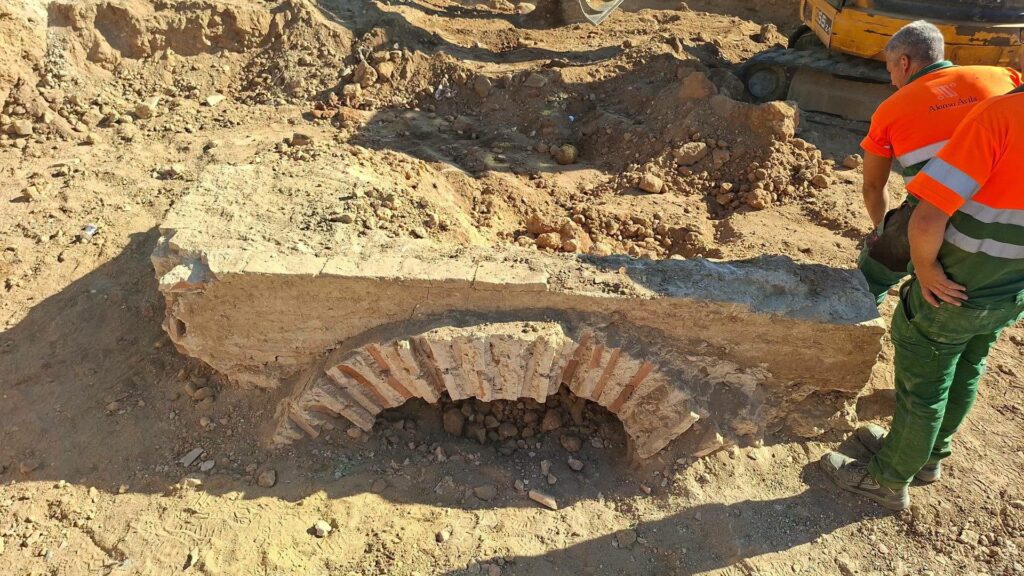
Workers exposed the structure while improving the roundabout on the road leading to the Ermita de la Virgen de Gracia. Carmona Mayor Juan Ávila announced the discovery on August 17, citing a preliminary assessment by the Municipal Archaeology Service that dates the bridge to the 17th or 18th century.
The find initially attracted attention because of its age, but municipal archaeologist Juan Manuel Román says the location is even more significant than the bridge.
During the Roman period, the Via Augusta passed through this sector on its approach to Carmona, then known as Carmo, and continued toward the Puerta de Córdoba. Román believes people may have used the same natural corridor before Roman rule, although that earlier origin remains a hypothesis.
The result is a rare example of a route that repeatedly changed while continuing to serve the same basic purpose for centuries.
A bridge built because of water
The small bridge was not designed as a monumental entrance to Carmona. It solved a practical problem that had troubled travelers using the road for generations.
The slope surrounding the route has long suffered from instability and difficult drainage. A shallow ravine crossed the road at this point, carrying little or no water during dry periods. Heavy rain, however, could transform it into a powerful flow of runoff descending the hillside.
Historical documents studied by Román record repeated attempts during the 17th and 18th centuries to manage the terrain and water near the Puerta de Córdoba. The newly exposed bridge appears to belong to this period of intervention.
Its builders created a crossing that allowed travelers to continue along the road even when stormwater rushed through the ravine below. Román currently dates the structure primarily from its construction techniques and the type of brick used, although the chronology remains provisional.
That distinction is important. The bridge is not Roman. The road beneath its story is.
Carmona’s official tourism service confirms that the Via Augusta crossed the city and remained an important route during later periods. Roman Carmona developed around this strategic network, while the Puerta de Córdoba became one of its principal monumental gateways.
The landscape around the newly exposed bridge also preserves evidence of repeated rebuilding. Nearby, archaeologists previously identified another structure made from reused Roman ashlar blocks, apparently assembled around the 16th century. Sections of an older paved road also survive, some relatively well preserved and others requiring repair.
Together, these remains reveal how successive generations repaired and adapted the same approach to Carmona rather than simply abandoning it.
It was not really lost for 400 years
Perhaps the most unusual part of the story comes from the 20th century.
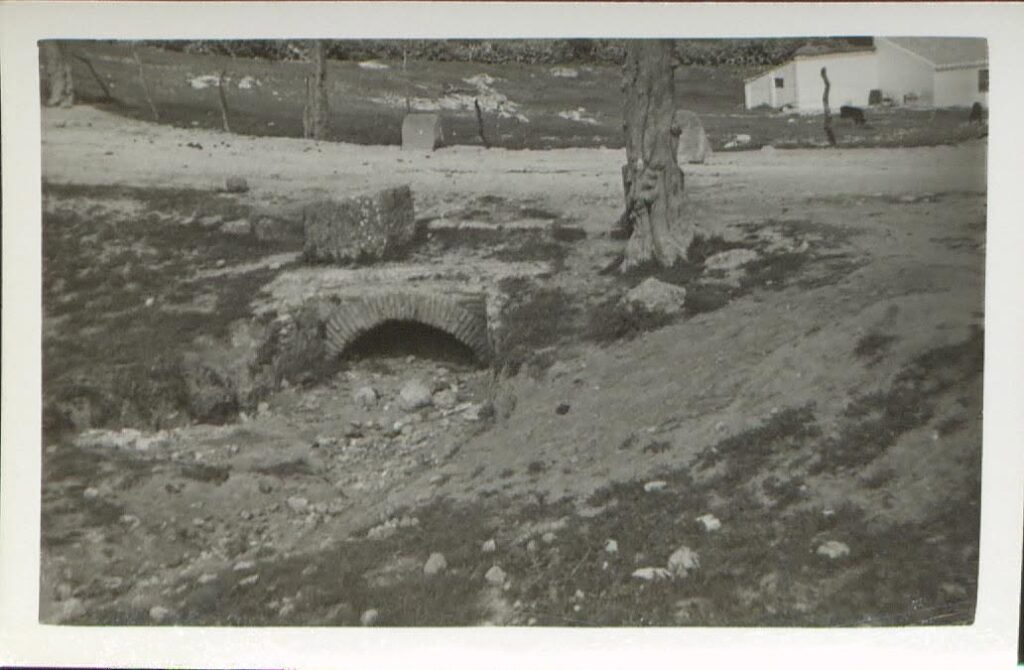
The bridge did not spend hundreds of years underground waiting for archaeologists to discover it. People in Carmona could still see and use it as recently as the 1960s.
A photograph documented by Spanish historian and archaeologist Juan de Mata Carriazo shows the structure exposed during that period. Román has also gathered accounts from local residents who remember the bridge before later alterations transformed the area.
Subsequent development, particularly work associated with the construction of Carmona’s Parador, changed the landscape. Drainage infrastructure was installed, and the historic crossing eventually disappeared beneath the redesigned terrain.
Roughly six decades later, another urban project has reversed that process.
The current roundabout renovation happened to intersect the bridge, bringing it back into view and allowing archaeologists to reassess its relationship with the old road.
The coincidence has also changed plans for the site. An earlier concept for the roundabout reportedly included a monument dedicated to Carmona’s traditional goatherds. Instead, the municipality now intends to use the archaeological remains themselves as part of the redesigned space.
The bridge will remain visible
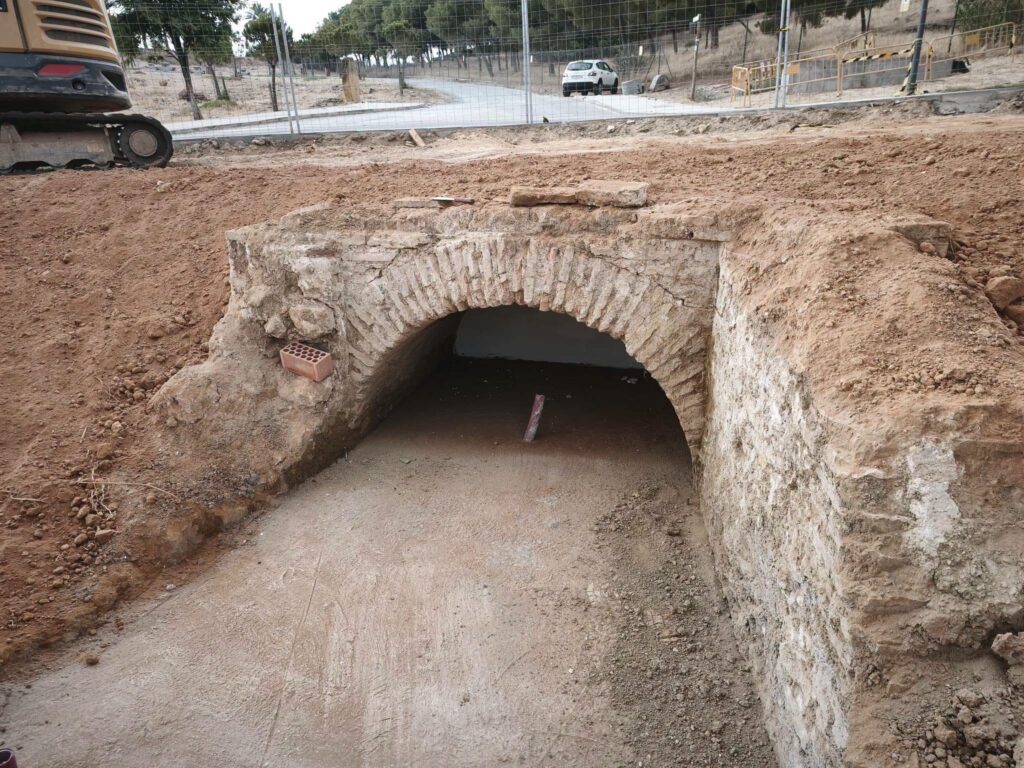
According to Mayor Juan Ávila, Carmona will integrate the bridge into the renovated roundabout rather than cover it again. The project involves the municipal company Limancar, the Environment Department and the Municipal Archaeology Service.
Part of the historic road will also remain visible.
The bridge is unlikely to dominate the roundabout visually. It was built as modest infrastructure and sits relatively low in the landscape. Its importance instead comes from what it can reveal about the changing use of one of Carmona’s oldest approaches.
A Roman road, reused Roman stonework, an early modern bridge, 20th-century drainage works and a modern roundabout now occupy different layers of the same corridor.
For Román, that continuity is the real significance of the find. Rather than representing an isolated 400-year-old structure, the bridge offers another piece of the history of a route that carried people into and out of Carmona for many centuries — and may have been doing so even before the Romans arrived.
