19 December 2025 The Future is the Product of the Past

Geological Surveys in Mongolia Uncover 3,000-Year-Old Nomadic Khirgisuur Burial Mounds

Geological surveys at Mongolia’s Oyut Deposit uncovered 3,000-year-old nomadic burial mounds, revealing Bronze Age and medieval khirgisuur graves.

Geological exploration aimed at unlocking Mongolia’s mineral wealth has unexpectedly opened a new window onto the country’s ancient nomadic history. During large-scale surveys at the Oyut Deposit in central Mongolia, researchers identified a cluster of ancient burial sites that shed light on funerary traditions spanning more than a millennium. The discovery, reported by MONTSAME, highlights how industrial exploration can intersect with archaeological heritage when strict preservation laws are applied.

The findings emerged from mineral exploration conducted by the state-owned Erdenet Mining Corporation (EMC) under a government permit covering parts of Orkhon and Bulgan aimags, regions long known as cultural heartlands of ancient steppe civilizations. Exploration work at the Oyut Deposit began in 2023 and confirmed an estimated 357 million tonnes of ore containing more than 1.1 million tonnes of pure copper, marking the site as one of Mongolia’s most significant recent mineral discoveries.

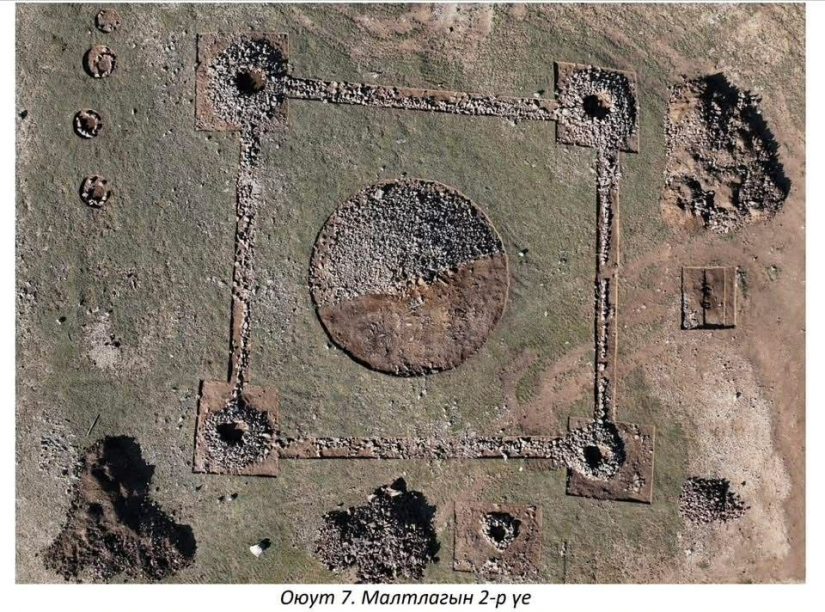
Yet alongside these economic results, geological teams encountered something far older. In 2024, surveys within the exploration field revealed 10 ancient burial mounds, locally known as khirgisuur. In line with Mongolia’s cultural heritage legislation, all industrial activity in the immediate area was halted, and archaeologists were brought in to document and study the sites.
All ten graves were documented, including Bronze Age burials, undated graves, and two from the medieval period (8th–13th centuries). Credit: Montsame

Collaboration Between Industry and Archaeology

EMC’s excavation team worked in cooperation with the Institute of Nomadic Archaeology at the National University of Mongolia (NUM). Fieldwork was carried out over several months and concluded in October, when researchers finalized a comprehensive archaeological report, according to MONTSAME.


📣 Our WhatsApp channel is now LIVE! Stay up-to-date with the latest news and updates, just click here to follow us on WhatsApp and never miss a thing!!


All ten graves were systematically excavated and recorded. Four were securely dated to the Bronze Age, four could not yet be assigned to a specific period, and two belonged to the Medieval era, roughly between the 8th and 13th centuries. The preservation level of the burials, particularly those from the Bronze Age, was described as notably high given the region’s harsh climatic conditions.

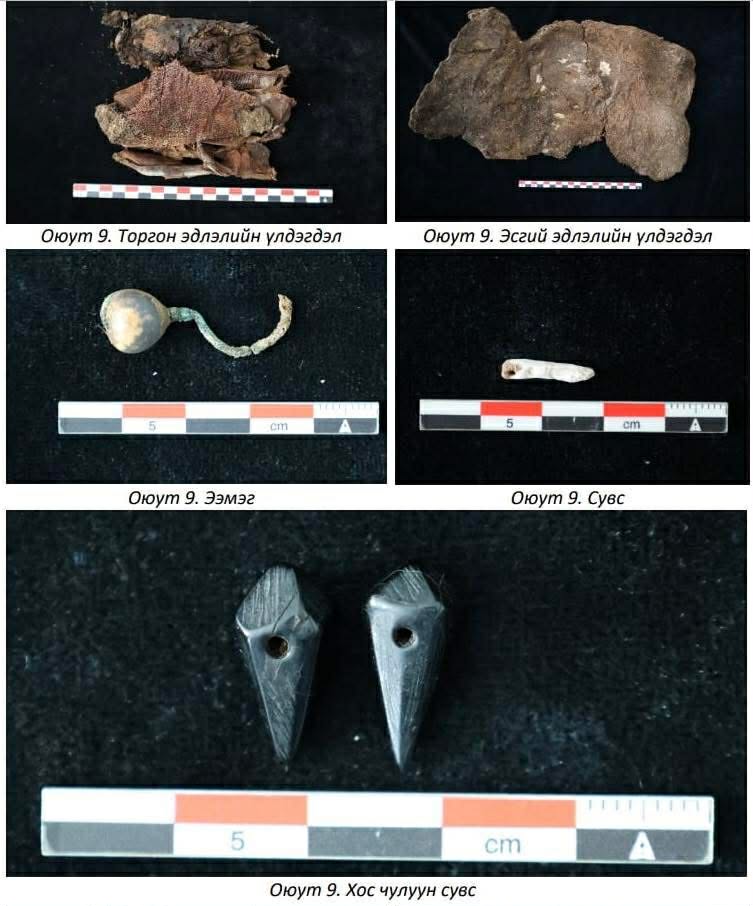
Artifacts recovered from the graves included bronze toli (mirrors), felt fragments, animal bones, and a range of funerary offerings. Such objects are typical of steppe nomadic burial customs, where personal belongings and symbolic items accompanied the deceased into the afterlife.

What Is a Khirgisuur?

The term khirgisuur refers to a distinctive type of burial mound found across Mongolia and parts of Inner Asia. Dating primarily to the Late Bronze Age, khirgisuur consist of stone-covered mounds often surrounded by satellite features such as standing stones or sacrificial animal remains. Scholars believe these monuments were not only graves but also ceremonial landmarks, reinforcing social memory and territorial identity among mobile pastoralist communities.

The presence of khirgisuur at the Oyut Deposit reinforces the idea that Orkhon and Bulgan aimags were central corridors of nomadic movement and ritual activity for thousands of years.
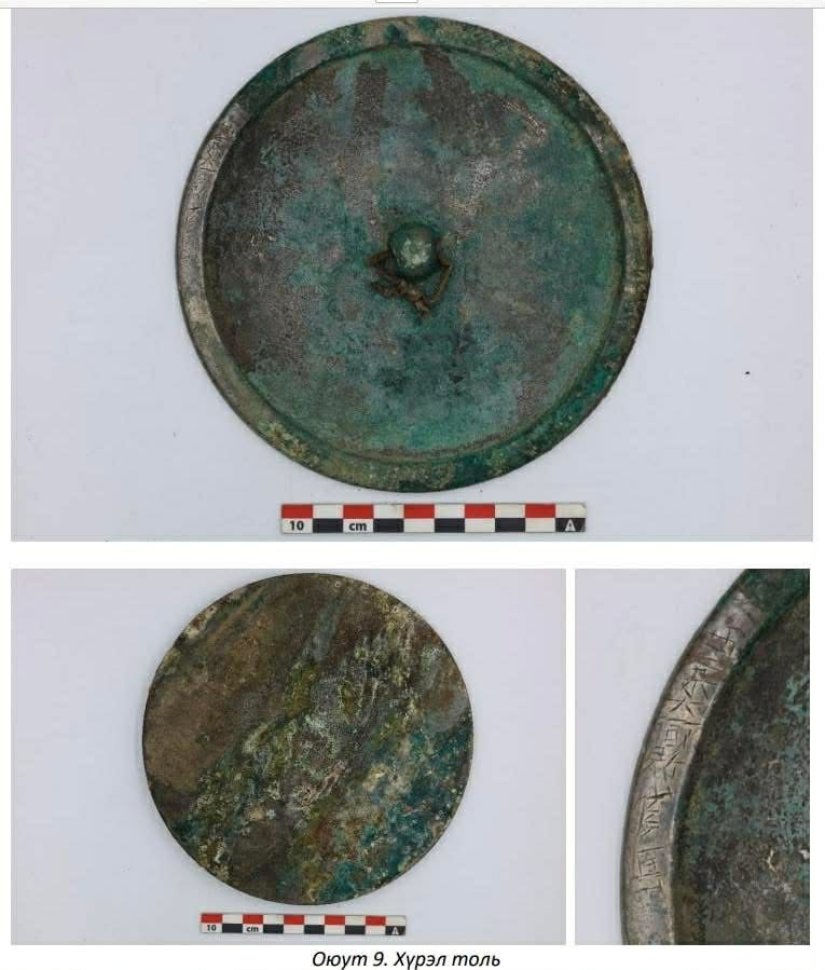
A bronze toli mirror recovered from a khirgisuur grave, reflecting personal status and ritual beliefs among ancient nomadic communities. Credit: Montsame

A Region Rich in Steppe History

The broader Orkhon Valley is already recognized as a UNESCO World Heritage Site for its role in the rise of steppe empires, including the Turkic Khaganates and later the Mongol Empire. The newly documented burial mounds add further depth to this landscape, demonstrating continuity in ritual practices from the Bronze Age through the medieval period.

Archaeological research at the Oyut Deposit covered a total area of 1,032 hectares, making it one of the more extensive heritage assessments linked to mining exploration in recent years.

As Mongolia continues to balance economic development with cultural preservation, discoveries like these underscore the importance of cooperation between industry, government authorities, and academic institutions. What began as a search for copper has instead revealed enduring traces of the people who once shaped the Eurasian steppe—long before modern borders or mines existed.

MONTSAME

Cover Image Credit: Montsame
Related Articles

Paleontologists have discovered a new species of giant rhino

18 June 2021

18 June 2021

Paleontologists studying in China have found a new species of gigantic rhinoceros, the world’s biggest land animal. According to a...

Grain Barns dating back 6,000 years unearthed in China

15 December 2022

15 December 2022

Chinese archaeologists have revealed a cluster of 16 ancient granaries that traced back to the mid-late period of the Yangshao...

Ancient Roman city of Pompeii, archaeologists have unearthed a fresco depicting the Greek mythological siblings Phrixus and Helle

2 March 2024

2 March 2024

Archaeologists excavating a house adjacent to the House of Leda in Insula 6, Regio V, in the ancient Roman city...

Excavations Near Stonehenge Uncover Bronze Age Barrow Cemetery

4 June 2023

4 June 2023

The Cotswold Archeology team excavating at the site of a planned housing development near Salisbury, England, has unearthed a giant...

The Bronze Sacred Sanxingdui Tree Number 3 is Being Restored

9 April 2021

9 April 2021

According to the announcement of the Sanxingdui Museum, archaeologists have begun to assemble and restore the No. 3 bronze sacred...

Lovingly gazing mosaics restored in Turkey’s Metropolis

16 October 2021

16 October 2021

In the ancient city of Metropolis in the Torbali district of the western Izmir province, mosaics portraying Eros, the Greek...

Wasabi Isn’t Just For Sushi: It is an Innovative Solution for Preserving Ancient Papyrus

28 February 2024

28 February 2024

A new natural technique for cleaning and preserving priceless ancient Egyptian papyrus that are in danger from bacteria and fungi...

10 Ancient Shipwrecks and Finds from Prehistoric to Ottoman Periods Discovered οff Kasos Island in Greece

14 March 2024

14 March 2024

The research team of the National Hellenic Research Foundation, in collaboration with the Ministry of Culture, has identified ten shipwrecks...

The researchers may have cracked the mystery of da Vinci’s DNA

7 July 2021

7 July 2021

A recent study of Leonardo da Vinci’s family tree indicates that the renowned Renaissance artist, inventor, and anatomist had 14...

Archaeologists find remains of Norman Bridge during dig in Chichester’s Priory Park, England

1 June 2024

1 June 2024

During an excavation in West Sussex, England, archaeologists uncovered the remains of a military causeway, or bridge, that led to...

A 2900-year-old collection of fossilized shark teeth found in the City of David, one of Jerusalem’s oldest Parts

5 July 2021

5 July 2021

Scientists discovered an inexplicable collection of fossilized shark teeth at a 2900-year-old archaeological site in Jerusalem’s City of David, one...

3,000-Year-Old Hazelnut Shells Discovered in the Sacred Hittite City of Nerik

30 July 2024

30 July 2024

In the sacred Hittite city of Nerik, located in the northern Vezirköprü district of Samsun province in the Central Black...

Folded Gold Diadem discovered in Ancient Burial Urn in Southern India

12 August 2022

12 August 2022

A gold diadem, bronze, iron objects, and pottery were reportedly found in a burial urn at the archaeological site of...

Lost medieval road thought to have been used by famous Scottish king Robert the Bruce found

27 June 2021

27 June 2021

Excavating a hill considered to have played a critical part in the Battle of Bannockburn, archaeologists discovered a forgotten medieval...

‘Exceptional’ Viking Age silver treasure found in Norway

27 October 2022

27 October 2022

A treasure trove of silver fragments from the Viking Age has been discovered in Stjørdal, near Trondheim in central Norway....

Comments
Leave a Reply

Your email address will not be published. Required fields are marked *