
In the annals of ancient surgical history, few instruments are as mysterious and debated as the Spoon of Diocles. This curious medical tool, described by the Roman encyclopedist Celsus in the 1st century AD, was said to assist in the extraction of barbed arrowheads from wounds—a frequent battlefield injury in the Greco-Roman world. But despite its seemingly critical function, only one known artifact has ever been linked to it—and even that identification is hotly contested.
A recent study published in the British Journal of Surgery (BJS) by an international team of researchers aims to finally shed light on the elusive instrument. Their analysis dives into historical texts, material findings, and the physical characteristics of an object discovered in the Domus del Chirurgo (House of the Surgeon) in Rimini, Italy—a site dating back to the 2nd century BCE.
A Surgical Tool Shrouded in Ambiguity
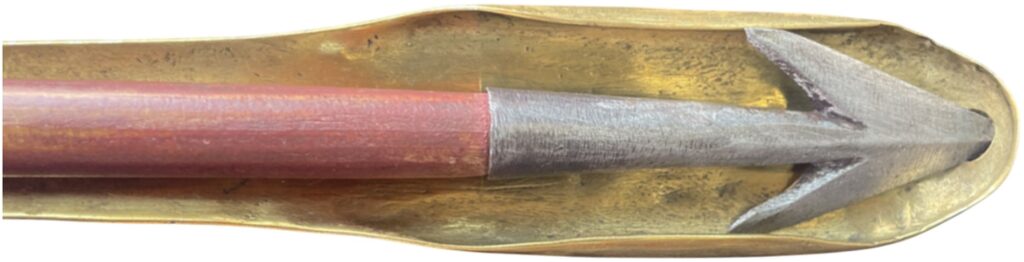
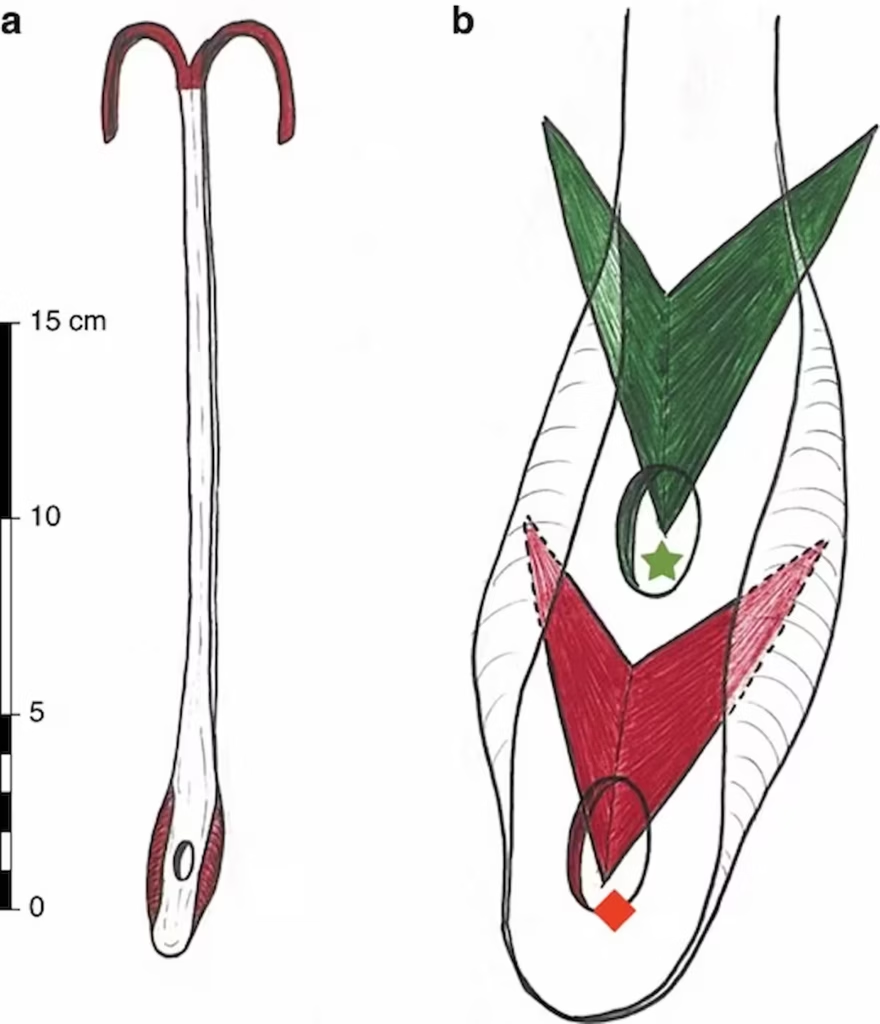
The Spoon of Diocles, as described by Celsus, was a specialized instrument composed of a metal blade—either bronze or iron—with two downward-facing hooks on one end and a folded, slightly curved tip with a hole at the other. The procedure was deceptively simple: the tool would be inserted along the shaft of the embedded arrow, rotated to catch the arrowhead in its cavity, and then carefully withdrawn, minimizing further tissue damage.
Celsus attributed the invention to Diocles of Carystus, a prominent Greek physician from the 4th century BCE. Unfortunately, no original illustrations or surviving texts from Diocles remain. Celsus’s account stands as the sole written record, making the Spoon of Diocles a kind of medical legend—real in theory, elusive in practice.
The Rimini Artifact: A One-of-a-Kind Find?
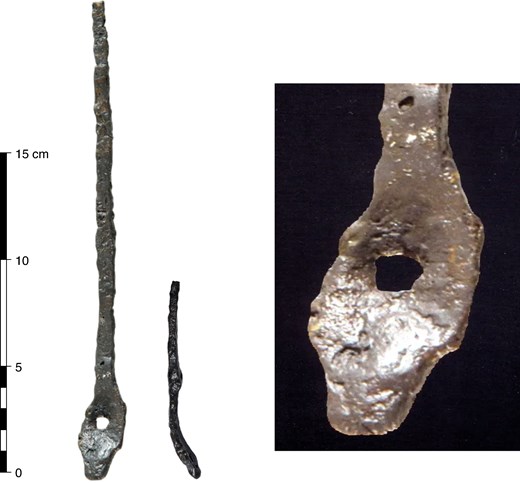
Archaeologists have long speculated that the only potential specimen of this tool was unearthed in the Domus del Chirurgo. This 22 cm tapered metal instrument features a flared end with a central circular hole, but its form deviates in several ways from Celsus’s written description. Notably, the distinctive hooks and folded end designed to protect soft tissues during extraction are absent.
Moreover, the location of the hole—2.5 cm from the tip—would require deep insertion beyond the arrowhead, an impractical maneuver, especially if the arrow was lodged near bones or vital structures.
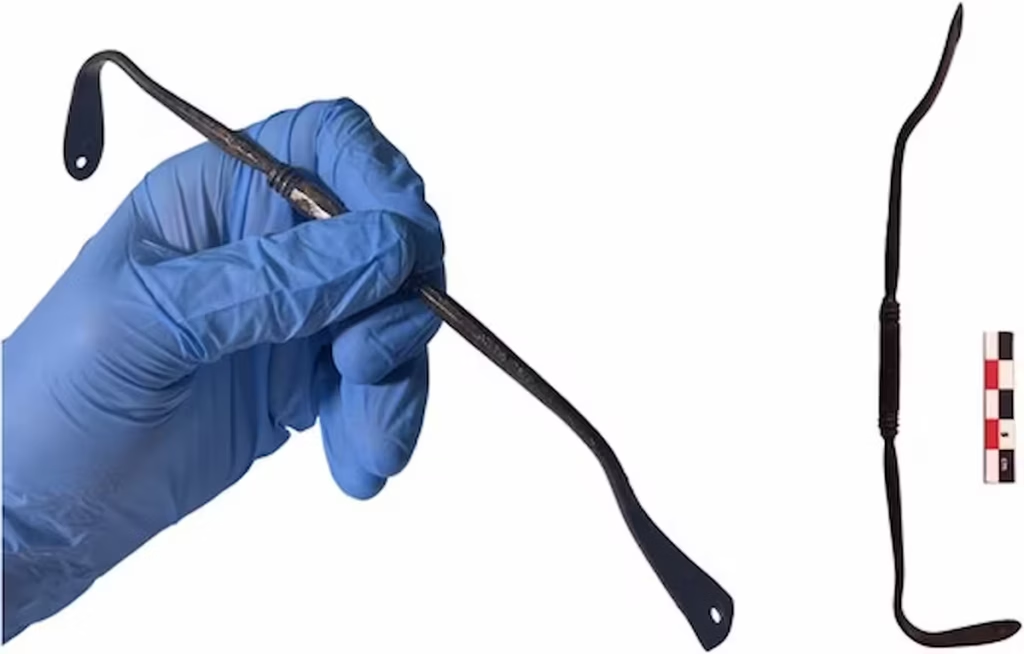
Some scholars, including De Carolis and Bliquez, argue that the inconsistencies cast doubt on the identification. Instead, they suggest the object might have served a different surgical purpose, such as a suture passer—a theory supported by a similar instrument discovered in Bingen, Germany, used by a Roman-era surgeon.
A Tool Ahead of Its Time or a One-Off Innovation?
The question remains: was the Spoon of Diocles ever widely used? The evidence suggests otherwise. Medieval medical texts, known for detailing projectile extraction techniques, fail to mention any instrument resembling it. This absence supports the idea that it may have been a “master’s tool”—a brilliant, possibly experimental solution, but not one adopted broadly.
Celsus himself may contribute to the confusion. Though a respected scholar, he was not a practicing physician or surgeon. His encyclopedic work compiled knowledge from various sources, and it’s entirely possible he described the Spoon of Diocles without firsthand experience. That raises further concerns about the accuracy of the description.
Ancient Medicine Meets Modern Curiosity
Despite the doubts, the fascination with the Spoon of Diocles endures. As the BJS study suggests, the object from Rimini remains a unique and specialized surgical artifact, whether or not it is truly the instrument described by Celsus. Its precision-crafted form, archaeological context, and potential applications continue to inspire debate—and experiments.
Researchers now propose replicating the instrument to test its practical effectiveness on anatomical models. Such experiments could finally clarify whether this enigmatic tool was a revolutionary battlefield solution or simply a misunderstood relic of ancient innovation.
More Questions Than Answers
The Spoon of Diocles remains a powerful symbol of the ingenuity—and ambiguity—of ancient medicine. Whether it was truly used to extract deadly arrowheads or served another function entirely, it represents the complexities of interpreting the past from fragments of evidence.
As new studies continue to emerge, and as experimental archaeology steps in to fill the gaps, the mystery of the Spoon of Diocles may someday be resolved. Until then, it remains a compelling puzzle at the crossroads of surgery, archaeology, and legend.
Thomas Daoulas, Giorgio Franchetti, Joel Savéan, Jean-Christophe Courtil, Muriel Pardon-Labonnelie, The spoon of Diocles: a tool for extracting an arrow from a wound in the Graeco-Roman world?, BJS, Volume 112, Issue 7, July 2025, znaf127, https://doi.org/10.1093/bjs/znaf127
Cover Image Credit: BJS – https://doi.org/10.1093/bjs/znaf127
