
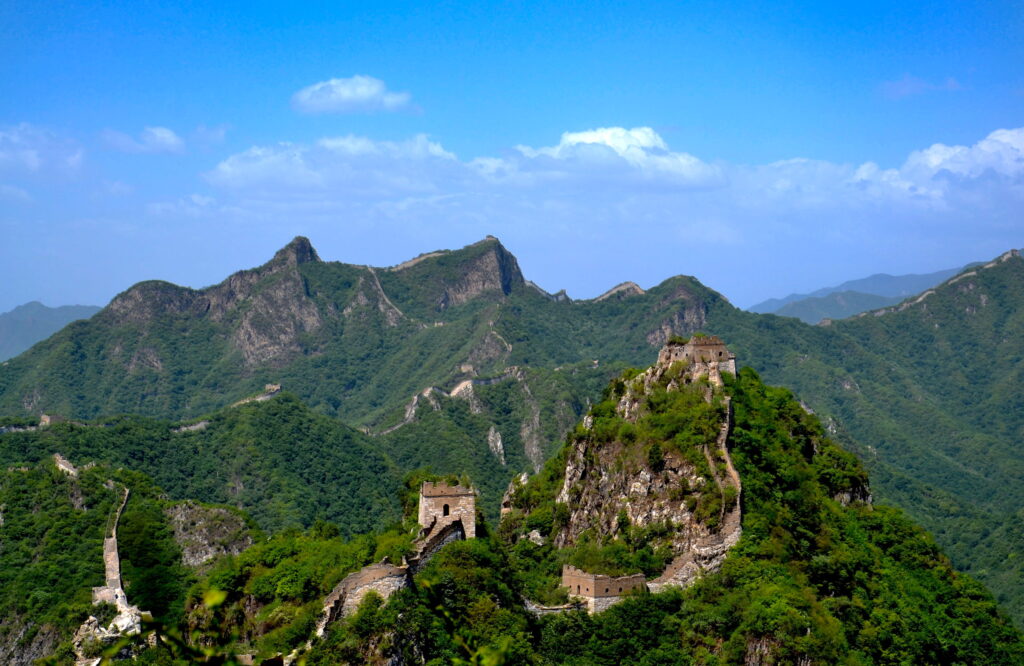
Archaeologists working along the Jiankou section of the Great Wall near Beijing have uncovered a rare collection of Ming Dynasty military and daily-life remains, including a massive 17th-century cannon, heated brick beds, inscribed construction bricks, food remains, animal bones, and traces of garrison life preserved inside the wall’s watchtowers.
The discoveries were announced during Beijing’s latest archaeological research briefing in December 2025, following excavations connected with conservation work at the steep and rugged Jiankou section in Huairou District. Researchers examined Watchtowers 117, 118, and 119, along with the connecting wall sections, recovering more than 300 artifacts related to weapons, architecture, and everyday life.
A 1632 cannon changes the story of Jiankou
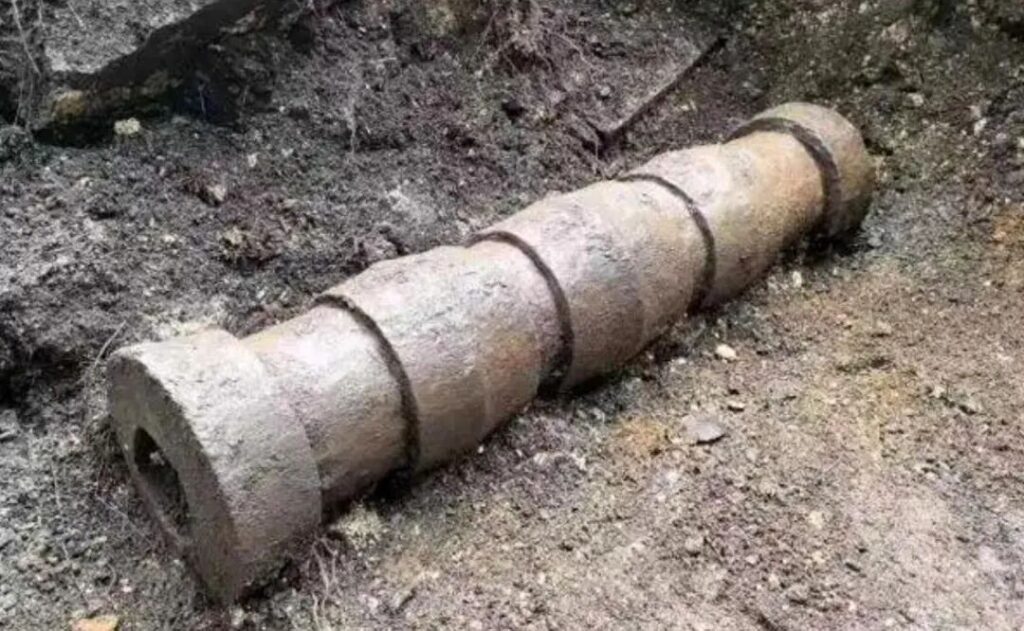
The most striking find is a cast-iron cannon dated to the fifth year of the Chongzhen reign, corresponding to 1632 CE, near the final decades of the Ming Dynasty. Measuring 89.2 centimeters in length, with an 8.5-centimeter caliber and a weight of about 112 kilograms, it is the largest cannon yet unearthed in the Jiankou section of the Great Wall.
Beijing Institute of Archaeology researcher Shang Heng described it as the first large firearm discovered at Jiankou. The cannon’s inscriptions, though partly corroded, remain legible enough to provide valuable evidence for the study of Ming-period firearm production, military supply systems and the exchange of artillery technology between China and the West.
Researchers noted that the weapon shows features associated with the so-called Hongyi cannon, or “red-barbarian cannon,” a type of European-style artillery adopted and adapted in late Ming China. Its relatively small muzzle and larger barrel body suggest that Jiankou was not merely a symbolic defensive line, but a fortified frontier where heavy weapons were installed and maintained.
Watchtowers reveal military planning and winter survival
The cannon was not an isolated object. Its size corresponds closely with previously identified gun platforms, suggesting that such weapons may have formed part of the standard defensive equipment of key watchtowers. This gives archaeologists a clearer view of how the Ming military organized firepower along the mountain sections of the wall.
Watchtower 117 produced a blue-stone stele that helped date the construction of this section to 1573. That inscription provides a fixed chronological point for comparing nearby wall structures and understanding how the Jiankou defensive system developed during the Ming period.
Watchtower 118 offered a different kind of evidence. Inside, archaeologists found the largest heated brick bed, or kang, yet discovered at Jiankou, along with a stove. These remains point directly to the living conditions of soldiers posted in a cold, high-altitude landscape. The Great Wall here was not only a line of defense. It was also a place where men slept, cooked, repaired equipment and endured long periods of isolation.
Bricks preserve the voices of builders
Some of the most human traces came from the bricks themselves. Two bricks carried production marks recording weights, including references to a “north kiln” and a row measurement. Such marks are important because they help researchers reconstruct how Ming builders organized kiln production, standardized materials and moved heavy construction supplies into difficult terrain.
Another brick carried a more personal message, reportedly scratched by a worker: “No wine, no rest; three years of hard labor have turned my hair white.” The line gives the excavation an unusually direct human voice. It suggests not only the hardship behind the wall’s construction, but also that at least some craftsmen had enough literacy to leave written traces of their experience.
Scientific analysis also identified plant fibers mixed into lime mortar, apparently added to strengthen the building material. Such details show that Great Wall construction depended on practical engineering knowledge as much as imperial command.
Food, medicine and animals on the frontier
The Jiankou excavation also produced charred plant remains, crops, non-agricultural plants and animal bones from both domestic and wild species. Some bones showed butchery marks, indicating food preparation by the garrison. Plant remains may help reconstruct both the soldiers’ diet and the natural environment around the wall during the Ming period.
Together, these finds turn the Jiankou Great Wall into something more complex than a military monument. The site preserves traces of artillery strategy, construction logistics, winter survival, and daily routine. It was a defensive system, but also a working landscape occupied by soldiers, builders, and craftsmen.
The latest discoveries also show the value of linking archaeology with conservation. Chinese researchers emphasized that the work was carried out as part of a research-based protection project, allowing excavation and preservation to proceed together rather than as separate processes. For a fragile mountain section such as Jiankou, that approach may be essential.
More than four centuries after the cannon was cast, the stones and bricks of Jiankou are still yielding evidence. What has emerged is not just the story of a weapon hidden in the Great Wall, but a fuller picture of the people who armed, built, and lived along one of China’s most dramatic frontier landscapes.
Cover Image Credit: Jiankou- Public Domain
