
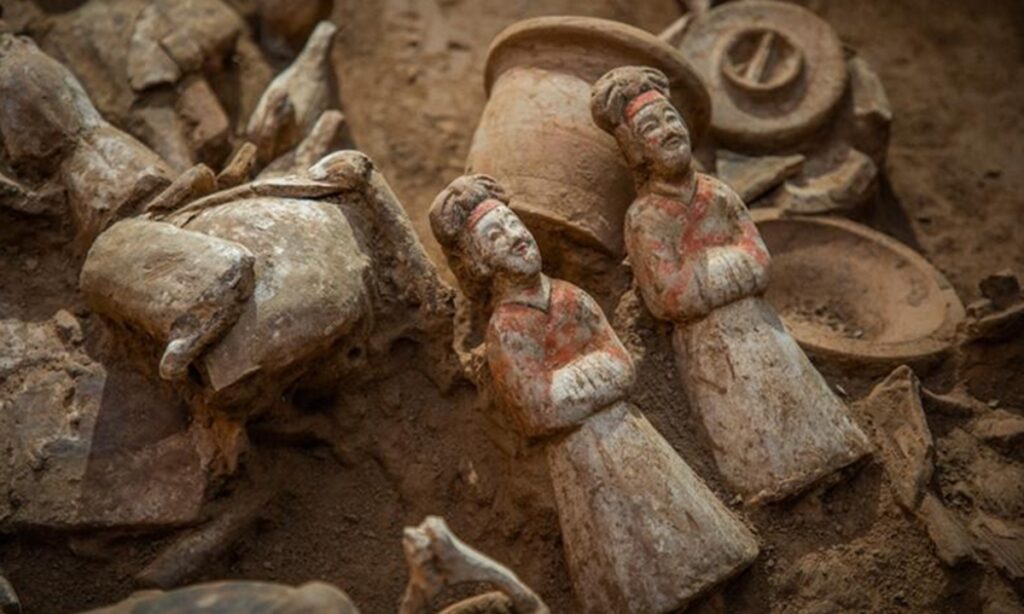
Archaeologists in northwest China have uncovered two game boards carved into square bricks inside approximately 2,000-year-old Han Dynasty tombs, providing rare new evidence for Liubo, one of ancient China’s most prominent board games.
The boards were discovered in tombs M4 and M17 during excavations at the Chang’an campus of Shaanxi Normal University in Xi’an, capital of Shaanxi Province. Although the excavation was completed in 2022, the Shaanxi Provincial Institute of Archaeology publicly presented the results in July 2026.
Han tombs discovered during campus construction
The excavation began in April 2022 ahead of the construction of student dormitories in the southeastern section of the university campus.
Archaeologists cleared 25 tombs and two ash pits across the construction area. Ten of the burials were identified as relatively well-preserved Han Dynasty tombs that had escaped extensive looting or later disturbance.
The graves represented three architectural forms: earthen-chamber tombs reached by vertical shafts, earthen chambers with sloping passages, and a brick-built chamber tomb. Together, they covered a period extending from the late Western Han Dynasty to the late Eastern Han Dynasty, approximately the first century BCE to the second century CE.
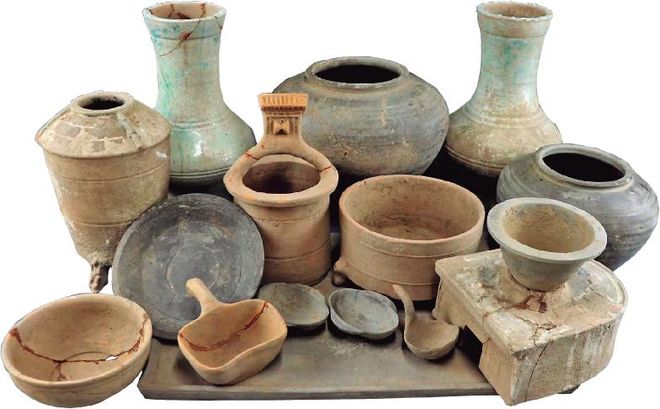
Around 130 objects or groups of objects were recovered from the Han tombs. The burial goods included pottery vessels, bronze mirrors, iron implements, coins and miniature representations of household facilities such as granaries, wells and stoves.
The most unusual finds, however, were the two Liubo boards.
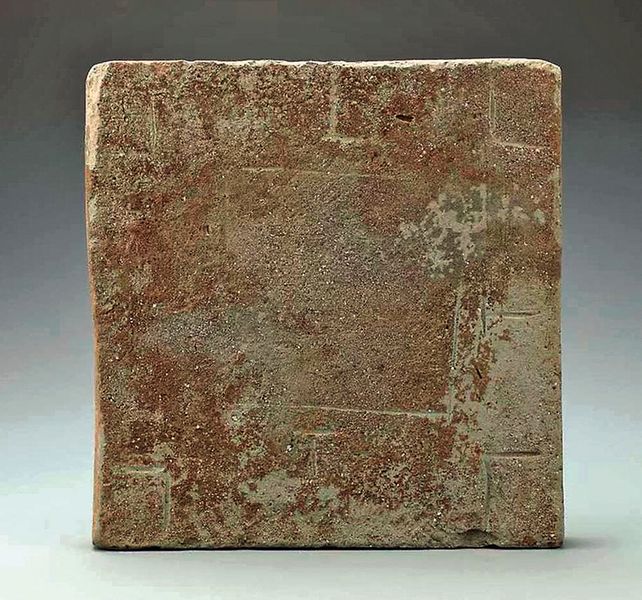
Ancient game boards engraved on building bricks
Rather than being constructed from lacquered wood, stone or another material normally associated with gaming equipment, the newly announced boards were engraved directly onto square bricks.
One was created from a plain brick, while the other reused a brick decorated with a geometric fret pattern. Lines forming the characteristic Liubo playing surface were cut across the faces of both bricks.
The boards were recovered separately from tombs M4 and M17. Chinese archaeologists said the finds add important material to the archaeological record of Han-period gaming boards and funerary objects.
The use of bricks may indicate that simplified or symbolic versions of Liubo equipment were placed in the tombs. However, the archaeological institute has not yet determined whether the boards were played during the owners’ lifetimes or produced specifically for burial.
Liubo was one of Han China’s most popular games
Liubo—literally translated as “six sticks” or “six rods”—was a two-player game played on a square board marked with a symmetrical network of paths.
Surviving sets suggest that each player controlled six pieces. Throwing sticks or dice determined movement across the board, while counters and additional pieces may have been used for scoring. The game appears to have combined strategy, chance and gambling, although its complete rules remain uncertain.
Archaeological finds and written references show that Liubo was especially popular during the Han Dynasty, when it was played in both elite and ordinary social settings. Tomb sculptures frequently depict players sitting opposite one another with the board positioned between them.
Liubo is sometimes described as a possible precursor to Xiangqi, or Chinese chess. That relationship has not been conclusively demonstrated, however, and Liubo should not be presented simply as an early form of chess. Its board, playing pieces and movement system belonged to a distinct gaming tradition.
Games prepared for the afterlife
Liubo boards, pieces and models have previously been recovered from Han tombs in several parts of China. Their presence in burial contexts reflects the broader Han practice of furnishing tombs with objects associated with domestic life, entertainment and social status.
One of the best-preserved examples comes from the third Mawangdui tomb in Changsha, where archaeologists found a complete Liubo set with a lacquered board, ivory pieces, throwing rods and an eighteen-sided die.
Other tombs contained ceramic figures portraying players leaning over Liubo boards. Such scenes suggest that the game was not merely an occasional pastime but a recognizable element of Han social culture.
The two boards from Xi’an are much simpler than the elaborate lacquered examples associated with wealthy burials. Their significance lies instead in their material: ordinary architectural bricks were transformed into recognizable gaming surfaces before being placed inside the graves.
Cemetery records changing burial traditions
The wider cemetery also documents changes in funerary customs over several generations.
Six vertical-shaft earthen tombs were dated from the late Western Han to the early Eastern Han periods. Other graves belonged to the middle and late Eastern Han. Differences in pottery assemblages, coins, and tomb architecture allow archaeologists to trace how burial practices developed across approximately two centuries.
One brick-chamber tomb, designated M18, contained two wooden coffins. Part of the original chamber appears to have been dismantled and enlarged when the second individual was buried, offering evidence of how Han tombs could be modified and reused.
Against this broader funerary background, the Liubo boards provide a more personal glimpse of ancient life. Carved into two simple bricks and sealed inside graves for nearly two millennia, they preserve traces of a game whose players and rules have otherwise largely disappeared.
Cover Image Credit: Shaanxi Provincial Institute of Archaeology / Huashang Daily.
