
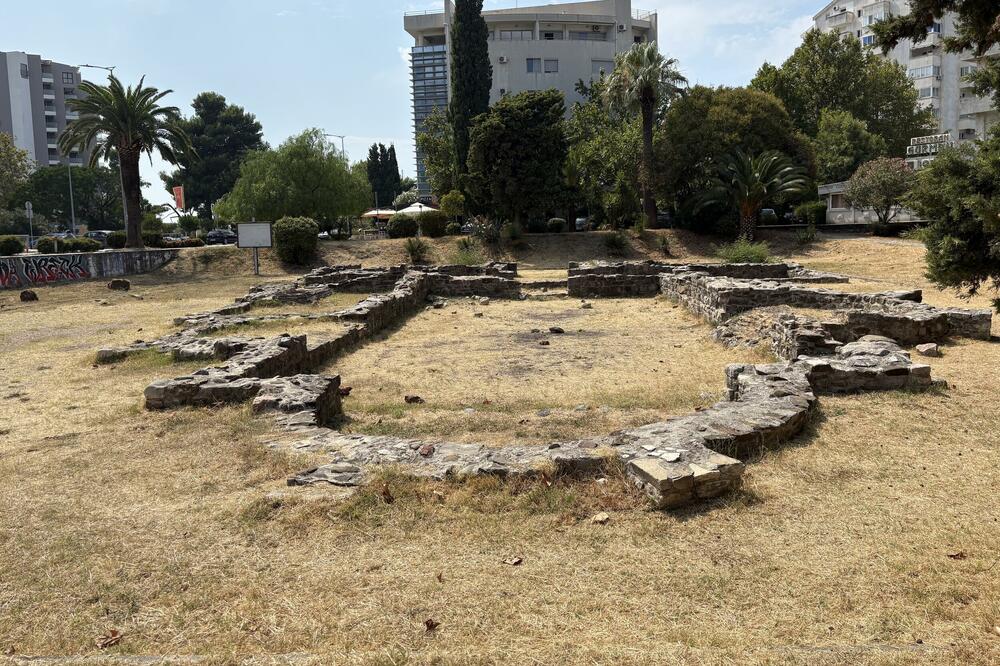
In the heart of Bar, just off the bustling Ulica Maršala Tita, lie the weathered remains of the Triconch Church — the oldest known place of worship in the region and a unique example of early Byzantine architecture in the western Balkans.
Built during the reign of Emperor Justinian I (AD 525–565), this sixth-century Christian monument is now under severe threat from both natural decay and human neglect.
A Monument of Imperial Ambition
The Triconch Church, locally known as Crkvice, takes its name from the Greek word trikonchos, meaning “three-shell,” describing a distinctive trefoil plan formed by three semicircular apses. It was originally constructed as a memorial chapel for an unknown but prominent figure in the late fifth century, later expanded with a bell tower and adjoining chamber where a vaulted grave was discovered.
Archaeological excavations in 1965 revealed that the church once stood at the center of a burial ground, with numerous graves — many belonging to children and infants — arranged around its walls. Its low but remarkably preserved stone foundations, bonded with lime mortar, still trace the full outline of the building.
Historical records and medieval engravings indicate that in the 12th century, the surrounding area may have been the birthplace of the Chronicle of the Priest of Duklja (Doclea), one of the most significant literary and historical works of the medieval Balkans.
From Sacred Space to Public Hangout
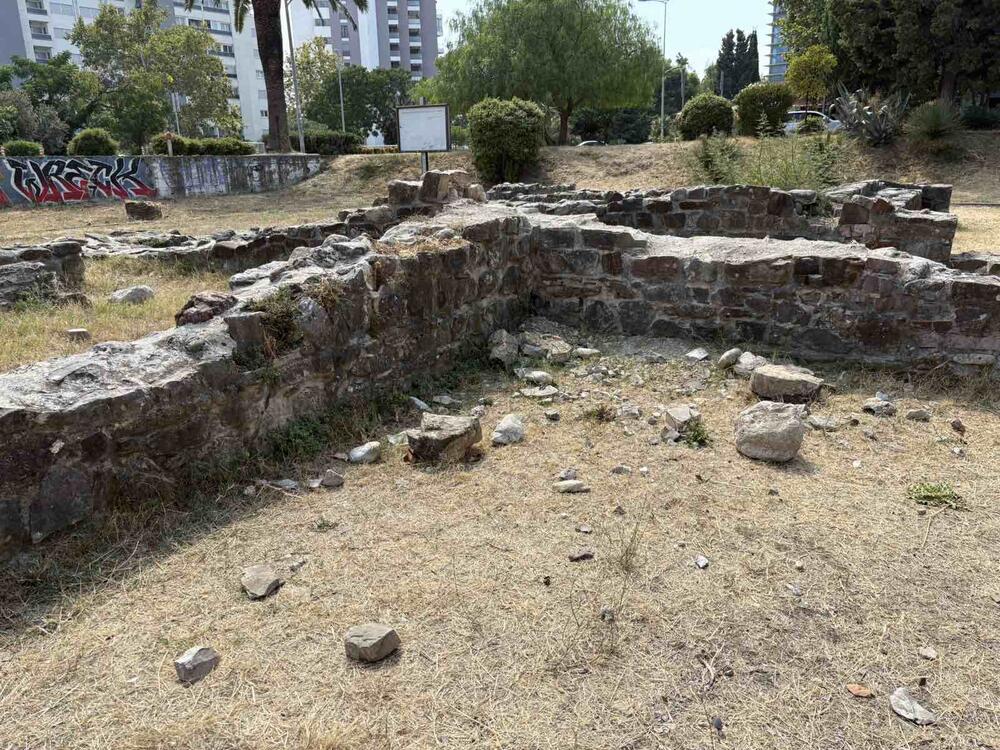
Today, however, the ancient site is a paradox — both a cultural treasure and a casual social spot for locals. Residents often gather here to meet friends, rest, or let children play among the ruins. While such community use underscores the church’s place in local memory, it has also contributed to wear and tear, littering, and even vandalism.
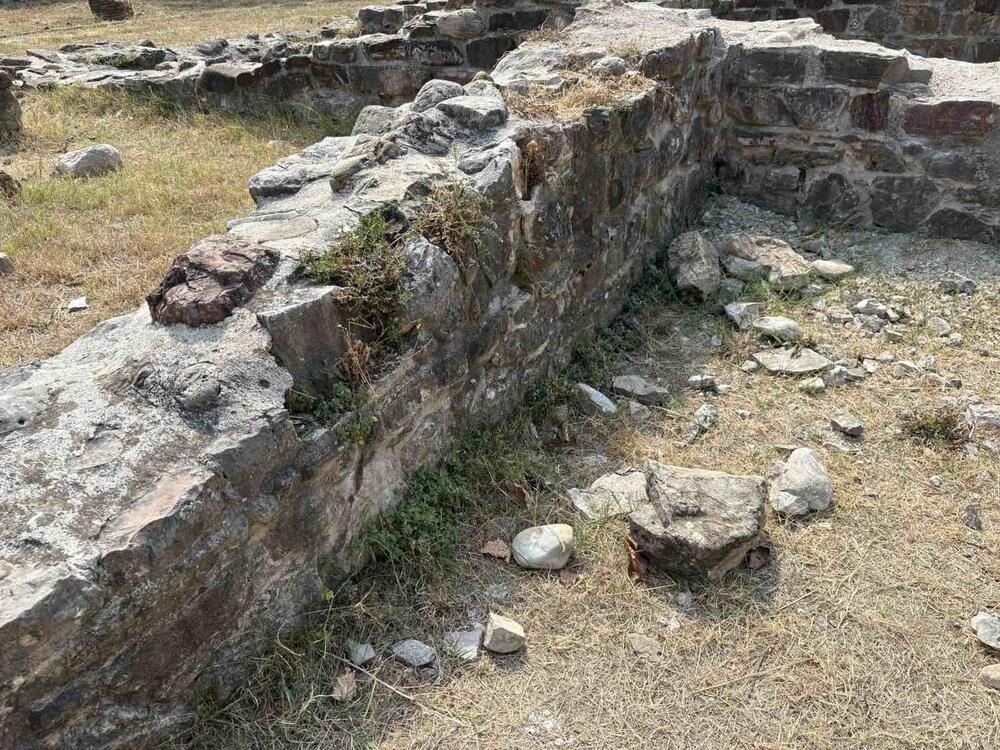
The monument’s information plaque has been damaged by both weather and human interference, and vegetation now sprouts from the cracks in its walls — a sign of structural instability.
Visible Damage and Urgent Warnings
The Ministry of Culture and Media of Montenegro, led by Minister Tamara Vujović, recently confirmed that expert inspections have identified serious structural changes requiring immediate intervention. Rainfall, moisture, and fluctuating temperatures over many years have caused erosion of the binding mortar, cracking of the stone, and the detachment of wall fragments.
In some places, stones have been removed entirely from the ruins and now lie outside the structure. Low vegetation growing on the walls is exerting pressure that could further deform the architectural remains.
The Cultural Heritage Administration has issued guidelines for urgent stabilization works to be carried out before the completion of a full conservation project. However, while the Municipality of Bar has shown willingness to act, it has not requested co-financing from the Ministry’s cultural heritage preservation program for 2025.
Legal Protection, Practical Challenges
Since May 4, 1967, the Triconch Church, Topolica has been officially listed as a protected cultural asset under Montenegro’s heritage laws. This status requires the owner — in this case, the Municipality of Bar — to preserve, maintain, and use the monument appropriately. All interventions must follow strict legal procedures to ensure the authenticity and integrity of the site.
Yet, despite its protected status, the monument has suffered from prolonged inaction, compounded by environmental exposure and everyday human impact. Preservationists warn that without swift measures, irreversible damage could occur, erasing one of Montenegro’s earliest and most valuable links to its Byzantine past.
Why It Matters
The Triconch Church is more than a ruin; it is a silent witness to nearly 1,500 years of history — from Justinian’s empire to the medieval Slavic kingdoms and the Ottoman period. Its survival offers scholars and visitors alike a tangible connection to the origins of Christianity in the Balkans and the architectural ingenuity of the early Byzantine world.
Losing it would not only diminish Bar’s cultural landscape but also sever a rare physical link to a period that shaped the religious and political map of Europe.
The Road Ahead
Experts stress that emergency stabilization is just the first step. A comprehensive conservation plan, adequate funding, and community engagement are essential to ensure the monument’s future.
For now, the crumbling stones of the Triconch Church stand as both a testament to Montenegro’s rich heritage and a warning that history, once lost, cannot be rebuilt.
In the nearby Spich plain, where the modern town of Sutomore now stands, churches once served both Orthodox and Catholic communities for centuries, a living testament to the spirit of Christian brotherhood in the region. One of the enduring witnesses to this tradition is the Church of St. Dimitrija (St. Demetrius), with its two altars preserved within the Nehaj Castle near Sutomore. Yet, as with the Triconch Church, these historical treasures face the risk of fading into neglect. Bar’s rich and diverse heritage deserves vigilant protection — and you can read more about another such endangered monument in our related report.
Cover Image Credit: Marija Pešić – Vijesti
