
23 January 2026 The Future is the Product of the Past

From Arnhem to Oldenburg: Nazi-Looted Artifacts Found in Oldenburg Museum Colection

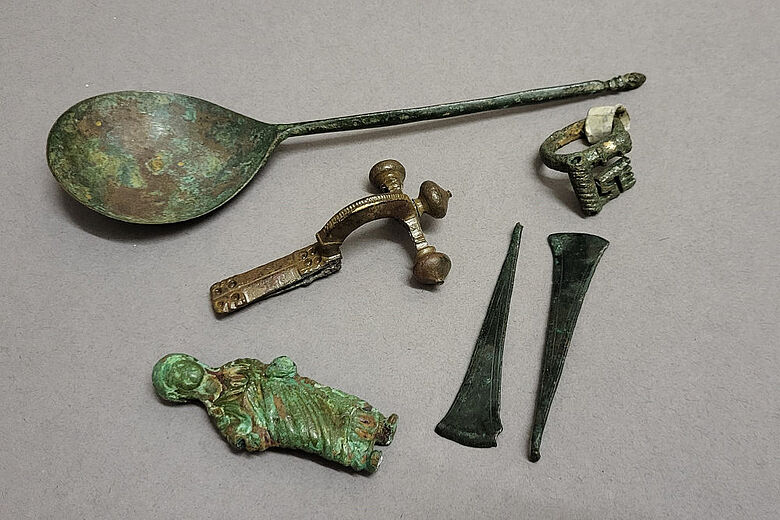
A remarkable discovery at the Landesmuseum Natur und Mensch in Oldenburg has shed new light on the dark history of World War II-era cultural looting. Seven metal objects, long believed to be Roman artifacts from Bentumersiel in Lower Saxony, have been reclassified as possible Nazi-looted art following extensive provenance research in collaboration with the Leibniz Centre for Archaeology (LEIZA) and the Fries Museum in Leeuwarden.

These metal objects—including fibulae, a statuette, and other decorative pieces—were acquired by the museum in 1983 from a private collector. At the time, the artifacts were purportedly sourced from Bentumersiel, a significant archaeological site along the Ems River known for Roman military and luxury finds. However, even during the acquisition, doubts arose. Museum documentation questioned the provenance with the notation “allegedly Bentumersiel?”

Recent investigations, part of a broader archaeological research project at the Landesmuseum, have confirmed that the composition and dating of these objects are inconsistent with the Bentumersiel site. Further analysis of acquisition records suggests an alternative origin: Arnhem in the Netherlands, during the final stages of World War II. Historical records show that German forces looted vacant houses in Arnhem during the fierce battles over the Rhine bridge, including the removal of valuable cultural artifacts.

Photographic evidence and label comparisons indicate that the objects may have belonged to the private collection of Arnhem-based photographer and collector Adam Jacobus Hieronimus Van der Toorn (1870–1919). Much of Van der Toorn’s collection is now housed in the Fries Museum in Leeuwarden and the Museum Arnhem, transferred there by his heirs.

“Evidence strongly suggests that these artifacts are indeed looted,” says Dr. Annette Siegmüller, an archaeologist and current research associate at Landesmuseum Natur und Mensch. “Our research not only expands knowledge about our collection but also reflects our ethical responsibility in handling cultural heritage.”


📣 Our WhatsApp channel is now LIVE! Stay up-to-date with the latest news and updates, just click here to follow us on WhatsApp and never miss a thing!!


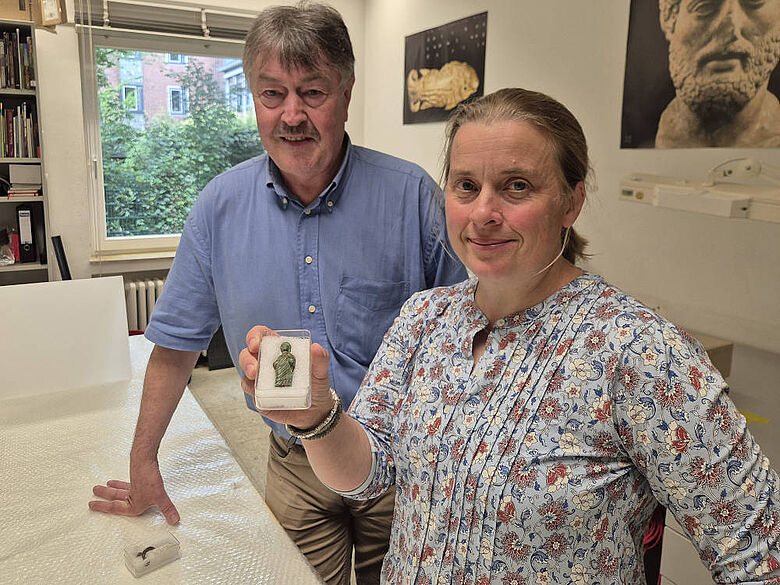
Archaeologists Dr. Frank Both and Dr. Anette Siegmüller traced the true origin of the artifacts at Landesmuseum Natur und Mensch Oldenburg. Credit: Landesmuseum Natur und Mensch Oldenburg

Museum Director Dr. Ursula Warnke emphasizes the broader significance: “Museums are not merely custodians of objects; they are places for critical engagement with the histories of their collections. Provenance research requires close scrutiny—even when an object’s origin has long been assumed secure. We embrace transparency, collaboration, and ethical reflection as central to our museum’s mission.”

The Landesmuseum is currently investigating the fate of other objects from the same 1983 acquisition batch, for which only photographs remain. These images depict finely crafted metalwork and rare bone artifacts, likely dating from the early medieval period and originating from the Dutch coastal region. Collaborative efforts with German and Dutch museum colleagues are underway to trace the origins and whereabouts of these items.

Plans are now in place to temporarily exhibit the newly reattributed artifacts, alongside the story of their turbulent history, in the museum this autumn. The upcoming exhibition promises not only to showcase remarkable craftsmanship but also to confront the challenging history of wartime looting and the museum’s ongoing commitment to ethical stewardship.

This discovery underscores the vital importance of provenance research in museums and highlights how historical objects carry stories far beyond their aesthetic or archaeological value. By unraveling the journeys of these artifacts, museums like Landesmuseum Oldenburg contribute to a more transparent and accountable understanding of cultural heritage.

Landesmuseum Natur und Mensch in Oldenburg

Cover Image Credit: Metal objects acquired in 1983, originally believed to be from Bentumersiel, now identified as looted artifacts from World War II. Landesmuseum Natur und Mensch Oldenburg

Related Articles

Human blood proteins were found in the red paint on a 1,000-year-old gold mask from Peru

27 October 2021

27 October 2021

Traces of human blood have been discovered in the red paint that decorated a gold mask found on the remains...

Ancient Sister Miners Discovered: Ritual Burial Reveals Hard Lives of Prehistoric Women

4 August 2025

4 August 2025

A groundbreaking archaeological discovery in the Krumlov Forest is shedding new light on prehistoric life, revealing a startling glimpse into...

Ancient Sarmatian Treasures, Including 370 Grams of Gold Bracelet, and Burial Sites Discovered in Kazakhstan’s Atyrau Region

10 February 2025

10 February 2025

During excavations at the Karabau-2 mound in Kazakhstan’s Atyrau region, archaeologists made a remarkable discovery, unearthing nine graves—seven of which...

Polish archaeologists discover papyruses containing a list of Roman centurions at Berenike

23 May 2024

23 May 2024

Papyruses with lists of Roman centurions stationed in Egypt were found by Polish archaeologists in Berenike. These unique documents were...

Scientists reveal new discovery inside the Pyramid of Khufu

20 March 2023

20 March 2023

An Egyptian pyramid for 4,500 years is still spilling secrets. After a years-long project using modern technology to reveal the...

Trier University’s Digital Coin Cabinet is Now Accessible

19 February 2024

19 February 2024

Historical coins are much more than just pieces of jewelry for collections and exhibitions and are of particular interest for...

Failed Mongol fleet may actually land in Japan after 800 years

18 July 2023

18 July 2023

A  recent shipwreck was found off the coast of Japan this year and identified as part of a Mongol fleet...

Medieval Ring with a Skull Emblem Found in Wales and The Gold Coins are Declared Treasure

11 April 2021

11 April 2021

Located in wales nine treasure finds dating from the medieval and post-medieval periods have been declared treasure. Metal detectors in...

A protected Punic-Roman tower “Tal-Wilġa” has been turned into a building site

15 August 2021

15 August 2021

The Tal-Wilga tower, one of Malta’s Punic-Roman heritage sites, is in danger from construction work near it. The Superintendent of...

A Mysterious 1,800-year-old Roman Statue Unearthed During Car Park Construction Work in UK

13 March 2024

13 March 2024

A 1,800-year-old Roman marble statue of a woman’s head was discovered during construction in the parking lot of Burghley House...

Ancient Burial Mound May Be Hidden on the Campus of Siberia’s Oldest University

18 January 2026

18 January 2026

Archaeologists from Tomsk State University (TSU), the oldest university in Siberia, have put forward a compelling hypothesis: a medieval burial...

The discovery that surprised archaeologists; a Rare glass cup adorning the table of rich Romans in Crimea

2 April 2022

2 April 2022

A discovery made in Frontovoye-3 necropolis in Crimea shows that during the Roman Empire there were more centers of glass...

The ancient city of Kastabala will soon have a colonnaded Street

4 September 2021

4 September 2021

The archaeological excavation of the ancient city of Kastabala in Osmaniye Province in southern Turkey continues. Kastabala-Hierapolis is one of...

Deadly 7.7 quakes hit Turkey destroys historical Gaziantep Castle

6 February 2023

6 February 2023

A deadly 7.7 magnitude earthquake that rocked the southern province of Kahramanmaraş, with tremors felt in the neighboring provinces, has...

Czech experimental archaeologists successfully completed their 1-month voyage in the Aegean Sea using a replica of a prehistoric vessel

17 July 2023

17 July 2023

Radomír Tichý, an archeology professor at the University of Hradec Králové who is also the director of the Všestary Archeopark,...