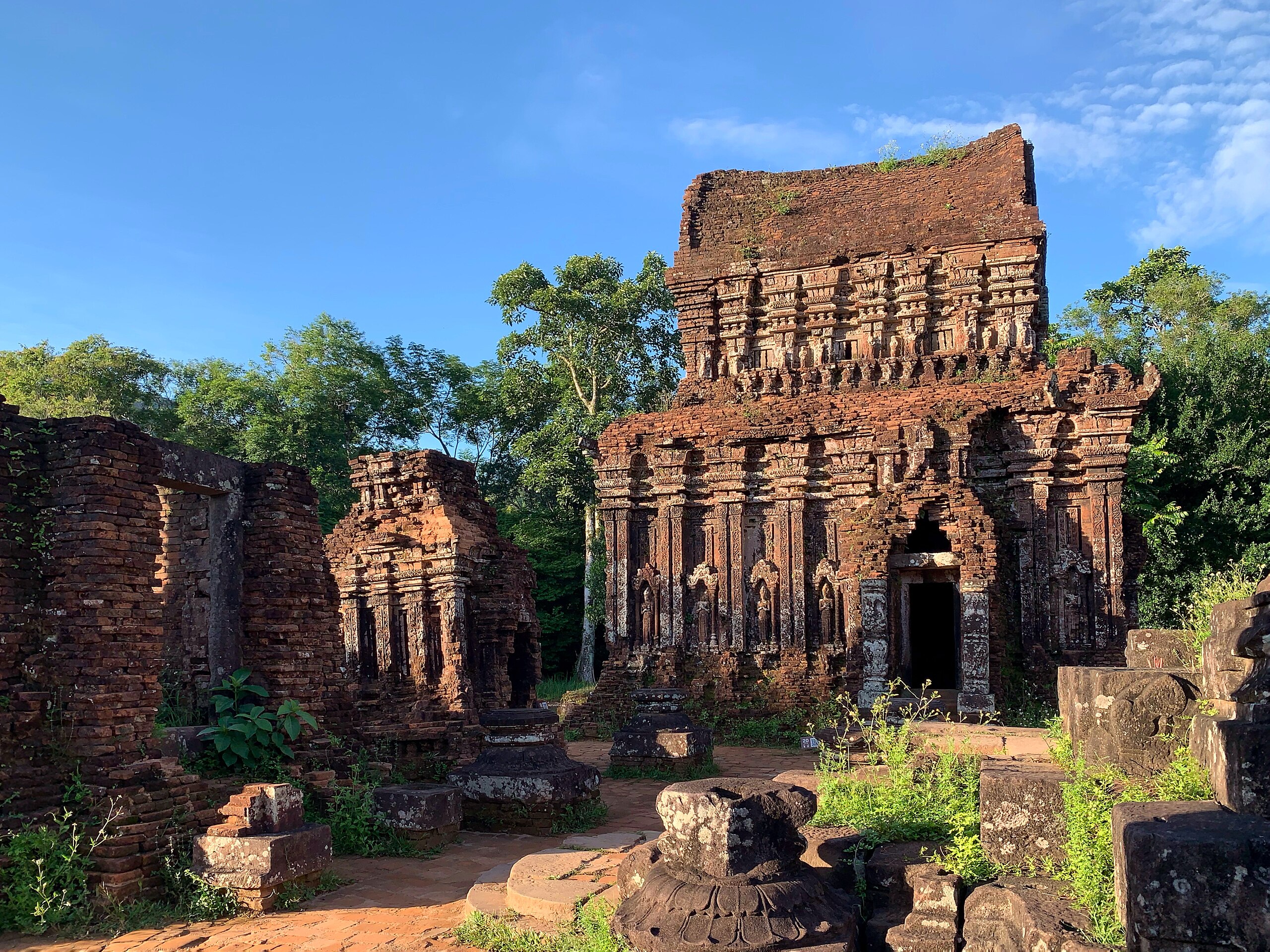
Archaeologists working at Vietnam’s My Son Sanctuary have uncovered a monumental sacred road that is reshaping scholarly understanding of Champa religious life, ceremonial movement, and sacred space planning between the 10th and 12th centuries. The discovery, revealed through multi-year excavations completed in 2025, exposes a previously unknown spiritual entrance linking Tower K with the central temple complex—an architectural feature never documented in over a century of research at the UNESCO World Heritage Site.
A Forgotten Ceremonial Axis Re-emerges
The newly revealed road stretches approximately 170 meters from the eastern foot of Tower K toward the heart of the My Son sanctuary. Archaeological teams have fully identified 132 meters of this route, uncovering a carefully engineered pathway nearly 9 meters wide, with a central roadway measuring about 7.9 meters. The surface was constructed from compacted sand, pebbles, and crushed bricks, layered to a thickness of up to 20 centimeters—evidence of deliberate planning rather than a simple access road.
Flanking the road on both sides are brick guide walls standing over one meter high, built without mortar using a sophisticated Champa technique in which bricks widen at the base and taper upward until they lock together. This construction method mirrors that used in Champa temple towers and suggests the road was conceived as an integral part of the sacred architectural ensemble.
Five Gates and a Ritualized Journey
One of the most striking revelations is the identification of up to five ceremonial gates embedded within the southern guide wall of the road. Archaeologists discovered stone beam remains featuring square sockets for pillars and circular holes for wooden gate pivots—clear evidence of formal entrances that once controlled ritual movement.
Notably, no corresponding gates were found on the northern wall, reinforcing the theory that processions followed a strictly prescribed ceremonial route. Scholars believe this road functioned as a sacred axis through which Hindu deities, Champa kings, and Brahmin priests symbolically transitioned from the secular world into divine space.
📣 Our WhatsApp channel is now LIVE! Stay up-to-date with the latest news and updates, just click here to follow us on WhatsApp and never miss a thing!!
The road’s termination at the bank of a now-dry stream has further intrigued researchers. Many suggest that ritual purification—likely involving water crossing—was required before entering the sanctuary, echoing Hindu cosmological concepts where water marks the boundary between worlds.
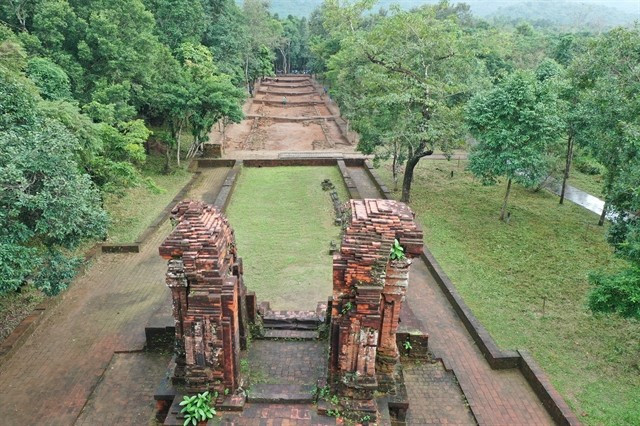
Tower K and the Spiritual Geography of My Son
Tower K, long considered an isolated structure, now appears to have played a far more significant role within the sanctuary’s spiritual geography. Built on an elevated platform near a natural water source, the tower aligns precisely with the sacred road, suggesting it functioned as a ceremonial gateway or transitional shrine.
French archaeologist Henri Parmentier, who documented My Son in the early 20th century, noted Tower K’s unusual isolation but lacked evidence to explain it. The discovery of the sacred road now provides that missing link, revealing Tower K as the formal eastern threshold of the sanctuary.
Dating the Sacred Road
Stratigraphic analysis and artefact discoveries indicate that the road was constructed and used primarily between the 11th and 12th centuries, though some architectural features may extend into the early 13th century. Excavations yielded glazed ceramics from China’s Northern and Southern Song dynasties, along with Champa terracotta fragments, reinforcing this timeframe.
Researchers emphasize that while My Son contains temples dating from the 4th to the 13th centuries, this sacred road represents a distinct and relatively brief cultural phase—after which it was abandoned, gradually reclaimed by forest, and forgotten for centuries.
A Unique Discovery in Champa Heritage
Comparative studies suggest that this ceremonial road is unique within the entire Champa cultural landscape. No other sanctuary in central Vietnam has yielded evidence of such a formally structured sacred approach, complete with guide walls and multiple ritual gates.
This reinforces My Son’s role not merely as a collection of temples, but as the supreme spiritual and political center of the Champa Kingdom—a place where kings legitimized their rule through divine association, particularly with Shiva, the sanctuary’s principal deity.
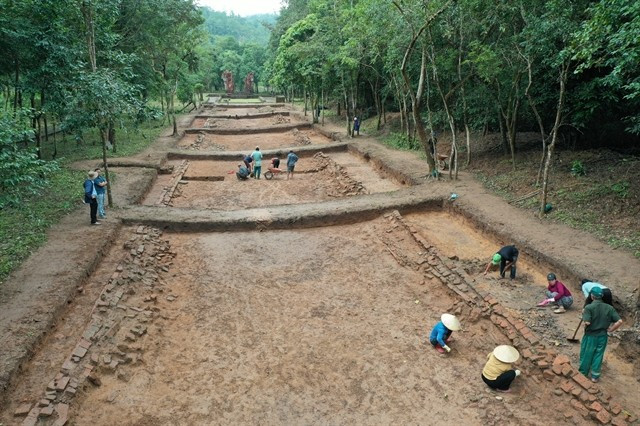
Excavation of the sacred processional road at My Son Sanctuary, a UNESCO World Heritage Site located 70 km from Da Nang. This road’s discovery is considered one of Vietnam’s most significant modern archaeological achievements. Credit: My Son Sanctuary Management Board
Preservation and Future Interpretation
Vietnamese heritage authorities are now considering how to conserve and interpret the sacred road for visitors without compromising its spiritual significance. Archaeologists and cultural heritage experts stress that tourism development must avoid overuse, physical degradation, and loss of symbolic meaning.
If managed carefully, the road could become one of the most powerful interpretive features at My Son, allowing visitors to experience the sanctuary as ancient worshippers once did—through movement, transition, and ritual progression.
Redefining My Son’s Sacred Landscape
The rediscovery of this sacred road fundamentally expands the known boundaries of the My Son Sanctuary, suggesting that its original ceremonial footprint may have been nearly twice as large as what survives today. More importantly, it transforms academic understanding of Champa ritual practice, revealing a highly structured spiritual choreography embedded in architecture and landscape.
As research continues, this long-hidden path promises to illuminate new dimensions of Southeast Asia’s Hindu past—proving that even after a thousand years, My Son still holds secrets waiting to be revealed.
Source: Vietnam Plus
Cover Image Credit: My Son Sanctuary. Wikipedia commons CC BY 4.0