
A windswept hillfort on Spain’s Cíes Islands has yielded the clearest evidence yet that people lived there long before the Romans reached this part of the Atlantic coast.
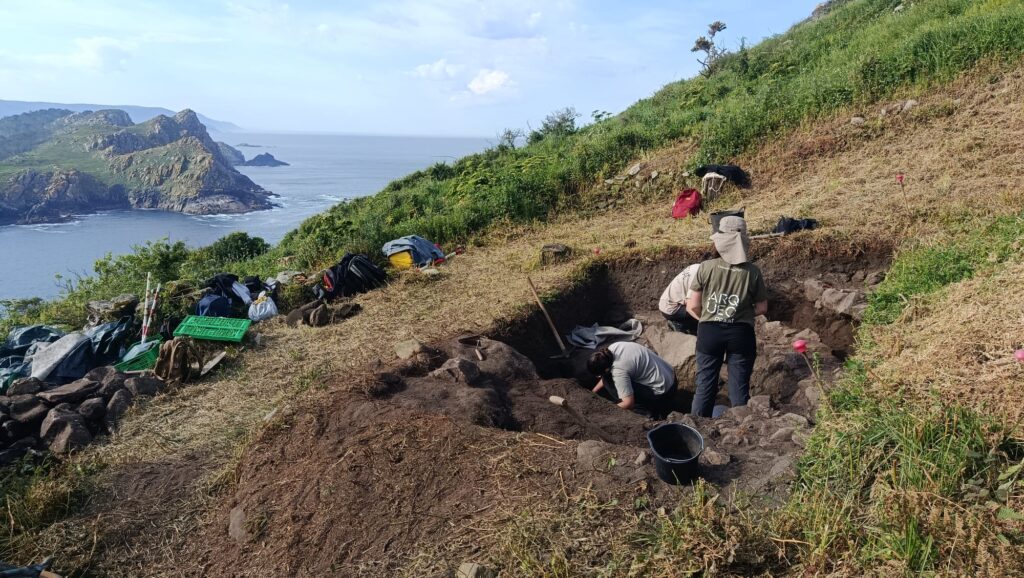
Archaeologists from the Universidade de Vigo have confirmed the first large castro-period house documented in the Cíes archipelago, a discovery that changes how researchers understand human life on these islands off Galicia. The find comes from Castro de Hortas, an Iron Age hillfort perched on the southern end of Faro Island, where cliffs, sea routes and sheltered waters made the site both difficult to reach and strategically powerful.
The latest excavation, carried out between late April and early May 2026 by the Grupo de Estudos en Arqueoloxía, Antigüidade e Territorio (GEAAT), was the second archaeological campaign at the site. Working with the Galician Atlantic Islands Maritime-Terrestrial National Park, the team opened two trenches on the eastern slope of the hillfort. What they found suggests that Castro de Hortas was not a brief island outpost, but a place used across a long span of time, from the castro period into the Middle Ages.
A hillfort facing the Atlantic
Castro de Hortas is one of Galicia’s most unusual Iron Age sites because of its island setting. Located on Faro Island, also known as Illa do Medio, it stands in a rugged position with wide control over maritime routes entering and leaving the Vigo estuary. That location would have mattered in antiquity. The Cíes Islands sit at the mouth of one of northwest Iberia’s most important coastal passages, where fishing, exchange and navigation shaped daily life.
The first trench expanded an area excavated in 2025, where earlier work had already documented walls and a floor surface. The new campaign exposed additional structures and confirmed two later occupation levels. One belongs to Late Antiquity, around the 5th and 6th centuries AD. The other dates to the early medieval period, around the 9th and 10th centuries AD.
This sequence gives the site a wider historical range than a simple Iron Age settlement. Castro de Hortas now appears as a place that remained meaningful, useful or repeatedly reoccupied long after the first castro-period community lived there.
A three-meter shell midden and a forgotten diet
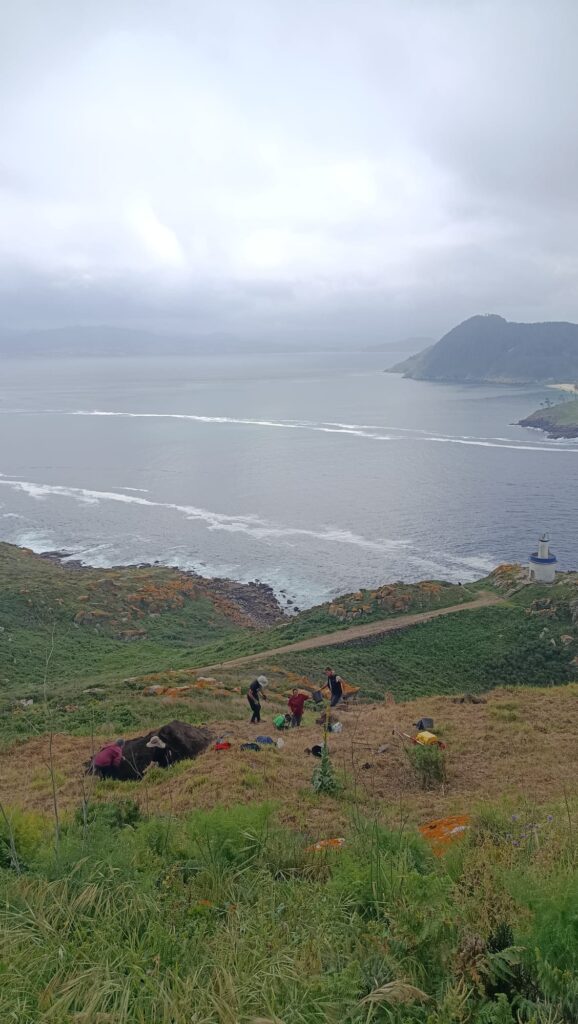
The second trench brought the most striking evidence. Archaeologists opened it in an area where a change in ground level suggested the possible remains of a defensive wall. Instead, they uncovered a large refuse zone connected to the food remains of the hillfort’s inhabitants.
At the center of this deposit was a shell midden almost three meters deep. Such middens are not just piles of discarded shells. For archaeologists, they are detailed archives of food habits, coastal exploitation and everyday survival. In island contexts, they can show how communities combined marine resources with livestock, agriculture and trade.
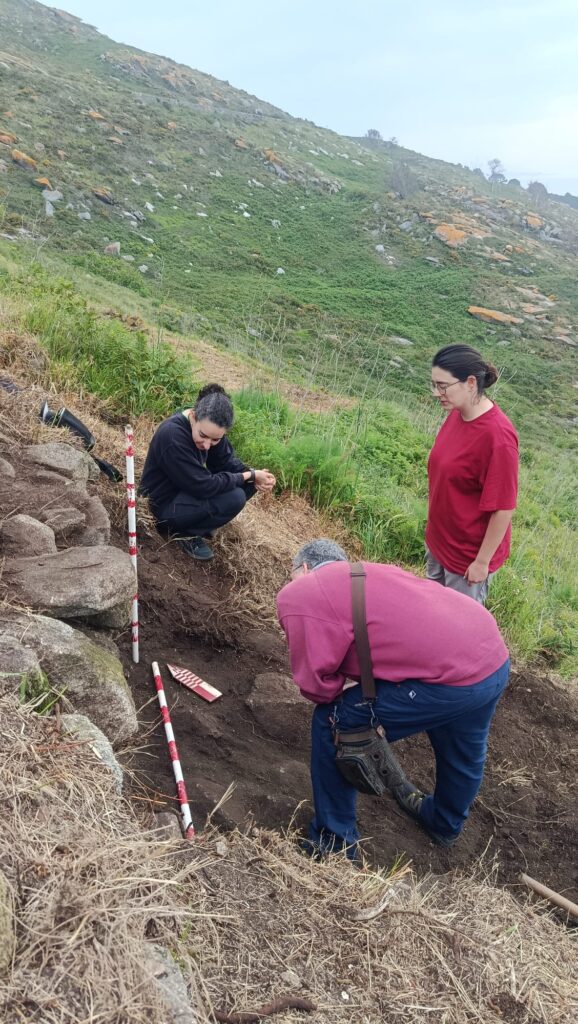
The team recovered numerous faunal samples that will be studied by specialists at the University of León. These analyses are expected to help reconstruct what the inhabitants of Castro de Hortas ate during the Iron Age and how they used the surrounding sea and land. The excavation also produced a large quantity of ceramics, which will be examined in the GEAAT laboratory at the Ourense campus.
But the most important detail lies in where the material appeared. The refuse zone was found outside a large house from the castro period. According to the researchers, this is the first such house confirmed in the Cíes Islands and provides secure evidence of a significant human settlement before the arrival of the Romans.
The Cíes before tourism and legend
Today the Cíes Islands are often associated with beaches, protected landscapes and controlled visitor access. The archipelago, made up mainly of Monteagudo, Faro, and San Martiño, forms part of the Galician Atlantic Islands National Park. Its western side faces the open Atlantic with cliffs rising more than 150 meters, while its eastern side turns toward the Vigo estuary, where beaches and calmer waters offered a very different environment.
The new findings add depth to that landscape. Official heritage records already note that the islands were used by prehistoric communities and that As Hortas, on the slope of Mount Faro, represents one of the key ancient settlement areas. The shell middens found there had previously suggested a diet strongly linked to shellfish and fish from nearby waters. The 2026 campaign now gives that picture a stronger archaeological foundation.
The work forms part of the Sentinela project, which focuses on threatened cultural heritage in the islands of the national park. Its aim is to catalogue cultural assets and monitor places affected by natural processes or human activity. The project is expected to conclude in July 2026.
For Galicia, the discovery is more than another entry in the archaeological map. It shows that the Cíes Islands were not only a maritime landmark or a place of later monastic and medieval occupation. They were home to an Iron Age community whose traces still survive beneath the island soil, beside the Atlantic routes they once watched.
Cover Image Credit: Universidade de Vigo
