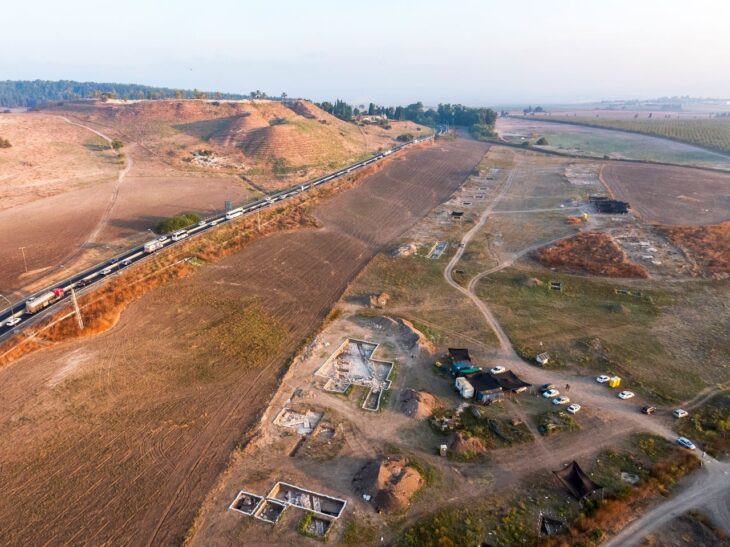
A vast network of ancient stone circles—long overlooked across the basalt landscapes of the Middle East—is forcing archaeologists to rethink one of the region’s most enigmatic monuments. What was once considered a singular prehistoric structure may now be understood as part of a much broader cultural tradition stretching across the southern Levant.
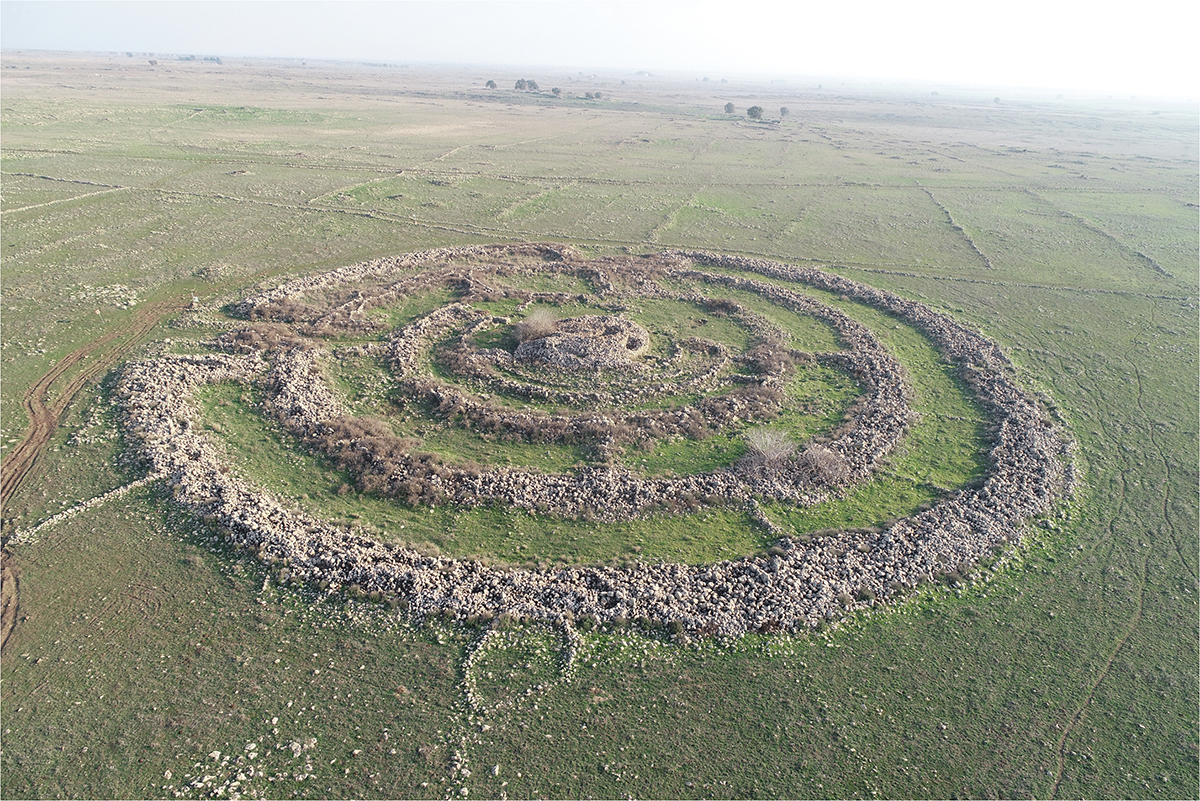
At the center of this shift stands Rujm el-Hiri, a monumental complex in the Golan Heights often compared to Stonehenge. But new research suggests it was never alone.
A Landscape Hiding in Plain Sight
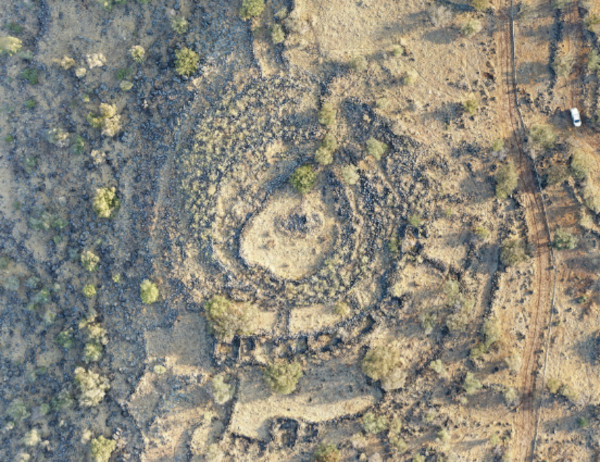
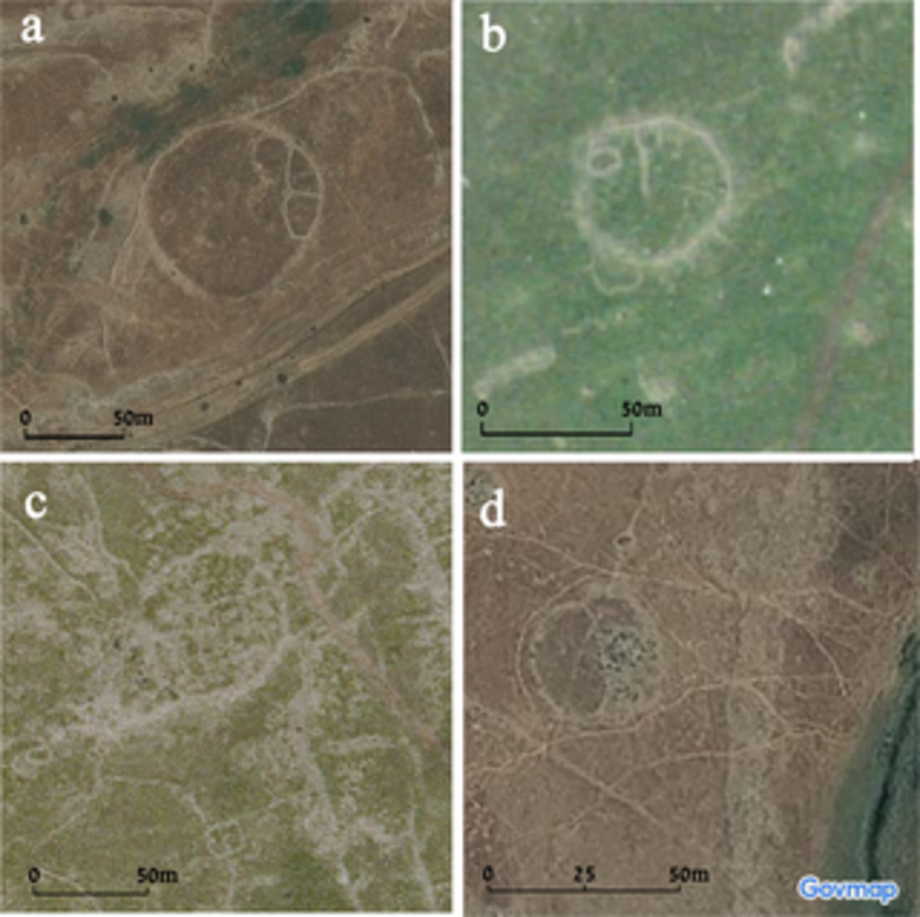
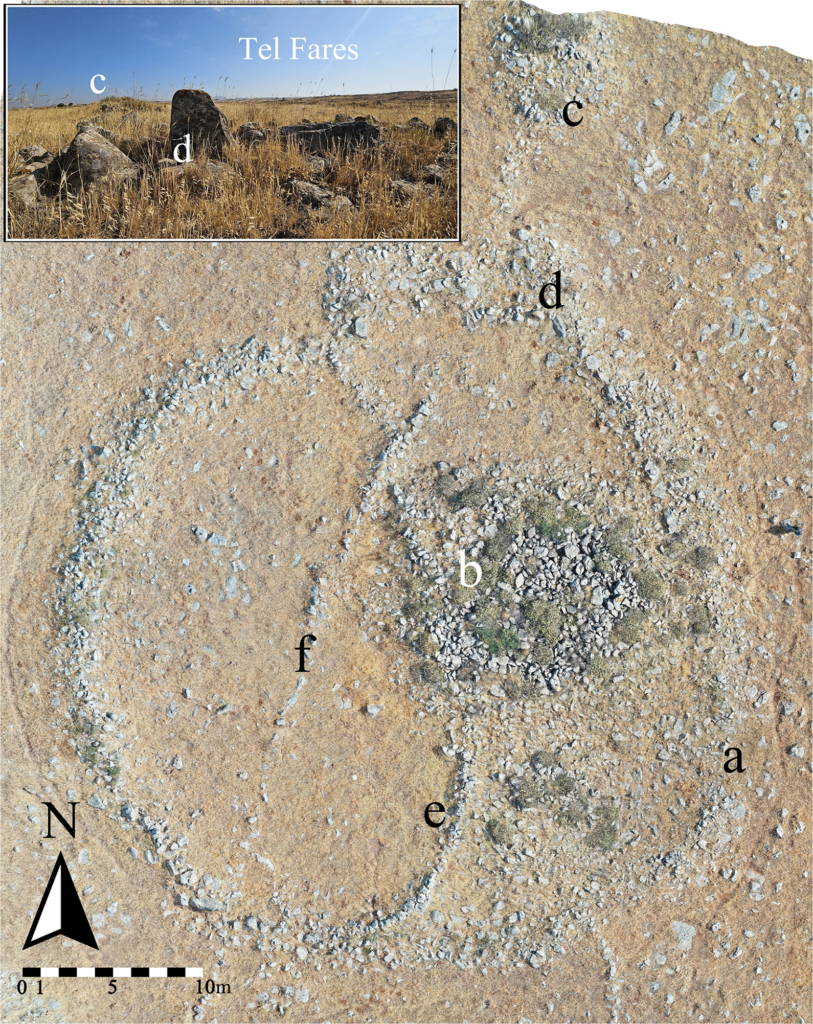
Using high-resolution satellite imagery, artificial intelligence, and geophysical modeling, an international team of researchers has identified more than 30 large circular stone structures within a 25-kilometer radius of Rujm el-Hiri. Most had never been documented before.
The study, published in PLOS One, reveals that these structures share a consistent architectural logic—concentric stone rings, radial divisions, and strategic placement within the landscape.
For decades, archaeologists assumed Rujm el-Hiri was an isolated phenomenon. That assumption now appears to have been shaped less by reality than by the limitations of traditional field surveys.
📣 Our WhatsApp channel is now LIVE! Stay up-to-date with the latest news and updates, just click here to follow us on WhatsApp and never miss a thing!!
Satellite-based analysis changed everything.
By layering imagery captured between 2004 and 2024, researchers were able to detect faint patterns invisible at ground level—features obscured by vegetation, erosion, or later human activity. AI tools helped filter out visual noise, revealing circular forms embedded in the terrain.
The result is not just a discovery—but a conceptual breakthrough.
Rujm el-Hiri: From Mystery to Model
Rujm el-Hiri itself remains an extraordinary structure. Built during the Early Bronze Age, it consists of a central cairn surrounded by multiple concentric basalt rings, with an overall diameter exceeding 150 meters and an estimated 40,000 tons of stone.
Discovered in 1968 through aerial reconnaissance, the monument has long puzzled researchers. Its purpose has been debated for decades—variously interpreted as a burial site, ceremonial center, or even an astronomical observatory.
But the newly identified circles suggest a different perspective.
Rather than being unique, Rujm el-Hiri may represent the most elaborate example of a widespread architectural tradition—a kind of regional “prototype” rather than an anomaly.
As noted in the research, these structures exhibit recurring design features and spatial patterns, indicating a shared construction logic across multiple sites.
The End of the “Ancient Observatory” Theory?
One of the most popular interpretations of Rujm el-Hiri has been its supposed role as an astronomical observatory. Some researchers once argued that its entrances aligned with solar events such as the summer solstice.
However, new geophysical evidence challenges this idea.
The region has undergone gradual tectonic rotation over thousands of years—shifting the orientation of the stones by several meters. This means that any apparent alignment today may not reflect the monument’s original design.
In other words, the sky may not have been the intended focus after all.
This reinterpretation marks a significant turning point in how archaeologists understand not just Rujm el-Hiri, but the broader tradition it now represents.
A Cultural Landscape, Not Isolated Monuments
What emerges from the study is a picture of a complex, interconnected cultural landscape rather than isolated structures.
The newly discovered circles are typically located on elevated plateaus or gentle slopes, often near seasonal water sources. Many are found alongside dolmens, burial mounds, and ancient field systems—suggesting they were integrated into everyday life rather than standing apart from it.
According to the analysis, these sites were likely part of agro-pastoral networks, used by communities that moved across the landscape seasonally.
Some circles measure as little as 50 meters in diameter, while others reach up to 250 meters. Despite variations in size and preservation, their shared geometry points to a coherent tradition spanning a wide geographic area.
Intriguingly, similar structures have also been noted in regions beyond the Golan Heights, including parts of Galilee and Lebanon—hinting at a much larger cultural horizon.
Gathering Places of the Ancient World?
If these monuments were not observatories, what were they?
The answer remains open—but the emerging consensus leans toward social and ritual functions.
Lead researcher Michal Birkenfeld suggests that, once stripped of their supposed uniqueness, these sites become easier to interpret as communal spaces—places where groups gathered for ceremonies, exchange, or seasonal events.
This interpretation aligns with their placement in the landscape: accessible, visible, and often connected to water sources and agricultural zones.
In this sense, the stone circles may have functioned less like isolated monuments and more like nodes in a living social network.
A Discovery That Changes the Map
The implications of this research extend far beyond a single site.
By demonstrating the power of remote sensing and AI-driven analysis, the study highlights how much of the ancient world may still be hidden—quite literally—in plain sight.
As previously noted by Ancient Origins, many of these structures remained undetected for decades despite being located in well-studied regions. Their rediscovery underscores the growing role of technology in reshaping archaeology.
More importantly, it challenges long-held assumptions about monumentality, landscape use, and social organization in the ancient Near East.
Rujm el-Hiri is no longer a mystery standing alone in the basalt plains.
It is now part of something much larger—a forgotten architectural language written across the land thousands of years ago.
Birkenfeld, M., Khabarova, O., Eppelbaum, L. V., & Berger, U. 2026. Reassessing Rujm el-Hiri: Aerial imagery and stone circles in the proto-historic Southern Levant. PLOS One. https://doi.org/10.1371/journal.pone.0339952
Cover Image Credit: Michal Birkenfeld et al./PLOS One, 2026