
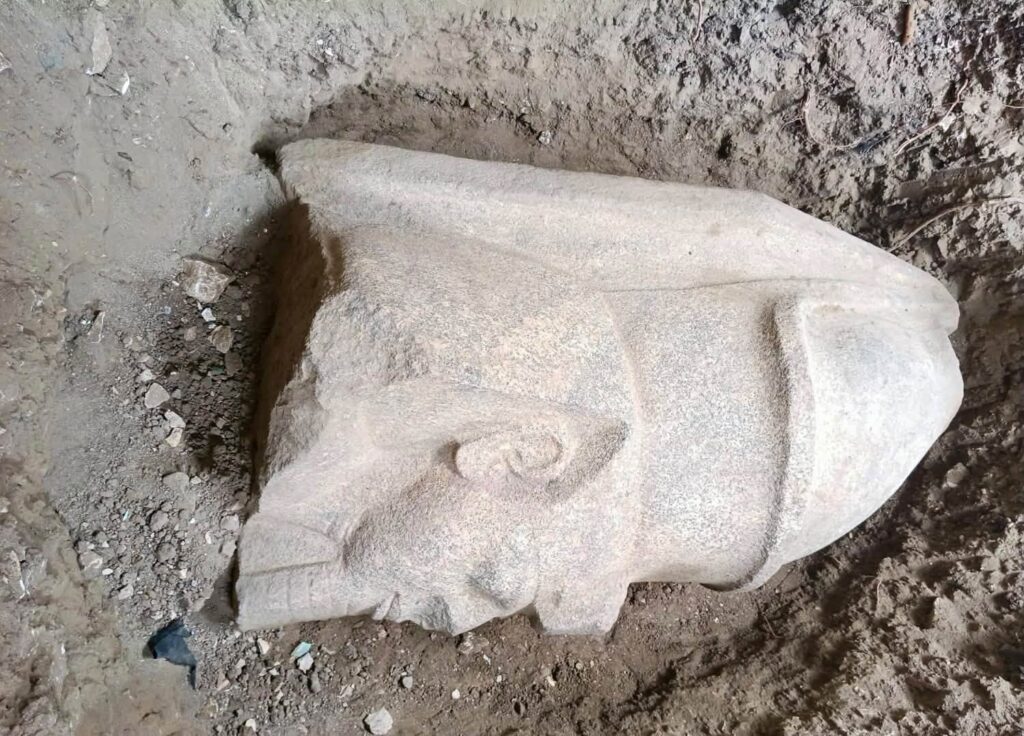
A chance discovery outside a home in Egypt’s Nile Delta has led archaeologists to the remains of two colossal royal statues, including the head of a Ramesses II monument that may once have stood 8.5 meters tall. The finds could provide new evidence of monumental construction at an ancient religious site centuries before its famous Temple of Isis was built.
The discovery began when a resident of Behbeit el-Hagar, a village in Egypt’s Gharbia Governorate, noticed an inscribed stone while working on land he owned in front of his house. Rather than disturbing the object further, he contacted local antiquities officials, setting in motion a rescue excavation that uncovered far more than the original stone.
According to Egypt’s Ministry of Tourism and Antiquities, an archaeological mission from the Supreme Council of Antiquities subsequently discovered the remains of two massive royal statues and a pink granite block bearing hieroglyphic inscriptions associated with Ramesses II, one of ancient Egypt’s most powerful pharaohs.
A Colossal Head Wearing Egypt’s Double Crown
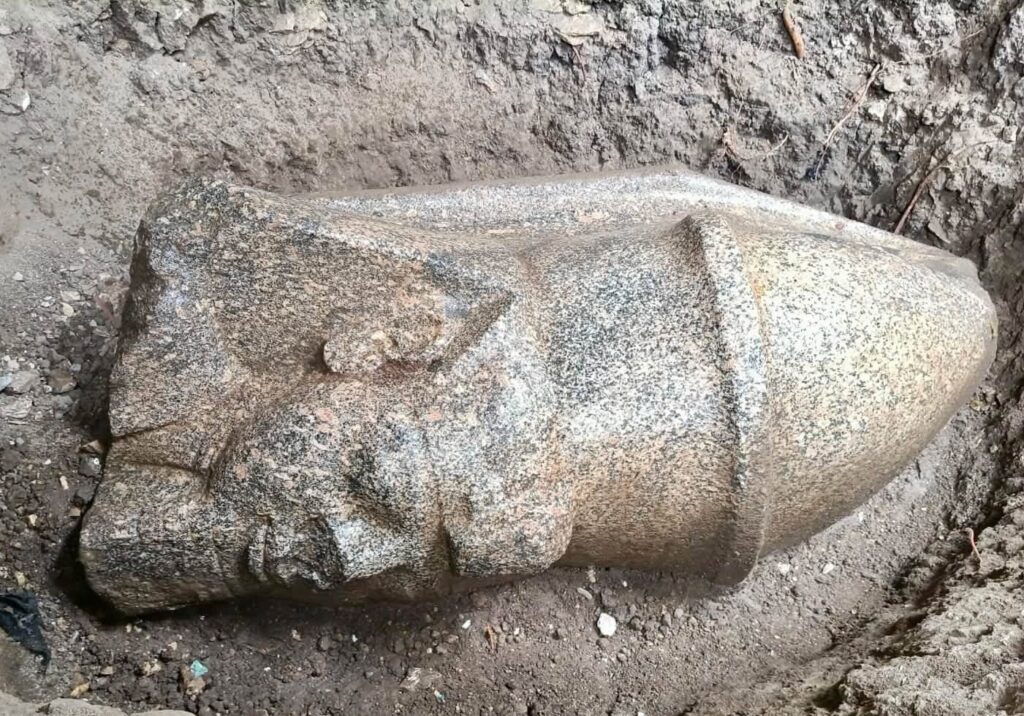
The most striking discovery is a 1.60-metre-tall head of Ramesses II wearing the double crown, the classic symbol of his rule over both Upper and Lower Egypt.
Archaeologists also recovered part of the statue’s back pillar. It carries the king’s Horus name, Hor Ka Nakht Mery Maat, which leaves no doubt that the monument belongs to Ramesses II, who reigned from roughly 1279 to 1213 BC.
According to Dr. Hisham El-Leithy, Secretary-General of the Supreme Council of Antiquities, the size of the head suggests the complete statue, base included, once stood about 8.5 metres tall.
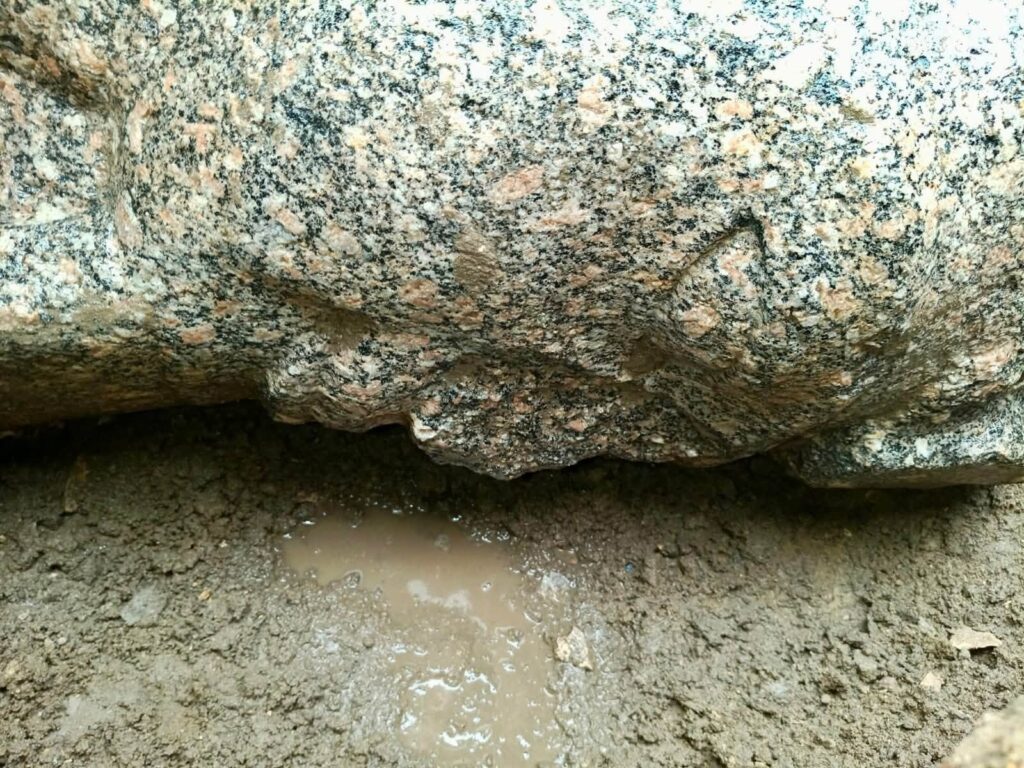
Nearby, the team uncovered most of a second royal statue, about 2.40 metres long in its surviving form. The legs and base are missing, yet the face is still recognisable, and the traditional striped nemes headdress is clearly visible.
The two sculptures look so similar that the second one may also depict Ramesses II, though archaeologists have not yet confirmed its identity.
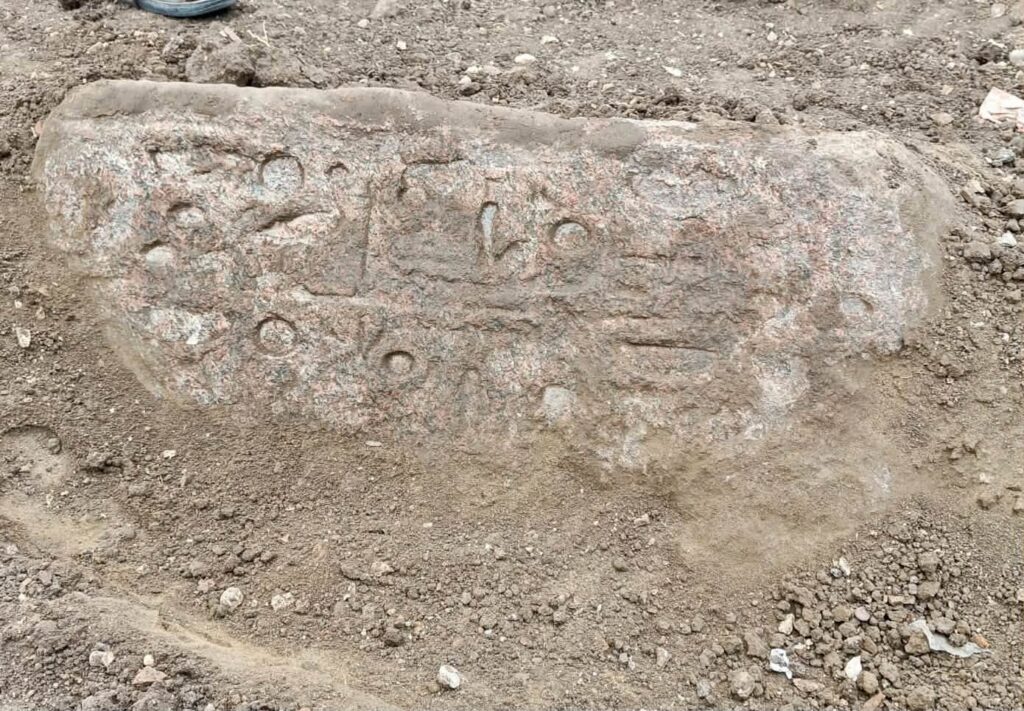
A third find strengthens the link to the pharaoh. Roughly one metre north of the second statue, researchers found a pink granite block about 1.30 metres long. Its remaining hieroglyphs include two of Ramesses II’s royal titles: Nesu Biti (King of Upper and Lower Egypt) and Sa Ra (Son of Ra).
Taken together, the statues and inscriptions show that large-scale royal monuments once stood in this part of the Nile Delta. Whether the statues were originally erected at the excavation site itself is still an open question.
An Earlier Chapter in the History of Behbeit el-Hagar
The location makes the discovery particularly interesting. Behbeit el-Hagar is best known for the remains of a monumental temple dedicated to Isis, one of the most important goddesses in ancient Egyptian religion.
The surviving ruins consist largely of enormous granite blocks scattered across the ancient temple precinct. Most of the great sanctuary dates to the reign of Nectanebo II in the fourth century BC, while later Ptolemaic rulers completed and expanded its decoration.
The temple became a major religious center in the Nile Delta, associated with the worship of Isis and Osiris. Yet the site’s history may extend considerably further into the past.
Ramesses II ruled roughly nine centuries before the construction of the surviving monumental Temple of Isis, raising questions about the earlier buildings and religious activities that may have occupied the area.
Previous discoveries already hinted at this possibility. In a 2017 study, Egyptologists Mahmoud Emam and Ehab Abd el-Zaher examined two architectural fragments bearing the cartouches of Ramesses II that had emerged during infrastructure work near the temple.
The researchers suggested that these fragments could indicate the existence of a building from the reign of Ramesses II, or potentially an even earlier period, before the later temple complex took shape.
The newly uncovered statues add another significant group of royal monuments to that archaeological picture. However, researchers must still establish whether the sculptures belonged to an earlier structure at Behbeit el-Hagar or arrived there through later reuse or relocation.
Excavations May Reveal More
The Supreme Council of Antiquities is continuing excavation and archaeological studies to establish the relationship between the statues, the inscribed block, and the surrounding remains.
Researchers hope to determine how these monuments were originally arranged and whether additional architectural features survive beneath the village.
For now, the discovery has produced an impressive royal head, a second large sculpture, and inscriptions linking the site to Ramesses II. What began with a single stone noticed outside a village home may ultimately help archaeologists reconstruct a much earlier chapter in the history of one of the Nile Delta’s important religious centers.
Egypt’s Minister of Tourism and Antiquities, Sherif Fathy, publicly thanked the resident for coming forward, underlining how vital public cooperation is in safeguarding the country’s archaeological heritage.
