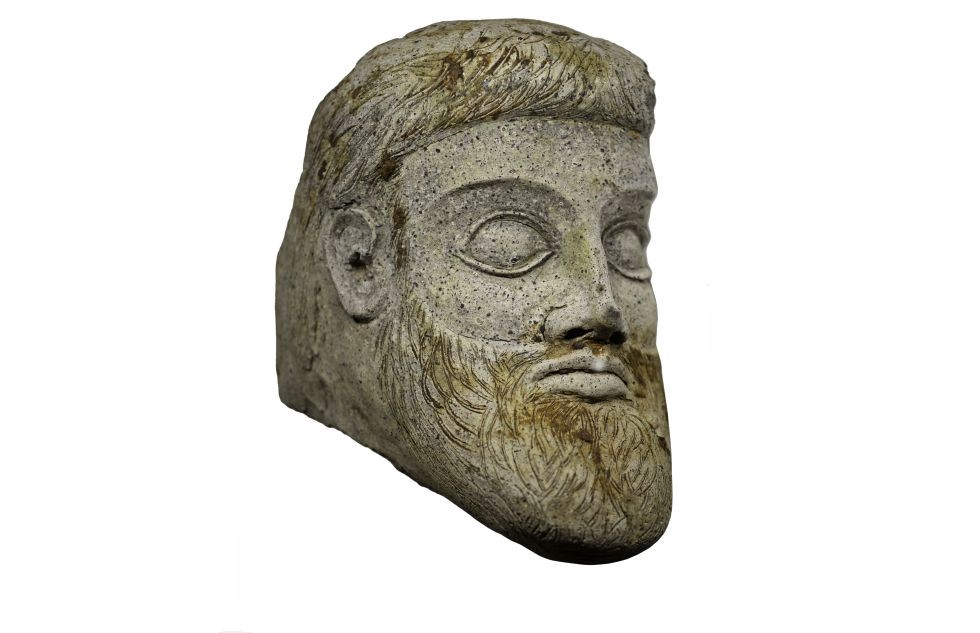
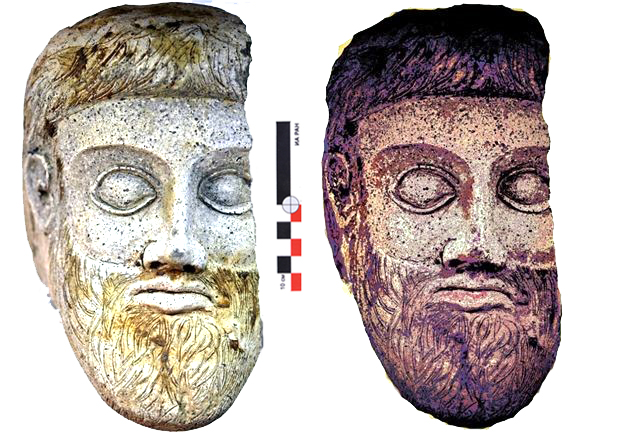
A remarkable terracotta sculpture recovered from the seabed near Crimea has yielded new insights into ancient craftsmanship, after scientists successfully reconstructed its original appearance using cutting-edge analytical techniques. The study not only confirms the artifact’s age but also reveals that the sculpture was once vividly colored—challenging long-standing assumptions about its original form.
The discovery centers on a hollow terracotta head, unearthed in 2017 during underwater excavations in the Kerch Bay area, near the construction site of the Crimean Bridge. Now, nearly a decade later, a multidisciplinary team of researchers has managed to uncover details that were previously invisible to the naked eye.
High-Tech Methods Unlock Hidden Details
The research was carried out by specialists from the Institute of Archaeology of the Russian Academy of Sciences in collaboration with the Kurchatov Institute. By combining multiple scientific techniques—including optical and scanning electron microscopy, X-ray diffraction, infrared spectroscopy, and energy-dispersive microanalysis—the team was able to identify both the materials and the methods used to create the sculpture.
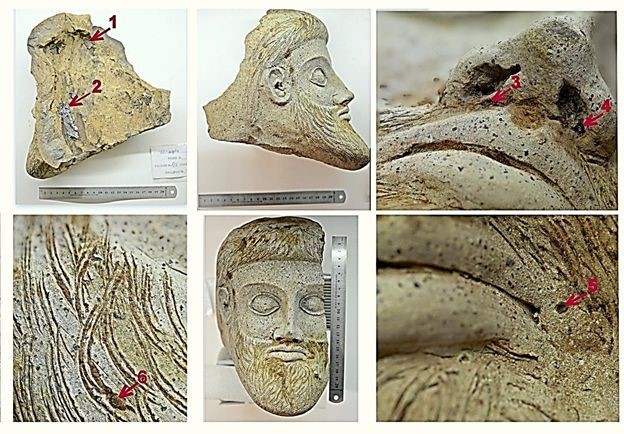
These analyses revealed the presence of organic compounds and mineral pigments embedded in microscopic traces across the surface. In particular, researchers detected residues of coniferous tree resin, which had been applied to the sculpture’s beard and hair.
This resin layer was not decorative alone. Instead, it appears to have served as a base for darker pigments, likely containing manganese-rich minerals such as jacobsite and braunite. Together, these materials created a dark coating that defined the figure’s facial features.
📣 Our WhatsApp channel is now LIVE! Stay up-to-date with the latest news and updates, just click here to follow us on WhatsApp and never miss a thing!!
Evidence of Color in Ancient Greek Art
The findings add to a growing body of evidence that ancient sculptures were not left in plain clay or stone, but were often painted in vivid colors. In this case, the reconstruction shows that while the hair and beard were coated in a dark resin-based layer, the lips were likely painted red using ochre pigments applied over a gypsum base.
Traces of this pigmentation were found in protected areas such as the corners of the lips and within carved grooves, where environmental erosion had less impact. By digitally enhancing color contrasts, researchers were able to visualize how the sculpture may have originally appeared, with selective use of color highlighting specific facial features.
Dating the Sculpture: A Rare Breakthrough
One of the most significant aspects of the study is the successful use of radiocarbon dating on organic material extracted from the sculpture. Such applications are rare in the study of classical-era artifacts.
Using accelerator mass spectrometry (AMS), scientists dated the resin coating to the 5th century BC, placing the object firmly within the period of the Greco-Persian Wars—a time of intense cultural and artistic development in the Greek world.
“This is an unusual case where organic material suitable for radiocarbon dating was preserved,” noted academician Nikolai Makarov, director of the Institute of Archaeology. “It allows us not only to confirm the chronology but also to better understand the original appearance and function of the artifact.”
A Hybrid Artistic Style
Stylistic analysis suggests that the sculpture reflects a blend of artistic traditions. The upper part of the face—characterized by large eyes and sharp transitions—aligns with archaic Greek conventions, while the nose, lips, and beard exhibit influences from eastern artistic traditions.
This hybrid style has led researchers to propose that the terracotta head was produced in a small workshop in one of the Greek cities of Asia Minor, where local artisans adapted and combined different artistic influences. The work may even represent a portrait of a specific individual or a localized interpretation of a deity.
Function and Maritime Context
The exact purpose of the sculpture remains uncertain, but new evidence points toward a maritime function. Researchers believe the object may have been mounted on a ship, possibly as a decorative or symbolic figure.
Lead elements discovered within the structure likely served as fastenings, anchoring the sculpture to a now-lost base. Meanwhile, the application of resin would have provided a protective coating against seawater—supporting the hypothesis that the object was exposed to a marine environment.
A Window into the Ancient Harbor of Panticapaeum
The terracotta head was discovered within a dense accumulation of ancient ceramics on the seabed of Kerch Bay. This underwater deposit is believed to represent a displaced cultural layer from the harbor of Panticapaeum, an ancient Greek city that flourished between the 6th century BC and the early medieval period.
The material was likely relocated during dredging operations in the 20th century, complicating efforts to reconstruct the artifact’s original archaeological context. Despite this, the application of modern scientific techniques has allowed researchers to extract valuable information from even the smallest surviving fragments.
Redefining the Role of Science in Archaeology
Beyond the artifact itself, the study highlights the growing importance of interdisciplinary approaches in archaeology. By integrating natural sciences with traditional archaeological methods, researchers are now able to reconstruct not only when objects were made, but how they looked, how they were used, and how they interacted with their environment.
In the case of this Crimean terracotta head, these methods have transformed a weathered fragment into a vivid testimony of ancient artistry—revealing a past that was far more colorful, complex, and technically sophisticated than previously imagined.
Archaeology of the Russian Academy of Sciences
Cover Image credit: Archaeology of the Russian Academy of Sciences