
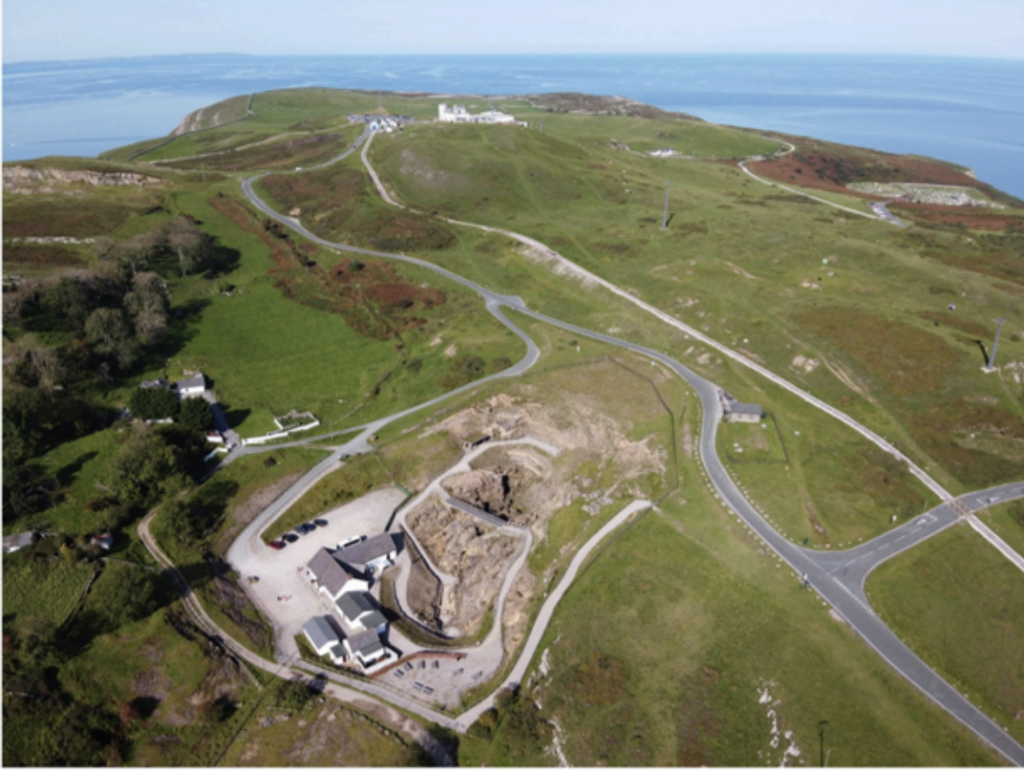
A new study of bone tools from Great Orme in North Wales suggests that Bronze Age miners did not simply replace older organic technologies with metal. Instead, they kept using animal bones as a practical part of copper mining.
At one of Britain’s most important prehistoric copper mines, Bronze Age workers appear to have used a toolkit that was more flexible than the usual image of stone hammers and metal picks suggests.
A new study of 150 bone artefacts from the Great Orme copper mines in North Wales has found that ancient miners deliberately selected and shaped animal bones for specific mining and ore-processing tasks. The tools were probably used to split soft copper-bearing rock, scrape mineral material, rake fine ore fractions, and handle loose ore.
The study, led by Olga Zagorodnia of the British Museum and Harriet White of Great Orme Mines, appears in the June 2026 issue of Journal of Archaeological Science: Reports. It examines 150 bone artefacts from Great Orme to understand how animal bones were selected, modified, and used in Bronze Age copper mining.
A major Bronze Age mine on the Welsh coast
Great Orme, a limestone headland near Llandudno, is already known as one of Europe’s most extensive prehistoric mining complexes. Archaeological work has identified up to 6,000 meters of Bronze Age mine workings across roughly 24,000 square meters, reaching about 55 meters below the present ground surface.
Radiocarbon dates from charcoal and bone collagen suggest that mining activity at the site lasted from around 1700 to 900 BC. That makes the newly studied bone tools part of a long-lived mining tradition, not a brief or accidental episode.
More than 30,000 bone fragments have been recovered from the site since excavation work began. Many were mixed with mining spoil, while others came from worked-out veins inside the mine. Earlier studies had already suggested that some of these bones may have been used as tools, but the new research gives the clearest functional picture so far.
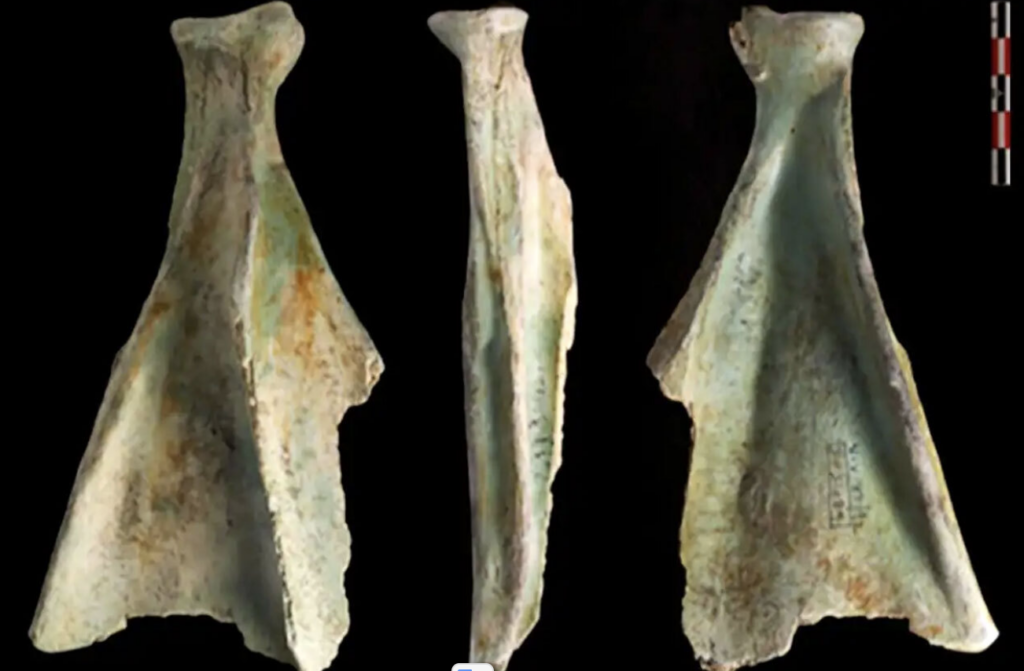
Bones were not waste — they were tools
The study focused on 150 relatively well-preserved specimens. The researchers used morphological study, technological analysis, low- and high-magnification microscopy, and scanning electron microscopy at the British Museum to examine how the bones had been modified and worn.
The results point to several tool categories.
Long limb bones, mainly from cattle, were made into wedges. Their pointed ends show chipping and deep striations, while the opposite ends preserve percussion marks. This suggests that some were struck with hammerstones and driven into soft copper-bearing rock, much like wedges or picks.
Rib bones formed the largest group of scraping or stirring tools. These had rounded edges, smoothing, polish, and grouped scratches consistent with repeated contact with abrasive material. The authors suggest that they may have been used to scrape sandy dolomitized limestone, or possibly to stir and rake ore during wet processing.
Scapulae and pelvic bones were shaped into scoop-like implements. Their wear traces suggest that they were used to gather or move loose ore or finely ground material.
A few awls were also identified. These were probably not mining tools in the strict sense, but they may have helped maintain leather bags, protective gear, or wooden containers used by miners underground.
Why use bone in the Bronze Age?
The finding is not that Bronze Age miners lacked metal. Great Orme has produced evidence for stone tools, charcoal from fire-setting, and copper-alloy fragments linked to mining activity. The point is more interesting: metal did not immediately make bone obsolete.
Bone was light, available, easy to shape, and useful in softer geological conditions. At Great Orme, copper mineralisation was associated with soft, weathered dolomite containing secondary ores such as malachite and goethite. In that setting, bone tools could do jobs that did not require the durability of metal.
The researchers argue that bone tools were a functional complement to stone and bronze implements, rather than a primitive survival from an earlier age. In pastoral societies, cattle, sheep, goats, and pigs provided a ready supply of raw material. Some bones may even have moved from food waste to tool blanks with minimal extra work.
That matters because archaeology often preserves stone and metal more readily than organic materials. When bone survives, as it did at Great Orme because of the site’s limestone-dolomite geology, it can reveal parts of ancient labour that are usually missing from the record.
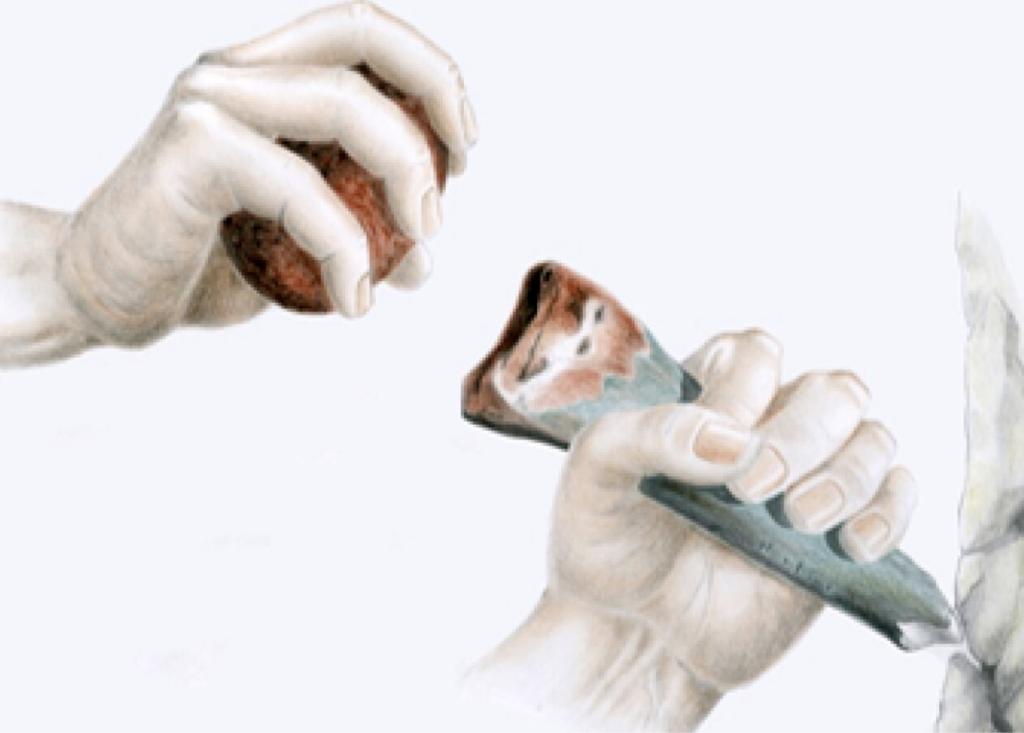
Reconstruction. Images by O. Zagorodnia, drawing by
A.Verbovsky. Credit: Zagorodnia, O., & White, H. (2026)
A wider European mining tradition
The Great Orme finds also fit into a broader Bronze Age pattern. Comparable bone tools have been reported at prehistoric mining sites in Ukraine, Russia, Austria, Ireland, Kazakhstan, and Uzbekistan.
This does not mean that all Bronze Age mining communities used identical tool kits. The study stresses local adaptation. Different geology, different animals, and different mining strategies shaped what tools were made and how they were used.
Still, the recurrence of bone wedges, rib tools, and scoops across distant mining landscapes suggests a shared practical knowledge: miners understood the properties of bone and used it where it made sense.
A cautious but important result
The authors describe the study as preliminary. The sample is limited when compared with the tens of thousands of bone fragments from Great Orme, and further experimental work is needed to test exactly how well bone wedges, rib scrapers, and scoops performed in site-specific mining conditions.
There is also no excavated dedicated ore-processing area at Great Orme yet, so interpretations of some rib tools as possible wet-processing implements remain cautious.
Even so, the evidence is strong enough to change the picture. Bronze Age mining in Britain was not a simple story of metal replacing older materials. At Great Orme, miners seem to have used a mixed toolkit, choosing bone, stone, or metal according to task, material, and availability.
The result is a more practical, less linear view of technological change: ancient miners were not just adopting new materials. They were combining them.
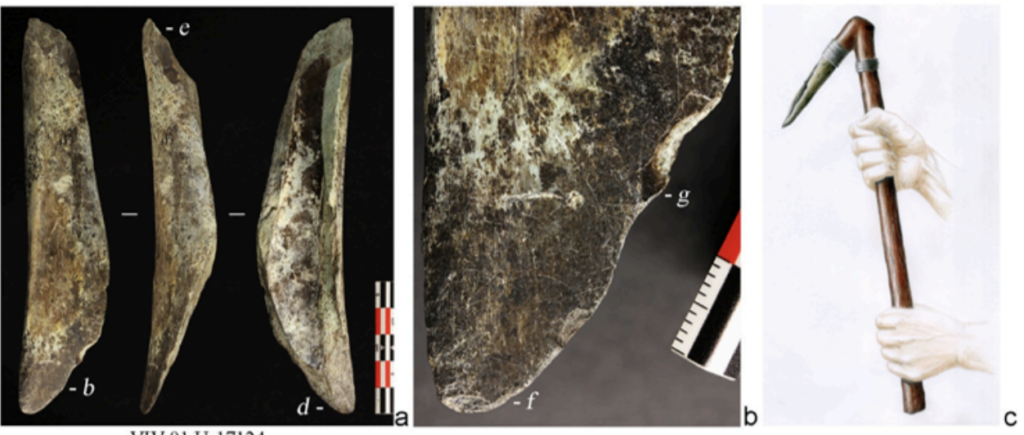
A.Verbovsky. Credit: Zagorodnia, O., & White, H. (2026)
Zagorodnia, O., & White, H. (2026). Bone tool functionality in the Bronze Age copper mines of Great Orme (UK): Preliminary results. Journal of Archaeological Science: Reports, 72, Article 105751. https://doi.org/10.1016/j.jasrep.2026.105751
Cover Image Credit: Zagorodnia, O., & White, H. (2026)
