
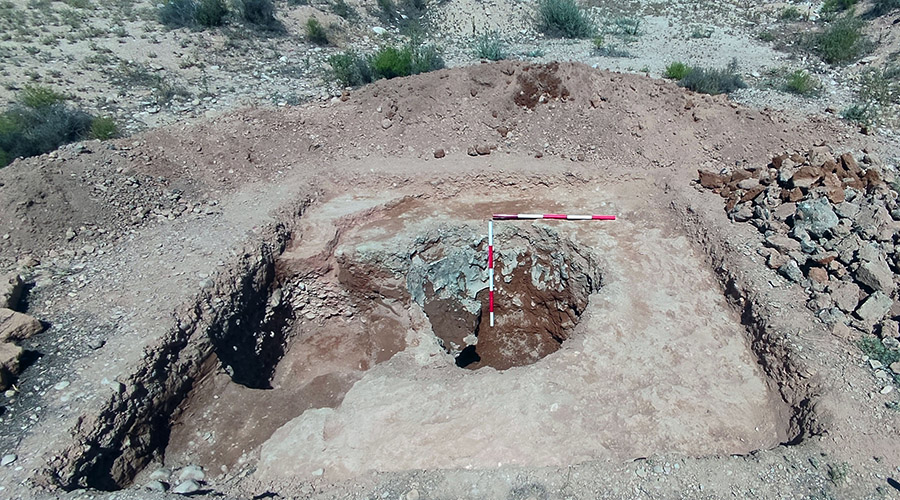
Archaeologists working in northeastern Iran have uncovered a remarkable Bronze Age settlement that is offering new insights into ancient cultural networks stretching across Central Asia. The discoveries come from excavations at the archaeological site of Kalat-e Yavar, located on the Bojnord Plain in North Khorasan Province. Recent research indicates that this site may have been an important cultural crossroads linking the Iranian Plateau with the Bactria-Margiana Archaeological Complex (BMAC)—one of the most significant Bronze Age civilizations of Central Asia.
The findings, recently reported in a scholarly article titled “Excavations at the Bronze Age Site of Kalat-e Yavar (Bojnord Plain, NE Iran): First Results,” have attracted wider attention after being discussed in an article by Antiquity, highlighting the growing importance of this discovery for understanding the region’s ancient history.
A discovery that began by chance
The story of Kalat-e Yavar began unexpectedly in 2021 when a local villager working near a mound north of the modern village uncovered a burial containing Bronze Age artefacts. The accidental discovery quickly drew the attention of archaeologists, who began investigating the site to determine its significance.
Researchers first conducted a geophysical survey using magnetometry to examine what lay beneath the mound’s surface. The survey revealed numerous subsurface anomalies that appeared to correspond to graves, architectural remains and other archaeological features. Encouraged by these results, archaeologists launched systematic excavations during the 2023 and 2024 field seasons.
When excavation trenches were opened across the mound, archaeologists encountered a sequence of archaeological layers extending roughly 3.5 meters deep, indicating multiple phases of occupation during the Bronze Age.
A settlement overlooking the Bojnord Plain
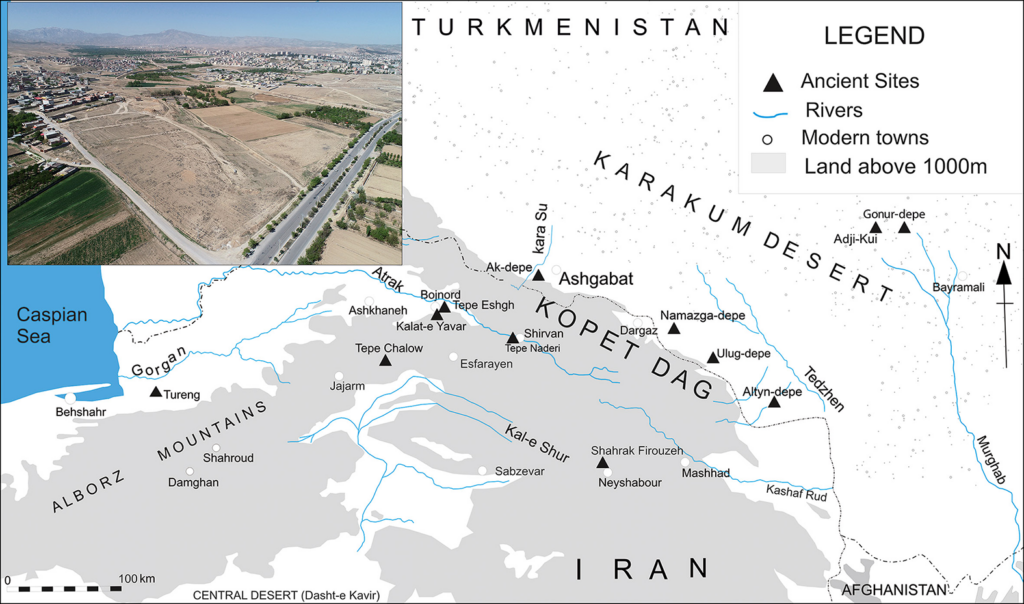
Kalat-e Yavar lies southeast of the city of Bojnord in northeastern Iran. The site occupies a natural rise about 15 meters above the surrounding landscape and covers an area of roughly 400 by 250 meters. It sits between two seasonal streams that would have provided water and fertile land for agriculture.
Although parts of the mound have been damaged by modern farming and construction, large portions remain well preserved. Excavations have revealed both domestic structures and burial areas, especially in the southern sector of the site.
The site’s geographic location is particularly significant. Northeastern Iran lies along natural corridors that historically connected the Iranian Plateau with the oasis civilizations of Central Asia and the steppe regions further north.
Bronze Age burials emerge from the soil
Among the most important discoveries at Kalat-e Yavar are several human burials belonging to different phases of the Bronze Age.
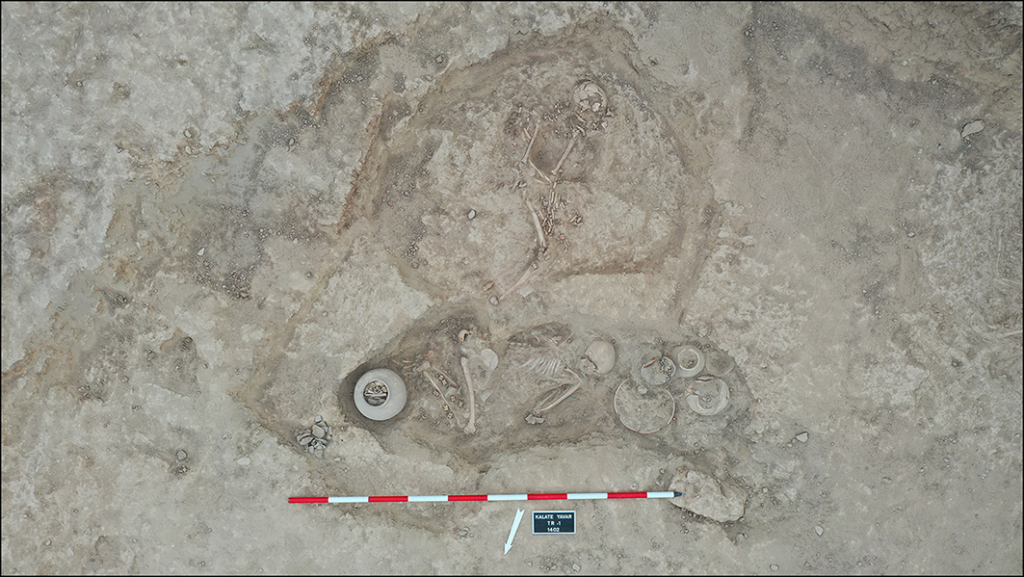
Some graves contained no accompanying artefacts but displayed burial positions typical of the Early Bronze Age. In these burials, individuals were placed on their sides with slightly flexed limbs, usually oriented north–south with their faces turned west. Archaeologists believe these burials likely date to around 3000–2500 BCE.
Other graves contained pottery vessels and small offerings placed near the bodies. One juvenile burial was accompanied by a ceramic vessel, while other burials contained multiple artefacts.
The orientation of the bodies and the associated grave goods strongly resemble funerary traditions of the BMAC civilization, a major Bronze Age cultural horizon that flourished across regions of modern Turkmenistan, Afghanistan, and Uzbekistan.
Evidence of daily life in a Bronze Age settlement
Beyond the burials, excavations have revealed significant evidence of everyday life at the settlement.
In one excavation trench, archaeologists uncovered the stone foundations of a substantial building, along with thick layers of ash and domestic refuse. These deposits contained broken stone tools, animal bones and fragments of pottery—clear signs of daily activities once carried out in the area.
Elsewhere on the site, archaeologists discovered two large storage jars buried in the ground. These jars were likely used to store agricultural produce such as grain.
Grinding stones, plant remains and animal bones found throughout the site suggest that the inhabitants practiced a mixed farming and herding economy.
A Bronze Age pottery workshop
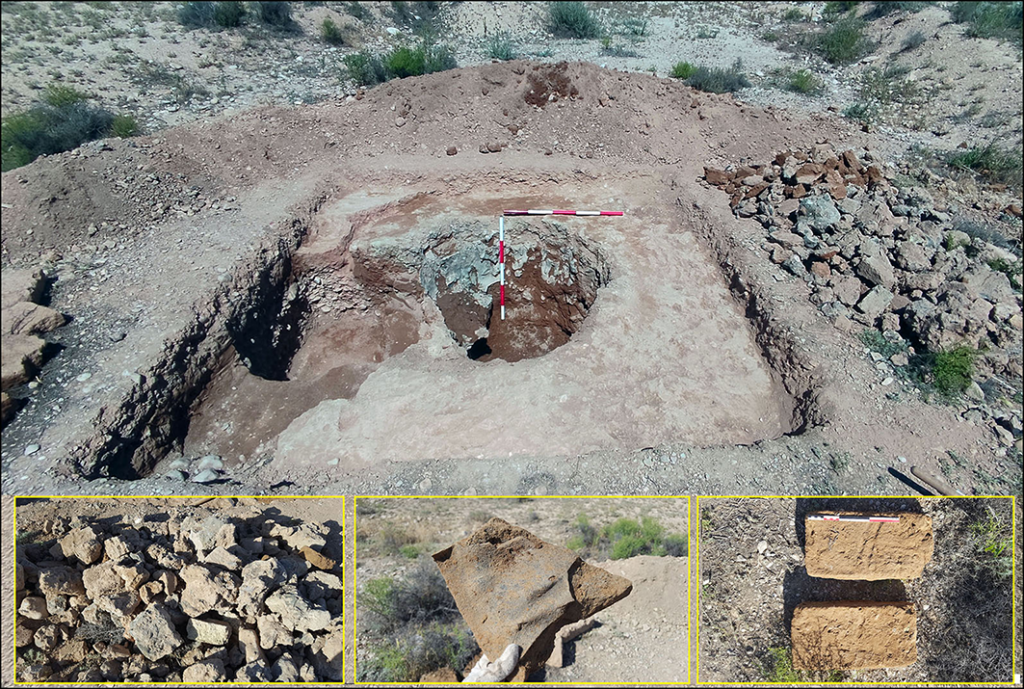
One of the most intriguing discoveries at Kalat-e Yavar was a circular pottery kiln containing misfired ceramic fragments.
These fragments, known as “wasters,” are a clear sign that pottery was produced locally. The kiln indicates that Kalat-e Yavar supported its own craft production and may have served as a center for ceramic manufacturing in the region.
Local production of pottery suggests that the settlement played a role in regional exchange networks during the Bronze Age, producing goods that could have circulated between communities.
Artefacts from a connected world
The artefacts recovered from the site reveal a diverse and interconnected material culture.
Archaeologists uncovered pottery vessels, copper-alloy objects, bone tools and stone implements. Personal ornaments were also found, including beads made from lapis lazuli and carnelian—materials often associated with long-distance trade in the ancient world.
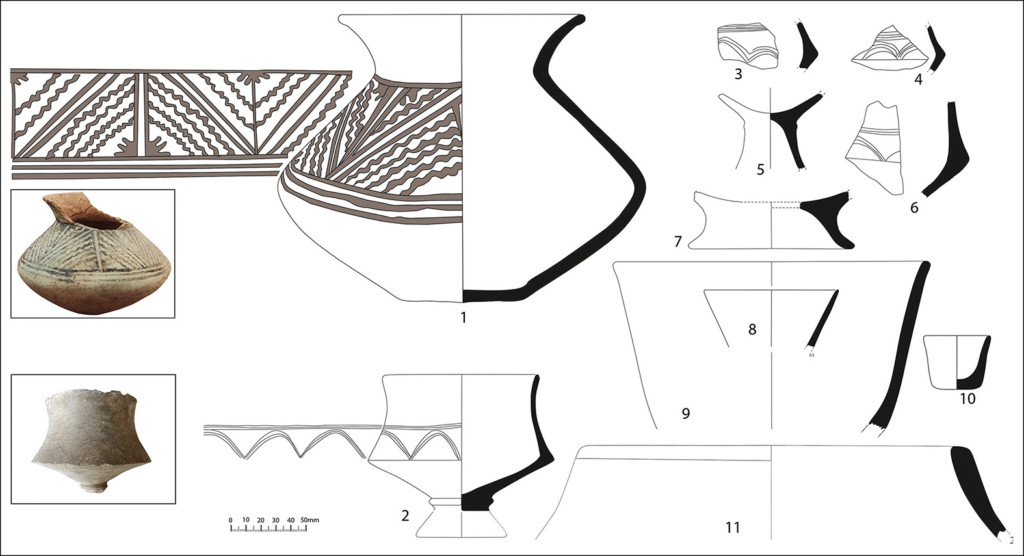
Among the most distinctive ceramics discovered at Kalat-e Yavar is a finely polished Grey Ware pottery decorated with incised motifs. Similar pottery styles are known from archaeological sites across northeastern Iran and southern Central Asia, suggesting cultural connections between distant communities.
Other artefacts include clay animal figurines, spindle whorls used in textile production, gaming pieces and grinding stones—objects that provide valuable clues about daily life and social practices in the settlement.
Northeastern Iran as a Bronze Age crossroads
Taken together, the discoveries at Kalat-e Yavar suggest that the Bojnord Plain functioned as an important cultural contact zone during the Bronze Age.
The pottery traditions found at the site combine elements associated with early Grey Ware cultures of northern Iran with features characteristic of the BMAC cultural horizon of Central Asia. This blend of influences indicates that communities in northeastern Iran were actively engaged in broader networks of exchange and interaction.
Rather than being an isolated frontier region, the Bojnord Plain appears to have been a dynamic crossroads where ideas, technologies and cultural traditions circulated across long distances.
Future research
Archaeologists plan to continue studying the site in order to better understand its role in Bronze Age history. Future research will focus on refining the chronology of the ceramics, analysing metallurgical evidence and examining plant and animal remains to reconstruct ancient diets and economies.
As new discoveries emerge, Kalat-e Yavar may become one of the most important archaeological sites for understanding how communities of the Iranian Plateau interacted with the civilizations of Central Asia thousands of years ago.
Vahdati A. A, Mohammadkhani K, Mahjoub Z. Excavations at the Bronze Age Site of Kalat-e Yavar (Bojnord Plain, NE Iran): First Results. Antiquity. Published online 2026:1-8. doi:10.15184/aqy.2026.10301
Cover Image Credit: Vahdati A. A (2026), Antiquity
