

Archaeologists excavating east of Halberstadt in central Germany have uncovered a remarkably well-preserved medieval settlement whose buildings are easier to trace than the people who once lived inside them.
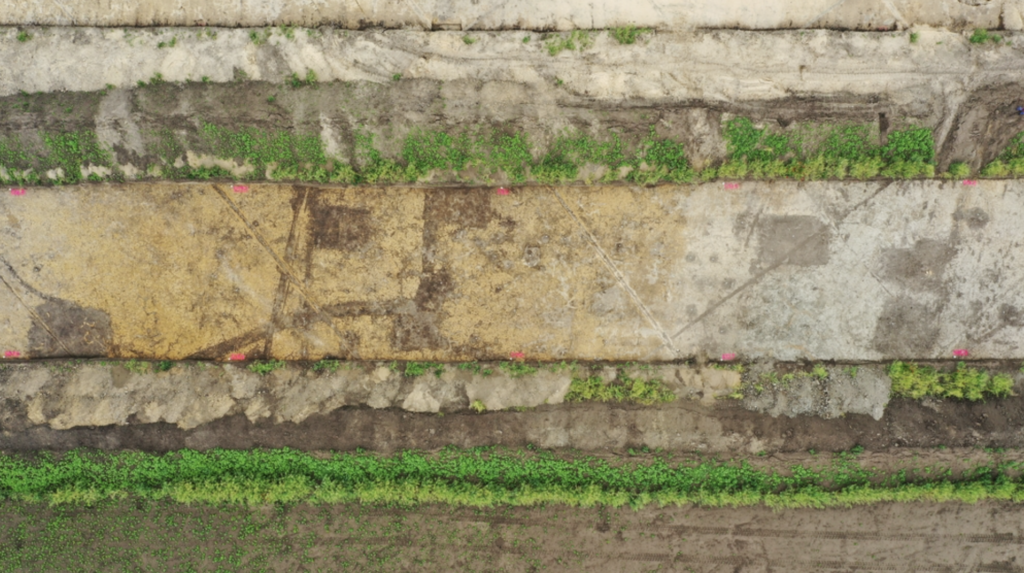
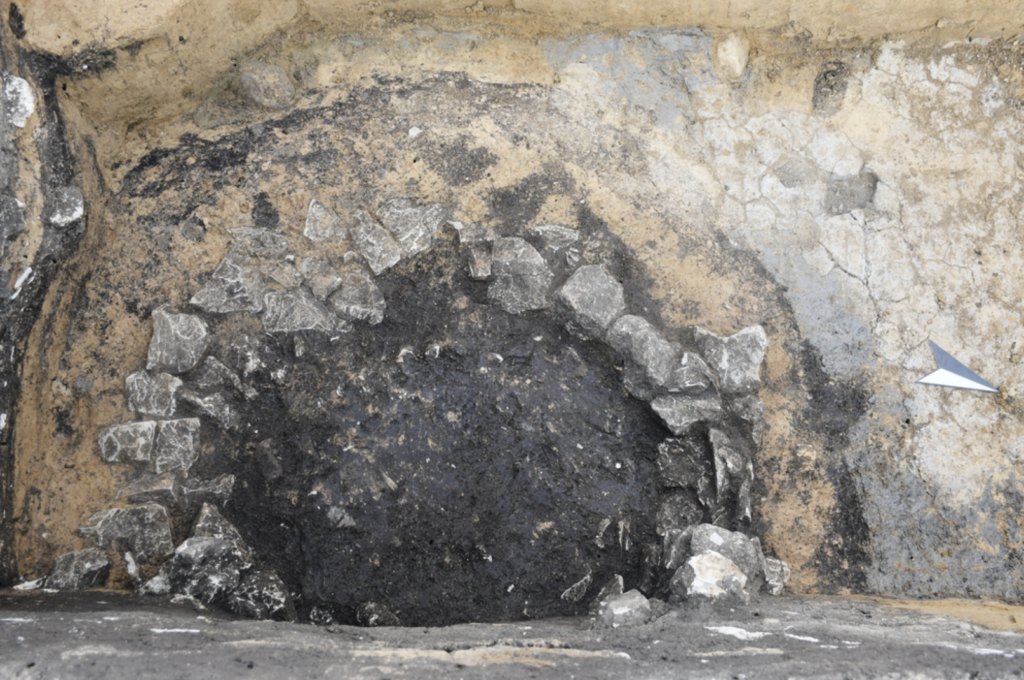
Rows of sunken buildings, settlement pits, wells and boundary ditches remain clearly visible beneath the soil. Yet despite that level of preservation, archaeologists have recovered surprisingly few possessions. There is no destruction layer and no evidence that the settlement burned.
Instead, the inhabitants appear to have taken much of what they owned with them before leaving. Why they left is still unknown.
A medieval settlement beneath an industrial development
The site lies east of Halberstadt, near Gessnerstraße and the Frevelgraben, in Saxony-Anhalt. Excavations have been underway since March as part of archaeological work preceding the expansion of Halberstadt’s Industrial Park East.
The settlement itself was not entirely unexpected. Geophysical surveys carried out before construction had already revealed sections of a complex ditch enclosure and numerous archaeological features inside it. Archaeologists from the State Office for Heritage Management and Archaeology Saxony-Anhalt (LDA) are now exposing those traces directly.
The results show that this was not a small, short-lived cluster of buildings. Numerous pit houses were arranged in rows alongside settlement pits, while two wells have also been documented. Toward the Frevelgraben, archaeologists found no house sites, but pits and occupation layers indicate that the bank itself was intensively used.
One of the most valuable features is something less spectacular than an individual artifact: the division of the settlement into recognizable plots.
According to LDA archaeologist Susanne Friederich, the surviving layout offers an unusual opportunity to examine how the settlement was organized and how individual areas were used by its inhabitants. Overlapping structures show that the village passed through at least two phases. New buildings were constructed beside or across older ones, gradually shifting parts of the settlement, while its ditch systems were repeatedly altered and expanded.
What the inhabitants did not leave behind may be the biggest clue
Well-preserved abandoned medieval settlements often contain large quantities of broken pottery, tools and other objects accumulated during everyday life. At Halberstadt, that expected material is largely missing.
Excavators have recovered scattered pottery fragments and only a limited number of metal objects, including a bronze tap, fittings and belt buckles. Considering the density of surviving structures, archaeologists believe these objects represent only a small fraction of what the settlement’s inhabitants once possessed.
That absence changes the picture of the site’s final days.
There is no archaeological layer indicating violent destruction, and the buildings do not appear to have been consumed by fire. The LDA therefore describes the settlement as having been abandoned in an unusually orderly manner. Rather than fleeing a sudden catastrophe, its inhabitants seem to have had enough time to remove possessions that were still useful or valuable.
It does not explain why they left, but it rules out some of the most obvious scenarios.
Was the lost village called Kühlingen?
Historical maps may preserve the settlement’s name long after its buildings disappeared.
Deserted-settlement maps produced around 1900 mark a place called Kühlingen a little more than a kilometer west of the excavated site. German topographic maps dating between 1872 and 1943 also place the name Kühlingen immediately north of the excavation area. The LDA therefore considers it likely that the settlement now being excavated is the lost medieval village recorded under that name.
The memory of Kühlingen appears in older local literature as well. A publication from the late 19th century noted that Halberstadt’s Kühlinger Straße took its name from a deserted village called Kühlingen, showing that the existence of the lost settlement was already part of local historical knowledge more than a century before the current excavation.
Municipal planning documents add another piece to the story. They record that written sources had long suggested a deserted village in the area, possibly known as Kühlingen or Frevel. Geophysical investigations commissioned by the city in August 2022 then confirmed an extensive medieval settlement with numerous pit houses and other remains. Those planning records broadly placed its abandonment in the Late Middle Ages, approximately AD 1250–1500.
The current excavation may eventually narrow that window considerably.
Kühlingen may have disappeared during a wider transformation
If the settlement was abandoned during the later Middle Ages, it would not have been an isolated case in the region.
Research into medieval settlement patterns in the northern Harz has shown that many villages disappeared during the 14th and 15th centuries. Historical records from the medieval Bishopric of Halberstadt also reflect this broader wave of settlement desertion. Nearby Marsleben, north of Quedlinburg, for example, grew for centuries before being abandoned around 1400.
That regional pattern does not explain what happened at Kühlingen. Different settlements could disappear for very different reasons, and the absence of burning or destruction at the Halberstadt site makes it particularly important not to impose the history of another deserted village onto it.
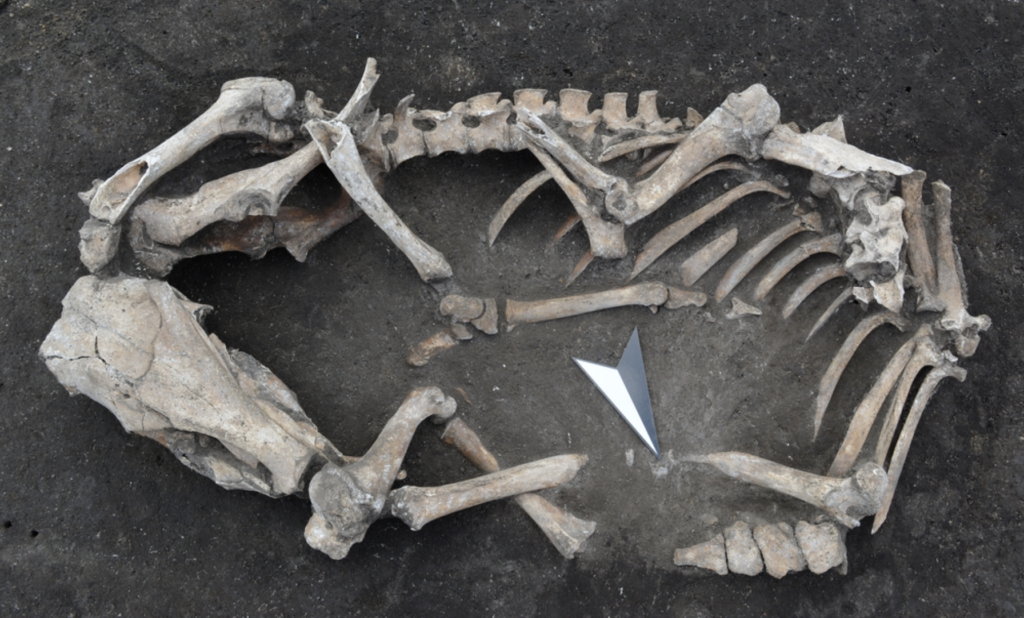
The next evidence may instead come from animal bones recovered during the excavation. Radiocarbon dating of selected animal remains is intended to establish when occupation ended, potentially allowing archaeologists to compare Kühlingen’s final phase more closely with the wider pattern of medieval village abandonment across the northern Harz.
Excavations at the Frevelgraben site are scheduled to continue until mid-December.
