
What looked like the remains of a single Iron Age house in the spring has turned into something far larger. After months of excavation on a hillside in the Alps, archaeologists have now uncovered more than 30 houses belonging to a settlement that flourished around 2,500 years ago.
The discoveries at Galgenbichl, near Niederrasen in South Tyrol, northern Italy, have revealed the scale of a community that once occupied a strategically placed slope in the Puster Valley. The excavation has also brought to light traces of weaving, bronze working, food preparation and animal husbandry, along with a small burial ground reserved only for very young children.
For South Tyrol, the scale of the discovery is exceptional. According to the provincial Office for Archaeology, no Iron Age settlement of this size has previously been investigated so extensively in the region.
One house became more than 30
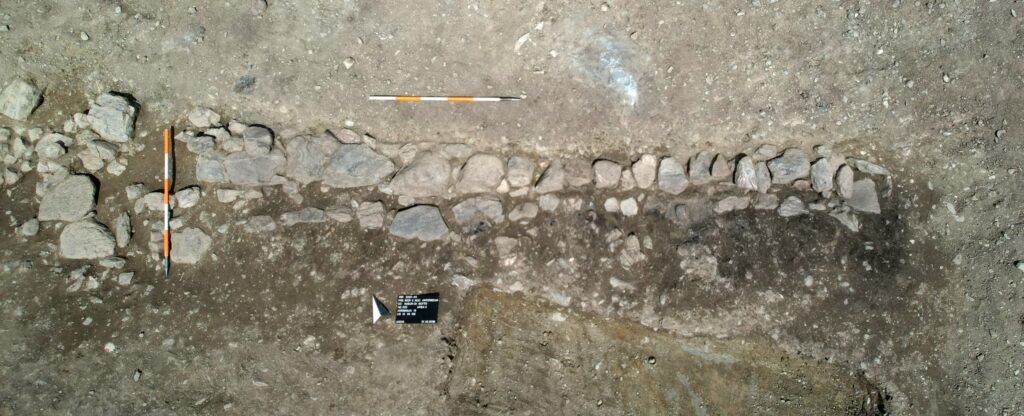
The scale of the site was not yet clear when archaeologists first reported the discoveries in April, when only the remains of a single Iron Age house had been identified.
Archaeological work at Galgenbichl had begun with trial excavations in late 2025, ahead of construction for new road access to the Antholz and Olang valleys. Full excavations followed in February 2026, and as more of the hillside was opened, structures began appearing across the construction area.
The first house already hinted at how much work had gone into creating a settlement here. The southern side of Galgenbichl is steep, so its inhabitants first cut terraces into the slope to create level ground. Houses were then built against the hillside with stone foundations and wooden upper structures, while wooden posts supported them on the downhill side.
Five months later, the picture had changed completely.
By September, archaeologists had uncovered the remains of more than 30 houses. What had initially appeared to be an isolated building was now recognizable as part of a substantial Iron Age village. The provincial archaeological office says the settlement reached its main period of prosperity between about 800 and 500 BC.
The story did not end there. Earlier excavation results show that people continued to live at Galgenbichl into the first century BC, meaning the settlement remained occupied for centuries after its principal Early Iron Age phase.
A village on a route through the Alps
Galgenbichl was not built on an easy piece of land, but its location had advantages.
The Puster Valley formed an important east-west route through the Alps, and the settlement stood in a position well suited to movement and contact. Finds from the site suggest that the people living here were connected with communities in the Venetic cultural region of what is now northeastern Italy.
Over the centuries, the wider cultural landscape around them also changed. During the settlement’s earlier phases, the Puster Valley belonged to the Raetian cultural sphere. By the final centuries of occupation, it had become connected with the Celtic kingdom of Noricum.
The village itself also appears to have experienced at least one destructive episode. Charcoal layers and burned wooden beams found during the excavation show that parts of the settlement were consumed by fire.
Life inside the houses
The real strength of Galgenbichl is not a single spectacular object. It is the way dozens of ordinary finds begin to reconstruct daily life.
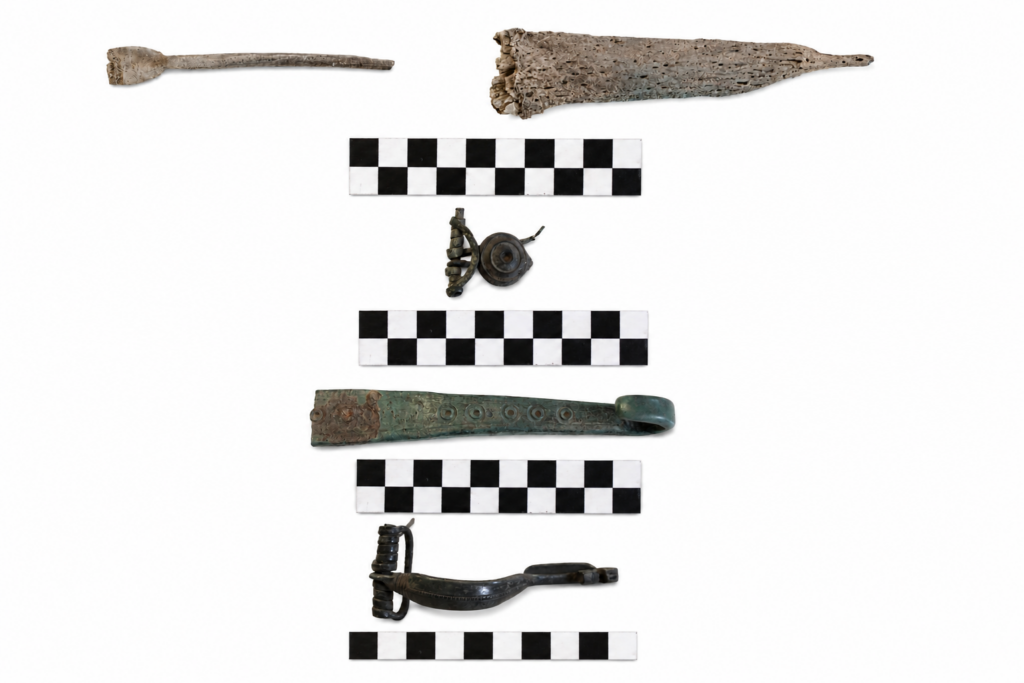
People here spun thread and wove textiles. They ground grain for food, used ceramic vessels in their homes and worked bronze. Loom weights, spindle whorls and grinding stones have been found among the houses, alongside traces of metalworking and fragments of everyday pottery.
Animal bones bring the village into even sharper focus. They show what people kept and ate, and cattle appear especially often among the remains. Archaeologists have suggested that the unusually strong presence of cattle may point to a community that was comparatively prosperous.
Seen together, these finds make it easier to imagine the settlement beyond its stone foundations: grain being crushed on grinding stones, cloth being produced inside or beside the houses, animals kept nearby and bronze objects being made or repaired as part of everyday life.
That is also why the discovery of more than 30 houses matters. It allows archaeologists to study not just individual buildings, but the workings of an entire community.
The youngest were buried inside the village
Among all the discoveries at Galgenbichl, one of the most revealing lies between the houses.
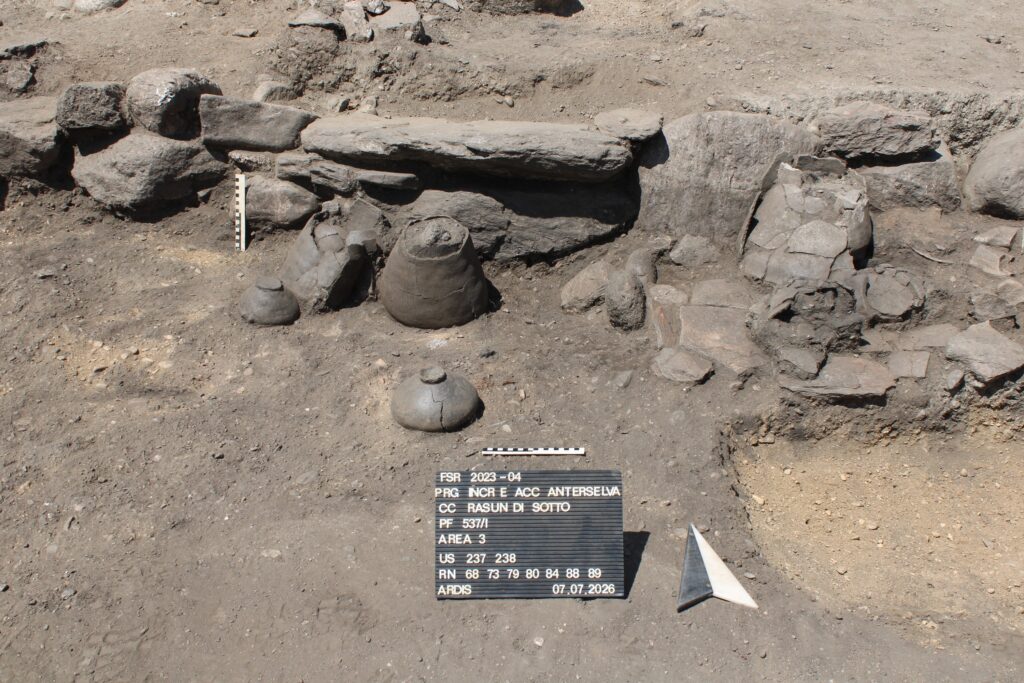
Archaeologists found a small burial area used exclusively for very young children. Their bodies were buried directly within the settlement rather than being cremated.
That stands in contrast to the nearby Iron Age cemetery at Windschnur, also in Niederrasen, where cremation was practiced. The difference suggests that the youngest members of the community were treated according to a separate funerary tradition.
The archaeological office has avoided assigning a specific religious meaning to the practice, but the contrast is striking. These children were not taken to the same cemetery as other members of the community; they remained within the inhabited space.
Their graves also reflect a harsher reality of life 2,500 years ago. According to the provincial archaeological office, infant mortality at the time may have reached between 20 and 35 percent, with many children not surviving their first year.
An Iron Age community comes into view
Galgenbichl was already known to archaeologists before 2026, but this year’s excavation has changed the scale of what can be understood about the site.
In April, the story centred on one house and a handful of objects that hinted at life on the hillside. By September, archaeologists were looking at more than 30 houses, evidence of craft production and livestock keeping, long-distance cultural contacts and a burial ground that treated the community’s youngest members differently from the rest.
Together with the nearby Windschnur cemetery, Galgenbichl is now considered one of the most important sources of evidence for the Early Iron Age in the Alpine region.
What has emerged from the hillside is therefore more than a cluster of ruined buildings. It is the outline of a village and, increasingly, the lives of the people who inhabited it.
