
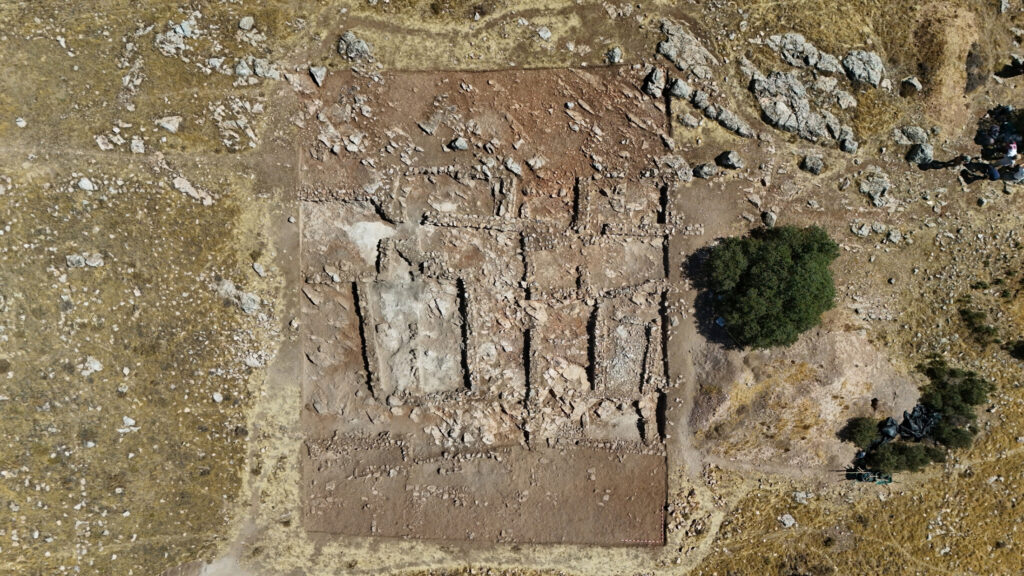
Archaeologists excavating Cerro del Gollino in central Spain have uncovered new evidence from a large Iron Age building that may have belonged to members of the local elite. The 2026 campaign also produced numerous imported ceramics from different parts of the Iberian Peninsula and the Mediterranean, alongside high-quality local wares.
The site belonged to the Carpetani, an Iron Age people who lived across central Iberia before Roman rule. At Cerro del Gollino, the combination of a substantial residence, imported pottery, and fine local production is helping researchers examine how wealthier members of this community lived and how closely they were connected to wider economic and cultural networks.
A large residence inside a major fortified settlement
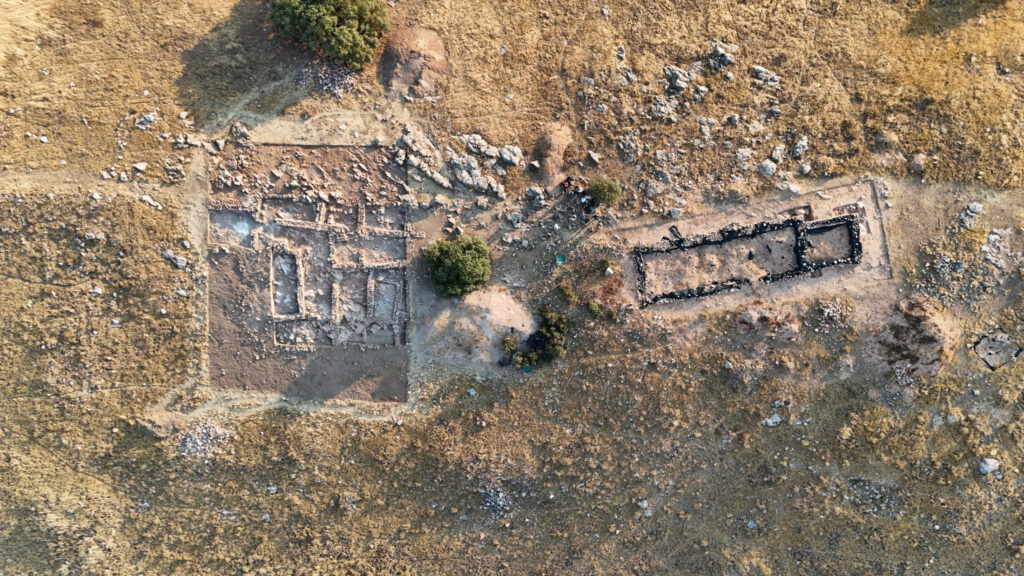
The latest work focused on a structure known as Building B, which archaeologists describe as a construction of considerable size. Researchers have not yet identified its function with certainty, but they consider it possible that the building served as a residence for members of the local elite.
Cerro del Gollino itself was no small settlement. The fortified oppidum near Corral de Almaguer, in the province of Toledo, covered around 18 hectares and remained occupied from the late 3rd century BCE until the first half of the 1st century BCE.
That period placed the settlement within the final centuries of the Iron Age in central Iberia, shortly before Roman rule transformed the region. The new excavations are therefore giving researchers a closer look at the social and economic organization of a substantial Carpetani community at a time of major political change.
Imported ceramics reveal wider connections
One of the most important results of the 2026 campaign is the quantity and variety of pottery recovered from the site. The finds include imported ceramics from different areas of the Iberian Peninsula and the Mediterranean, together with local wares that the excavation team describes as being of notable quality.
These objects suggest that Cerro del Gollino participated in exchange systems extending well beyond its immediate surroundings. The imported ceramics show that goods reached this inland settlement through broader networks, while the local pottery points to a developed regional production alongside those outside contacts.
For the possible occupants of Building B, access to imported objects may also have carried social significance. The official announcement does not specify the exact origin or function of individual vessels, so it is too early to connect particular pieces directly with status, trade or ritual use.
What the finds do show more clearly is that the inhabitants of Cerro del Gollino were not cut off from developments elsewhere in Iberia and the Mediterranean. Their material culture reflects participation in wider economic and cultural exchanges during the final stages of the Iron Age.
Who were the Carpetani?
The Carpetani were one of the Iron Age peoples of central Iberia, living in areas that included parts of what is now central Spain. Unlike groups such as the Phoenicians or Romans, however, they do not have a single widely recognized feature that immediately defines them for a modern audience.
Sites such as Cerro del Gollino are therefore especially important because archaeology provides much of the detail needed to reconstruct their daily life, social hierarchy and regional connections. Large fortified settlements, substantial buildings and imported objects can help researchers move beyond the limited picture provided by ancient written sources.
At Cerro del Gollino, Building B may become particularly important for understanding social differences within the settlement. If continued excavation strengthens the interpretation of the structure as an elite residence, archaeologists will have an opportunity to examine architecture, imported goods and local production within the same domestic context.
Excavations resumed after nearly four decades
Archaeologists first excavated Cerro del Gollino in 1985 and 1986, but work at the site did not continue uninterrupted. A new research project began in 2024, bringing excavation back to the oppidum after a long break.
The 2026 season represents the third campaign of the renewed project. The work is directed by the Autonomous University of Madrid and the University of Oxford, with archaeologist Pablo Sánchez de Oro playing a central role in restarting and developing the excavation program.
Researchers and students from several other universities also participated in the latest campaign. These included the Complutense University of Madrid, McMaster University in Canada, and Duke University in the United States, giving the project a broader international research and training dimension.
A more detailed picture of life in central Iberia
The discoveries from Building B matter because they bring several strands of evidence together. Archaeologists are not looking only at the size of the structure, but also at the objects associated with the settlement and the wider networks through which those objects moved.
Imported ceramics, high-quality local wares and substantial architecture all add detail to the picture of Cerro del Gollino as an important Carpetani center. Rather than portraying the community as isolated, the evidence points toward a settlement connected with broader movements of goods, ideas and people across the Iberian Peninsula and the Mediterranean.
The excavation team still needs to determine the exact function of Building B and the status of the people who occupied it. For now, the 2026 campaign has strengthened the case that Cerro del Gollino can offer an unusually detailed view of social hierarchy, exchange and everyday life in central Iberia during the closing centuries of the Iron Age.
