
23 June 2026 The Future is the Product of the Past

Archaeologists Reveal Earliest Suburbs of Glasgow Beneath Gallowgate

Archaeologists in Glasgow, Scotland, have uncovered rare traces of the city’s earliest medieval suburbs during excavations in the Gallowgate district, revealing remarkably preserved wooden structures and pottery dating back to the 13th–14th centuries.

The discovery, made by GUARD Archaeology at the Spoutmouth site—now being redeveloped for social housing—lies 4.5 metres beneath the present street level. The remains include 63 upright wooden posts set in three parallel rows, woven fencing, animal bones, and fragments of medieval pottery. Constant flooding of the area has ironically preserved this fragile organic material for centuries.

A Glimpse into Glasgow’s First Expansion

Experts believe the finds represent part of an early eastward expansion of the medieval burgh, which was officially granted status in 1175 by King William the Lion. This status transformed Glasgow into a centre of trade and governance, laying the foundations for the thriving city it would become.

“This is a rare survival of organic archaeology in the heart of Glasgow,” said Thomas Muir, who leads the excavation team. “It is extraordinary that, in the same year the city celebrates 850 years of burgh status, we have uncovered physical evidence of its earliest growth.”
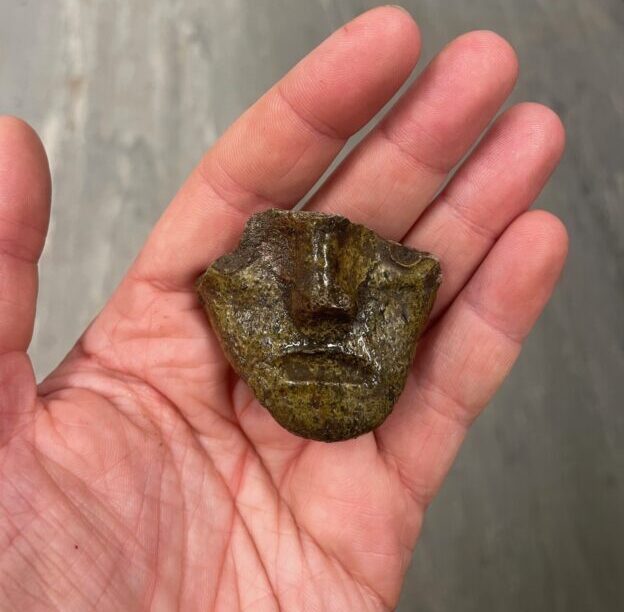
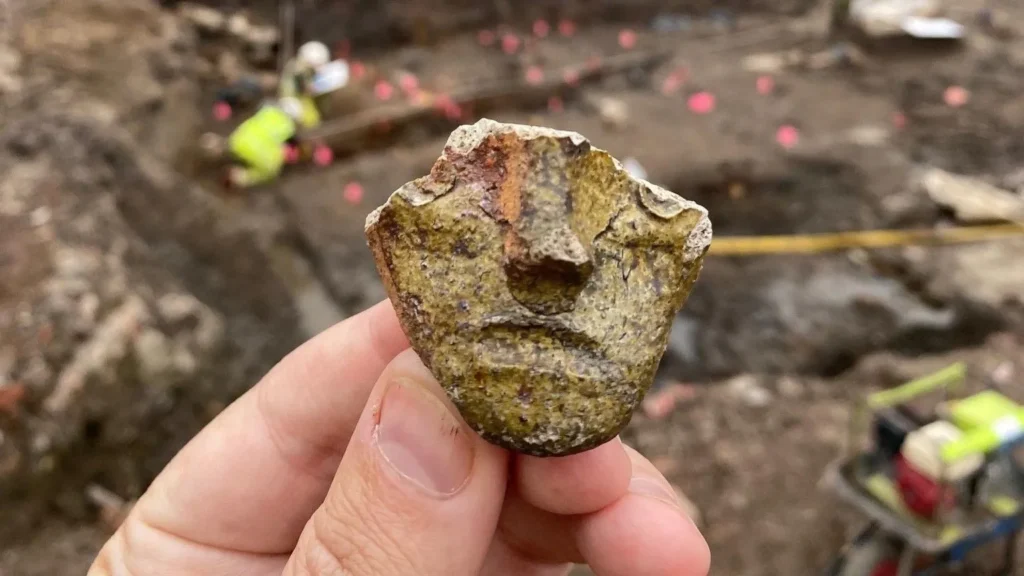
Sherd of a 13th-14th century jug with face. Credit: Guard Archaeology

Life Beside the Molendinar Burn

The site sits on the southern edge of the long-vanished Molendinar Burn, the stream where St Mungo is said to have founded his church in the late 6th century. The area later became pivotal in the city’s medieval development, with Glasgow Cathedral rising nearby in the 12th century.


📣 Our WhatsApp channel is now LIVE! Stay up-to-date with the latest news and updates, just click here to follow us on WhatsApp and never miss a thing!!


Bob Will, a medieval pottery specialist at GUARD Archaeology, explained: “The bulk of the pottery comes from the 13th and 14th centuries. The fencing and associated finds confirm this was once part of a medieval settlement on the city’s edge.”

From Medieval Settlement to Modern Housing

The excavation was triggered by plans from the Wheatley Group to build 34 social homes and two commercial units, supported by a £5.57 million grant from the Scottish Government. While modern construction will resume once archaeologists complete their work in November, the wooden posts and pottery will be conserved and eventually transferred to museums for study and display.
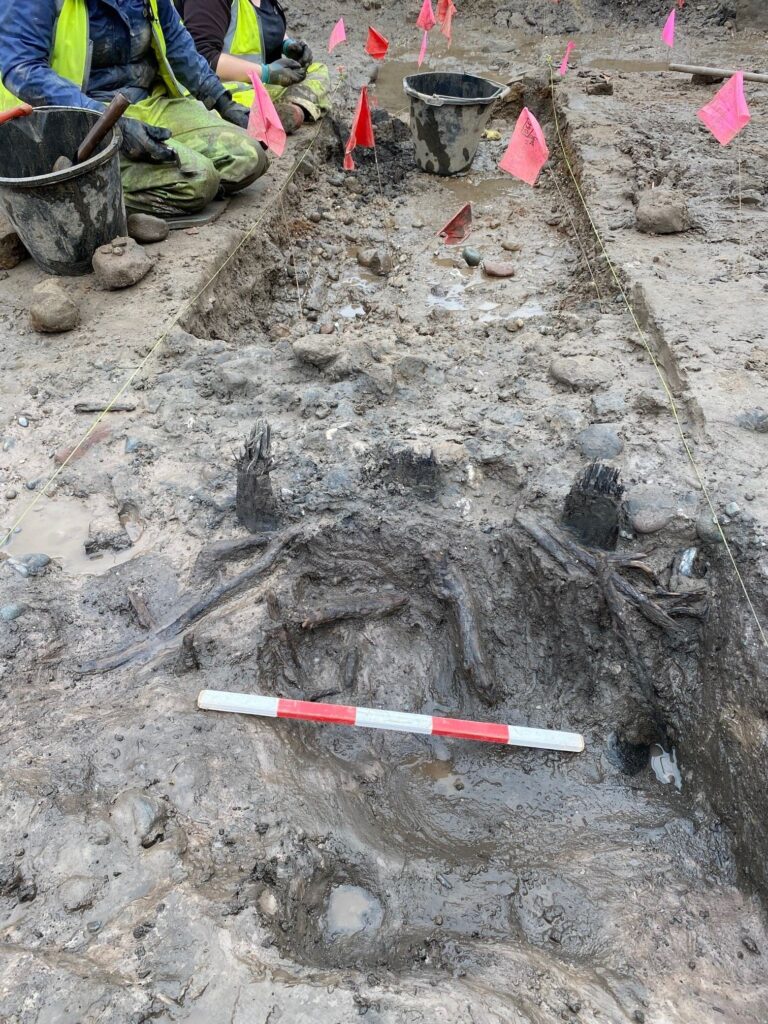
Wattle fencing discovered at Spoutmout. Credit: GUARD Archaeology

Why It Matters

The survival of medieval wooden structures in an urban setting is exceptionally rare, offering archaeologists a unique chance to explore Glasgow’s formative years. For residents, it connects the city’s modern transformation with its earliest roots.

As Glasgow looks forward to its future, these finds remind the city of its beginnings—when a settlement by the Molendinar Burn grew into a burgh, and eventually into Scotland’s largest city.

GUARD Archaeology

Cover Image Credit: Sherd of a 13th-14th century jug with face. Guard Archaeology

Related Articles

The Basilica cistern, which is said to have the sarcophagus of Medusa or the Mysterious Snake Woman, was restored

21 July 2022

21 July 2022

The Basilica Cistern, one of the magnificent ancient structures of Istanbul, was restored. Besides being the greatest work of the...

They Worshipped the Olympian Gods Until the 9th Century — DNA Reveals the Hidden Descendants of Ancient Hellenes

5 February 2026

5 February 2026

A new Oxford-led DNA study reveals that the isolated Deep Mani Greeks preserved ancient Hellenic ancestry and continued pagan Olympian...

1,400-year-old temple from the time of the East Anglian Kings discovered at Suffolk royal settlement

21 November 2023

21 November 2023

Archaeologists have uncovered a possibly pre-Christian temple from the time of the East Anglian Kings at Rendlesham, near Sutton Hoo...

The inner wall was reached during the excavations of the tomb of the poet Aratos in the Soli Pompeiopolis Ancient City

13 August 2021

13 August 2021

The inner wall was reached during the excavations of the tomb of Aratos, the famous poet and astronomer of the...

Submerged Land Bridge Beneath the Aegean May Have Carried Early Humans From Türkiye to Europe

21 September 2025

21 September 2025

A groundbreaking archaeological study has revealed that early humans may have crossed from modern-day Türkiye into mainland Europe via a...

Archeologists Discover Two Sphinxes measure 26 feet in length in Egyptian Ruins

21 January 2022

21 January 2022

Archeologists have discovered the remains of two huge sphinx statues, each measuring 26 feet in length, at the funerary temple...

Flint tools found in Tunel Wielki Cave, Poland, about half a million years old

9 October 2022

9 October 2022

Flint tools discovered over 50 years ago in the Tunel Wielki Cave (Maopolskie region) are not tens of thousands of...

New study reveals the Milky Way’s hidden role in ancient Egyptian mythology

11 April 2024

11 April 2024

The ancient Egyptians were keen observers of the night sky. They incorporated their astronomical observations into their religion, mythology, and...

The Oldest Evidence of Stone Blade Production in Southern Arabia: 80,000-Year-Old Stone Blades Discovered

21 February 2025

21 February 2025

An international team of researchers led by Knut Bretzke of Friedrich Schiller University Jena uncovered 80,000-year-old stone blades at the...

Researchers find the earliest record of aurora in old Chinese documents

15 April 2022

15 April 2022

Researchers have found the oldest known reference to a candidate aurora in a celestial event, described in an ancient Chinese...

Rare 400-year-old Bronze Trumpets Discovered on a shipwreck in Croatia

12 July 2024

12 July 2024

Croatian underwater archaeologists have made an extraordinary discovery off the southern coast of Istria near Cape Kamenjak. They have unearthed...

A Mysterious Deity’s Ancient Gold Gift was Discovered at Georgia’s Gonio-Apsaros Roman Fort

25 October 2024

25 October 2024

During excavations at the Roman fortress of Apsaros in Georgia, archaeologists discovered a unique gold votive plaque presented to Jupiter...

Mysterious Dead Sea Copper Scroll May Hide the Financial Secrets of a Failed Jewish Revolt

1 June 2026

1 June 2026

The Copper Scroll has always looked less like a manuscript than a deliberate act of silence. Found in 1952 inside...

Archaeologists discovered 130 dwellings around the Ringheiligtum Pömmelte monument “German Stonehenge”

15 June 2021

15 June 2021

Archaeologists have unearthed 130 dwellings at an Early Bronze Age monument in Germany, indicating that the ‘Stonehenge’ was once home...

Ancient rubbish dump under Hatshepsut temple reveals hundreds of artifacts

24 November 2021

24 November 2021

Polish archaeologists uncovered a 3,500-year-old dump while working on the reconstruction of the Hathor Goddess Chapel, which is part of...