
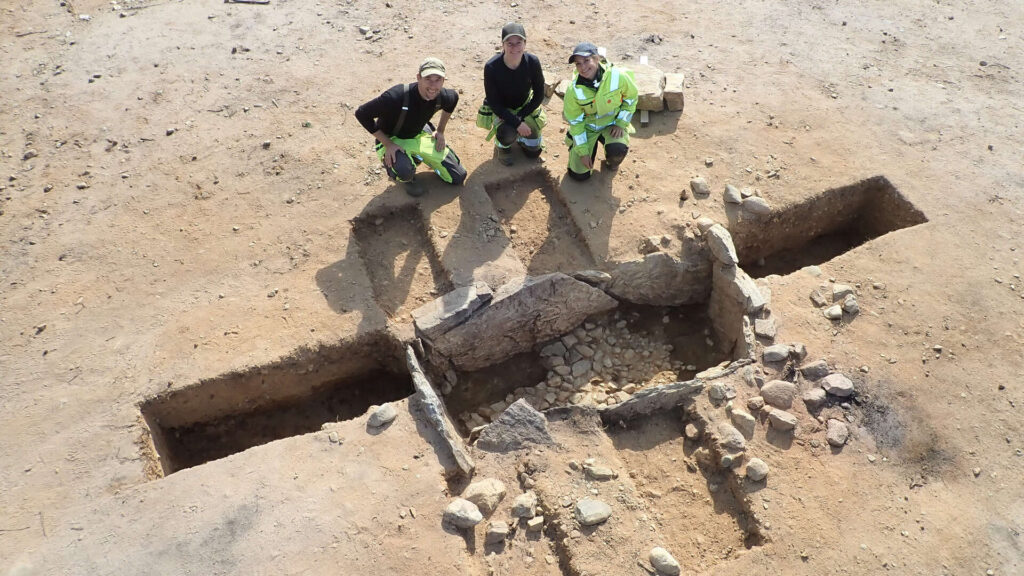
What initially looked like the remains of an ancient fire pit has turned out to be a rare, 4,000-year-old stone tomb in southeastern Norway. The discovery surprised archaeologists excavating a prehistoric settlement near Halden, offering an unusual opportunity to investigate the burial practices of the region’s earliest farming communities.
The carefully constructed burial chamber emerged on the Svinesund plateau, where fewer than 20 comparable tombs have been recorded in eastern Norway. Its contents, including an arrowhead, an amber bead, and mysterious burned bone fragments, have already raised questions about who was buried there and whether the grave was used for different burial rituals.
An Ancient Fire Pit That Wasn’t What It Seemed
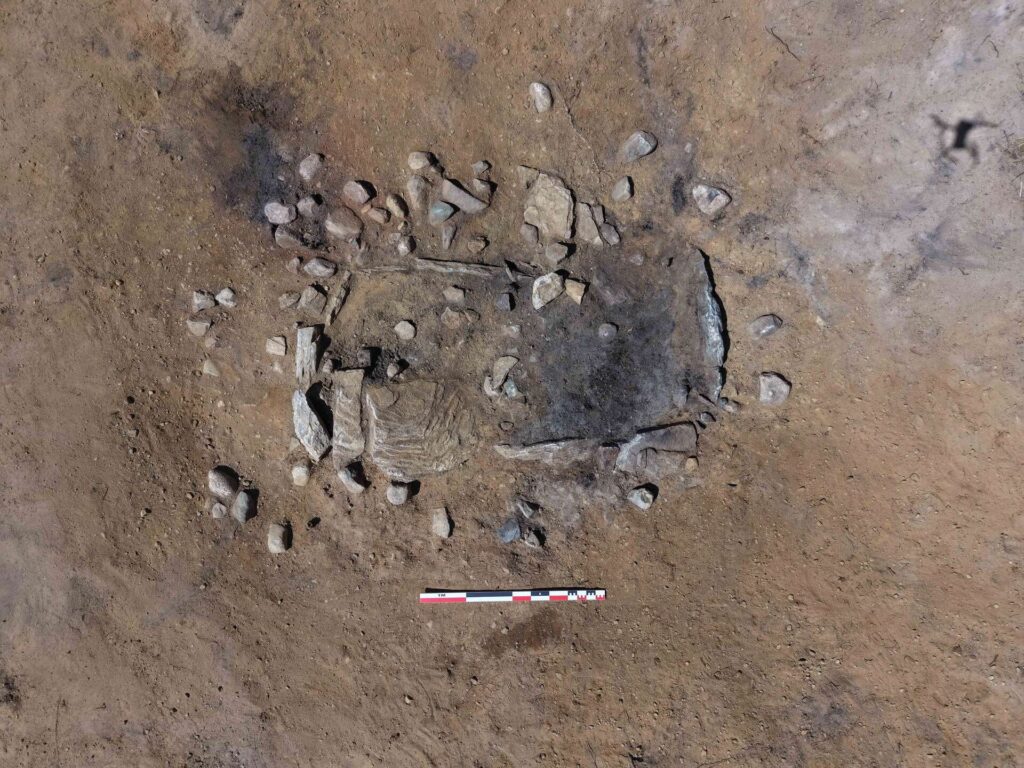
The excavation at Kongefaret 8 began ahead of construction work on a large industrial development. Archaeologists were initially investigating evidence of an Early Stone Age settlement when excavation leader Kjersti Væge noticed charcoal and fire-cracked stones protruding from the ground.
Such traces typically suggest prehistoric hearths or cooking pits, which can provide valuable charcoal samples for radiocarbon dating. A small team began carefully removing the upper soil with trowels, but as the outlines of the structure emerged, it became clear that they were uncovering something entirely different.
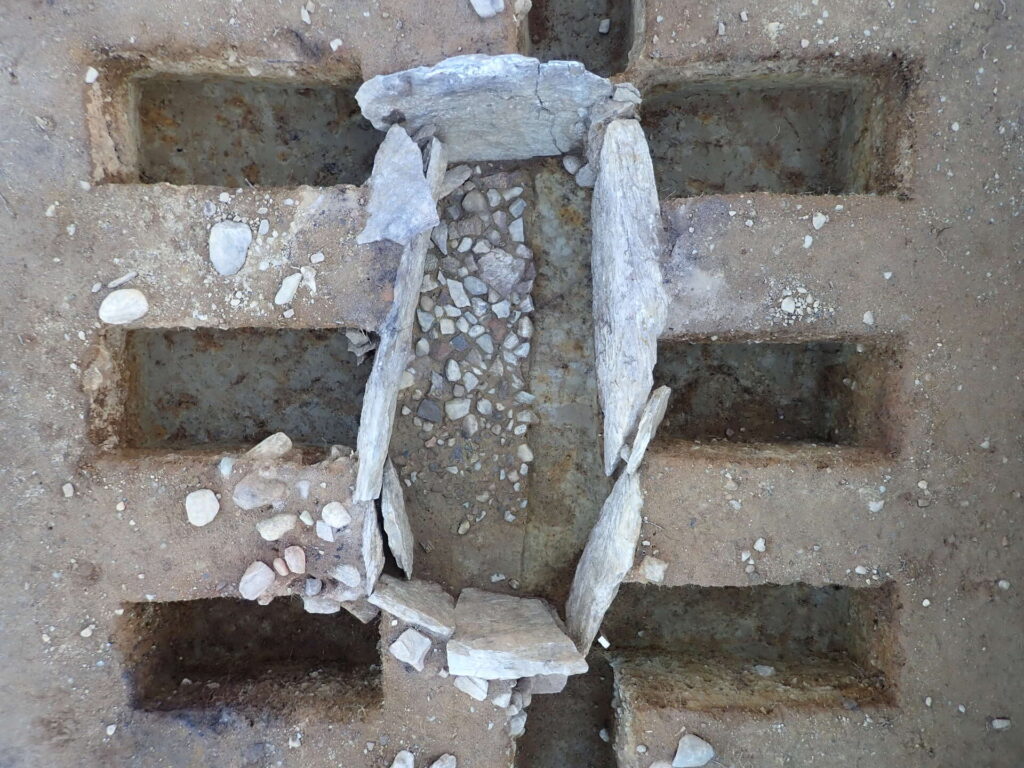
The stones belonged to a hellekiste, a burial chamber constructed from large, upright stone slabs. Some weighed several hundred kilograms, while the chamber itself measured approximately 70 centimeters deep. Its builders had also created a carefully laid stone floor, demonstrating the considerable effort invested in the grave.
The discovery sparked celebrations among the excavators, followed by a sense of awe at the opportunity to investigate such a rare monument. It had been more than 25 years since the University of Oslo’s Museum of Cultural History last excavated a comparable stone chamber.
Preliminary evidence suggests that the tomb dates to the Late Neolithic, approximately 2350–1700 BC. Its exact age, however, remains uncertain until laboratory analyses are completed.
A Missing Dagger and the Mystery of the Buried
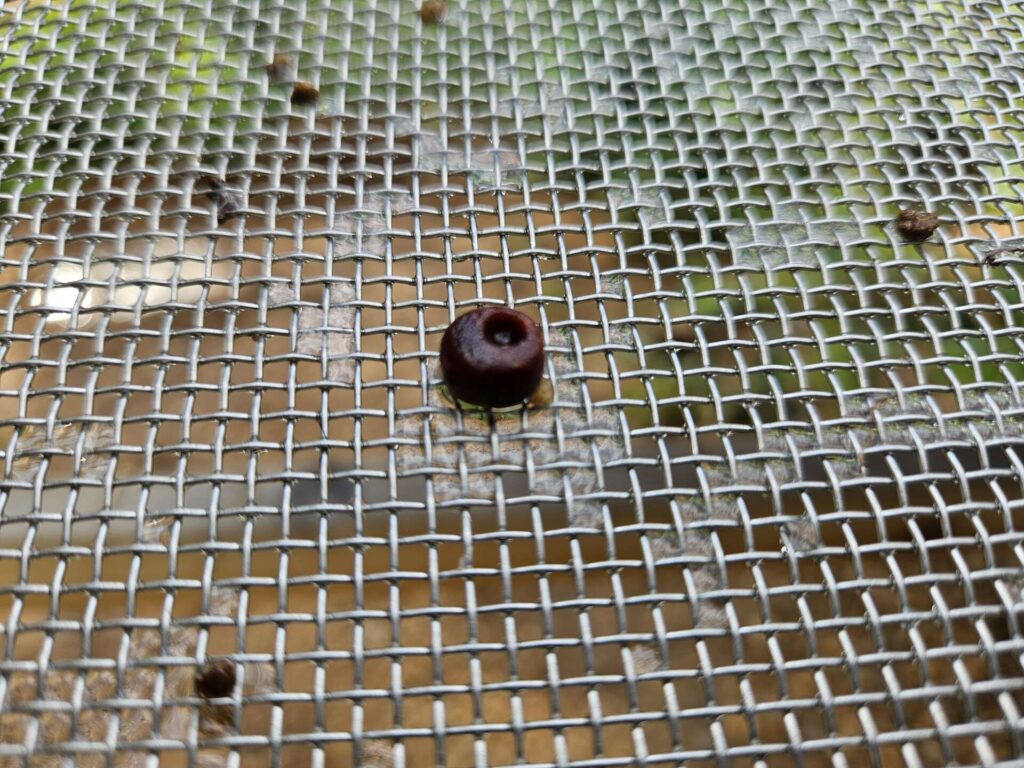
Inside and around the chamber, archaeologists recovered a finely retouched arrowhead, a small amber bead, and pottery decorated with cord impressions. The pottery resembles material previously discovered in a stone tomb at Fange in Østfold, suggesting connections between burial traditions in southeastern Norway.
Yet one expected object was absent. Archaeologist Carine Rosenvinge told Forskning.no that flint daggers had appeared in comparable Norwegian tombs, but the Halden chamber contained no such weapon. Although an arrowhead was present, the missing dagger distinguishes this burial from the examples she described.
Some researchers have interpreted these stone chambers as warrior graves, but that explanation remains debated. Morten Ramstad, an archaeologist at the University Museum of Bergen, points to a chamber excavated at Selje in 2023, where several individuals, including women and children, were buried without clear evidence that any particular person received more prominent treatment.
The Selje discovery suggests that some chambers functioned as collective burial monuments rather than graves reserved for individual warriors. Whether the smaller Halden tomb served a similar purpose remains unknown, particularly because no identifiable unburned skeletal remains have yet been reported.
Could the Tomb Have Been Used for Two Different Burial Rituals?
Another puzzle emerged at one end of the chamber, where archaeologists discovered charcoal and burned bone fragments. The material has been sent to an osteologist to determine which species the bones belonged to and, if possible, establish their age.
Researchers are investigating whether the fragments represent human cremation remains. If so, they must determine whether the cremation occurred when the chamber was originally constructed or whether someone reused the tomb for a later burial.
The distinction could reveal changes in burial practices over time. Rosenvinge suggests that different funerary traditions may have reflected differences in social status or the roles individuals held within their communities, although the evidence is not yet sufficient to establish such a connection at Halden.
Recovering information about the original occupants presents another challenge. Unburned bones rarely survive thousands of years in the soil of Norwegian stone tombs, leaving archaeologists with little biological evidence to examine.
The team has therefore collected soil samples from inside the chamber for DNA analysis. Researchers hope these samples, together with the burned bone fragments, will help establish who was buried there and provide a more precise chronology.
A Rare Window into Norway’s Earliest Farming Communities
The Halden tomb belongs to a period when farming communities were becoming firmly established in Norway. During the third millennium BC, population movements and contacts with continental Europe brought new burial customs, religious practices, and ways of organising everyday life to Scandinavia.
These early agricultural communities increasingly occupied permanent settlements, living in timber longhouses near cultivated fields and livestock. Their burial monuments reflected the importance of settlement and, in some cases, connections between successive generations.
Ramstad describes certain stone chambers as mausoleum-like structures that may have served communities over extended periods. The Selje tomb, for example, contained multiple individuals, while smaller chambers such as the one at Halden might have accommodated fewer burials.
The geographical distribution of these monuments also raises questions about prehistoric contacts. More than 1,000 similar tombs are known in Sweden, compared with fewer than 20 recorded examples in eastern Norway. Denmark has approximately 150, suggesting that different regions participated in related but potentially distinct burial traditions.
Researchers are examining whether communities in eastern Norway maintained closer cultural ties with present-day Sweden, while those in western Norway had stronger connections with Jutland. The newly discovered chamber could contribute to this investigation, particularly because modern analytical techniques were unavailable when many Norwegian examples were excavated more than a century ago.
For now, the precise age of the Halden tomb, the identity of its occupants, and the significance of its unusual contents remain unresolved. Further analysis may reveal whether the chamber represents a single burial event or preserves traces of rituals carried out by different generations, offering new insight into the people who lived on the Svinesund plateau thousands of years ago.
