Danish maritime archaeologists have identified the long-lost wreck of Dannebroge, a flagship warship that exploded and sank during the historic Battle of Copenhagen on April 2, 1801.
The remarkable find sheds new light on one of Denmark’s most dramatic naval conflicts and offers a rare, tangible connection to a battle that has shaped the nation’s history and identity for over two centuries.
Lost Flagship Found Beneath Copenhagen Harbour
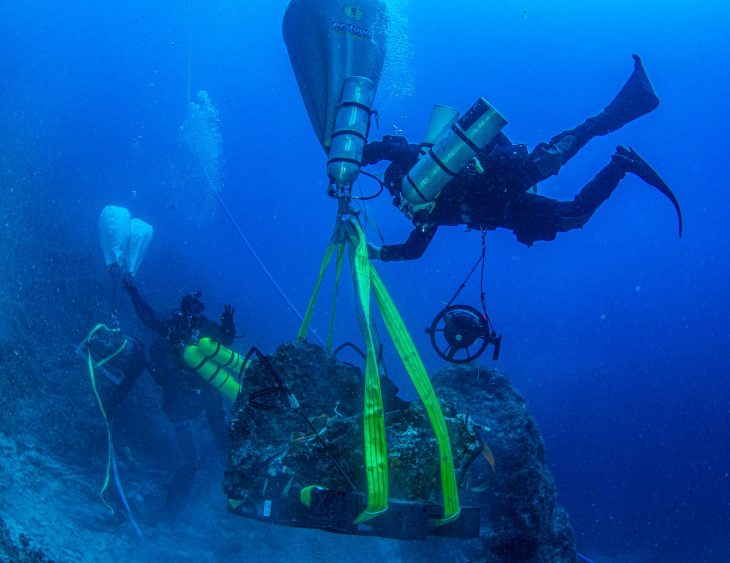
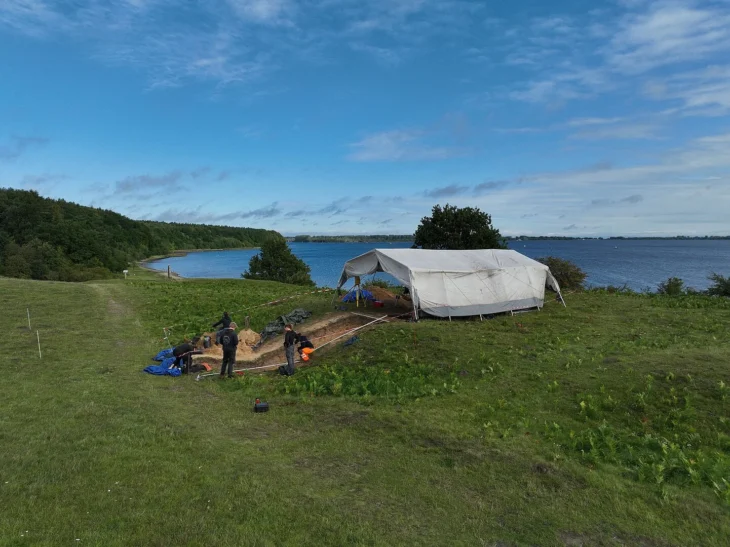
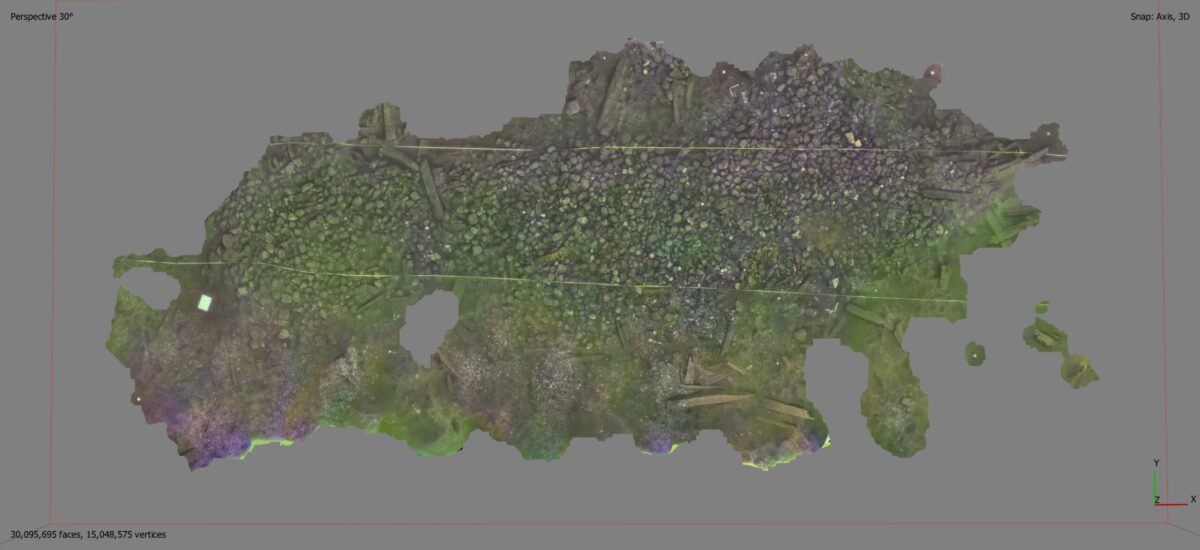
The wreck was discovered by a team from the Danish Viking Ship Museum during ongoing excavations linked to the construction of the artificial island of Lynetteholm. Buried approximately 15 meters below the surface in near-zero visibility conditions, the remains lay hidden beneath layers of dense silt.
After months of meticulous underwater investigation, archaeologists are now confident the wreck belongs to Dannebroge, a powerful ship of the line that played a central role in Denmark’s defense against the British fleet.
“We have found Dannebroge and the remains of those who never made it ashore after the battle,” said maritime archaeologist Otto Uldum, who leads the excavation.
📣 Our WhatsApp channel is now LIVE! Stay up-to-date with the latest news and updates, just click here to follow us on WhatsApp and never miss a thing!!
A Violent Chapter of Naval History
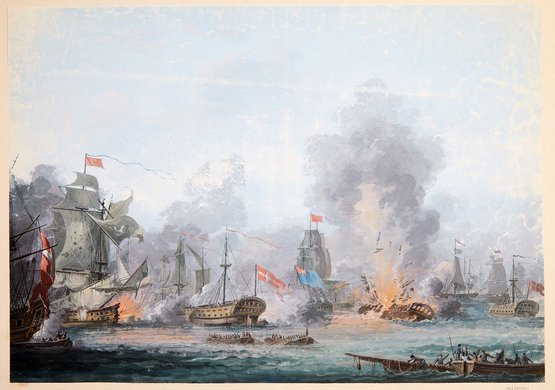
The Battle of Copenhagen in 1801 was a fierce naval confrontation between the Danish–Norwegian fleet and the British Royal Navy, commanded by Vice Admiral Horatio Nelson. Despite being heavily outgunned, Danish forces fought for over four hours in what became a devastating clash of firepower.
Within hours, the waters of the King’s Deep turned into a scene of destruction, filled with smoke, flames, and cannon fire. Dannebroge was struck repeatedly, caught fire, and ultimately exploded—sinking to the seabed along with dozens of crew members.
Evidence Confirms Identity of the Wreck
According to researchers, the ship’s structure, timber dimensions, and dendrochronological analysis all match historical records of Dannebroge, which was constructed in 1772.
Artifacts recovered from the site further confirm the identification. The seabed surrounding the wreck is scattered with cannonballs, bar shot, and even two cannons—clear indicators of the intense combat that took place.
“We are stating this with a degree of certainty that borders on absolute,” Uldum explained.
First-Ever Archaeological Study of the Battle
Although the Battle of Copenhagen is well documented in historical texts and national narratives, this marks the first time archaeologists have conducted a direct investigation of a wreck from the conflict.
“This is something entirely new,” said Uldum. “No one has previously examined the battle archaeologically, which is quite remarkable given its importance.”
The excavation is expected to provide a new layer of understanding, adding physical evidence to complement written accounts.
Human Stories Emerge from the Seabed
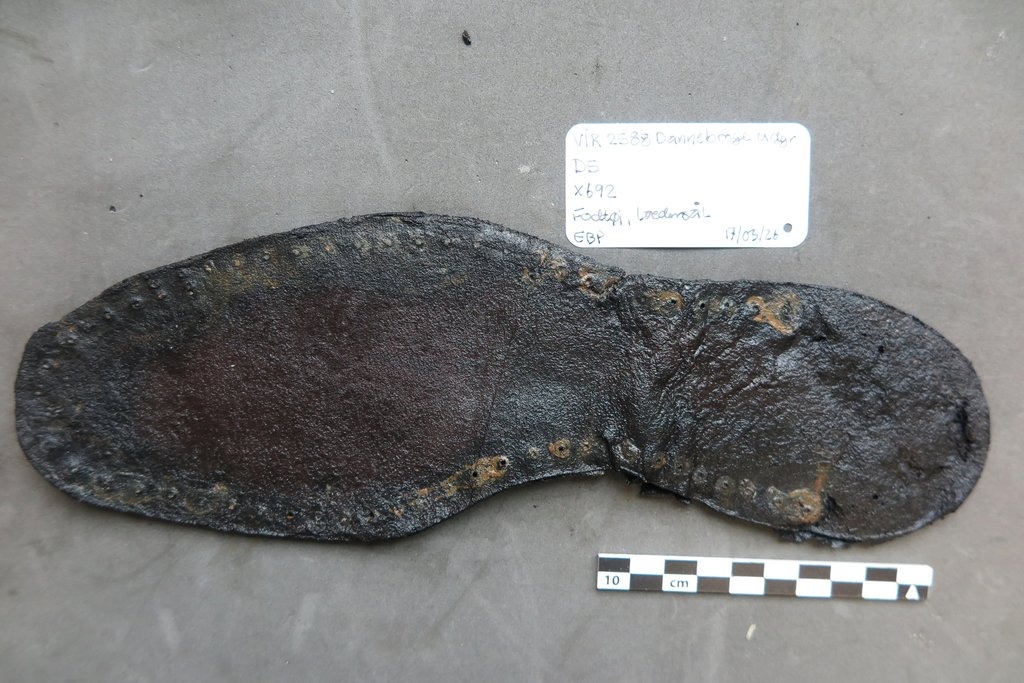
Beyond military artifacts, archaeologists have uncovered personal items that reveal the human side of the tragedy. Shoes, fragments of clothing, clay pipes, uniform insignia, and weapons have been recovered—offering insight into the everyday lives of the sailors on board.
Most strikingly, the team has also found human remains, including a lower jaw and several bones believed to belong to crew members listed as missing after the battle.
Historical records show that of the 357 men aboard Dannebroge, 53 were killed during the battle, while 19 were never accounted for.
“These finds give the event a human presence,” Uldum noted. “They represent the individuals who experienced—and died in—the battle.”
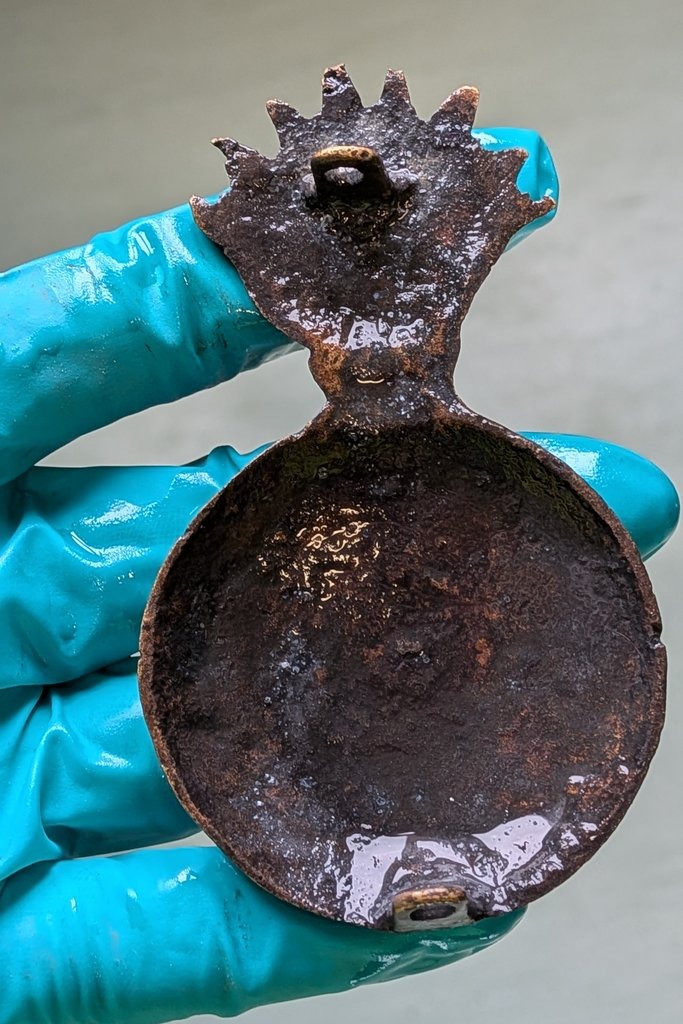
Rewriting History Through Archaeology
The discovery of Dannebroge is more than just a maritime find—it represents a new source of historical knowledge. Unlike traditional museum collections that often focus on high-ranking officers and prestigious objects, this excavation highlights the lives of ordinary sailors.
“Statistically, we are more likely to find objects belonging to common crew members,” Uldum said. “That makes our discoveries more socially representative.”
As excavations continue, researchers hope to uncover further details that will deepen our understanding of the Battle of Copenhagen—not just as a historic event, but as a lived human experience.
A Landmark Discovery for Denmark
More than 225 years after it sank, Dannebroge has re-emerged as a powerful symbol of Denmark’s past. The ongoing archaeological work promises to transform how this iconic battle is understood, bringing history out of books and into the physical world.
“Every find matters,” Uldum concluded. “Because this is the Battle of Copenhagen.”
The Viking Ship Museum in Roskilde
Cover Image Credit: The Viking Ship Museum in Roskilde