
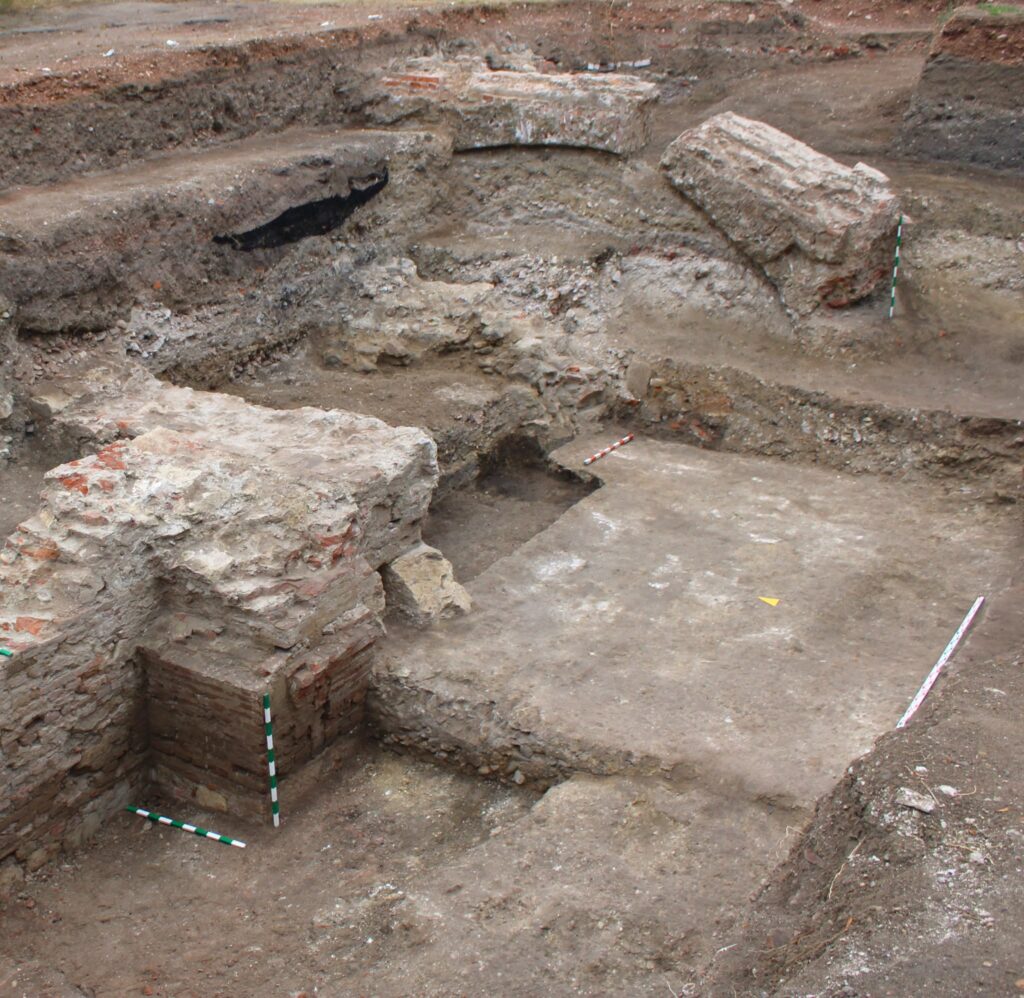
Archaeologists at Apulum in Romania have identified the Porta Praetoria, the main eastern gate of the Roman fortress occupied by Legio XIII Gemina. The discovery comes roughly 40 years after researchers identified the camp’s southern gate, giving archaeologists a much clearer picture of how one of Roman Dacia’s most important military bases was organized.
The new evidence emerged during systematic excavations on the Capistrano Bastion in Alba Iulia. At a depth of about four meters, the team uncovered the massive foundation platform of one of the gate towers, a structure substantial enough to reveal important details about the size and layout of the entrance.
A monumental entrance to the legionary fortress
The Porta Praetoria served as one of the principal entrances into the legionary camp. From the gate, the Via Praetoria led directly toward the principia, the fortress headquarters and administrative center of Legio XIII Gemina.
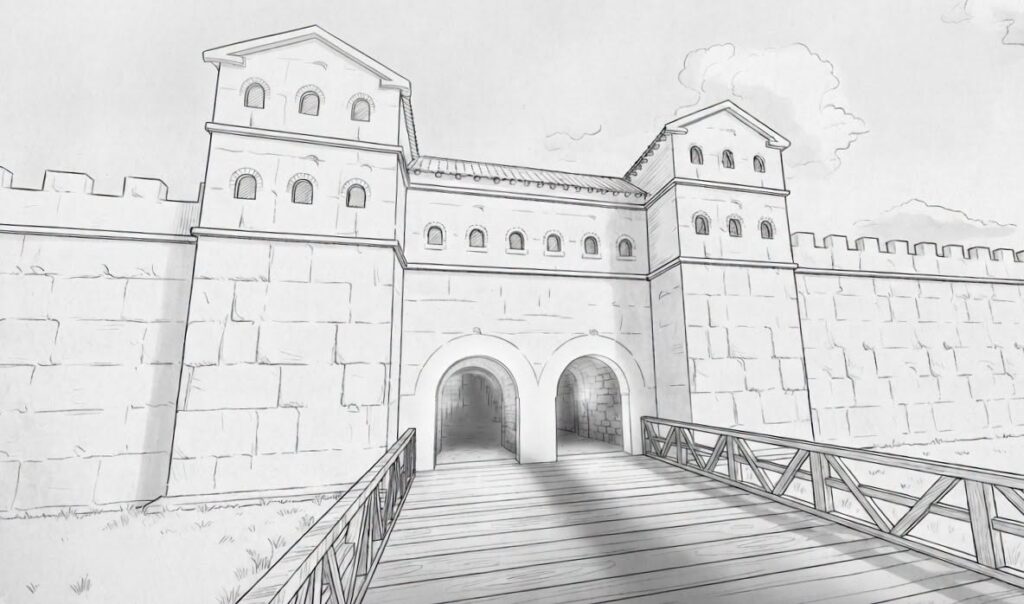
Researchers can now compare the newly identified structure with the Porta Principalis Dextra, the southern gate discovered in 1986 and later partially reconstructed. That comparison suggests the Porta Praetoria formed a monumental entrance with two large rectangular towers, a central dividing wall and two arched passageways.
The builders used opus quadratum, a Roman construction technique based on large, carefully dressed stone blocks laid in regular courses. At Apulum, the gate appears to have relied on substantial limestone blocks, consistent with the scale expected from a permanent legionary fortress.
Roman foundations reused in the Middle Ages
The discovery becomes more interesting because the Roman gate did not simply disappear when the imperial military complex fell out of use.
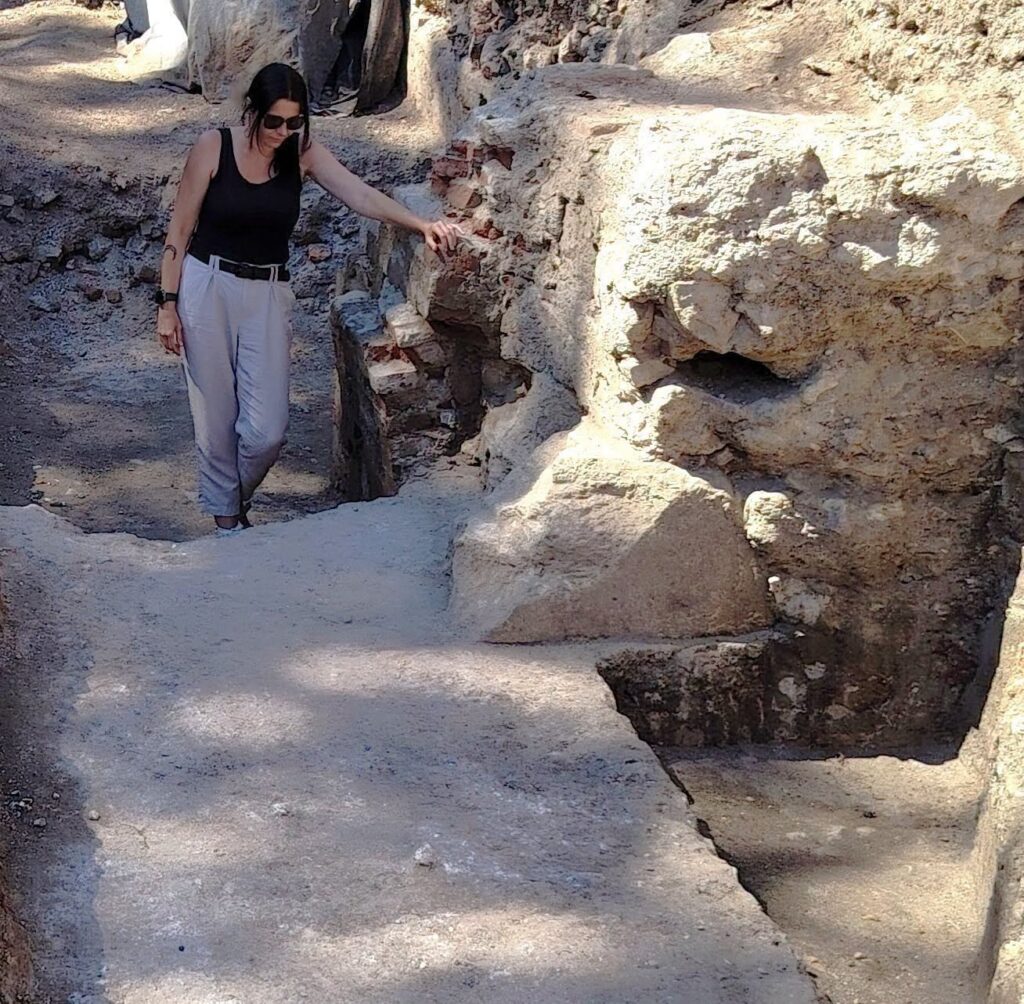
Archaeologists confirmed that later builders reused the Roman foundations and incorporated them into the medieval St. George Gate. The same strategic point therefore served as a monumental entrance in two very different periods, separated by centuries but linked by the underlying Roman structure.
That connection had long survived in historical memory.
Seventeenth-century chronicler Wolfgang Bethlen described the medieval gate and mentioned an image of Romulus and Remus being suckled by the she-wolf above the entrance, which he believed may have been a Roman relic.
The excavation now gives archaeologists a chance to test those early observations directly against the surviving architecture.
Reconstructing the plan of Apulum
The new gate helps researchers refine the plan of the fortress that housed Legio XIII Gemina, one of the principal Roman military units stationed in Dacia.
Knowing the positions and architecture of multiple gates allows archaeologists to reconstruct how movement worked inside the camp, how major roads connected with the headquarters, and how the fortress related to the wider settlement that developed around it.
The discovery also illustrates how later builders reused Roman infrastructure rather than simply abandoning it. At this point in Alba Iulia, a Roman military entrance and a medieval gateway occupied essentially the same strategic location, creating a rare architectural continuity across different periods.
The systematic excavation is being organized by the National Museum of the Union in Alba Iulia with support from the Alba County Council and is coordinated by archaeologist Anca Timofan.
Apulum, the military heart of Roman Dacia
Apulum was one of the most important urban and military centers of Roman Dacia. Located at modern Alba Iulia, it developed around the fortress of Legio XIII Gemina, which became a permanent base after the Roman conquest of Dacia in the early 2nd century CE.
The military presence helped transform the area into a major administrative and economic center, with civilian settlements, public buildings, workshops, and roads growing around the fortress. Over time, Apulum became one of the largest Roman communities north of the Danube and an important hub connecting the province’s military infrastructure with wider trade and administration.
The newly identified Porta Praetoria therefore adds more than another architectural feature to the map. It helps archaeologists reconstruct the internal organization of the legionary fortress at the center of one of Roman Dacia’s most important settlements.
