
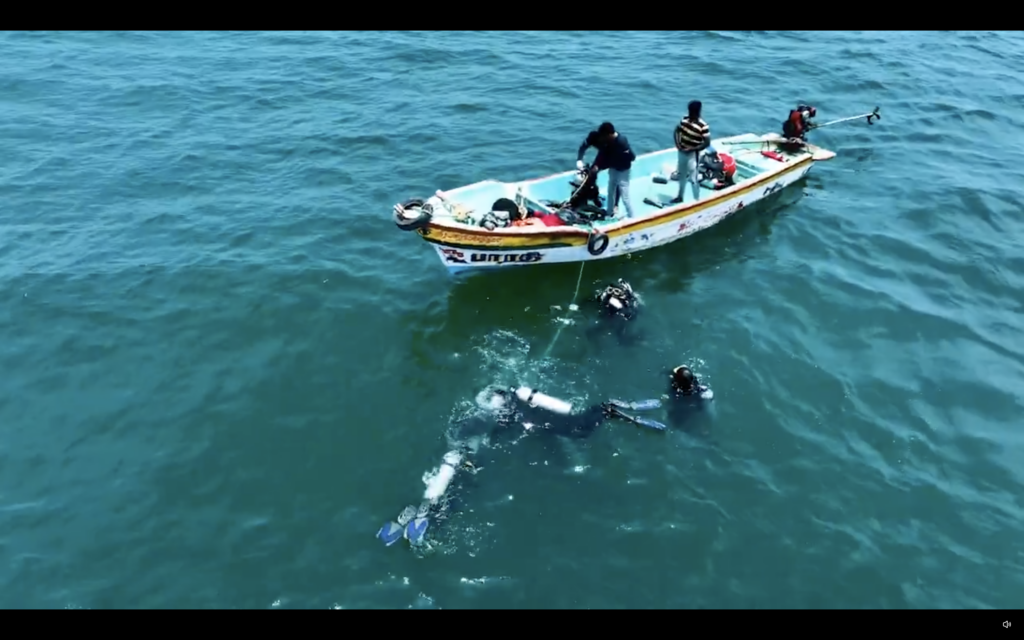
Archaeologists exploring the seabed off Tamil Nadu have recovered four ancient ring wells, more than 250 ceramic fragments, and part of a West Asian torpedo jar from the submerged landscape of Poompuhar. The finds add fresh evidence to a story that has been building for decades beneath the Bay of Bengal, where earlier surveys also identified large stone structures, possible shipwreck remains and traces of habitation beyond the modern shoreline.
The new discoveries matter for different reasons. The torpedo jar points toward maritime trade extending across the Arabian Sea and Persian Gulf, while the ring wells suggest that people once lived on ground that now lies underwater. Together with an enigmatic structure detected during earlier underwater work, they are helping archaeologists reconstruct a city remembered in Tamil literature as one of the great ports of the ancient Chola world.
A city that did not end at the shoreline
Poompuhar, also known as Kaveripoompattinam or Kaveripattinam, stood where the Cauvery River meets the Bay of Bengal. Literary traditions describe a busy urban centre divided into harbour, residential and market districts, while archaeology has uncovered wharves, brick structures, imported pottery, coins and other material connected with long-distance exchange.
The city also appears to have extended farther seaward than today’s coastline suggests. Earlier investigations found ring wells, brickwork and pottery offshore, while modern sonar and diving surveys have identified additional structures beneath the seabed. The 2026 project is specifically trying to determine how much of ancient Poompuhar now lies underwater and how changes in sea level, river channels and coastal erosion reshaped the settlement.
That broader setting makes the latest discoveries more important than a simple collection of artifacts. Archaeologists are not only recovering objects lost at sea; they are tracing parts of an inhabited landscape that once stood on dry ground.
Four ring wells point to a drowned neighbourhood
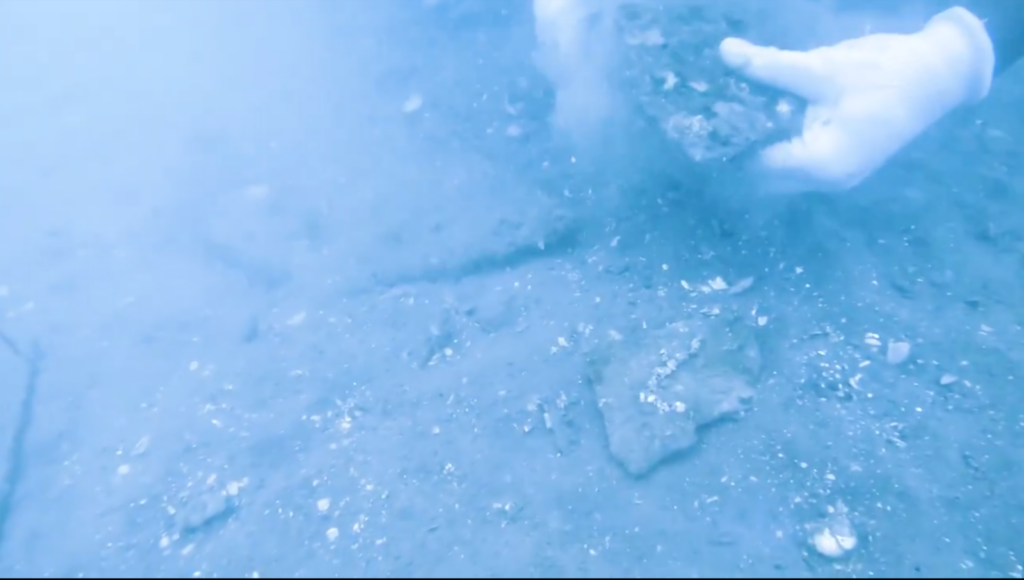
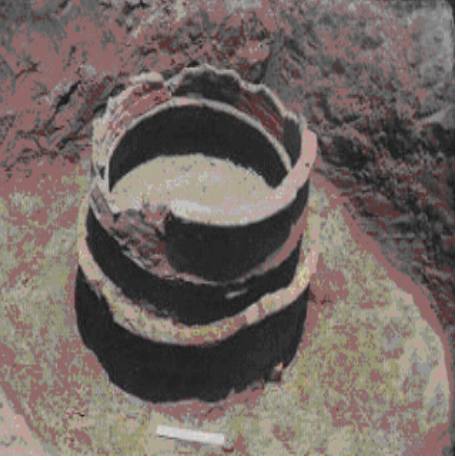
Among the most revealing finds are four terracotta ring wells. These vertical installations were constructed by stacking circular baked-clay sections into the ground and could provide water or help manage drainage in populated areas.
Their presence offshore is therefore difficult to dismiss as evidence from passing ships. People normally built ring wells where they lived and worked, and Tamil Nadu State Department of Archaeology officials say the new examples may also indicate the course of an ancient palaeochannel. Only about 10 percent of the planned underwater exploration has been completed, leaving much of the surrounding landscape untested.
The ring wells are especially valuable because they point to everyday life in the submerged settlement. Unlike imported ceramics, which reveal trade connections, these structures suggest where people lived, accessed water, and managed daily needs before this part of the city disappeared beneath the sea.
A jar carried along Persian Gulf trade routes
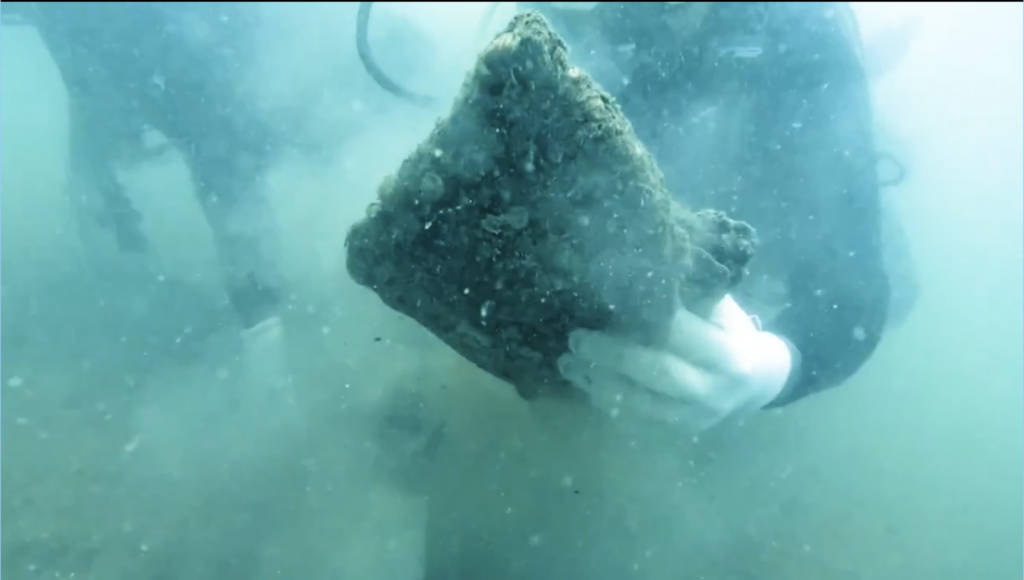
The most striking evidence for overseas connections comes from a fragment of a torpedo jar, the first such vessel reported from underwater exploration at Poompuhar. Researchers describe it as West Asian in origin and estimate that the complete vessel would have measured roughly 30 to 35 centimetres across.
Torpedo jars were long, narrow transport containers associated with Mesopotamia and Persian Gulf commerce. Many had pointed bases and bitumen-lined interiors that allowed merchants to carry liquids such as wine or oil by sea, although archaeologists have not yet established what the Poompuhar jar contained.
The fragment provides direct evidence that goods moving through Persian Gulf trade networks reached the Tamil coast. It supports what ancient texts and earlier archaeological work have long suggested: Poompuhar was part of a much wider Indian Ocean trading system.
The same season also produced glazed ceramic fragments, while previous work around Poompuhar has recovered amphorae, rouletted ware and other imported material. The result is a picture of a port connected not only with other parts of the Indian subcontinent but with trade routes stretching across the wider Indian Ocean.
A mysterious structure still lies deeper offshore
The new artifacts are only the latest pieces of a much older underwater puzzle. Marine archaeological work around Poompuhar began decades ago, and previous surveys identified substantial stone structures offshore, including a large U-shaped feature at roughly 23 metres depth. More recent work has also located an elliptical structure close to that previously known feature, along with other buried anomalies and a possible shipwreck.
Researchers still do not know what the submerged structures were used for. Their size and position suggest they belonged to the wider urban or harbour landscape, but further diving will be needed to understand how the different features were connected.
Older National Institute of Oceanography research had already shown that Poompuhar’s underwater archaeology included structures, pottery and evidence that habitation extended beyond the present coast. The 2026 campaign is now adding more precise documentation to a landscape that earlier teams could only examine in limited detail.
The port classical geographers knew as Kaberis Emporium
Poompuhar’s commercial importance was not confined to Tamil literary memory. Scholars have long associated Kaveripattinam with the Kaberis Emporium mentioned by the second-century geographer Ptolemy, while later sources refer to a locality called Caber on the same coast.
That identification fits the archaeological picture increasingly well. A river mouth gave ships access to inland markets, while the Bay of Bengal opened routes toward Sri Lanka and Southeast Asia; connections westward linked the port into commercial networks reaching Arabia, the Persian Gulf and the Mediterranean.
Poompuhar also belonged to a region with an unusually deep technological history. Recent research in Tamil Nadu has pushed evidence for iron use far earlier than scholars once expected, adding to a wider picture of complex communities developing in southern India long before Poompuhar reached its peak as a maritime centre. That broader context is useful without changing the focus of the story: this was not an isolated fishing settlement that suddenly became wealthy, but part of a region with long-established technical and economic traditions.
A city emerging through ordinary things
The strongest evidence for Poompuhar may ultimately come from the combination rather than any single spectacular object. A Persian Gulf-linked transport jar records long-distance movement, ring wells preserve traces of everyday settlement, hundreds of pottery fragments provide chronological and economic clues, and the submerged structures show that substantial parts of the ancient landscape remain unexplained.
The Tamil Nadu State Department of Archaeology plans to resume underwater work after the monsoon, with the next phase expected in January 2027. With only a fraction of the target area explored, archaeologists still do not know how far the drowned settlement extends or what purpose the larger offshore structures served.
What is becoming clearer is that Poompuhar cannot be understood simply as an ancient port whose shoreline shifted. The evidence beneath the Bay of Bengal is beginning to reveal a broader cityscape where people drew water, handled cargo, traded across the Indian Ocean, and built structures on land that eventually disappeared beneath the sea.
