
Chinese archaeologists have uncovered the tomb of Kim Young, a hostage prince from the ancient Korean kingdom of Silla, in Xi’an, Shaanxi Province, Northwest China. This remarkable find marks the first formal archaeological excavation of a Tang Dynasty (618–907) royal tomb belonging to the Silla kingdom.
The epitaph discovered inside offers a rare, detailed account of Kim Young’s life, deepening our understanding of the Tang Dynasty’s hostage system and diplomatic ties with Silla, located on the Korean Peninsula, according to reports by the China News Service.
The Shaanxi Academy of Archaeology confirmed the tomb’s location about two kilometers north of the ancient Tang capital Chang’an. Despite evidence of past looting, the tomb contained a wealth of burial artifacts. Crucially, the epitaph verified the occupant as Kim Young, a prince of Silla and political hostage in the Tang court.
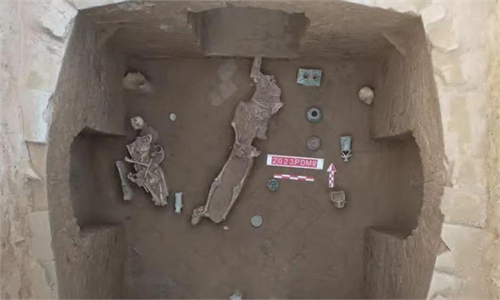
The tomb is a single-chamber earthen cave featuring a long sloped entrance passage and a skylight shaft. Its distinctive knife-shaped layout faces south. Originally, the entrance was destroyed, and the burial chamber now lies approximately 4.5 meters underground. Measuring 10.4 meters from north to south and 4 meters deep, the tomb includes a passageway, corridor, skylight shaft, tunnel, and burial chamber.
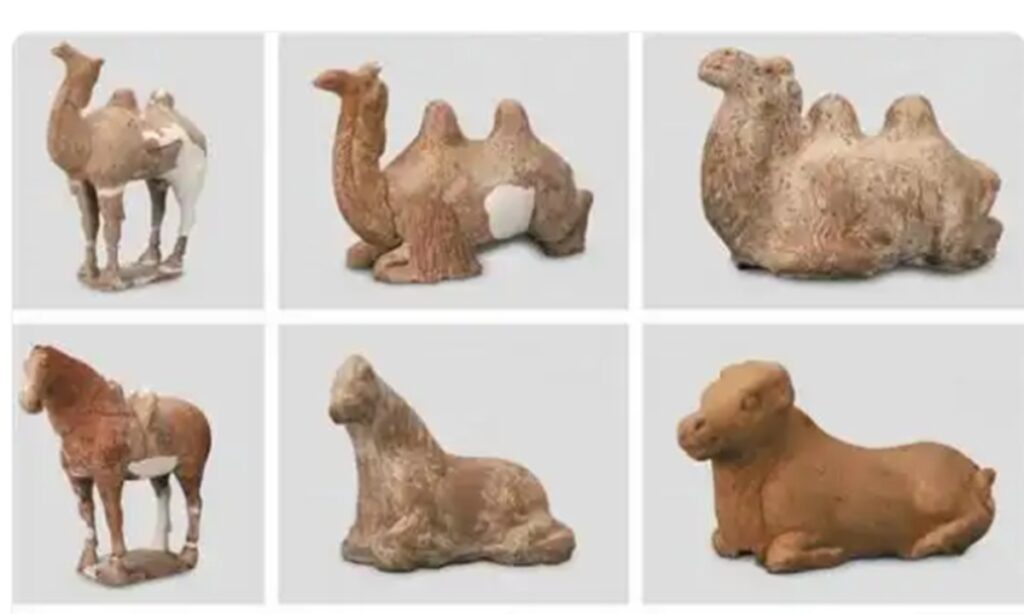
Archaeologists unearthed 83 burial objects, such as pottery figurines of heavenly kings, tomb guardians, horse handlers, and zodiac animals crafted from molded red clay. Additionally, 58 clay animals—camels, horses, cattle, sheep, pigs, dogs, and chickens—were found. Other notable items included a pagoda-shaped jar, copper coins from the Kaiyuan Tongbao series, and the stone epitaph itself.
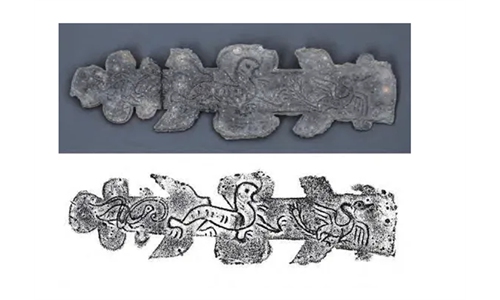
The epitaph, made from bluestone, features a square base and domed cover decorated with cloud and floral patterns, with peonies carved on each corner. The central inscription, written in ancient seal script, reads: “Epitaph of the Late Lord Kim of the Great Tang.” The main inscription contains 557 Chinese characters written in regular script, chronicling Kim Young’s life.
According to the epitaph, Kim Young was born in 747 (the sixth year of the Tianbao reign) and died in 794 at age 48 in the Taipingli guest residence in Chang’an. He was sent to Tang China as a political hostage, a common practice during the Tang Dynasty designed to secure loyalty and maintain diplomatic relations with vassal states like Silla. His family served as hostages for three consecutive generations, holding official positions within the Tang administration.
Kim Young participated in two diplomatic missions accompanying Tang envoys to Silla and took part in ceremonial functions such as mourning and investiture rites. His funeral was managed by Tang officials, including the magistrate of Chang’an county. The Tang imperial court granted both the burial site and coffin, underscoring the high regard in which Kim was held.
Significantly, the epitaph mentions Kim Young’s wife—a rare detail in the records of hostage princes. She was from the prominent Wang family of Taiyuan and daughter of Wang Qianling, the magistrate of Yanshi county. This indicates that Silla hostage princes often forged marital alliances with influential Chinese families, strengthening political and cultural ties.
Understanding the Hostage System Between Tang China and Silla
The practice of sending royal hostages from Silla to Tang China was a diplomatic strategy to ensure Silla’s allegiance to the powerful Tang empire. Hostage princes like Kim Young lived at the Tang court, receiving Confucian education and integrating into Chinese elite society while serving as intermediaries in foreign relations. Their presence symbolized both Tang dominance and mutual cooperation, balancing power through cultural exchange and political oversight.
Liu Zheng, a member of the Chinese Society of Cultural Relics, explained to the Global Times: “The discovery of Kim Young’s tomb offers concrete proof of the Tang Dynasty’s hostage system with vassal states like Silla. It highlights how the Tang maintained suzerainty through diplomatic and cultural engagement.”
Kim Young’s diplomatic missions and leadership roles exemplify how hostage princes acted as bridges between Tang China and their native kingdoms. They were not merely political pawns but active participants in shaping bilateral relations.
This archaeological find enriches our understanding of East Asian diplomacy in the medieval period, illustrating how political hostages fostered intercultural ties and upheld the Tang Dynasty’s influence over neighboring states.
Cover Image Credit: Shaanxi Academy of Archaeology
